Why a Bayer India acquisition is a water-and-wastewater problem first
Bayer's 2023 water strategy commits to a 25% reduction in water use per kilogram of crop by 2030 and a 30% reduction in the environmental impact of its crop protection portfolio by 2030 (Bayer, March 2023). In 2021, approximately 10% of Bayer's total capital expenditure was directed to water and wastewater projects. The same 2023 release introduced an updated Supplier Code of Conduct (SCoC) with dedicated items on water and wastewater that bind acquired sites and third-party manufacturers operating under Bayer contracts.
These corporate commitments apply directly to Indian manufacturing sites. They land inside one of the most prescriptive statutory regimes in the world: the Water (Prevention and Control of Pollution) Act 1974, the Air (Prevention and Control of Pollution) Act 1981, the Environment (Protection) Act 1986, the EIA Notification 2006, the Hazardous and Other Wastes (Management and Transboundary Movement) Rules 2016, and state-level ZLD mandates enforced by the State Pollution Control Board. Cristina Alonso Alija, Head of Sustainability, SHE, is the named accountable executive for Bayer's water strategy, and any acquisition must demonstrate a defensible compliance pathway before her function signs off.
For a Bayer India EHS director, the practical consequence is that the acquisition cannot be treated as a real-estate or HR transaction. It is a permitting and process-engineering program from day one, because none of the corporate water targets count as compliant if the site cannot satisfy BOD ≤30 mg/L, COD ≤250 mg/L, TDS caps, pesticide-residue limits, and full Zero Liquid Discharge in stressed basins. The following sections map the full statutory stack and the engineering process train required to meet these standards.
The Indian regulatory stack that governs a newly acquired site
Six consents and clearances are non-negotiable for any acquired manufacturing site commissioning in 2026. The Consent to Establish (CTE) and Consent to Operate (CTO) are issued under Section 25/26 of the Water Act 1974 and Section 21 of the Air Act 1981 by the State Pollution Control Board (GPCB in Gujarat, MPCB in Maharashtra, KSPCB in Karnataka, TNPCB in Tamil Nadu). CTE must be in hand before any construction; CTO must be renewed typically every 5 years for white-category units and up to 1 year for highly polluting industries, and both are required before any discharge to a drain, sewer, or water body.
Authorization under the Hazardous and Other Wastes (Management and Transboundary Movement) Rules, 2016 is required for any solvent, spent catalyst, obsolete pesticide, or pharma waste stream generated on site. Environmental Clearance (EC) is issued by MoEF&CC for Category A projects or the State EIA Authority (SEIAA) for Category B under the EIA Notification 2006 — the threshold is crossed when a pharma formulation project exceeds 5 ha of land or 1 ha for pesticide technical manufacturing, depending on the activity schedule.
Beyond the central framework, three additional gates apply. (1) The site must register on the CPCB OCEMS portal (OCEMS = Online Continuous Effluent and Emission Monitoring System) and install analyzers for pH, flow, BOD/COD, TSS, and Conductivity (TDS proxy) that stream live data to the CPCB and SPCB servers. (2) A groundwater NOC from the Central Ground Water Authority (CGWA) is required where extraction exceeds the notified threshold, or for any new/expanding unit in a notified over-exploited or critical assessment unit. (3) State ZLD policy — Gujarat, Maharashtra, Haryana, Punjab, Rajasthan, and parts of Tamil Nadu and Karnataka — mandates Zero Liquid Discharge for new/expanding industries in stressed basins; no liquid effluent may leave the site boundary, and the only disposal route is a dry, disposable solid.
CPCB and state effluent standards an Indian plant must meet
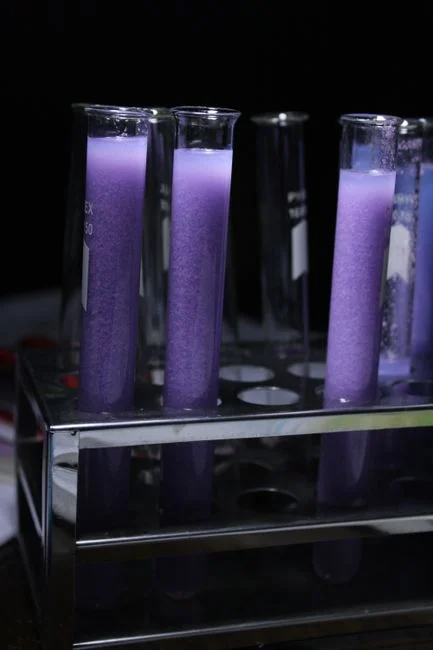
CPCB Schedule VI (General Standards for Discharge of Effluents) sets four discharge-route limits — inland surface water, public sewers, marine, and irrigation — each with a distinct numerical cap. Pharma and agrochemical sites effectively work to the most stringent inland surface-water route plus CPCB's sector-specific effluent standards issued for pesticides and bulk drugs, because pesticide and solvent residues (organochlorines, organophosphates, pyrethroids) cannot legally reach a stream or a downstream drinking-water treatment plant. The headline numbers a Bayer site must design against are summarized below.
| Parameter | Inland Surface Water (CPCB Schedule VI) | Public Sewers | Marine | ZLD Route (no liquid discharge) |
|---|---|---|---|---|
| pH | 6.5–8.5 | 6.5–8.5 | 6.5–8.5 | Not applicable (no liquid out) |
| BOD (3 days, 27 °C) | ≤ 30 mg/L | ≤ 350 mg/L | ≤ 100 mg/L | Not applicable |
| COD | ≤ 250 mg/L | ≤ 1,000 mg/L | ≤ 250 mg/L | Not applicable |
| TSS | ≤ 100 mg/L | ≤ 600 mg/L | ≤ 100 mg/L | Not applicable |
| Oil & Grease | ≤ 10 mg/L | ≤ 20 mg/L | ≤ 20 mg/L | Not applicable |
| TDS | ≤ 2,100 mg/L | ≤ 2,100 mg/L | — | Condensed to solid salt |
| Heavy metals (Pb, Cd, Cr, Hg, As, Ni, Cu, Zn) | Concentration caps per Schedule VI (e.g. Pb ≤ 0.1 mg/L, Cd ≤ 0.2 mg/L, total Cr ≤ 2.0 mg/L, Hg ≤ 0.01 mg/L) | Higher caps with pretreatment | Lower caps | Recovered/immobilized in crystallizer salt |
| Pesticide residues (organochlorines / OPs / pyrethroids) | CPCB sector-specific + BIS IS 14543 thresholds for downstream use | Generally prohibited | Sector-specific | Stripped by AOP / activated carbon; concentrated in brine |
If the site sits in a ZLD-mandated basin, the regulatory question is not "can we meet 30 mg/L BOD" — it is "can we reduce the reject stream to zero and crystallize a disposable solid." That single decision drives the engineering choices in the next section.
Engineering the process train to satisfy Indian limits and Bayer's water strategy
A five-stage train plus a sludge line satisfies both CPCB Schedule VI and Bayer's 25%/30% water targets. The intent of each stage matters more than any specific dimension, because influent character varies by product mix (agrochemical batches vs. API synthesis), and the equipment is sized to the wastewater characterization.
Stage 1 — Equalization and neutralization. Surge balancing with pH correction. Batch discharges from API and formulation reactors are highly variable in pH, COD, and salinity; homogenization here is what makes every downstream stage work. Static mixers with online pH and conductivity loops are the minimum.
Stage 2 — Primary treatment. A DAF system (dissolved air flotation) or a lamella clarifier with coagulant/flocculant dosing strips suspended solids, oil and grease, and a meaningful fraction of COD before the biological stage. This is also where the bulk of the pesticide and solvent load is partitioned into a sludge phase that the filter press will later dewater.
Stage 3 — Secondary biological treatment. Activated sludge, Moving Bed Biofilm Reactor (MBBR), or Membrane Bioreactor (MBR). An MBR membrane bioreactor is the preferred option on Bayer-style sites where footprint is constrained and a high-quality secondary effluent is needed to feed a downstream RO without fouling. MBR effluent typically lands at BOD < 5 mg/L, TSS < 1 mg/L, and a substantial COD reduction, which is what the RO membranes downstream need to survive.
Stage 4 — Tertiary treatment. Sand filtration followed by activated-carbon adsorption for residual COD and trace organics, then advanced oxidation (ozone or Fenton) for the recalcitrant pesticide residues that survive biology. Selective ion exchange can be deployed for specific metals (Cr(VI) reduction + IX, for example) if the influent characterization warrants it.
Stage 5 — ZLD closure. Two-pass reverse osmosis concentrates the tertiary effluent to a brine at typically 50,000–70,000 mg/L TDS with 80–90% water recovery in the first pass. The brine then goes to a Mechanical Vapor Recompression (MVR) evaporator and a crystallizer, producing a disposable solid salt cake sent for secure landfill or co-processing in cement kilns. The recovered condensate is recycled back to the process.
Sludge handling. A plate-and-frame filter press dewaters the combined biological and chemical sludge to < 25% moisture (dry cake), which is then either sent to a TSDF, used as pre-heater fuel in cement kilns, or — for pesticide-laden sludge — incinerated in a CPCB-approved hazardous-waste incinerator. The choice of dewatering unit determines whether the site passes the sludge-handling audit under the 2016 Hazardous Waste Rules. For a broader perspective on Indian industrial wastewater engineering, see this Indian industrial wastewater engineering guide, and for the M&A compliance pattern in other jurisdictions, the parallel M&A wastewater compliance for German acquisitions write-up.
How an acquired site should integrate Bayer's Supplier Code of Conduct in 90 days
Three thirty-day sprints convert an inherited site into a defensible asset under both Indian law and Bayer's SCoC water items.
- Days 0–30 — Baseline audit. Characterize influent and effluent at every outfall for BOD, COD, TSS, TDS, oil & grease, heavy metals (Pb, Cd, Cr, Hg, As, Ni, Cu, Zn), and pesticide-residue parameters per CPCB sector-specific standards. Review the existing CTE/CTO, Hazardous Waste authorization, EC, and groundwater NOC for any deviations. Build a gap matrix against CPCB Schedule VI, CPCB sector-specific standards, and the SCoC water items. This matrix is the single document the corporate sustainability function will demand.
- Days 31–60 — Engineering design package. Size the equalization, biological stage, tertiary train, and ZLD train to the gap matrix. Specify OCEMS analyzers (pH, flow, conductivity, COD/BOD) and integrate them with the CPCB and SPCB servers before commissioning. Lock the process train to a 90% water-recovery target where ZLD is mandated, and a treated-effluent quality of BOD ≤ 30 mg/L / COD ≤ 250 mg/L where direct discharge remains permissible.
- Days 61–90 — Commissioning and assurance. Trial runs with NABL-accredited third-party lab testing on every parameter, including pesticide-residue suite, to demonstrate compliance. Submit performance guarantees to the State PCB and to Bayer's corporate sustainability function. Beyond day 90, the site transitions to steady-state: OCEMS live data, monthly compliance reports to GPCB, annual water-stewardship disclosure aligned with CDP Water, and progress tracking against the 25% water-use reduction target by 2030.
Frequently Asked Questions
What triggers a Zero Liquid Discharge requirement for a Bayer site in India?
ZLD is triggered by state policy, not by CPCB. Gujarat, Maharashtra, Haryana, Punjab, Rajasthan, and parts of Tamil Nadu and Karnataka mandate ZLD for new or expanding industries in notified stressed basins or over-exploited groundwater assessment units. A site that cannot obtain a CGWA groundwater NOC, or that sits in a Critically Polluted Industrial Area under the CPCB cluster program, will also be steered toward ZLD regardless of the state.
When does the EIA Notification 2006 require Environmental Clearance for an acquisition?
EC is required
Frequently Asked Questions
What wastewater consent is required before Bayer commissions a new plant in India?
Before commissioning, the facility must obtain a Consent to Operate (CTO) under Section 25/26 of the Water (Prevention and Control of Pollution) Act, 1974. This is issued by the respective State Pollution Control Board (SPCB) or Pollution Control Committee (PCC) after verifying that the onsite Effluent Treatment Plant (ETP) meets the design specifications submitted during the Consent to Establish (CTE) phase.
Does an Indian Bayer site need Zero Liquid Discharge (ZLD)?
ZLD is mandatory for Bayer sites if they are categorized as highly polluting industries (Red Category) or if they are located within the catchment area of critically polluted industrial clusters identified by the Central Pollution Control Board (CPCB). Under ZLD requirements, the facility must achieve 100% recycling of treated effluent, typically using advanced technologies like Reverse Osmosis (RO) and Multi-Stage Flash (MSF) evaporators to ensure no industrial wastewater is discharged into surface water bodies.
Which CPCB effluent standards apply to an agrochemical or pharma plant in India?
Agrochemical and pharmaceutical manufacturing units must adhere to the General Standards for Discharge of Environmental Pollutants under Schedule VI of the Environment (Protection) Rules, 1986. Specific industry-based standards, such as those defined for the pesticide industry (GSR 446(E)), often mandate stringent limits for parameters like Chemical Oxygen Demand (COD < 250 mg/l), Biological Oxygen Demand (BOD < 30 mg/l), and specific toxicity limits for pesticide residues.
When is Environmental Clearance from MoEF&CC required for a plant acquisition in India?
Environmental Clearance (EC) from the Ministry of Environment, Forest and Climate Change (MoEF&CC) is required under the EIA Notification, 2006, if the plant acquisition involves a capacity expansion, a change in product mix, or a new manufacturing process that triggers Category A or B1 classification. If the acquired plant already possesses an EC, the new operator must apply for a transfer of the clearance, ensuring that all existing environmental safeguards and monitoring conditions remain fully operational.
How does Bayer's Supplier Code of Conduct affect water management at acquired Indian sites?
Bayer’s Supplier Code of Conduct mandates that all acquired sites and third-party suppliers must go beyond local regulatory compliance by implementing international best practices in water stewardship. This includes systematic monitoring of water withdrawal volumes, rigorous management of wastewater quality to prevent hazardous chemical contamination, and the adoption of water-efficient technologies to minimize the site's overall hydrological footprint in accordance with the company’s global sustainability targets.