What a Healthy UASB Reactor Looks Like in 2026
A healthy upflow anaerobic sludge blanket reactor runs with a dense, well-defined granular bed at the bottom, a turbulent blanket zone above it, a quiescent separator zone near the top, and a gas dome capturing biogas. Mature granules are spherical, well-settling, and 1–3 mm in diameter; mixed-liquor suspended solids (MLSS) inside the bed routinely exceed 40 g/L, several times the concentration in conventional digesters (blog.anaerobic-digestion.com, 2025-12). On a well-run industrial UASB you should see 80–95% COD removal at organic loading rates (OLR) of 4–15 kg COD/m³/day and hydraulic retention times (HRT) of 6–12 h for industrial wastewater or 10–14 h for municipal flows. Upflow velocity should sit between 0.5–1.5 m/h, with brief excursions to 3 m/h during peak flow tolerable for reactors carrying 2–3 mm granules (blog.anaerobic-digestion.com, 2025-12).
Before an operator touches a valve or pulls a sample, five numbers anchor every decision. The table below shows the field-tested operating window and the qualitative "good" signal for each. Operators who learn to read these five numbers catch 80% of drift events before they become failures.
| Parameter | Healthy range (2026 industrial) | What "good" looks like in the field |
|---|---|---|
| Influent pH | 6.5–7.5 | Stable, no swing >0.3 units per shift |
| Effluent VFA (as acetic acid) | < 200–500 mg/L | Stable or slowly declining week-on-week |
| VFA / alkalinity ratio | < 0.3 | Climbing ratio is the first warning before pH drops |
| Gas flow | ~0.35 m³/kg COD removed | Matches feed COD within ±15% |
| Bed expansion | Visible but contained in the blanket zone | No fines in effluent; bed height stable between sampling events |
Daily and Weekly Maintenance Tasks
Daily checks are the operator's first line of defense: record influent flow, reactor temperature, influent pH, and the gas meter reading at the same time every shift. Run a quick visual on the effluent — a turbid sheen or visible specks of fines means the sludge bed is shedding material, not that biology has failed. Skim any scum, oil, or floating debris from the gas dome area; a persistent oil sheen or stable foam is the qualitative trigger to look at the influent for FOG or surfactant loading rather than to dose chemicals into the reactor (sswm.info, 2025-11).
Effective maintenance relies on consistent observation and data collection. Weekly checks move from observation to measurement. Pull an effluent sample for VFA and alkalinity; a VFA/alkalinity ratio rising above ~0.3 is the earliest warning of acidification, because VFA accumulation shows up in this ratio several hours before pH itself starts to drop (blog.anaerobic-digestion.com, 2025-12). Walk the influent header and verify pressure uniformity across the distribution grid. With inlet spacing of 2–3 m (blog.anaerobic-digestion.com, 2025-12), a single clogged nozzle shows up as a localized pressure rise on its leg of the manifold before it shows up as channeling in the bed. The table below condenses the routine into a print-and-pin schedule.
| Frequency | Task | Trigger threshold |
|---|---|---|
| Daily | Log flow, temperature, pH, gas meter | Any parameter outside the window in the table above |
| Daily | Visual effluent check for granule carryover | Visible fines or persistent turbidity |
| Daily | Skim scum and floating debris from gas dome | Persistent oil sheen or stable foam |
| Weekly | Measure effluent VFA and alkalinity | VFA/alkalinity ratio > ~0.3 |
| Weekly | Verify distribution-grid pressure uniformity | > 10% deviation across legs |
Monthly and Quarterly Preventive Maintenance
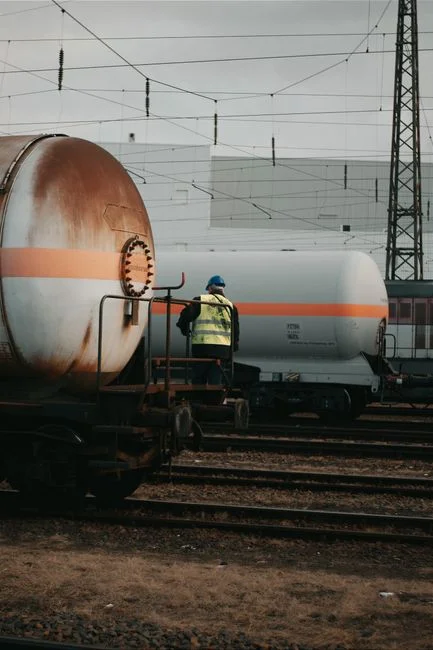
Monthly, walk the biogas line from the dome to the flare or CHP. Condensation collects in low points and floods flame arrestors and pressure reliefs; drain every condensate trap, verify the flame arrestor is clean and intact, and confirm the pressure-relief valve seats correctly. Skipping this step often leads to an unplanned shutdown.
Proactive inspection of internal components ensures long-term system stability. Quarterly, the three non-negotiable tasks are: (1) isolate and inspect the three-phase separator — S4 calls it the most critical internal component because its fouling directly causes effluent TSS spikes and granule loss (blog.anaerobic-digestion.com, 2025-12); (2) pull and clean a sample of influent distribution nozzles through the access ports, looking for biofilm buildup, scale, or H2S-driven pitting on stainless internals; standard internal materials in H2S-rich biogas are acid-resistant stainless steel, HDPE, or FRP (blog.anaerobic-digestion.com, 2025-12); and (3) measure sludge bed height through the dedicated sample ports and compare against the previous quarter — a rising bed at constant upflow velocity indicates accumulation that will eventually need desludging, while a falling bed without a corresponding drop in feed solids suggests washout that needs a hydraulic, not biological, fix.
None of these tasks require draining the reactor or taking it offline; design the access and isolation hardware now so quarterly maintenance does not become a capital project later.
Desludging: When and How to Do It Without Killing the Biomass
Desludging is the highest-stakes maintenance decision a UASB operator makes. Aiyuk et al. (2010) showed that in untreated domestic sewage where SS accumulation reached 70% of influent COD, desludging was required on average every 100 days, and each extraction caused measurable perturbation of the methanogenic community with a corresponding drop in COD removal. Desludging is event-driven, not calendar-driven, and every extraction has a biological cost.
For pre-screened industrial wastewater (sugar, brewery, distillery, pulp/paper) the interval is longer than 100 days, but the principle holds. The trigger to escalate to a full desludge is the simultaneous appearance of three signals: rising sludge bed height, rising effluent suspended solids, and falling gas production at constant OLR. When two of those three appear, increase monitoring to daily; when all three appear together, schedule a controlled withdrawal.
The procedure itself is simple but unforgiving. Withdraw only from the dedicated sludge draw-off points at the base of the reactor — never from the reaction zone. Limit each event to a small fraction of total bed mass rather than emptying the cone. Do not extract during peak OLR windows or within 24 h of a major feed change. After withdrawal, hold OLR at or below the pre-extraction rate for 48–72 h so the methanogenic community can rebound before the next organic push. Where desludging volume is consistently high, the right long-term answer is to pair the UASB with a mechanical dewatering step such as sludge dewatering with a plate and frame filter press rather than hauling liquid sludge off-site.
Troubleshooting Common UASB Problems
The matrix below covers the four most common field failures and what to do about each when the reactor is off-spec.
| Symptom | Likely cause | Corrective action |
|---|---|---|
| Granule washout (turbid effluent, fines < 1 mm) | Hydraulic imbalance — upflow velocity above the 0.5–1.5 m/h range or distribution short-circuit (blog.anaerobic-digestion.com, 2025-12) | Reduce flow, repair distribution short-circuiting; do not reduce OLR until hydraulics are fixed |
| Falling biogas yield | Temperature drop below 25–35 °C mesophilic band, or H2S scrubbing issue starving downstream equipment | Verify reactor temperature first, then H2S scrubber performance, then check for VFA accumulation |
| Foaming or scum buildup | FOG or surfactant loading in influent | Reduce OLR, restore or install DAF pre-treatment for FOG and suspended solids |
| pH crash below 6.8 | VFA accumulation from OLR overload (in >90% of field cases) | Alkalinity supplementation is a temporary fix; reduce OLR to address the root cause |
| Plugged influent nozzles | Localized channeling and uneven bed expansion | Quarterly nozzle cleaning through access ports; do not raise pump head to compensate |
The single most useful diagnostic habit is to read VFA/alkalinity before reading pH. By the time pH has dropped, the biology has been stressed for hours. The ratio gives you a day or two of lead time.
What to Specify When Upgrading or Refurbishing UASB Internals
Design choices that allow for maintenance without shutdown provide the fastest return on investment. For internal components exposed to H2S-rich biogas, specify acid-resistant stainless steel, HDPE, or FRP — these are the standard materials in current industrial practice (blog.anaerobic-digestion.com, 2025-12). The influent distribution grid should keep 2–3 m inlet spacing, include velocity-reducing features at each nozzle, and be built with isolation valves and access ports positioned so a technician can pull and clean individual nozzles without draining the reactor.
Biogas handling should be sized at 0.35 m³/kg COD removed plus a 20–30% safety margin to absorb production surges without over-pressurizing the dome (blog.anaerobic-digestion.com, 2025-12). Always pair moisture removal with H2S scrubbing to protect the flare, boiler, or CHP downstream. Where desludging volume is consistently high, build the downstream dewatering step into the same capex scope — a plate and frame filter press for sludge dewatering, or a DAF unit for FOG pre-treatment, depending on which stream is driving the volume.
When to Call a Specialist vs Handle In-House
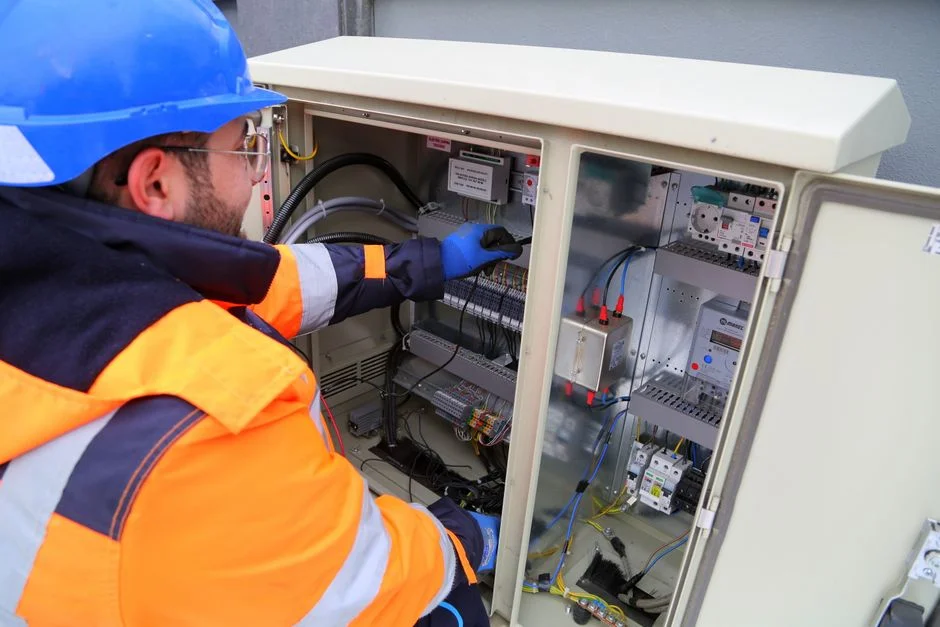
In-house maintenance covers routine monitoring, nozzle cleaning, scum removal, gas-line condensate draining, and sample collection — everything on the daily, weekly, monthly, and quarterly lists above. Call a specialist when the problem has crossed a defined threshold: COD removal has held below 60% for more than 48 hours, granule washout exceeds roughly 10% of bed volume per week, the concrete vessel shows structural cracking, or any H2S exposure event in the work area exceeds 10 ppm.
Operators managing multiple digester types can reference additional resources for system-specific maintenance. For operators running a CSTR or fixed-film digester alongside the UASB, the anaerobic digester troubleshooting guide covers the adjacent fixed-film systems; for higher-rate EGSB reactors, see the EGSB reactor troubleshooting field guide.
Frequently Asked Questions
How often should a UASB reactor be desludged?
Desludging is event-driven, not calendar-driven. In untreated domestic sewage with high SS accumulation, Aiyuk et al. (2010) documented a roughly 100-day interval; in pre-screened industrial wastewater the interval is longer. The trigger is the simultaneous appearance of rising bed height, rising effluent SS, and falling gas production at constant OLR.
What does the VFA/alkalinity ratio actually tell me?
It is the earliest warning of acidification. A ratio above ~0.3 indicates that volatile fatty acids are accumulating faster than the reactor's alkalinity buffer can neutralize them; pH will drop only hours later. Track the ratio weekly and treat a rising trend as a command to investigate OLR and temperature before adding chemicals.
What causes granule washout in a UASB?
Granule washout is almost always hydraulic, not biological. Upflow velocity above the 0.5–1.5 m/h