Quick Triage: Match the Symptom to the Cause in 60 Seconds
EGSB reactor troubleshooting follows a symptom-to-parameter workflow: map the upset (granule washout, pH crash, low biogas, channeling, foaming) to a measurable trigger, then correct it inside the 4-10 m/h upflow and up to 35 kg COD/m3/d design window. The most common failures are VFA/TA imbalance above 0.4, bed expansion over 30%, and hydraulic short-circuiting at high recirculation ratios.
Before touching any valve, read the control panel in this fixed order: upflow velocity, bed expansion, VFA, pH, gas flow. A non-instrumented operator can still triage by sight and smell — milky effluent signals washout, a dark foamy crust at the separator lid signals floating sludge, a sour acetic smell signals VFA accumulation, and a tracer test that returns in two distinct peaks signals channeling. The matrix below is built to be scanned in under a minute while standing in front of the panel.
| Symptom observed | First parameter to check | Trigger threshold | Likely root cause |
|---|---|---|---|
| Milky effluent, falling bed height | Bed expansion + effluent TSS | Expansion >30%, TSS >250 mg/L | Excessive upflow velocity (above 10 m/h) or gas-induced bed fluidisation |
| Sour smell, pH dropping on the trend | VFA/TA ratio | Ratio >0.3 (watch), >0.4 (danger) | OLR overshoot or loss of alkalinity reserve |
| Biogas flow dropped, no other change | Methane content + gas line DP | CH₄ <50% or gas line water ingress | Methanogen inhibition or physical gas leak |
| Dark foamy crust on separator, floating sludge carryover | Surface velocity + feed FOG | FOG >feed design or surface velocity high | Fat/oil overload, denitrification, or missing scum baffle |
| Dead zones in tracer test, uneven bed | Actual HRT vs theoretical HRT | Actual HRT <80% of theoretical | Clogged feed nozzle, single-inlet operation, or oversized recirculation pump |
Normal EGSB Operating Window: The Numbers You Compare Against
The EGSB design envelope sits at 4-10 m/h upflow velocity and OLR up to 35 kg COD/m³/d, roughly twice the OLR ceiling of a conventional UASB reactor (per ScienceDirect Topics overview of EGSB vs UASB). Print this table and tape it to the panel — every corrective action later in this article is benchmarked against these numbers.
| Parameter | Normal operating window | Notes for shift operators |
|---|---|---|
| Upflow velocity | 4-10 m/h | Hold at low end (4-6 m/h) during upset recovery |
| Organic loading rate (OLR) | Up to 35 kg COD/m³/d (design ceiling) | Slaughterhouse operation feasible at 15 kg COD/m³/d with 65-80% COD removal |
| Temperature | Mesophilic 30-38°C; psychrophilic 4-10°C feasible for acidified wastewater | Microaerobic EGSB pilot ran at 15-26°C for low-strength domestic wastewater (per IEEE RSETE 2011 study, 3.9-4.8 h HRT) |
| HRT | 2.6 h for low strength (<2000 mg/L COD); 8-24 h for high strength | Match HRT to feed strength, not the other way round |
| COD removal | 65-80% on slaughterhouse; 85-90% on brewery-type streams at design OLR | UASB matches removal at lower OLR; EGSB wins at higher OLR |
| Methane content in biogas | 60-65% | Below 50% indicates inhibition or air ingress; methane yield gain 10-25% over conventional anaerobic (per ScienceDirect Topics) |
| Bed expansion | 10-30% under normal upflow | Above 30% you are losing granules to washout |
| VFA/TA ratio | <0.3 safe; 0.3-0.4 watch; >0.4 danger | Single most reliable 24-48 h leading indicator of pH crash |
| Effluent TSS | <150 mg/L steady state | Above 250 mg/L is a washout event, not a trend |
Granule Washout: Diagnosis, Correction, and Recovery
Granule washout is the single most common EGSB failure mode and the easiest to misdiagnose as floating sludge or hydraulic channeling. The numeric signature is effluent TSS above 250 mg/L with a milky appearance, a falling bed height on the level probe, and a measurable drop in MLVSS inventory in the bed.
Test three root causes in this order before changing anything else. First, check upflow velocity: if the recirculation pump is set above 10 m/h you are mechanically lifting granules out of the reactor, not biologically failing. Second, check gas-induced bed expansion: high biogas production at the design OLR can fluidise the bed past the 30% expansion threshold even at normal upflow. Third, check influent pH and toxic load: a slug of low-pH or toxic influent disintegrates granules and the broken fragments wash out as the milky TSS signal you are seeing.
Correct in this sequence: (1) cut recirculation until upflow velocity is at the low end of 4-6 m/h; (2) check and restore influent pH to 6.8-7.4 using a sodium bicarbonate or carbonate dose; (3) stop feed for 2-4 hours to let granules settle and stop the loss; (4) re-seed with 5-10% mature granular sludge only if the bed inventory has dropped by more than 30% (mature seed is available from sibling reactors or external suppliers). The recovery target is to return to design OLR only when effluent VFA is below 200 mg/L as acetic and gas production has stabilised for 48 hours — restarting load earlier re-triggers the same washout event. Granule washout recovery on a healthy bed typically takes 5-10 days of steady low-end operation; plan the production schedule around that window, not around the design OLR.
Acidification and pH Crash: Reading the VFA/TA Ratio
VFA/TA is the ratio of volatile fatty acids to total alkalinity, both expressed in mg/L as CaCO₃, and it predicts a pH crash 24-48 hours before the pH probe itself moves. By the time pH drops below 6.6 the methanogens are already poisoned; the VFA/TA ratio is the warning that lets you act first.
The safe window is VFA/TA below 0.3. The watch zone is 0.3-0.4, where you should be cutting OLR before the next shift. The danger zone is above 0.4, where alkalinity is being consumed faster than the reactor can replace it and a pH crash is imminent. The typical sequence in an EGSB is rising OLR pushes VFA up faster than the methanogens can convert it, alkalinity reserve is consumed buffering the acids, and only then does pH drop below 6.6 — at which point methane yield collapses and the bed can take weeks to recover. The anaerobic digester design guide for 2026 covers the same alkalinity logic in more detail for high-strength enzyme manufacturing wastewaters.
Corrective actions in order: (1) reduce OLR by 20-30% by lowering feed flow, not by diluting it — dilution changes HRT and can trigger channeling; (2) dose sodium bicarbonate or sodium carbonate to restore TA to 2500-4000 mg/L as CaCO₃, delivered through a dosing line at the reactor inlet, not inside the bed; (3) check for hydraulic short-circuiting that is sending fresh acid directly to the effluent before the bed has a chance to consume it — a tracer test will confirm. Prevention is simpler than recovery: keep influent alkalinity above 1.5x the design value whenever feed strength varies, and an automatic chemical dosing system on the alkalinity line will hold the ratio inside the safe band across feed swings.
Low Biogas Yield and Floating Sludge
Low biogas yield is a symptom, not a diagnosis. Separate the two failure modes before acting: low gas with high VFA means the biology is inhibited or toxic-loaded, while low gas with normal VFA means the gas is not reaching the meter (gas line water, dead zone in the bed, leak in the gas collection piping, or counter-pressure on a water-sealed holder).
Floating sludge is the second common EGSB failure mode and the one most often misread as washout. The granule inventory in the bed looks fine but a dark crust accumulates at the three-phase separator. Three root causes cover most cases: excessive fat/oil in feed that buoys granules; excessive upflow at high OLR that lifts them past the gas collector; and denitrification in the bed if the makeup water carries more than 20-30 mg/L nitrate — nitrogen gas bubbles then attach to the granules and float them. The fix is mechanical, not biological: install or refurbish a scum baffle at the three-phase separator, reduce surface velocity at the gas-liquid interface, and use a defoamer only as a short-term measure, never continuously, because it accumulates on the granule surface and blocks mass transfer.
Loss-of-methanogen activity (low gas plus high VFA) requires a different fix. Halve OLR and hold, then check for known inhibitors: ammonia above 1700 mg/L, sulfide above 200 mg/L, heavy metals, and feed-specific toxicants such as formaldehyde and lauric acid — the same compounds the EGSB is reported to handle, but only below inhibition thresholds (per ScienceDirect Topics). Methane content in the headspace should sit at 60-65% in a healthy reactor; below 50% is a strong signal of inhibition or air ingress at the gas collection system.
Channeling, Dead Zones, and Recirculation Problems
Not every underperforming EGSB has a biological root cause. Hydraulic channeling and dead zones can mimic a biological failure but require a mechanical fix, and a wrong biological response (cutting OLR, re-seeding) only delays the real correction.
Channeling symptoms are distinctive: a localised high bed on one side of the reactor, low gas production in the other zones, and a tracer test that returns in two or more peaks instead of one — meaning the same parcel of water takes two different residence times through the same vessel. Root causes are almost always mechanical: clogged feed distribution nozzles, broken distribution laterals, single-feed operation on a multi-inlet reactor (someone closed the other feed valves during a previous upset and never re-opened them), or a recirculation pump that was oversized for the current load and is now forcing the upflow above 10 m/h.
The diagnostic step is a lithium chloride or salt tracer test. Confirm that the actual HRT is within 20% of the theoretical HRT — the microaerobic EGSB pilot study (per IEEE RSETE 2011) used 3.9-4.8 h HRT for low-strength domestic wastewater as the reference point. If the actual HRT is below 80% of theoretical, you have a hydraulic problem. Fix it by cleaning or replacing the distribution nozzles, balancing feed across all laterals, then re-tuning recirculation to the lower end of 4-6 m/h before raising it back to design. Do not raise OLR until the tracer curve returns as a single clean peak.
Foaming, Scum Build-Up, and Three-Phase Separator Blockage
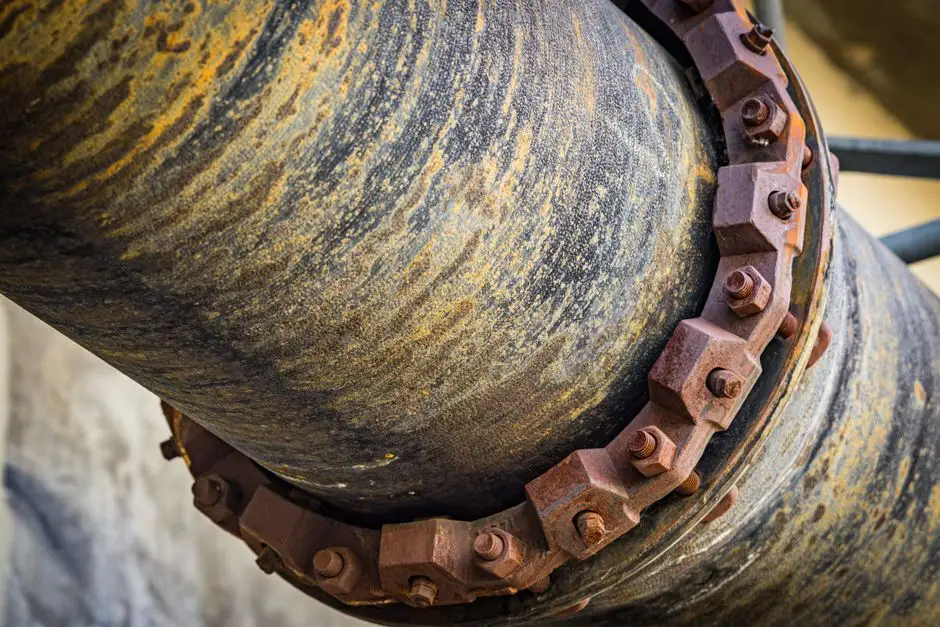
Foaming in an EGSB is almost always a symptom of high OLR or surfactant/fat carryover from feed — it is rarely a gas-system problem. Diagnose by checking feed first, gas system last.
Three-phase separator blockage has three common causes: floating sludge carried into the gas collector, calcium carbonate scaling when TA is overdosed and the carbonate precipitates onto the internals, and fibrous carryover from poor upstream screening. Each one shows up as a rising differential pressure across the gas collector and a falling gas flow at constant OLR.
Operational response: drop OLR by 20% and dose antifoam only at the top of the reactor, never inside the bed — antifoam inside the bed coats the granules and blocks the mass transfer that the EGSB's high upflow is designed to deliver. Mechanical response: schedule a separator cleaning when differential pressure across the gas collector rises 20% above baseline; do not wait until gas flow collapses. A pre-assembled automatic chemical dosing system for antifoam at the separator top is cheaper than an unplanned shutdown.
Startup, Restart After Toxic Shock, and Preventive Routine
Startup rule of thumb: start at 30% of design OLR, increase by no more than 10-15% per week once VFA/TA stays below 0.3 and gas composition is stable at 60-65% methane (per ScienceDirect Topics reference to 161 IC reactors and 200+ EGSB units built at 30-5000 m³ worldwide as of 2008). The most common startup mistake is raising OLR on the gas-flow number alone — gas flow rises before the methanogenic community has caught up, and the next OLR step pushes VFA/TA past 0.4.
After a toxic shock: stop feed, hold at minimum recirculation for 24-48 h, and watch the gas. If gas production does not recover within 72 h, re-seed with 5-10% mature granular sludge. If the bed is intact, the methanogenic community will usually re-establish from the surviving population and re-seeding is wasted cost.
Daily checks (every shift): upflow velocity, bed expansion, VFA/TA, gas flow, methane content, effluent TSS. Weekly checks: tracer HRT, distribution nozzle pressure, separator DP, alkalinity reserve, and feed FOG screening condition. Quarterly checks: granule size distribution (target 1-3 mm diameter), specific methanogenic activity, and micronutrient dosing review. Granule size is the early signal of bed health — a drift below 1 mm means granules are breaking up and washout risk is rising. A plate and frame filter press on the sludge line keeps the wasted-granule TSS captured rather than discharged, which matters for plants with strict effluent TSS permits. The full CAPEX picture for an EGSB build is in the EGSB reactor cost and CAPEX guide for 2026.
Frequently Asked Questions
What is the single most reliable early warning of an EGSB pH crash?
The VFA/TA ratio. It moves 24-48 hours before pH itself drops. Hold VFA/TA below 0.3 for steady operation, cut OLR in the 0.3-0.4 watch zone, and treat anything above 0.4 as a pH crash in progress. By the time the pH probe reads below 6.6 the methanogens are already inhibited and recovery takes weeks rather than hours.
How is an EGSB different from a UASB in day-to-day operation?
EGSB runs at a higher upflow velocity of 4-10 m/h and a higher OLR ceiling of up to 35 kg COD/m³/d, compared to roughly 5 kg COD/m³/d for a UASB reactor (per ScienceDirect Topics). EGSB also handles acidified wastewater under psychrophilic conditions (4-10°C) and toxic compounds like formaldehyde and lauric acid that a conventional UASB cannot. The operational cost is closer recirculation control: a UASB tolerates pump swings, an EGSB does not.
When should I re-seed the EGSB after granule washout?
Only when bed inventory has dropped by more than 30% and the surviving population has not recovered gas production within 72 hours. Re-seed with 5-10% mature granular sludge and do not restart to design OLR until effluent VFA is below 200 mg/L as acetic and gas production has stabilised for 48 hours. Re-seeding a bed that can still recover is wasted cost and added risk of importing a non-acclimatised microbial community.
What methane content in the biogas indicates a healthy EGSB?
60-65% methane in the headspace is the normal operating window, with methane yield typically 10-25% above a conventional anaerobic reactor (per ScienceDirect Topics). A drop below 50% is a strong signal of methanogen inhibition or air ingress into the gas collection system. Cross-check against VFA/TA and gas flow before deciding whether the cause is biological or mechanical.