What a CASS Maintenance Plan Actually Has to Cover in 2026
A cyclic activated sludge system (CASS) runs fill–react–settle–decant–idle phases in a single basin, with the same concrete hosting aeration, clarification, and effluent withdrawal (HydropureWater field data, 2026). That single-basin design concentrates mechanical wear on four predictable assets: the floating decanter seal and swing-arm, swing diffuser membranes, jet aerator nozzles, and blowers. Together those four items account for 55–70% of unplanned maintenance spend on a typical municipal CASS plant, which is why a 2026 maintenance plan is asset-driven, not microbe-driven (HydropureWater field data, 2026).
For a 5,000–50,000 m³/d CASS plant, annual maintenance OPEX runs $0.06–$0.18/m³, or $220,000–$650,000/year at 10,000 m³/d. Most operators are sitting 20–40% above the low end of that band through predictable operational gaps rather than biology problems (HydropureWater field data, 2026). CASS is mechanically similar to a conventional SBR — the floating decanter is the only meaningful maintenance delta — so an SBR-trained operator can reuse most of this checklist by swapping "fixed weir" for "floating decanter" and adding the seal-replacement cycle. If your plant does not run a decanter, swing diffusers, or jet aeration, you are looking at a different reactor class and the OPEX band below will not apply.
CASS Maintenance Schedule and CMMS Checklist (2026)
The table below is built for direct CMMS import. Each row carries a measurable trigger, an interval, a labor-hour estimate for a 10,000 m³/d plant, and a 2026 part-cost band. Scale labor hours linearly for larger basins and add a 10–15% contingency for plants with multiple basins on staggered cycles.
| Asset | Trigger / Condition | Interval | Labor hours (10,000 m³/d) | Spare / part cost (2026) |
|---|---|---|---|---|
| Floating decanter seal & swing-arm | Leak-down test failure; cycle count > 8,000; visible weep | Inspect quarterly; replace every 2–4 yr | 6–10 h per unit | $1,800–$4,500 per assembly |
| Swing diffuser membranes | ΔP > baseline + 20%; uneven airflow pattern | Inspect annually; replace every 5–7 yr | 12–20 h per basin | $400–$900 per membrane |
| Jet aerator nozzles | Visible wear, rag fouling, drop in oxygen transfer | Inspect annually; clean/replace as needed | 2–4 h per nozzle | $80–$250 per nozzle |
| Blowers (positive-displacement or multistage centrifugal) | Operating hours since last service | Every 4,000–8,000 h | 4–6 h per blower | $300–$1,200 service kit |
| DO probes, level switches | Calibration drift; response time > 90 s | Calibrate every 6 mo; replace every 2–3 yr | 1–2 h per probe | $400–$1,100 per probe |
| VFD on blower | Harmonic distortion, parameter drift, fault log entries | Inspect every 6 mo; service every 4,000–8,000 h with blower | 2–3 h per drive | $0 (under warranty) – $1,500 capacitor/fan service |
| Upstream GX series rotary mechanical bar screen | Rake-tooth wear, brush discharge fouling, downstream rag carryover | Inspect weekly; brush/service quarterly | 1–2 h/week | $200–$600 brush set |
| Chemical dosing lines & pumps (coagulant/polymer) | Calibration drift, stroke-count threshold, line scaling | Calibrate monthly; service quarterly | 2–3 h per pump | $150–$500 diaphragm/valve kit |
Keep 6–10% of annual maintenance OPEX tied up in critical spares on site; an emergency overseas order typically adds a 30–60% logistics premium and 2–6 weeks of decanter or blower downtime, both of which dwarf the carrying cost of stocking a spare seal and a blower service kit (HydropureWater field data, 2026). Pair the decanter-seal interval with an upstream GX series rotary mechanical bar screen inspection: field data shows upstream screening alone extends decanter seal life 30–50% by keeping rags off the moving weir face.
Decanter Service, Seal Replacement, and the 2–4 Year Cycle
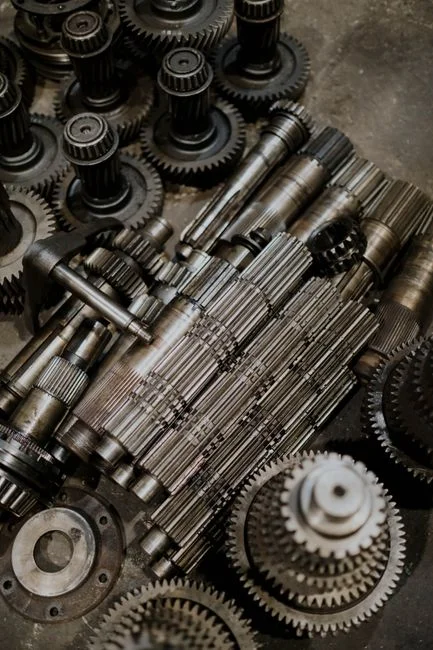
The floating decanter is the CASS-specific wear center because it moves every cycle, sits in mixed liquor between cycles, and seals against a moving surface under hydrostatic head — three accelerants that a fixed-weir SBR never sees (HydropureWater field data, 2026). Calendar-based replacement at year 3 is the historical default, but it leaves money on the table in two directions: premature replacement on lightly loaded plants, and catastrophic failure on heavily loaded ones.
Three process variables can roughly double the replacement frequency. Mixed-liquor suspended solids above 5,000 mg/L raise seal friction and grit load. Frequent peak-shaving cycle changes increase seal flex cycles per day. Influent TDS above 3,000 mg/L accelerates chemical attack on standard EPDM seals. The trigger that converts a calendar schedule to a condition-based one is the leak-down test — pressurize the decanter chamber to 50 kPa, hold 10 minutes, and any pressure drop above 10% flags a seal that is due, not one that is being replaced out of habit. In field data, plants that combine the leak-down test with a cycle counter extend seal life 30–50% over calendar-based replacement (HydropureWater field data, 2026).
Unit cost in 2026 runs $1,800–$4,500 per decanter seal and swing-arm assembly, with a single-source vendor typically adding 20–60% over the second-qualified bid. The most overlooked saving is bundling decanter and diffuser replacement into a single basin drain — on a 10,000 m³/d plant this saves $8,000–$25,000 per event by sharing mobilization, crane time, and basin dewatering labor (HydropureWater field data, 2026).
Blower, Aeration, and DO Control: Where Energy and Maintenance Cross
Energy OPEX for a CASS basin with VFD-controlled blowers lands at $0.04–$0.10/m³ in 2026; a legacy constant-speed plant can exceed $0.15/m³, which materially shifts the comparison against SBR or MBR alternatives (HydropureWater field data, 2026). The VFD-plus-DO-trim combination typically delivers 18–32% energy reduction with payback in 14–30 months at $0.08–$0.14/kWh industrial tariffs. A full-scale 20,000 m³/d CASS plant in Zhangjiakou cut energy consumption 16.67–25% using an ASM1 plus CFD aeration upgrade while meeting GB 18918–2002 Grade I-A (MDPI, 2021).
The maintenance side is what gets missed. Blower service is set at 4,000–8,000 operating hours, but a failing VFD raises those hours at the same aeration demand — the blower cycles harder, the bearings run hotter, and the service interval compresses. Couple the blower PM with a VFD inspection in the CMMS so a parameter-drift fault is caught before it forces extra running hours onto the bearings. Plants under state operator-licensing regimes should also confirm the VFD work falls within the same Class B-2a Chemical Clarification / C-3a Activated Sludge Facility scope that governs the rest of the aeration work (CareersInFood, 2026).
CASS Troubleshooting: Symptom, Root Cause, and Fix
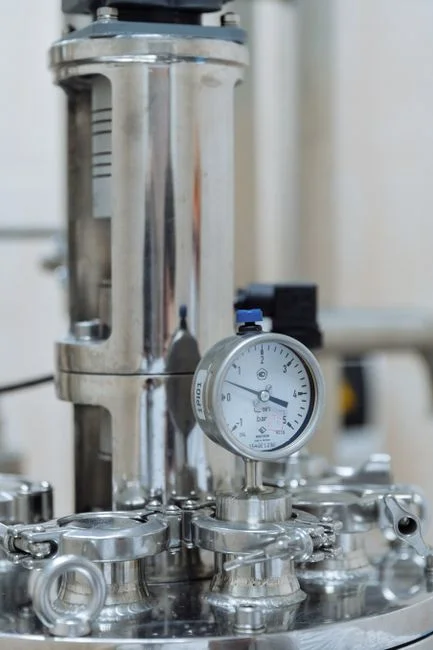
The table below is the maintenance engineer's decision tree: start at the observable symptom, identify the root cause, and ship the fix as a CMMS work order rather than a one-off investigation.
| Symptom | Likely Root Cause | Preventive Move / CMMS Action |
|---|---|---|
| Decanter effluent turbidity spikes at start of decant | Decanter seal weep or rag fouled at floating weir | Run leak-down test; replace seal; verify upstream GX series rotary mechanical bar screen rake-tooth condition |
| Rising DO at end of react phase with no load change | Diffuser membrane fouling or blower over-cycle | Inspect swing diffusers for uneven airflow; check blower service hours against 4,000–8,000 h interval |
| MLSS drifts above 5,000 mg/L and decant quality deteriorates | Under-wasting or shock loading | Stabilize MLSS with automatic chemical dosing system for coagulant/polymer; can cut wasted sludge 15–25% |
| Total nitrogen climbs in winter | Nitrification slowdown in cold mixed liquor | Extend react phase, increase anoxic time per the Zhangjiakou seasonal strategy (MDPI, 2021) |
| Unexplained OPEX rise with no visible leak | Single-source spare parts premium | Pre-qualify a second decanter and diffuser vendor; breaks 20–60% single-source premium |
CASS vs SBR, Oxidation Ditch, and MBR: Maintenance OPEX Compared
The procurement-side defense for keeping a CASS basin comes down to a maintenance-versus-capex frontier, not a winner/loser ranking.
| Reactor | Annual Maintenance OPEX ($/m³, 2026) | Dominant Wear Items | Replacement / Overhaul Event | Footprint (relative, same load) |
|---|---|---|---|---|
| CASS (this guide) | $0.06–$0.18 | Floating decanter, swing diffusers, blowers | Decanter 2–4 yr; diffusers 5–7 yr | 1.0× |
| Conventional SBR | $0.06–$0.17 | Fixed weir, diffusers, blowers | Weir low-cycle; diffusers 5–7 yr | 1.0× |
| Oxidation ditch | $0.08–$0.22 | Brush rotor, center bridge bearings, diffusers | Brush rotor 8–12 yr; bearings 5–7 yr | 1.2–1.5× |
| MBR (flat-sheet or hollow-fiber) | $0.05–$0.15 | Membranes, blowers, CIP skids | Membranes 8–12 yr (with recovery cleanings) | 0.4× |
CASS typically runs 15–25% lower annual maintenance OPEX than an oxidation ditch because there is no brush rotor or center bridge to service. CASS runs 10–20% higher annual maintenance OPEX than a well-tuned MBR membrane bioreactor wastewater treatment system, but MBR carries a membrane-replacement event every 8–12 years that can swing a 10-year NPV by 5–8% (HydropureWater field data, 2026). MBR is the valid upgrade path when an existing CASS basin's footprint needs to shrink roughly 60%; see the MBR membrane bioreactor module spec sheet for the membrane-side cost detail. For a deeper digester-side cross-check, the anaerobic digester troubleshooting guide covers the same dual-vendor and condition-based logic for downstream sludge handling.
The Four Highest-ROI Maintenance Moves for 2026
The four moves below are operational, not capital, and a 10,000 m³/d plant that executes all four typically lands a 20–40% maintenance OPEX cut within 12–24 months with no new basin and no new permit (HydropureWater field data, 2026).
| Move | Savings / Payback | CMMS Signal to Track |
|---|---|---|
| Switch constant-speed blowers to VFD with DO trim | 18–32% energy reduction; payback 14–30 months | kWh per m³ treated; DO trim deviation > ±0.3 mg/L |
| Adopt condition-based maintenance on the decanter (leak-down test + cycle counter) | Extends seal life 30–50% | Leak-down test pass/fail; cycle count > 8,000 |
| Pre-qualify a second spare-parts vendor | Breaks 20–60% single-source premium on decanter and diffuser membranes | Quoted lead time per critical spare; PO unit price variance |
| Bundle decanter seal and swing diffuser replacement into one basin drain | $8,000–$25,000 per event at 10,000 m³/d | Basin-drain event count; mobilization cost per event |
| Pair the above with automatic chemical dosing system for MLSS stabilization | 15–25% wasted-sludge reduction; full maintenance OPEX cut 20–40% in 12–24 months | MLSS deviation from setpoint; polymer dose per kg TSS |
For the OPEX benchmark that drives the 20–40% savings figure, see the CASS process maintenance cost in 2026 benchmark; for an adjacent biofilm alternative with a different wear curve, the how MBBR works engineering guide is the parallel reference.
Frequently Asked Questions
What is the typical CASS maintenance cost per m³ in 2026?
Maintenance-only OPEX for a CASS plant in 2026 runs $0.06–$0.18/m³, which puts a 10,000 m³/d facility at $220,000–$650,000/year for maintenance and $800,000–$2,000,000/year for total OPEX including energy, labor, sludge, and consumables (HydropureWater field data, 2026).
How often should a CASS floating decanter seal be replaced?
The replacement interval is 2–4 years at $1,800–$4,500 per seal and swing-arm assembly, and a leak-down test combined with a cycle counter can extend seal life 30–50% beyond the calendar-based default by replacing on condition instead of on habit (HydropureWater field data, 2026).
What is the CASS blower service interval?
Blower service runs every 4,000–8,000 operating hours and should be coupled with a VFD inspection in the same CMMS work order so parameter drift is caught before it forces extra running hours onto the bearings.
How does CASS maintenance OPEX compare to MBR?
CASS runs 10–20% higher annual maintenance OPEX than a well-tuned MBR system, but MBR carries a membrane-replacement event every 8–12 years that can swing a 10-year NPV by 5–8%, so the comparison is a maintenance-versus-capex frontier rather than a clear winner (HydropureWater field data, 2026).
How can a CASS plant cut maintenance OPEX 20–40% in 12–24 months?
Switch constant-speed blowers to VFD with DO trim (18–32% energy reduction, 14–30 month payback), adopt condition-based decanter maintenance with a leak-down test and cycle counter, pre-qualify a second spare-parts vendor, and bundle decanter and diffuser replacement into a single basin drain — together with automatic chemical dosing for MLSS stabilization this typically delivers a 20–40% maintenance OPEX reduction within 12–24 months (HydropureWater field data, 2026).