Why Doha Is a Different Water Problem for Data Centers
Doha experiences average summer temperatures of 40 °C with minimal nighttime relief, creating a significant cooling load for new AI infrastructure following the Qai–Brookfield agreement. Cooling is the binding constraint on a Doha campus, not raw IT power (mecouncil.org, 2025-10). A 100 MW facility in this climate can demand up to 2 million liters of water per day, and the global Water Usage Effectiveness (WUE) benchmark of 0.47–0.65 gal (1.8–2.5 L) per kWh does not account for the split between permanently consumed water and reusable volume (ide-tech.com, 2026; genesiswatertech.com, 2025-12).
Qatar produces electricity and desalinated water in shared co-generation plants. When summer power demand peaks, turbine capacity limits water production, and vice versa. Kahramaa requires new large loads to interconnect without eroding system reliability; therefore, a Doha data center must flatten its summer water-energy load to secure load approval (mecouncil.org, 2025-10).
The Three Water Streams a Doha Data Center Has to Balance
Doha facilities must manage three distinct water streams to maintain operational efficiency.
- Make-up water. Fresh water fed to the cooling tower to replace evaporation and blowdown. In Doha, the preferred source is treated sewage effluent (TSE) delivered through a dedicated purple-pipe network, blended as needed with brackish RO permeate.
- Circulating cooling-tower water. The working fluid inside the tower, concentrated by evaporation to a defined cycles-of-concentration (CoC) set-point.
- Cooling-tower blowdown (CTBD). The controlled purge that carries concentrated calcium carbonate, calcium sulfate, and silica out of the system. CTBD is typically 20–40% of total intake at 4 CoC (genesiswatertech.com, 2025-12).
The CoC-to-blowdown relationship is a common source of calculation errors. At 4 CoC, blowdown equals 25% of make-up volume; at 6 CoC it drops to 20%; at 8 CoC it falls to about 14%. Stepping from 4 to 6 CoC provides a 20% relative improvement in blowdown volume, but biological and scaling risks grow non-linearly above 5–6 CoC without advanced treatment (genesiswatertech.com, 2025-12). This article details which of these streams can be closed and the necessary hardware to achieve it.
What Goes Into Doha Cooling-Tower Make-Up Water — Target Parameters
Engineers must establish a defensible specification for the make-up stream to ensure the cooling tower operates efficiently. Gulf high-CoC operation is challenging because sparingly soluble salts—silica, CaCO₃, and CaSO₄—concentrate through evaporation and drive the blowdown rate (ide-tech.com, 2026). The table below merges typical Gulf make-up targets with the values required for downstream RO and high-recovery polish stages.
| Parameter | Target for Gulf high-CoC make-up | Why it matters |
|---|---|---|
| Conductivity | ≤ 200 µS/cm (blended target) | Sets baseline cycles-of-concentration headroom |
| pH | 7.0 – 8.0 | Controls CaCO₃ scaling tendency in the tower |
| Silica (SiO₂) | ≤ 1 mg/L (ideally) | Required for high-recovery RO polish; matches MAXH₂O permeate (ide-tech.com, 2026) |
| Total hardness (as CaCO₃) | ≤ 40 mg/L | Limits calcium-sulfate scaling at high CoC |
| Free chlorine residual | 0.2 – 0.5 mg/L | Microbiological control without overdosing the loop |
| Silt Density Index (SDI₁₅) | ≤ 3 | Protects downstream RO membranes from fouling |
Any make-up blend of TSE and RO permeate must meet microbiological control limits to allow high CoC operation without excessive biocide use. Chemical intensity scales with water volume, so lower-cost make-up water often requires more aggressive chemistry (genesiswatertech.com, 2025-12).
The CTBD Treatment Train: From Blowdown Back to Make-Up
The following treatment train defines the standard configuration for a Doha data center to prevent fouling, scale, and biocide waste.
- Sidestream clarification. Start with DAF pre-treatment for cooling-tower blowdown to drop suspended solids, followed by multi-media filter polishing the CTBD feed to an SDI₁₅ that the RO membranes can tolerate.
- Anti-scalant-controlled BWRO. A conventional industrial RO unit for CTBD recovery is typically sized at 75–80% recovery. PLC-controlled anti-scalant and biocide dosing maintains the membrane at this threshold reliably.
- High-recovery polish (hyperscale only). For a 50 MW+ Doha campus, layer a fluidized-bed reactor that precipitates silica and CaCO₃ as removable pellets, then use a dynamic-mode RO to reach 95% recovery with permeate silica near 1 mg/L, as seen in the MAXH₂O Brine Desalter (ide-tech.com, 2026).
- Disinfection on the reused stream. Apply on-site chlorine dioxide for the reused make-up stream—or a UV stage—so the recovered water rejoins the make-up with a 0.2–0.5 mg/L free chlorine residual.
- Blowdown-to-zero (hyperscale only). Where land and capital allow, an evaporator-crystallizer converts residual RO brine to solids for disposal (saltworkstech.com, 2026). This is typically over-spec for a 10–15 MW facility but beneficial for a 100 MW hyperscale build.
A two-stage train (DAF → BWRO → ClO₂) provides sufficient benefits for most colocation sites. The Ho Chi Minh City data center blowdown guide and the Manila data center blowdown guide provide comparisons for this train in different salinity bands. Additionally, the DOE FEMP note on on-site wastewater treatment identifies this closed-loop logic as a U.S. federal priority.
Qatar Compliance Path: Kahramaa, MECC, and the Purple-Pipe Question
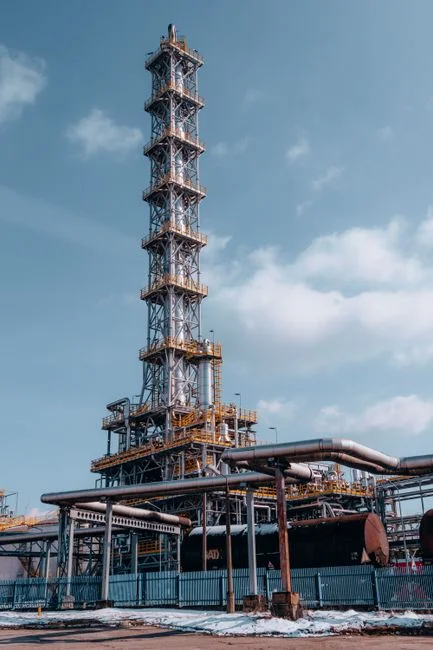
Designers must clear regulatory requirements alongside technical implementation. Key authorities include Kahramaa for utility-side water and power coordination, the Ministry of Environment and Climate Change (MECC) for discharge permitting, and the Public Works Authority / Ashghal regarding TSE distribution networks. Where QatarEnergy co-generation feeds a district cooling plant, the feedwater contract adds a layer of review.
Qatar incentivizes the use of non-potable water for district cooling, making a TSE-fed design both technically and politically favorable (mecouncil.org, 2025-10). While no GCC-wide mandatory WUE limit exists, dual water-energy efficiency standards are an active policy direction; designing for high WUE serves as future-proofing against expected 2027–2028 regulations (mecouncil.org, 2025-10). Hyperscale operators like Khazna and DataVolt have tested liquid cooling in the Gulf to reduce cooling water usage by up to 90%; a hybrid air/liquid design requires recalculating BWRO sizing if the site transitions from adiabatic to immersion cooling (mecouncil.org, 2025-10).
ROI: What Higher CoC and CTBD Reuse Are Actually Worth in Doha
The financial case for CTBD reuse depends on the cost of marginal make-up water, avoided discharge fees, and potential Kahramaa demand-response incentives. The 10 MW worked example below applies CoC calculations to the Qatar tariff band (mecouncil.org, 2025-10; genesiswatertech.com, 2025-12).
| Scenario | CoC | Blowdown as % of make-up | Recoverable CTBD (10 MW site) | Indicative payback |
|---|---|---|---|---|
| Baseline | 4 | 25% | ~3.75 M gal/month | — |
| Mid-tier reuse | 6 | 20% | ~3.0 M gal/month | 4–6 years |
| High-reuse (BWRO + ClO₂) | 8 | ~14% | ~2.1 M gal/month | 3–5 years with Kahramaa incentives |
| Hyperscale (MAXH₂O-style) | ≥ 10 | ≤ 10% | ~1.5 M gal/month | 3–4 years at hyperscale capex basis |
Closed-loop systems can reduce freshwater use by 50–70% when TSE substitution is included (mecouncil.org, 2025-10). Payback estimates of 3–5 years assume the buyer verifies the current Kahramaa industrial tariff and MECC discharge-fee schedules. Every cubic meter saved from the Doha potable network reduces the desalination load on co-generation plants during summer peaks, which is a priority for Kahramaa (mecouncil.org, 2025-10).
Frequently Asked Questions
What water source should a new Doha data center design around first — potable, TSE, or brackish groundwater?
Design around treated sewage effluent (TSE) from a Doha West or developer-supplied purple-pipe line, using brackish RO permeate only if TSE availability is constrained. Starting with a potable water design often triggers load-approval challenges with Kahramaa (mecouncil.org, 2025-10).
What cycles-of-concentration (CoC) is realistic for a Doha cooling tower with on-site CTBD reuse?
6–8 CoC is achievable with a DAF → BWRO → ClO₂ train and anti-scalant control; hyperscale sites can reach 10 CoC using a fluidized-bed reactor and dynamic RO operation (ide-tech.com, 2026). Increasing from 4 to 6 CoC provides a 20% relative improvement in blowdown volume (genesiswatertech.com, 2025-12).
Which Qatari authorities actually have to sign off on a CTBD reuse system?
Approval is required from Kahramaa for utility-side load, the Ministry of Environment and Climate Change (MECC) for discharge, and the Public Works Authority / Ashghal for TSE distribution. Designing for high efficiency now prepares assets for future dual water-energy efficiency standards (mecouncil.org, 2025-10).
How does a hybrid air/liquid cooling design change the treatment train?
Liquid cooling can reduce total cooling water by 90%, but the residual blowdown stream becomes more chemically concentrated because the tower performs less evaporation. BWRO sizing and antiscalant recipes must be adjusted if a site transitions from adiabatic to immersion cooling (mecouncil.org, 2025-10).