Why Semiconductor Wastewater Is a Different Problem for CAS
A 15-year-old CAS basin in Fayetteville that handled 1990s-era process loads will not quietly absorb a new EUV lithography line. Semiconductor fab wastewater diverges from municipal-strength influent on almost every variable that CAS performance depends on: hydraulic and mass loadings are batchy rather than diurnal, the carbon-to-nitrogen ratio is depressed by solvents and high-purity rinse water, and toxicity is delivered in slugs rather than gradients. CMP (chemical-mechanical planarization) effluent contributes abrasive silica slurry, copper, and free or complexed fluoride from HF-bearing post-CMP cleans; litho tracks contribute TMAH, NMP, and IPA at concentrations that shift dissolved-oxygen demand by an order of magnitude between shift changes. CAS relies on floc aggregation and gravity settling; floc breakup under those toxic or solvent shocks is a documented failure mode (Mannina et al., 2019) and is the reason most MBR-vs-CAS benchmarks stop short of recommending CAS for fab duty. Trace metals (Cu, Ni, Co, W) and low-biodegradability solvents further compress the BOD/COD ratio to roughly 0.2–0.4, starving heterotrophs of readily degradable carbon and leaving floc-forming populations vulnerable to washout. A Fayetteville fab must satisfy the Cumberland County Industrial Pretreatment Program categorical standards plus site-specific permit limits for TSS, fluoride, total metals, and pH; the engineer should confirm current numeric local limits with the POTW before locking the design envelope.
How MBR and CAS Work Side by Side in a Fab Treatment Train
Integrated treatment trains often combine biological degradation with physical separation to meet stringent discharge requirements. CAS treats fab wastewater as a scaled-up version of a municipal works: equalization, primary clarification, an aeration basin operating at mixed liquor suspended solids (MLSS) of roughly 2,000–4,000 mg/L, a secondary clarifier, and disinfection. Solids–liquid separation is by gravity, and the system depends on well-settling floc for both effluent clarity and biosolids recycle (Mannina et al., 2019). MBR collapses the clarifier and most of the secondary infrastructure into a single tank with submerged PVDF membrane modules at sub-micron pore size, typically below 1 μm (per HydropureWater integrated MBR system ratings). Fine screening upstream protects the membranes; the biological stage runs at 8,000–12,000 mg/L MLSS with a solids retention time (SRT) that can exceed 30 days, giving slow-growing nitrifiers and solvent-acclimated consortia the residence time municipal-grade CAS rarely allows. The trade-off is fouling: membranes are kept clean with continuous coarse-bubble air-scour and periodic chemical CIP, both of which raise specific energy demand relative to CAS (Mannina et al., 2019; Grasmick et al., 2012, on file with the European Membrane Institute). For fab reuse, MBR permeate feeds an industrial RO polish and downstream EDI; CAS effluent usually needs coagulation, sand filtration, or an MBR polish stage before it can be pushed to ultrapure water (UPW) polishing trains.
Head-to-Head Parameters: MBR vs CAS for Semiconductor Effluent
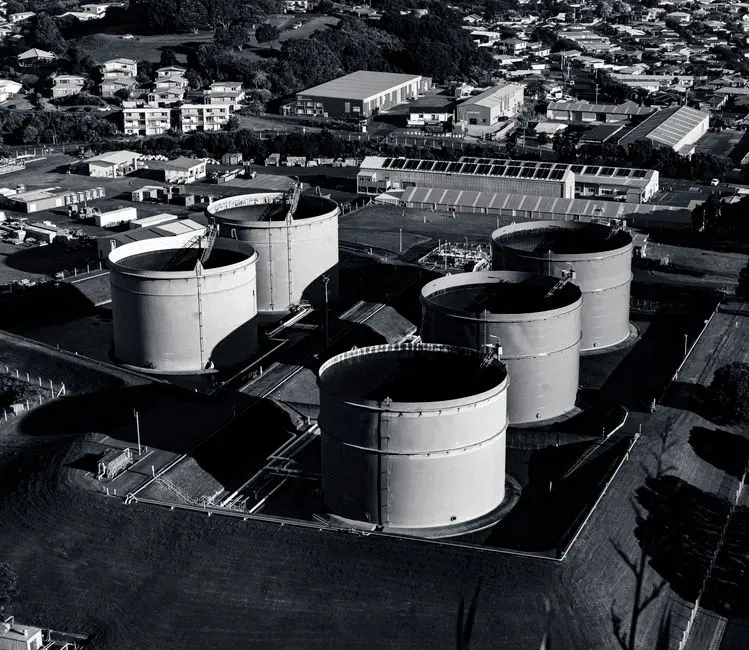
Effluent TSS, footprint, SRT, and microplastics rejection are where MBR pulls decisively ahead; energy demand and fouling risk are where CAS still has a cost argument. The values below mix the Mannina et al. (2019) benchmark, the Grasmick et al. (2012) MBR study, and manufacturer-rated MBR performance.
| Parameter | CAS | MBR | Semiconductor-relevant note |
|---|---|---|---|
| Effluent TSS (mg/L) | 10–30 (clarifier-limited) | <5 (typically <1 with PVDF) | Lower TSS protects downstream RO from fouling |
| Effluent turbidity (NTU) | 2–10 | <0.5 | MBR permeate is near reuse-grade before RO |
| Effluent COD removal | 85–92% | 90–97% | MBR's higher SRT handles NMP/TMAH better |
| SRT (days) | 3–10 | 15–40+ | Higher SRT supports nitrification and solvent acclimation |
| MLSS (mg/L) | 2,000–4,000 | 8,000–12,000 | MBR tolerates shock load; CAS risks bulking |
| Footprint | 1.0× baseline | ~0.4× baseline (60% smaller) | Per HydropureWater integrated MBR ratings |
| Sludge yield | Higher (lower SRT) | Lower | Less waste activated sludge to dewater |
| Microplastic barrier | ~1 MP/L in effluent | ~0.4 MP/L in effluent | Lares et al., 2018, cited in Mannina et al., 2019 |
| Pathogen barrier | None (relies on disinfection) | Physical (0.04–0.2 μm cutoff per Grasmick et al., 2012) | Reuse safety advantage |
| Reuse suitability | Needs polishing | RO-ready | Determines downstream capex |
| Energy demand (kWh/m³) | Lower (aeration only) | Order-of-magnitude higher specific energy demand (Mannina et al., 2019) | Air-scour + CIP are the main drivers |
| Membrane fouling risk | None (no membrane) | Real (TMP rise, CIP frequency) | Drives OPEX and instrumentation |
| HF / solvent shock tolerance | Poor (floc breakup) | Good with equalization | Critical for CMP/litho side streams |
| Slug-load response | Effluent excursions | Damped by high MLSS buffer | Important for batch CMP dump |
Cost, Energy and Carbon: The 2026 OPEX Picture
The Mannina et al. (2019) plant-wide model reports direct GHG of 0.85 kgCO2eq/m³ for CAS and 0.91 kgCO2eq/m³ for MBR—a small gap driven by the extra aeration required for membrane scour. The same study confirms that MBRs have higher specific energy demand per cubic metre than CAS, with the air-scour blowers and chemical CIP as the dominant loads. For Fayetteville fab economics, the right framing is the planning horizon your plant manager is actually optimizing for. Karim and Mark (2017), as summarized in Mannina et al. (2019), concluded that MBR is the lower total-cost option only over a roughly 67-year horizon; on the 10–20 year horizon that fab capex cycles actually run, CAS typically wins on OPEX if reuse and footprint are not driving the decision. Engineers should validate Fayetteville-area industrial electricity rates and any North Carolina DEQ industrial carbon reporting obligations at the time of specification, since those two numbers swing the OPEX conclusion more than the equipment catalog will.
When to Choose MBR Over CAS on a Fayetteville Fab Site
Selection between these technologies depends on specific site constraints and long-term water management goals. Pick MBR when the project is being driven by reuse targets, footprint, or recalcitrant influent. Specifically: the site cannot add equal basin area for a CAS clarifier; the fab needs RO/EDI-grade polishing of the biological effluent; the influent includes NMP, TMAH, or HF-bearing CMP waste that would break CAS floc; or the plant needs a physical pathogen barrier (membrane cutoff 0.04–0.2 μm per Grasmick et al., 2012) to make water-reuse safety defensible. In all four cases, the HydropureWater integrated MBR system with DF-series flat-sheet MBR modules is a credible 10–2,000 m³/day envelope for Fayetteville-scale fab flows. Pick CAS (or a hybrid: existing CAS with an MBR polish stage) when the existing 15-year-old basin has depreciation life left, the flow is high but biodegradable, and the discharge endpoint is the POTW rather than internal reuse. Pretreatment at the head of either train still needs a rotary bar screen headworks and adequate equalization to damp CMP and litho dump slugs before biology sees them. A one-pass decision tree:
- Need reuse-quality permeate? → MBR + RO polish.
- Slug loads of HF or solvents? → MBR with equalization and pH adjustment upstream.
- Brownfield CAS with 15+ years of life and ample land, discharge-only endpoint? → Keep CAS; add MBR polish only if reuse is later added.
2026 Specification Checklist for a Fayetteville Fab
Use the table below as the must-spec block in your RFQ narrative. Membrane material, pore size, and CIP protocol are non-negotiable; pretreatment and compliance are what get the design past Cumberland County review.
| Item | Spec / Requirement | Why it matters |
|---|---|---|
| Membrane material | PVDF (hydrophilic, chlorine-tolerant) | Fab chemistry and CIP compatibility |
| Pore size | 0.1 μm nominal (UF range) | Reuse-grade TSS, pathogen barrier |
| Aeration / scour design | Coarse-bubble, bottom-diffuser, continuous | Fouling control and energy baseline |
| CIP protocol | NaOCl + citric acid, automated, TMP-triggered | Membrane life and OPEX predictability |
| Sludge handling | Sludge dewatering filter press downstream of MBR waste | Cake dryness, hauling cost |
| Headworks | Rotary bar screen headworks (≤3 mm aperture) | Membrane protection |
| Equalization | ≥24 h HRT with pH and conductivity trim | Damps CMP/litho slugs |
| Fluoride / pH adjustment | Automatic chemical dosing system for Ca²⁺ precipitation or NaOH trim | Cumberland County fluoride and pH limits |
| Instrumentation | Online MLSS, TMP, pH, F⁻, turbidity | Process control and permit proof |
| RO polish (if reuse) | Industrial RO polish after MBR | UPW-grade closed loop |
| Compliance | Confirm Cumberland County Industrial Pretreatment limits; EPCRA reporting for HF; NC DEQ reuse permit if applicable | Permit defensibility |
Frequently Asked Questions
Is MBR or CAS better for semiconductor wastewater in Fayetteville, NC?
For most 2026-vintage fab duties in Fayetteville, MBR wins on effluent TSS (typically <5 mg/L vs CAS 10–30 mg/L), footprint (around 60% smaller, per HydropureWater MBR ratings), and tolerance of HF and solvent slugs. CAS still wins on near-term OPEX over a 10–20 year planning horizon (Karim & Mark, 2017, summarized in Mannina et al., 2019), so the choice is governed by whether reuse-quality polishing and footprint are project constraints.
How does Cumberland County's Industrial Pretreatment Program affect the MBR vs CAS choice?
Cumberland County categorical standards and site-specific permit limits for TSS, fluoride, total metals, and pH are typically tighter than the influent envelope a CAS basin can hold under slug loads. MBR's physical barrier (0.04–0.2 μm cutoff, per Grasmick et al., 2012) provides a more defensible effluent against fluoride and trace-metal excursions, but the engineer must confirm current numeric local limits with the POTW before specifying.
What is the typical energy penalty for an MBR versus a CAS system?
MBR carries an order-of-magnitude higher specific energy demand per cubic metre than CAS (Mannina