What MABR Maintenance Actually Involves
A Membrane Aerated Biofilm Reactor (MABR) maintains itself through passive, bubble-less oxygen diffusion through hollow-fiber membranes, which grows a nitrifying biofilm on the outside. Maintenance is fundamentally different from MBR: there is no sludge cake to manage, no suction pump, and no transmembrane pressure (TMP) to trend, but operators must monitor lumen pressure, biofilm thickness, and bulk-liquid dissolved oxygen instead. A disciplined 90-day inspection rhythm — plus a parameter table pinned above the SCADA — keeps modules delivering the 90% aeration-energy savings that justify the retrofit (Fluence, 2026).
The most common mistake a new operator makes is importing an MBR or activated-sludge playbook into a membrane aerated biofilm reactor O&M program. MABR has no return activated sludge (RAS), no suction pump, no scheduled chemical cleaning, and no secondary clarifier required — the modules sit in the existing anoxic zone, and a low-pressure blower pushes air through the hollow-fiber lumens. Three things actually fail on an MABR: membrane dry-out, biofilm imbalance (too thick = clogging, too thin = starvation), and bulk-liquid mixing loss when the coarse-bubble cycle stops. Treat those three failure modes as your diagnostic framework, and the rest of the work — lumen pressure trending, visual biofilm reads, and event-driven cleaning — falls into place. SUBRE retrofits (Fluence) typically show a 30% plant-wide energy reduction within 1–3 weeks of start-up, which is the baseline you are protecting when you do the maintenance correctly.
The 90-Day MABR Inspection Schedule
The fastest way to break an MABR module is to wait until something trips an alarm. The schedule below is built around a 90-day cycle that tightens the inspection frequency as biofilm establishes, then settles into a steady rhythm after the biofilm reaches steady-state thickness (typically within 30–60 days of start-up). For a small Aspiral packaged unit, the same logic applies at lower absolute flow numbers; for SUBRE retrofits serving 2,000–100,000 m³/d basins, the steps scale with the number of modules online (Fluence, 2026).
| Frequency | Task | Time Required | Pass/Fail Indicator |
|---|---|---|---|
| Daily | Log lumen gas pressure, bulk-liquid DO, and module inlet temperature | 5 min | Pressure within ±10% of baseline; DO 0.5–2.0 mg/L in anoxic zone |
| Weekly | Visual biofilm inspection through sight glass or sample port | 30 min | Biofilm is golden-tan, not black or white |
| Monthly | Verify coarse-bubble mixing cycle is running; check blower amp draw | 20 min | Mixing cycle completes per SCADA schedule; amp draw within ±15% of baseline |
| Quarterly | Review influent C/N ratio, pH, and alkalinity; trend lumen pressure drift | 1 h | Pressure drift < 10% from baseline; alkalinity > 80 mg/L as CaCO₃ |
| Annual | Pull one reference module for lab biofilm thickness and species distribution; pressure-hold test for membrane integrity | Half day | Biofilm thickness < 200 µm; pressure-hold decay < 5% over 10 min |
Daily checks belong on the operator's morning round, logged against the SCADA screen. Weekly visual inspection is the single highest-value task in the schedule — it catches biofilm imbalance before it shows up as effluent NH4-N breakthrough. If your plant uses a SCADA system for paper mill wastewater plant guide as a reference for trend layout, the same tri-color health logic applies to MABR lumen pressure, bulk-liquid DO, and effluent NH4-N on one screen.
Normal Operating Parameters for an MABR Module

This is the table to print and pin above the SCADA. It is built from the design envelope Fluence publishes for SUBRE (basin depths 1.5–6 m, plant flows 2,000–100,000 m³/d) and from typical operating ranges observed in field trials and vendor documentation (Fluence, 2026; OxyMem, 2025). Aspiral packaged units start at 20 m³/d, so small-plant readers should expect lower absolute gas flows but identical parameter logic.
| Parameter | Normal Range | Walk-Away / Call Engineering |
|---|---|---|
| Lumen gas pressure | Per design (typically 5–15 kPa above atmospheric) | > design + 15% sustained 24 h |
| Gas flow per 100 m² membrane | 0.5–2.0 Nm³/h (varies with loading) | Drop > 20% in 48 h with stable blower |
| Bulk-liquid DO (anoxic zone) | 0.5–2.0 mg/L | > 3.0 mg/L (loss of anoxic conditions) |
| Bulk-liquid temperature | 10–30 °C | < 5 °C or > 35 °C |
| Biofilm color (visual) | Golden-tan, uniform | Black patches or white filamentous growth |
| Influent NH4-N | 15–50 mg/L (typical municipal) | > 80 mg/L or > 2× design |
| Effluent NH4-N | < 2 mg/L (designed for SND) | > influent NH4-N (indicates biofilm detachment) |
| Influent C/N ratio | 3:1 to 6:1 for full denitrification | < 2:1 (carbon-starved denitrification) |
Two lines in the table should trigger an immediate stop-and-call: lumen pressure above design + 15% sustained over 24 hours, and effluent NH4-N exceeding influent NH4-N. The second one is counterintuitive — a rising effluent ammonia that is higher than the influent is not a process upset, it is biofilm sloughing, and it means modules are losing active biomass. The same principle shows up in capacity-planning work like the Canada housing and water-sewer capacity analysis (2026): when the asset is overloaded, the symptom shows up as a ratio inversion, not a simple rise.
Membrane Care: What to Clean, When, and How
The single most common MABR maintenance mistake is over-cleaning. A membrane aerated biofilm reactor O&M program should default to no cleaning at all unless one of two triggers fires: lumen pressure rises more than 10% above baseline, or oxygen transfer efficiency (OTE) drops measurably. Calendar-based cleaning — the model that MBR operators are used to (CEB 3×/week, maintenance monthly, recovery as needed, per Membrane Solutions, 2025) — does not apply here. A healthy MABR biofilm is the asset; aggressive chemical contact strips it and sets the module back weeks.
When cleaning is triggered, escalate in three steps. First, run a lumen air-flush using the supply blower at elevated flow for 10–15 minutes — this clears loose biofilm and condensation without chemical exposure. Second, perform a low-pressure water flush on the lumen side if air-flush alone does not return pressure to baseline. Third, escalate to a chemical soak only if steps 1 and 2 fail: typically 500–1,000 mg/L NaOCl for organic fouling, or a mild citric acid soak (pH 3–4) for inorganic scaling (Fluence, 2026). MABR cleaning is gas-side, not permeate-side — there is no suction pump, so the MBR chemical-backwash analogue is a lumen pulse, not a reverse flow. During any tank dewatering, keep aeration running to the modules: a dry MABR membrane loses 20–40% of effective surface area within hours, and the loss is irreversible. Pair this rule with the screening discipline covered in the domestic sewage treatment in Australia guide — upstream screening quality directly controls how often you face this decision.
Biofilm Health: Reading the Reactor Without a Lab
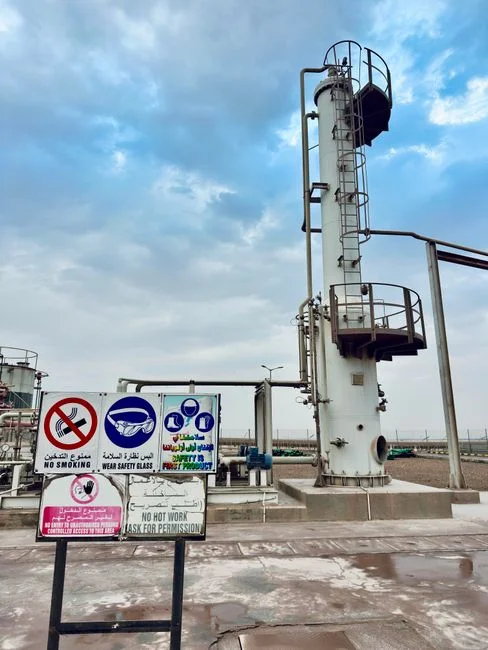
The biofilm is the reactor. A healthy MABR biofilm is thin (< 200 µm), golden-tan, and visually uniform across the module surface. A black biofilm indicates an anoxic death zone — usually caused by lumen over-pressurization or influent sulfate reduction. A white, filamentous biofilm points to sulfur-oxidizing bacteria, which is almost always an influent sulfate issue that no amount of membrane cleaning will fix (HydropureWater field data, 2026).
Two symptom-driven reads will tell you most of what you need to know. If effluent NH4-N is rising but lumen pressure is flat, the problem is upstream — check the influent C/N ratio first, because a starved denitrification stage pulls biofilm growth off the module. If NH4-N is rising and lumen pressure is also climbing, the biofilm is overgrown and is restricting gas transfer; an air-flush is the correct first action. Use simultaneous nitrification-denitrification (SND) as a free performance indicator: if effluent total nitrogen stays low without external carbon dosing, the biofilm is healthy and the system is delivering the energy advantage that justified the MABR retrofit. In IFAS configurations (OxyMem, 2025), suspended biomass is intentionally mixed with the fixed biofilm, so visual distinction in the bulk liquid is normal — focus on the module surface, not the mixed liquor, when you read biofilm health.
MABR Troubleshooting: Symptom → Cause → First Action
When a process upset hits, the operator has roughly 15 minutes to decide whether to act, wait, or escalate. The matrix below is built for that window. Each row is anchored to a measurable so the operator can confirm the diagnosis before taking action. Two consecutive weekly checks showing the same unresolved symptom means pull a module and send it to a lab — do not chase the problem with more cleaning (Fluence, 2026).
| Symptom (SCADA / Effluent) | Likely Cause | First Action |
|---|---|---|
| Effluent NH4-N rising, lumen pressure flat | C/N imbalance, denitrification starving biofilm | Reduce lumen aeration setpoint to favor SND; verify influent BOD |
| Effluent NH4-N rising, lumen pressure rising > 10% | Biofilm overgrowth restricting gas transfer | Run lumen air-flush at elevated blower flow for 10–15 min |
| Effluent NO3-N rising, NH4-N stable | Incomplete denitrification, anoxic zone volume loss | Verify anoxic zone mixing; check bulk-liquid DO < 0.5 mg/L |
| Module floating or tilted | Coarse-bubble diffuser failure, gas accumulation under module | Inspect blower and diffuser; confirm mixing cycle per SCADA schedule |
| Sudden loss of aeration energy savings (kWh trend up) | Blower fault or membrane leak | Run pressure-hold test on each module; compare amp draw to baseline |
The SUBRE retrofit model (Fluence) reuses existing coarse-bubble blowers for periodic bulk-liquid mixing wherever possible, which simplifies the diagnostic in row 4 — if the blower is already running the activated-sludge basin, the failure is more likely a diffuser than a blower. If the troubleshooting takes you toward a containment or compliance question, the hospital wastewater treatment engineering guide walks through comparable escalation logic for regulated plants.
Integrating MABR O&M With the Rest of the Plant
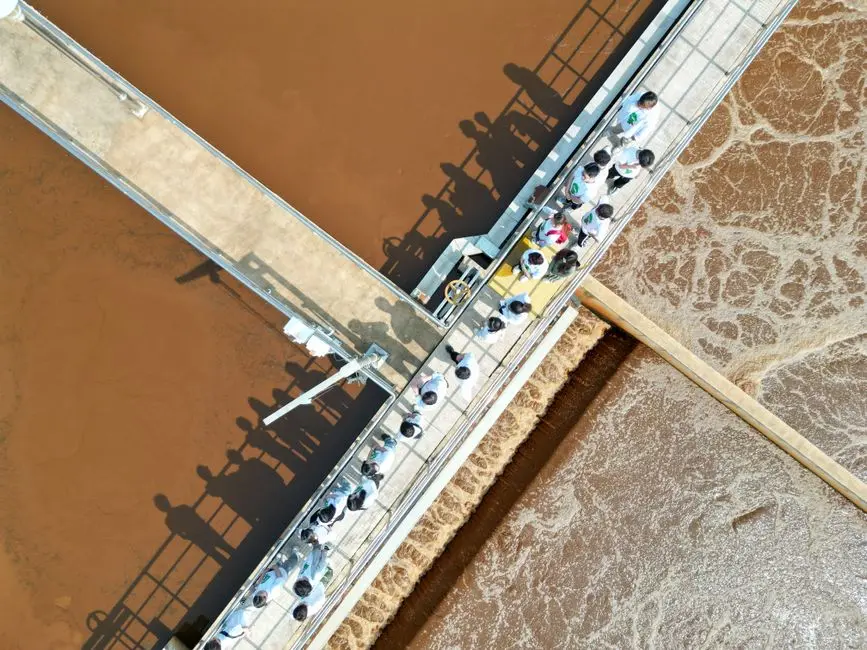
MABR does not run in isolation. Because SUBRE modules submerge into the anoxic zone of an existing activated-sludge basin (Fluence, 2026), upstream primary treatment and screening quality directly determine module life — a rotary mechanical bar screen rated for the plant's peak flow is the cheapest insurance you can buy for an MABR retrofit. Downstream, MABR effluent typically feeds a polishing or disinfection step; pair the MABR maintenance schedule with downstream checks on a UV sterilizer for downstream polishing or chlorine dioxide contactor so that an MABR biofilm event is not masked by a downstream failure. On the SCADA screen, trend lumen pressure, bulk-liquid DO, and effluent NH4-N as a tri-color health indicator (green/amber/red) — the same layout principle used in a packaged MBR membrane bioreactor system, but with the three MABR-specific signals swapped in. For plants balancing MABR with broader nutrient compliance, the domestic sewage treatment in Australia guide covers the regulatory framing that drives these integration decisions.
Frequently Asked Questions
What is the difference between MABR and MBR maintenance?
MABR uses passive bubble-less aeration and a fixed biofilm, so it has no suction pump, no TMP, and no scheduled chemical cleaning. MBR uses pressurized aeration, a suction pump, and a CEB/maintenance/recovery cleaning cadence (3×/week, monthly, as-needed) per Membrane Solutions (2025). The MABR equivalent of an MBR CEB is an event-driven lumen air-flush, and MABR chemical cleaning is escalation-only, not scheduled.
How often should an MABR membrane be inspected?
Daily lumen pressure and DO checks, weekly visual biofilm inspection through a sight glass, quarterly influent chemistry review (C/N ratio, pH, alkalinity), and an annual module pull for lab analysis including biofilm thickness and a pressure-hold integrity test. This 90-day inspection rhythm is the same one used in OxyMem and Severn Trent field deployments (OxyMem, 2025).
Can you chemically clean an MABR membrane?
Yes, but only on demand — when lumen pressure rises more than 10% above baseline, or when oxygen transfer efficiency drops. Start with a lumen air-flush, then escalate to a low-pressure water flush, then to a NaOCl soak (organic fouling) or mild acid soak (inorganic scaling). Routine scheduled cleaning is a sign of an upstream problem, not a maintenance plan (Fluence, 2026).
How long does an MABR module last?
Vendor data and field trials from OxyMem, Severn Trent, and Jacobs suggest 10+ years when the 90-day inspection rhythm is followed. The dominant cause of early failure is membrane dry-out during tank dewatering, followed by chronic biofilm imbalance from an uncontrolled influent C/N ratio (OxyMem, 2025).
Can MABR be retrofitted into an existing activated-sludge plant without major civil work?
Yes. The SUBRE design (Fluence, 2026) submerges modules into the existing anoxic zone, suits basin depths 1.5–6 m, and is installed one basin at a time with minimal interruption. Aspiral packaged units start at 20 m³/d for plants that need a new asset rather than a retrofit.