Why Mining and Metals Wastewater in Inkom Tests Conventional Biology
Ore-processing wastewater in the Inkom and Bannock County area typically arrives at the biological stage with a profile that defeats a textbook CAS design: total dissolved solids often in the 3,000–8,000 mg/L range, sulfate frequently above 1,500 mg/L, and episodic spikes of iron, manganese, lead, zinc, and residual flotation reagents that ride on top of a diurnal flow swing of 2:1 to 4:1 from mill shifts. When those spikes pass primary clarification and reach the aeration basin, biomass loses floc structure: the mixed-liquor suspended solids (MLSS) deflocculates, the sludge volume index (SVI) climbs above 200 mL/g, and secondary clarifier effluent TSS rises with it. The French MBR thesis on activated-sludge viability and reactivity (S3) confirms that biomass viability and respirometric activity both decline when organic loading and toxicant conditions move outside the design window — a direct match for what an Inkom aeration basin sees during a mill upset.
The climate compounds the problem. Inkom winter mixed-liquor temperatures drop to roughly 8–12 °C, which slows CAS nitrification kinetics, lengthens sludge settling time, and pushes the operator toward higher MCRT — exactly when the biomass is most vulnerable to metal toxicity. A membrane bioreactor is not immune to cold, but its higher MLSS (commonly 8,000–12,000 mg/L versus 2,000–4,000 mg/L in CAS) buffers toxic shocks and retains slow-growing nitrifiers that CAS washes out under the same loading.
How a Conventional Activated Sludge System Treats Metals-Bearing Water
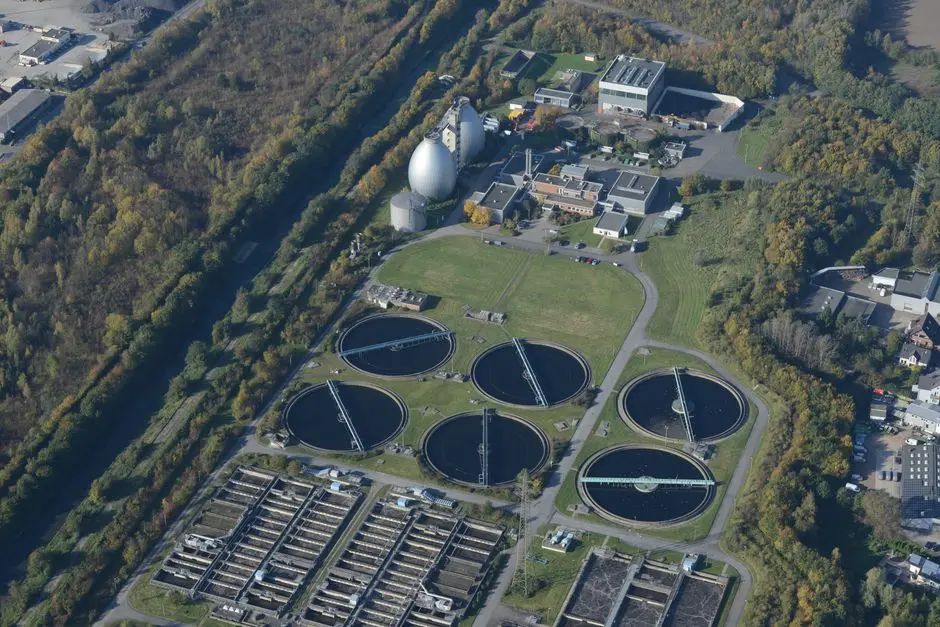
Most existing Inkom-area plants run a flow path that includes screening, equalization, primary clarification, an aeration basin, a secondary clarifier, and chlorination, with return activated sludge (RAS) and waste activated sludge (WAS) loops. The classic operating envelope from academic MBR-vs-CAS literature is MLSS of 2,000–4,000 mg/L, F/M ratio of 0.2–0.5 kg BOD/kg MLSS·day, and clarifier overflow rates of 16–28 m³/m²·day. The clarifier is the entire effluent-quality story in CAS — everything the aeration basin produces has to settle there.
Two failure modes recur on mining streams. First, poor settleability after a metal upset: divalent cations like zinc, copper, and lead displace bridging flocculants and push SVI above 250 mL/g, after which solids drift over the clarifier weir and effluent TSS can climb past 100 mg/L. Second, biomass washout during a flow spike: at a clarifier overflow rate of 28 m³/m²·day, hydraulic surges pull floc over the weir before it has time to compact, and the operator loses both effluent quality and active biomass in a single event. CAS also relies on gravity settling, so any non-settleable colloidal metal hydroxide that escapes the clarifier passes straight to discharge — there is no absolute barrier between the biology and the receiving water.
How an MBR Changes the Mining Effluent Equation
An MBR configured for a mining duty typically runs: equalization, pH adjustment to roughly 6.5–7.5, ferrous iron oxidation, DAF or sand pre-filter for metal hydroxide floc removal, submerged PVDF membrane modules inside the aeration tank, permeate suction under vacuum, and UV or chlorine dioxide polishing. The S3 thesis reports that immersed membranes with cut-off in the 0.04–0.2 μm range retain bacteria and viruses almost completely — directly relevant to a mine site discharging to a stock-watering reach or groundwater recharge under Idaho IDEQ rules.
Operating in concrete terms: an DF series flat-sheet PVDF membrane modules package delivers 0.1 μm nominal pore size, with individual modules in the 80–225 m² range producing 32–135 m³/day each, and consumes 10–20× less energy than external cross-flow membrane systems because the blower that aerates the basin also scours the membrane surface. Housed in an integrated MBR membrane bioreactor system, the package delivers near-reuse effluent with sub-1 μm filtration at roughly 60% of the civil footprint of a CAS train at the same daily flow.
The biology-side advantage is what matters most on a metal-bearing stream. MBR runs MLSS at 8,000–12,000 mg/L — sometimes higher — which dilutes any single toxicant across a much larger active biomass, slows the onset of inhibition, and retains slow-growing nitrifiers that CAS struggles to hold through cold Inkom winters. The trade-off is membrane fouling, and the S3 thesis is explicit: working at very high organic loading produces an intense fouling dynamic that must be managed through air-scour rate, relaxation cycle, and chemical cleaning interval. On a mining stream, that fouling risk migrates upstream — iron and calcium scaling on the membrane face — which is why pretreatment design, not membrane selection, is the first decision the engineer should lock down.
MBR vs CAS: Side-by-Side Parameters for a Mining Duty
The table below consolidates the design parameters an engineer would normally assemble in a feasibility memo, sized for a 50–500 m³/day ore-processing duty in the Inkom area. Where research data was not available — particularly site-specific CAPEX and OPEX — the table flags the trade-off qualitatively.
| Parameter | Conventional Activated Sludge (CAS) | Membrane Bioreactor (MBR) |
|---|---|---|
| Effluent total suspended solids | Typically 10–30 mg/L; degrades to >100 mg/L after metal upset | Near zero, set by membrane integrity (sub-1 μm pore) |
| Effluent COD/BOD | BOD 20–30 mg/L achievable in steady state; sensitive to clarifier failure | Consistently lower because biomass is fully retained |
| MLSS operating range | 2,000–4,000 mg/L | 8,000–12,000 mg/L; up to 15,000–20,000 mg/L in some mining duties |
| F/M ratio | 0.2–0.5 kg BOD/kg MLSS·day | 0.05–0.2 kg BOD/kg MLSS·day (lower because MLSS is higher) |
| Footprint factor at 200 m³/day | Baseline (1.0×) | ~0.4× — roughly 60% smaller (HydropureWater product data) |
| Modular capacity benchmark | Limited by clarifier surface area | DF series modules: 32–135 m³/day per 80–225 m² module (HydropureWater product data) |
| Metal-shock tolerance | Low — deflocculation, SVI climb, biomass washout | High — high MLSS dilutes toxicant per cell; membrane retains biomass |
| Primary operating risk | Clarifier failure and biomass washout | Membrane fouling (iron/calcium scaling, biofilm, organic loading) |
| Reuse suitability | Usually needs tertiary polish (sand filter, UF) to reach reuse | Permeate often meets reuse spec for mill process or dust suppression directly |
| Cold-weather nitrification (8–12 °C) | Slowed; risk of nitrifier washout | Slower kinetics but nitrifiers retained by membrane |
| CAPEX profile | Lower membrane/civil cost; larger basin and clarifier | Higher membrane CAPEX offset by smaller civil works and clarifier elimination |
| OPEX profile | Higher sludge handling; less aeration energy | Lower sludge yield; higher membrane aeration and periodic CIP cost |
Site-specific dollar values were not present in the research inputs; the CAPEX/OPEX trade-off should be sized from vendor quotes against the operator's actual flow and reuse target.
Inkom-Specific Siting and Pretreatment Considerations
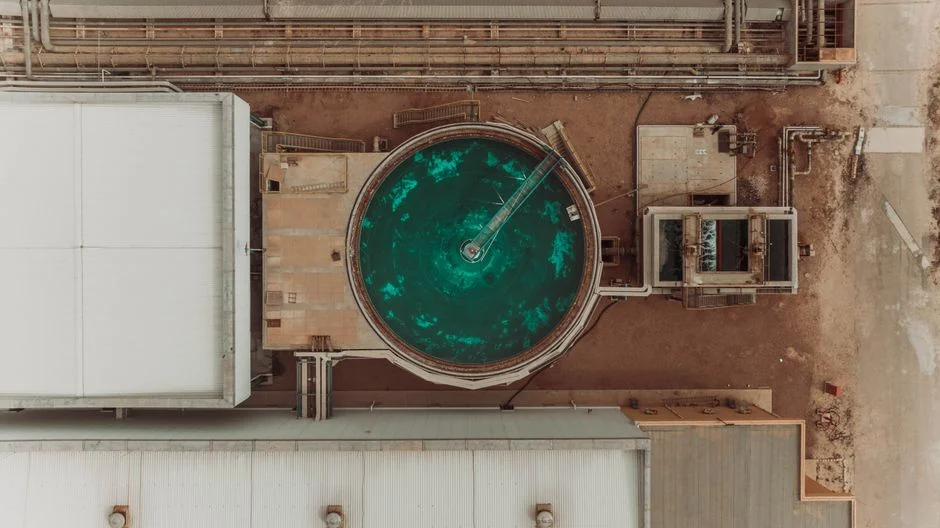
Pretreatment upstream of the membrane dictates whether MBR succeeds on a Bannock County ore-processing stream. Iron is the most common foulant on Inkom-area mines: ferrous iron in the influent oxidizes across the aeration basin and precipitates as ferric hydroxide on the membrane face, which collapses flux within hours if not removed first. The standard pretreatment train is pH adjustment to roughly 6.5–7.5, oxidation of any residual ferrous iron, a DAF pre-treatment for metal hydroxide floc to float the precipitate before it reaches the membrane, and a multi-media filtration ahead of the membrane to catch what the DAF misses. Calcium scaling follows the same logic — addressed by pH control and antiscalant dosing rather than by membrane selection.
Cold-weather operational tuning matters more in Inkom than in milder sites. Lower aeration-tank temperature slows kinetics for both CAS and MBR, so hydraulic retention time and MCRT should be reviewed for winter, but MBR's higher MLSS compensates in a way CAS cannot match. The implicit driver pushing most Idaho mines toward reuse-quality effluent is the discharge expectation under Idaho IDEQ groundwater recharge and surface discharge rules — limits that MBR permeate meets more directly than CAS clarifier overflow. For a deeper look at the broader packaged treatment train, the integrated wastewater treatment plant engineering guide walks through the full process flow, and the DAF vs clarifier comparison for mining wastewater covers the pretreatment choice in more depth. A general MBR system explainer with 2026 cost and selection data is also useful when sizing OPEX.
When CAS Still Wins — and When MBR Pays Back the Premium
CAS is the correct answer under a narrow set of Inkom-area conditions: average flow under about 50 m³/day, metal load that is low and stable enough that SVI stays below 150 mL/g, an existing aeration basin with useful life remaining, and discharge to a sewer or land application where reuse quality is not required. The CAPEX is lower, the operations crew already understands the system, and there is no membrane replacement reserve to fund.
MBR pays back the membrane premium when the operator can convert that premium into measurable results: variable or upset-prone metal influent where CAS clarifier failure is a real risk, a target of water reuse for mill process water or dust suppression, a footprint constraint at an existing Inkom plant where civil expansion is expensive, or a regulator-driven effluent TSS target near zero. The two operating risks are not symmetric — MBR's main risk is membrane fouling from iron and calcium scaling, which is a chemistry problem the operator controls with pretreatment; CAS's main risk is biomass loss and clarifier washout, which is a biological problem the operator often cannot control in time during a metal spike. The question to answer before any equipment order is which risk the on-site team is better set up to manage.
Rule of thumb: choose MBR when reuse or footprint drives project value; choose CAS when flow is steady, metals are low, and the existing aeration basin still has useful life.
Frequently Asked Questions
What MLSS should an MBR run on a mining wastewater stream in Inkom, ID?
Most submerged MBR packages for ore-processing wastewater run 8,000–12,000 mg/L MLSS, with some duties going higher. The higher MLSS dilutes any single metal toxicant across more active biomass and retains slow-growing nitrifiers that wash out of a CAS clarifier at 2,000–4,000 mg/L (per HydropureWater product data, 2026).
How does cold Inkom winter mixed-liquor temperature affect MBR vs CAS performance?
Both systems slow down at 8–12 °C mixed-liquor temperature, but the effects differ. CAS nitrification kinetics drop and sludge settling worsens, often with nitrifier washout. MBR runs the same slower kinetics but the membrane retains the biomass regardless of settling, so the system holds its nitrification inventory through winter where CAS loses it.
Frequently Asked Questions
Is MBR better than conventional activated sludge for mining wastewater?
MBR (Membrane Bioreactor) is generally superior to conventional activated sludge (CAS) for mining applications due to its ability to produce high-quality effluent that meets stringent NPDES discharge standards, often achieving turbidity levels below 0.2 NTU. MBR systems operate at higher Mixed Liquor Suspended Solids (MLSS) concentrations, typically ranging from 8,000 to 12,000 mg/L, allowing for a smaller footprint and enhanced degradation of complex organic compounds common in mineral processing wastewater.
Can a membrane bioreactor handle high TDS and metals like iron and zinc?
While MBR systems are robust, high Total Dissolved Solids (TDS) can cause osmotic stress on biomass, and heavy metals like iron and zinc require careful pretreatment. Concentrations of dissolved iron exceeding 5-10 mg/L or zinc exceeding 1-2 mg/L can precipitate on membranes, necessitating upstream chemical precipitation or pH adjustment to ensure the MBR remains operational without excessive flux decline.
What is the smallest MBR footprint available for a small mine site?
For small-scale mine sites, containerized or modular MBR units can occupy a footprint as small as 200 to 500 square feet for a flow rate of 10,000 to 20,000 gallons per day. These integrated units combine the bioreactor and membrane modules into a single skid, significantly reducing the civil engineering requirements compared to the large secondary clarifiers required for a CAS system.
How do you stop iron and calcium from fouling an MBR membrane?
Fouling from iron and calcium is mitigated through a combination of automated chemical cleaning (CIP) and upstream stabilization. Implementing a dosing system for antiscalants or sequestering agents, maintaining pH levels between 6.5 and 7.5 to prevent carbonate scaling, and utilizing regular maintenance cleans with citric acid or sodium hypochlorite are critical to maintaining flux rates in the 15-25 LMH range.
When is conventional activated sludge still the right choice for a mine in Idaho?
CAS remains the preferred choice in Idaho when land availability is not a constraint and the wastewater stream has low variability in flow and organic loading. If the mining facility lacks the specialized technical staff required to maintain membrane integrity or if the discharge requirements are less stringent than those mandated by the Idaho Department of Environmental Quality for sensitive watersheds, the lower capital and operational costs of CAS provide a more economical solution.