
Why Hamburg NY food and beverage plants are rethinking the activated sludge question
A Hamburg, NY dairy, brewery, sauce, or snack plant discharging in 2026 typically has two choices for biological treatment: retrofit the existing conventional activated sludge (CAS) train or replace the secondary clarifier with a membrane bioreactor (MBR). The decision is driven by three local realities. First, the discharge path: most plants either hold an NYSDEC SPDES permit for surface discharge, or send pretreated effluent to the Buffalo Sewer Authority or Erie County Sewer District No. 3 under an industrial pretreatment permit with local limits on TSS, BOD, FOG, pH, and temperature. Second, the stream profile: brewery, dairy, snack, and sauce wastewaters routinely run BOD 1,500–5,000 mg/L, COD 3,000–10,000 mg/L, and FOG 200–1,500 mg/L, with sharp diurnal and seasonal swings tied to CIP cycles and product changeovers. Third, the failure mode: CAS clarifiers in this exact service routinely suffer bulking, rising sludge, and washout during CIP peaks, making a side-by-side review of the DAF vs clarifier options for food and beverage plants a necessary first step.
MBR vs conventional activated sludge: how the two trains actually differ
A CAS train is a two-stage biological process: an aeration tank where heterotrophic bacteria convert BOD into biomass and CO₂, followed by a secondary clarifier where gravity settling separates the mixed liquor from the clarified effluent. Settled sludge splits into return activated sludge (RAS) and waste activated sludge (WAS). The clarifier is the single point of failure — sludge bulking, rising sludge, and hydraulic overload all collapse the system. An MBR train runs the same activated-sludge biology but replaces the clarifier with submerged or sidestream MF/UF membranes, typically 0.1–0.4 μm PVDF, that pull permeate under vacuum and reject biomass back to the aeration basin.
The operational consequence is structural. MBR decouples hydraulic retention time (HRT) from solids retention time (SRT) more aggressively than CAS, sustains long SRTs that favor slow-growing nitrifiers, and operates at F/M 0.05–0.15 d⁻¹ versus 0.2–0.5 d⁻¹ typical for CAS. Because the biology remains constant while the separation step changes, selecting the right system depends on the required effluent quality. For a deeper process walkthrough, the MBR explainer with 2026 cost data covers the same membrane cassette and aeration-basin geometry in more detail.
Side-by-side operating parameters for a 2026 design basis
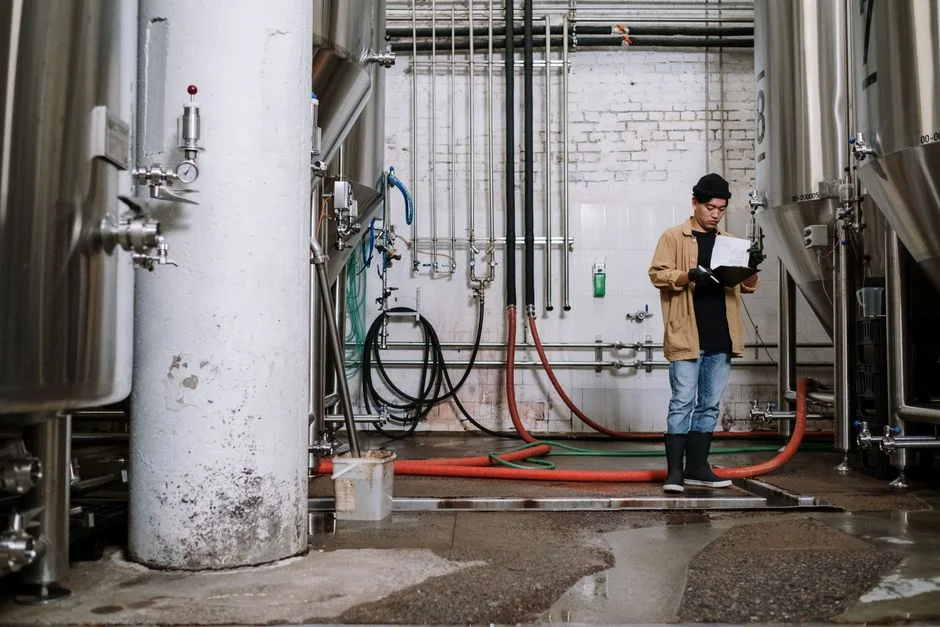
The table below consolidates the operating envelope an engineer can copy directly into a design basis memo. MBR and CAS ranges are drawn from current 2026 industry data; the high-MLSS envelope is the same band Banu et al. (2009) validated at industrial scale over 270 days at 77 LMH flux.
| Parameter | CAS (typical) | MBR (typical) |
|---|---|---|
| MLSS (mg/L) | 2,000–5,000 | 8,000–12,000 |
| SRT (days) | 5–15 | 20–60+ |
| HRT (hours) | 6–12 | 4–8 |
| F/M ratio (d⁻¹) | 0.2–0.5 | 0.05–0.15 |
| Membrane pore size | N/A (gravity settling) | 0.1–0.4 μm PVDF |
| Effluent TSS (mg/L) | 10–30 | <5 |
| Effluent BOD (mg/L) | 10–30 | <5 |
| WAS yield vs CAS | Baseline | 20–40% less at matched SRT |
The high MLSS envelope is the lever that shrinks the aeration basin and removes the clarifier, which is the source of the 40–60% footprint saving. MBR's long-SRT operation also suppresses sludge yield, consistent with Banu et al.'s finding of "relatively high decay rate and less sludge production due to much longer sludge age." For procurement teams evaluating skid packages, the integrated MBR membrane bioreactor system pairs PVDF cassettes directly with a packaged aeration zone for flows of 10–2,000 m³/day.
Effluent quality and what it means for Hamburg reuse and discharge scenarios
MBR permeate from a properly designed food/beverage train meets TSS <5 mg/L, BOD <5 mg/L, turbidity <1 NTU, and SDI <3 — the threshold that lets the permeate feed RO without further clarification. CAS effluent lands at 10–30 mg/L TSS under normal conditions and typically requires tertiary filtration (sand, multimedia, or cloth-media disc) to reach reuse criteria. The reuse economics are concrete: MBR permeate extends RO CIP intervals by 30–50% versus CAS-fed RO (HydropureWater field data, 2025-Q4), which is directly relevant for breweries or dairies running CIP loops on RO polish water.
The discharge scenario is different. For a plant sending treated effluent to the Buffalo Sewer Authority under a typical industrial pretreatment permit, CAS followed by a polishing filter often meets the local limits. MBR is overkill unless reuse is in scope or the consent requires <10 mg/L TSS. Cold-climate operation also matters at Hamburg's latitude: winter mixed-liquor temperatures drop into the 8–12 °C band, slowing nitrification and pushing MBR design fluxes down by 10–20% versus summer baseline; CAS suffers the same kinetic penalty but is more forgiving because there is no membrane flux to hold.
Food and beverage stream reality: why a DAF almost always sits in front
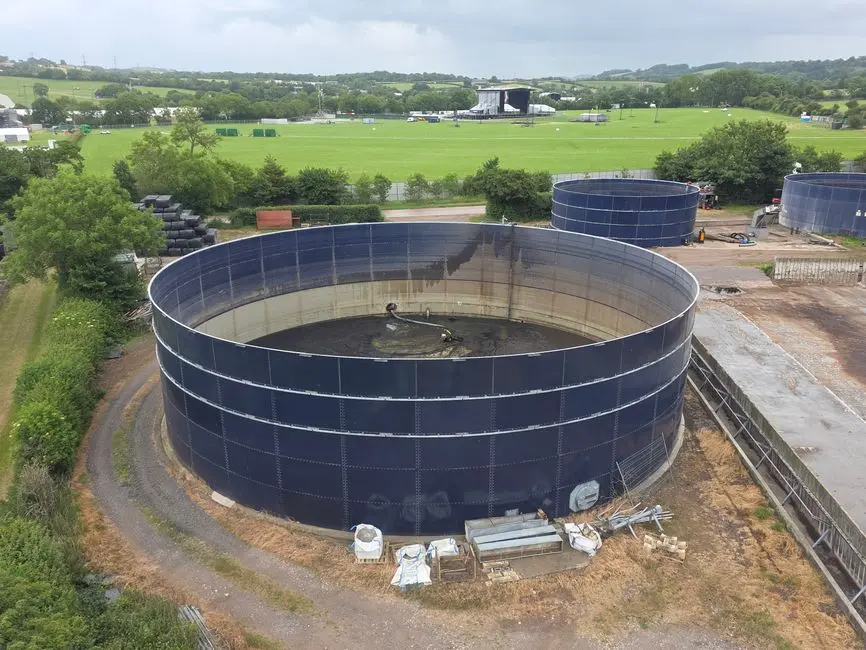
Food and beverage wastewater carries FOG, dairy fat, blood/protein, starch, fruit fiber, and pulp that blind 0.1 μm membranes quickly. For applications such as food processing and oily wastewater, a DAF (dissolved air flotation) is commonly installed before MBR to remove FOG and protect membrane performance. A DAF is the standard guard for Hamburg dairy, brewery, sauce, and snack streams. Without it, membrane scour air demand drifts out of the design range, CIP interval collapses from weeks to days, and MLSS falls out of the 8,000–12,000 mg/L operating band under FOG overload.
CAS plants in this service already run a DAF or grease trap; adding MBR downstream does not remove that pretreatment, it just changes what the downstream separator has to do. For a matched-capacity package, the dissolved air flotation system covers 4–300 m³/h and is a typical upstream guard for an MBR train in this flow range. Upstream DAF also stabilizes downstream MLSS and reduces CIP chemical consumption, which is a direct OPEX offset on the MBR side.
CAPEX, OPEX, footprint and payback: the 2026 numbers
Indicative 2026 turnkey CAPEX for skid-integrated, EPC-scope plants ranges from $80–$220 per m³/d for CAS and $180–$420 per m³/d for MBR. OPEX lands at $0.10–$0.22/m³ for CAS and $0.18–$0.42/m³ for MBR. The MBR OPEX premium breaks down into three line items: roughly 30–50% of MBR energy is membrane scour air separate from biological oxygen demand; CIP chemicals (NaOCl 300–500 mg/L plus citric or oxalic acid) cycle every 1–4 weeks; and membrane replacement amortizes over 5–8 years.
| Cost line | CAS | MBR |
|---|---|---|
| Turnkey CAPEX ($/m³/d) | 80–220 | 180–420 |
| OPEX ($/m³) | 0.10–0.22 | 0.18–0.42 |
| Footprint vs CAS | 1.0× (baseline) | 0.40–0.60× |
| WAS volume | Baseline | 20–40% less |
| Membrane replacement | N/A | Every 5–8 years (S2), 7–12 years (S4) |
| Tertiary filtration needed for reuse | Usually (sand, multimedia, cloth-media disc) | None |
The offsets that close the gap are real: 40–60% smaller footprint, 20–40% less WAS to haul, and elimination of tertiary filtration when reuse is in scope. The payback rule: 3–6 years when reuse water is needed, when land cost makes the footprint saving material, or when the consent requires <10 mg/L TSS and CAS would need cloth-media disc filters anyway. Outside those three triggers, CAS stays the lower-cost compliant option. Sludge handling downstream of either train is covered in the beverage wastewater sludge treatment guide.
Decision framework: pick MBR or CAS for a Hamburg food and beverage plant
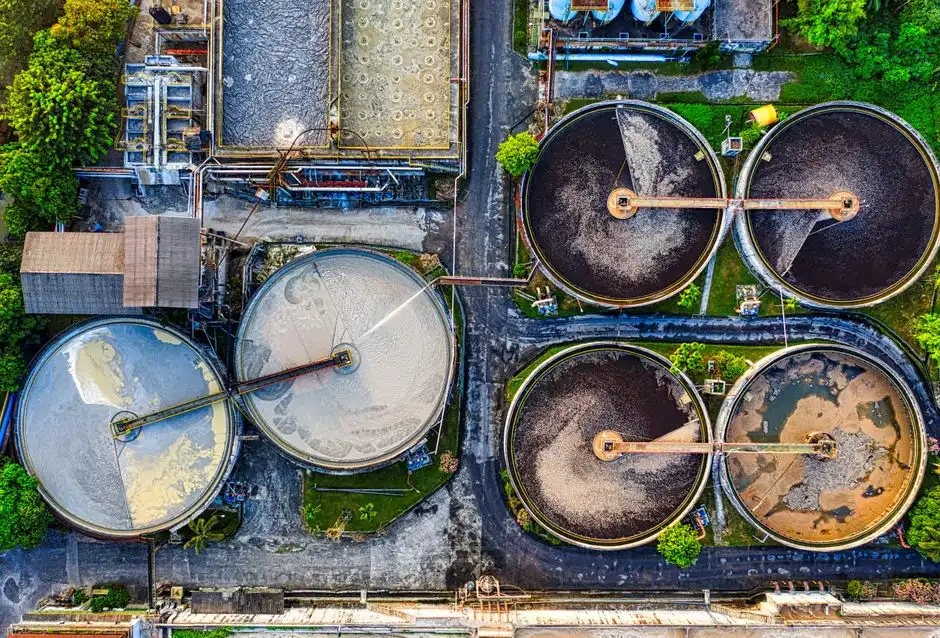
The matrix below maps the standard use-case rules to Hamburg-specific scenarios. A greenfield brewery with on-site bottle rinse and CIP reuse goes to MBR — reuse-grade permeate pays for the membrane premium inside five years. A dairy processor with a spray-irrigation field and an existing DAF can justify an MBR retrofit because the permeate hits the irrigation TSS and SDI targets without a polishing filter. A small snack manufacturer sending clarified effluent to the Buffalo Sewer Authority under an IPP permit still wins on lifecycle cost with CAS, because the local limits are achievable and no reuse obligation exists.
The three "pick MBR" triggers for a Hamburg food/bev plant are: (1) a reuse obligation on bottle rinse, boiler feed, or CIP polish water; (2) a discharge consent requiring <10 mg/L TSS, which would force a cloth-media disc filter onto a CAS baseline anyway; (3) a land constraint where the 40–60% footprint cut unlocks a brownfield site. The two "stay with CAS" triggers are: ample land, no reuse obligation, discharge consent ≥20–30 mg/L TSS, and a stable influent that does not challenge the clarifier. MBR is bought for effluent quality and footprint, not for OPEX savings; CAS is bought for simplicity and lower first cost, not for reuse.
Frequently asked questions
What is the main difference between MBR and conventional activated sludge for a food and beverage plant?
MBR replaces the secondary clarifier with a 0.1–0.4 μm PVDF membrane and operates at 8,000–12,000 mg/L MLSS versus 2,000–5,000 mg/L for CAS, producing <5 mg/L TSS effluent in 40–60% less footprint at 20–35% higher OPEX per m³.
When does MBR pay back against CAS at a Hamburg food or beverage plant?
3–6 years when reuse water is needed, when land cost makes the 40–60% footprint saving material, or when the discharge consent requires <10 mg/L TSS and CAS would need a cloth-media disc filter to meet it. Outside those three triggers, CAS stays the lower-cost compliant option.
Does a food and beverage plant need a DAF in front of an MBR?
Yes. FOG, dairy fat, starch, and pulp blind 0.1 μm membranes quickly; a DAF upstream keeps membrane scour air in design, extends CIP interval from days to weeks, and holds MLSS in the 8,000–12,000 mg/L band under FOG overload.
How does cold-climate winter operation in Hamburg affect MBR design versus CAS?
Winter mixed-liquor temperatures drop to 8–12 °C, slowing nitrification in both systems. MBR design fluxes typically fall 10–20% versus summer