
What a Packaged MBR STP Actually Is — and Why Hotels in Mombasa Need One
A packaged MBR STP for a Mombasa hotel is a factory-built, skid-mounted membrane bioreactor that combines activated sludge with submerged PVDF ultrafiltration (0.1 μm pore size) to produce reuse-quality effluent. Size it at roughly 0.8–1.0 m³ per hotel room per day — so a 200-key coastal resort needs about 200 m³/d of MBR capacity, matched with an 8-hour equalization tank, oil and grease removal for kitchen wastewater, and design flux near 25 LMH on the membranes.
Mombasa hotels are a strong fit for packaged MBR for three convergent reasons. First, coastal water stress is real: Mombasa's main supply (Mzima springs, baracks boreholes, and desalinated add-ons) is rationed in dry seasons, so reuse for toilet flushing and landscaping cuts potable demand by 30–50% — the same reuse envelope a 200-bed 5-star installation in a reference hotel MBR plant delivers (Imemflo reference install, 250 m³/d treating a 200-bed 5-star luxury hotel). Second, the regulatory stack is tight: the Environmental Management and Coordination Act (EMCA, Cap 387) sets the umbrella framework, the NEMA Water Quality Regulations control discharge limits, and the Coast Development Authority has expectations for any project discharging to the Indian Ocean lagoon system. Third, tourist-season load swings — occupancy moving from 40% in low season to 95%+ in July–August and December–January — punish a plant that cannot absorb a 2.0–2.5× peaking factor. A HydropureWater packaged MBR wastewater treatment system integrates equalization, biological aeration, submerged PVDF membranes, and disinfection in a single skid, eliminating the secondary clarifier and producing effluent with BOD₅ <5 mg/L and TSS essentially nil (per the 200 KLD MBR design note, 2025-09).
Sizing the Plant: Capacity, Flow, and Load for a Mombasa Hotel
Hotel MBR capacity is set by per-key water consumption, not by a vendor's standard skid. For full-service coastal hotels the engineering rule of thumb is 0.8–1.0 m³ per available key per day, with the upper end reserved for properties carrying large food-and-beverage operations, on-site laundry, and conference facilities. An 80-key boutique hotel at 1.0 m³/key/day needs 80 m³/d; a 200-key beach resort at 1.0 m³/key/day needs 200 m³/d; a 400-key conference hotel at 0.9 m³/key/day needs 360 m³/d. Add 20% contingency for peak-season load, then round up to the next standard packaged skid size (commonly 100, 150, 200, 250, 300, 400, 500 m³/d).
Worked example for a 150-key Mombasa resort: 150 keys × 1.0 m³/key/day = 150 m³/d design flow; add 20% contingency = 180 m³/d; round up to a standard 200 m³/d packaged skid. The equalization tank is then sized at 8 hours of average flow (per the 200 KLD design note) — that is 200 m³/d ÷ 3 = ~67 m³ of buffer to absorb the morning peak and the post-lunch kitchen surge. In Mombasa's 28–32°C ambient temperatures, coarse-bubble mixing in the equalization tank is non-negotiable to prevent septicity; a standby mixing blower (1W+1S) is the standard configuration.
Working basis for influent quality, per the 200 KLD design note: pH 7.5–8.5, TSS 300 mg/L, BOD₅ 400 mg/L, COD 500 mg/L. Stress-test for high-occupancy events (festive conferences, Easter) where BOD can climb 20–30% above baseline. For coastal hotels, add a salinity check: seawater intrusion into shallow sewer lines and brackish bore-water usage can push influent conductivity above 2,000 μS/cm. Confirm with the membrane vendor that the operating envelope tolerates that, and that the CIP protocol includes a high-salinity soak step.
| Parameter | Design basis | Source / note |
|---|---|---|
| Hydraulic loading | 0.8–1.0 m³ per key per day | Full-service coastal hotel rule of thumb |
| Peaking / contingency | +20% on design flow | Tourist-season absorption |
| Equalization HRT | 8 hours | 200 KLD design note (2025-09) |
| Influent pH | 7.5–8.5 | 200 KLD design note (2025-09) |
| Influent TSS | 300 mg/L | 200 KLD design note (2025-09) |
| Influent BOD₅ | 400 mg/L | 200 KLD design note (2025-09) |
| Influent COD | 500 mg/L | 200 KLD design note (2025-09) |
| Coastal conductivity check | Verify to >2,000 μS/cm | Seawater intrusion / brackish bore-water |
The Process Train Inside a Packaged MBR
The unit-operations train inside a packaged MBR is fixed by physics, but the equipment choices inside each stage are where the engineer verifies the vendor. Walk the P&ID line-by-line and check the numbers.
Pretreatment chain: a coarse bar screen with 8 mm clear openings catches rags and trash; a semi-automatic fine bar screen at 2 mm removes fibrous material that would blind the membranes (per the 200 KLD design note, 2025-09). The oil and grease separator sits ahead of the equalization tank — for a hotel kitchen discharging 50–200 mg/L FOG at peak buffet service, a DAF system for kitchen FOG removal drops FOG below 30 mg/L and prevents irreversible membrane fouling within months. Without a DAF or equivalent, the membranes will foul and CIP frequency will double.
Equalization: 8-hour HRT tank with coarse-bubble aeration grid; transfer pumps (2W+1S) sized for 12 m head (per the 200 KLD design note) into the aeration tank. Aeration tank: fine-bubble EPDM tubular diffusers (90 mm × 1,000 mm), MLSS maintained at 3,000–6,000 mg/L, oxygen demand at ~2 kg O₂ per kg BOD removed (per the 200 KLD design note); 18-hour HRT sizing basis. MBR tank: submerged PVDF cassettes operating in suction mode at 100–300 mmHg, design flux 25 LMH (per the 200 KLD design note), with dedicated air-scour blowers and an integrated CIP tank holding sodium hypochlorite and citric acid dosing lines. Disinfection: an online UV unit or chlorination downstream; for sites with intermittent power, an on-site chlorine dioxide generator sized 50–20,000 g/h provides a stable residual without the bulk chlorine logistics. Sludge: a holding tank with coarse-bubble diffuser feeds a plate-and-frame filter press for offsite cake disposal. Solids handling is the part most vendors under-spec — get the press capacity and the cake moisture target in writing before signing.
Choosing the Right Membrane: Hollow Fiber vs Flat Sheet for a Coastal Hotel
Two PVDF formats dominate the hotel MBR market: hollow fiber (HF) and flat sheet (FS). Both deliver the same 0.1 μm pore size, but they behave differently under hotel-specific conditions.
Hollow-fiber modules (typical suppliers: Suez, Dow, DuPont, Mitsubishi) pack the highest membrane area per cubic meter of cassette and tolerate the widest flux range (15–70 LMH/m²·h per the 200 KLD design note, with a 25 LMH design value). They suit variable hotel loads where the plant sees sharp morning and evening peaks. They are, however, less tolerant of fibrous debris and hair from guest bathrooms — pretreatment discipline is the price of the higher packing density.
Flat-sheet modules (the PVDF flat-sheet MBR membrane modules in our DF series) ship in 80–225 m² cassettes producing 32–135 m³/day each, and are physically more tolerant of fibrous material. A maintenance team that is not membrane-trained can clean flat-sheet cassettes by hand, which matters at remote coastal properties. The trade-off is larger cassette footprint and slightly higher air-scour demand per m².
Operating envelope to verify with any vendor before signing (per the 200 KLD design note): pH 2–10 during cleaning, maximum temperature 40°C, suction pressure 100–300 mmHg, design flux 25 LMH. For coastal hotels, request a CIP protocol that includes a high-salinity soak step and written confirmation that the membrane warranty is not voided by sustained conductivity above 1,500 μS/cm. If the vendor cannot produce a written salinity-tolerance statement, walk away.
| Parameter | Hollow fiber (PVDF) | Flat sheet (PVDF) |
|---|---|---|
| Pore size | 0.1 μm | 0.1 μm |
| Typical cassette area | 20 m² per module (HF) | 80–225 m² per cassette |
| Cassette output | Per design, multiple modules per cassette | 32–135 m³/day per cassette |
| Flux range | 15–70 LMH; design 25 LMH | Design 25 LMH typical |
| Debris tolerance | Lower; demands tight pretreatment | Higher; tolerates fibers and hair |
| Manual cleaning | Difficult — backwash + CIP only | Possible — cassettes removable |
| Salinity tolerance | Verify with vendor; CIP protocol required | Verify with vendor; CIP protocol required |
Packaged MBR vs SBR, MBBR, and Built-in-Place Concrete MBR
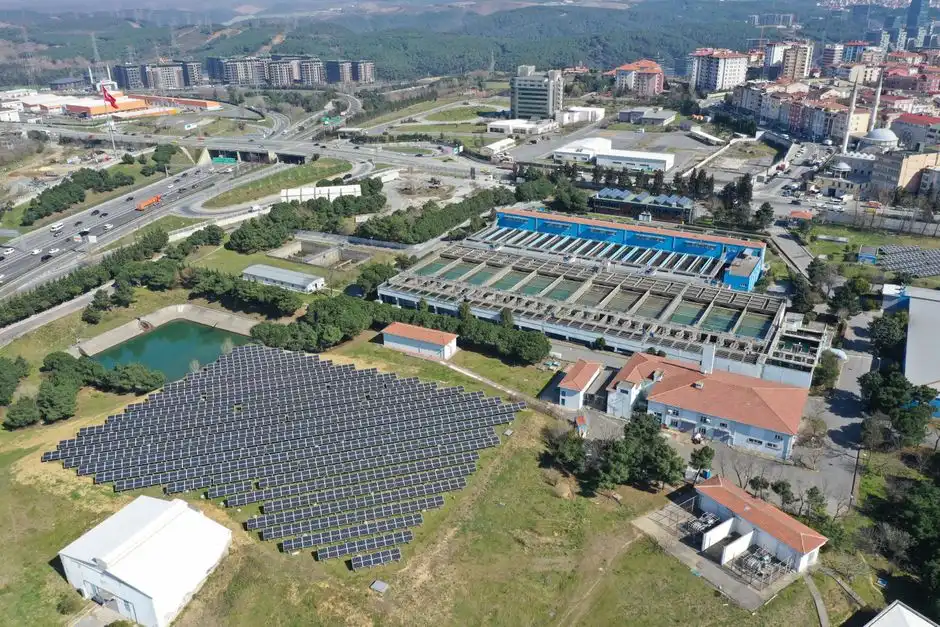
When the developer asks "why not a cheaper SBR?", the engineer needs a defensible side-by-side, not a price tag. The comparison is not just capex; it is footprint, effluent quality, reuse readiness, civil requirement, and commissioning time.
Packaged MBR wins on footprint — typically 60% smaller than SBR or conventional activated sludge because the membrane replaces the secondary clarifier and supports MLSS up to 10,000–12,000 mg/L versus 3,000–5,000 mg/L in a clarifier-based system. SBR and MBBR (per the Imemflo hotel MBR reference) are lower capex per m³ but produce effluent with TSS 10–30 mg/L — too high to reuse for toilet flush or irrigation without tertiary polishing, which adds back the cost advantage. Built-in-place concrete MBR is more flexible on capacity and uses civil tanks that can be made from locally available materials, but it adds 6–9 months of civil work on a beach plot. Packaged units ship in 8–12 weeks and are factory-commissioned, which matters when the hotel must open before peak tourist season. The lower-cost option for hotels with tight beach plots and laundry or landscape reuse is usually packaged MBR at the system level, even when its unit capex is higher. A packaged integrated sewage treatment system can also be specified as a fully buried option where the surface footprint is a hard constraint.
| Criterion | Packaged MBR | Containerized MBR skid | Built-in-place concrete MBR | SBR / MBBR |
|---|---|---|---|---|
| Footprint (same load) | ~40% of SBR (60% smaller) | Similar to packaged MBR | Similar to packaged MBR | Baseline (largest) |
| Effluent TSS | Essentially nil | Essentially nil | Essentially nil | 10–30 mg/L |
| Effluent BOD₅ | <5 mg/L | <5 mg/L | <5 mg/L | 10–20 mg/L |
| Reuse ready (toilet flush / irrigation) | Yes, direct | Yes, direct | Yes, direct | Needs tertiary polishing |
| Civil work | Minimal (slab only) | Minimal (slab only) | Major (tanks cast in situ) | Major (tanks cast in situ) |
| Commissioning time | 8–12 weeks ex-factory | 8–12 weeks ex-factory | 6–9 months on site | 6–9 months on site |
| Capex per m³/d | Higher | Higher | Medium | Lower |
| Whole-life cost (with reuse) | Lowest | Lowest | Medium | Higher (reuse polishing) |
Compliance, Reuse, and What to Hand the Procurement Team
Compliance in Mombasa sits in three layers. Verify the packaged MBR is sized to meet the NEMA Water Quality Regulations for effluent discharge. Where discharge is to a municipal sewer, confirm the local county water services company's trade-effluent limits — Mombasa Water Supply and Sanitation Company applies its own industrial tariff schedule, and pre-treatment requirements are enforced at the connection. For coastal sites discharging via soak pit or marine outfall, confirm with NEMA and the Coast Development Authority before the EIA is filed, not after.
If the hotel reuses treated water for landscape irrigation or toilet flushing, the design must include UV polishing or on-site chlorine dioxide generation for a stable residual; an open-channel UV sterilizer for reuse water is the simpler option where a residual is not required. The same logic for a Freetown coastal hotel follows the parallel 2026 guide to packaged MBR selection for a Freetown hotel; sizing and membrane logic transfer directly, only the regulatory body changes.
Procurement checklist to hand to the buying team:
- Hydraulic capacity (m³/d) and peaking factor (1.5–2.0× for hotels).
- Membrane spec: PVDF, 0.1 μm, design flux 25 LMH, written salinity tolerance.
- Blower redundancy 1W+1S for aeration and 1W+1S for membrane air scour.
- CIP system with high-salinity soak protocol and chemical dosing pumps.
- PLC/SCADA with remote monitoring — Mombasa sites need off-site alarm visibility.
- Containerized or skid format; sea-freight pre-assembly to Mombasa.
- Local after-sales support: response time in writing, spare parts in-country.
Lifecycle cost drivers (framed qualitatively, not fabricated as numbers): membrane replacement every 7–10 years for well-operated PVDF; blower and pump service on a 12–24 month cycle; chemical CIP cost on the order of $0.02–0.05 per m³ treated; and sludge dewatering logistics dominated by cake haulage to an offsite facility. For broader MBR market context relevant to East African buyers, see the 2026 MBR market growth and regional analysis and the data-driven MBR module vs alternatives comparison.
Frequently Asked Questions
What flow rate should I size a hotel MBR at per key?
Size at 0.8–1.0 m³ per available key per day for a full-service coastal hotel, then add 20% contingency for tourist-season peaks. A 150-key resort at 1.0 m³/key/day needs a 180 m³/d design flow, rounded up to a standard 200 m³/d packaged skid.
What effluent quality will the MBR produce for reuse?
Per the 200 KLD MBR design note (2025-09): BOD₅ <5 mg/L, COD <20 mg/L, TSS essentially nil, turbidity <2 NTU. This meets reuse standards for toilet flushing, landscape irrigation, and most laundry applications after UV or chlorine dioxide polishing.
How much smaller is a packaged MBR than an SBR for the same load?
A packaged MBR footprint is roughly 40% of an equivalent SBR or conventional activated-sludge plant — about 60% smaller — because the membrane replaces the secondary clarifier and allows MLSS up to 10,000–12,000 mg/L versus 3,000–5,000 mg/L in clarifier-based systems.
How often do PVDF membranes need replacement in a hotel plant?
With proper pretreatment, MLSS control, and CIP discipline, PVDF membrane cassettes in a hotel MBR typically last 7–10 years. CIP frequency is the main lever: a fouled plant running weekly CIPs at $0.02–0.05 per m³ treated will burn through membranes in under 5 years.
What are the dominant capex and opex items in a packaged hotel MBR?
The largest capex items are the membrane cassettes, the blowers (1W+1S redundancy on both aeration and air-scour), and the container or skid enclosure. The largest opex items are electrical power for aeration and membrane suction, and chemical CIP consumption. Sludge haulage is a small line item by volume but a logistical one — confirm the offsite cake disposal route before commissioning.