
Why Lansing Semiconductor Fabs Are Re-Evaluating Activated Sludge in 2026
A single tool campaign at a Lansing-area 300mm fab can dump 200–400 L of TMAH-spent developer in under an hour — enough to deflocculate a clarifier and push effluent TSS past the 250 mg/L BWL sewer limit before the operator can react. That is the new baseline reality for semiconductor fab wastewater in 2026: photoresist developers contribute tetramethylammonium hydroxide (TMAH, 2–25% in process baths), wet etches generate fluoride and HF, CMP tools release NH3 and silica slurries,清洗 steps add isopropanol and N-methyl-2-pyrrolidone, and trace Cu, Ni, and Co bleed through acid rinses. The combined envelope is high-COD, low-BOD/COD-ratio, surfactant-rich, and shock-loaded — exactly the influent that conventional activated sludge handles worst.
Two forces are pushing fab EHS managers to reopen the activated-sludge decision in 2026. First, Michigan EGLE Part 22 categorical pretreatment standards and Lansing Board of Water & Light (BWL) sewer-use limits have tightened on BOD (≈250 mg/L), TSS (≈250 mg/L), fluoride (≈25–75 mg/L depending on categorical standard), ammonia, and total metals, with EGLE Part 31 surface-water quality standards acting as a backstop for any partially treated bypass. Second, fabs are now targeting 60–80% water reuse — UPW make-up, cooling-tower make-up, and scrubber feed — to offset Great Lakes withdrawal pressure and BWL sewer surcharges that rose again in 2025. Together, these drivers convert what was a generic CAS-vs-MBR question into a fab-specific, reuse-driven 2026 decision. The MBR fundamentals guide walks through the biological-stage side of this shift in more depth.
How MBR and Conventional Activated Sludge Each Treat Semiconductor Wastewater
Conventional activated sludge relies on biological oxidation in an aeration basin followed by gravity settling in a clarifier. The bottleneck is floc settleability: when fab surfactants, high TMAH loads, or pH swings hit the basin, biomass deflocculates, sludge-volume-index climbs above 200 mL/g, and solids wash over the weir. CAS typically operates at 2,000–4,000 mg/L mixed-liquor suspended solids, 5–15 day sludge retention time (SRT), and produces an overflow with 10–30 mg/L TSS that must be polished downstream before any reuse application.
A membrane bioreactor keeps the same biological stage but replaces the clarifier with a submerged PVDF ultrafiltration cassette at 0.04–0.2 μm pore size, per the membrane-process literature (S4). The physical barrier retains nearly all bacteria and viruses regardless of floc health, so solid/liquid separation is decoupled from settleability. That decoupling lets MBR operate at 8,000–12,000 mg/L MLSS and 20–60+ day SRT, which is the parameter that actually drives TMAH and isopropanol mineralization — slowly biodegradable compounds that need long enough SRT for acclimatized biomass to fully oxidize them. A CMP tool dump that would upset a clarifier becomes a slug load the MBR rides out with a few hours of elevated OUR rather than a permit excursion.
The trade-off is fouling. Submerged MBR cassettes require continuous air scour, cyclic relaxation, and periodic chemical clean-in-place (CIP) with NaOCl and citric acid, which adds energy and consumable cost relative to a clarifier (S3). Operating-cost modeling consistently shows MBR at higher energy demand than CAS, but also at lower sludge production and far higher effluent quality — the trade-off is not free, but it is quantifiable.
Head-to-Head Comparison: MBR vs CAS for Fab Effluent
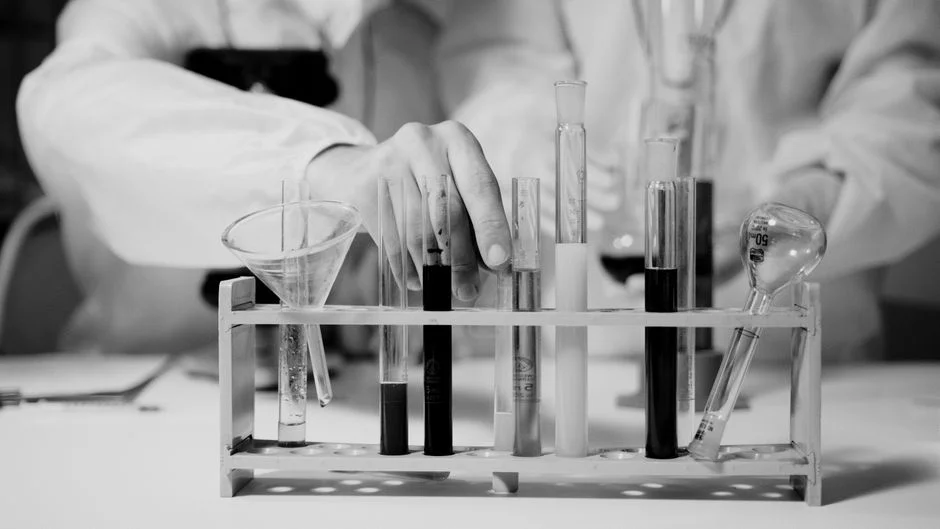
The matrix below is what an EHS manager would actually pin to a project-meeting slide. Effluent, footprint, energy, and reuse columns are the four that drive a fab upgrade decision; the GHG and microplastic rows are the carbon-and-quality differentiators that increasingly show up in corporate ESG reporting.
| Parameter | Conventional Activated Sludge (CAS) | Membrane Bioreactor (MBR) | Fab implication |
|---|---|---|---|
| Effluent TSS (mg/L) | 10–30 | <5 (typically <1) | MBR permeate can feed RO/UF without tertiary filtration |
| Effluent BOD (mg/L) | 10–25 | <5 | MBR clears EGLE/BWL BOD limits with margin |
| Effluent turbidity (NTU) | 2–10 | <0.5 | MBR protects downstream RO membranes from fouling |
| Typical SRT (days) | 5–15 | 20–60+ | Longer SRT mineralizes TMAH and dampens CMP shock loads |
| Footprint | Baseline (100%) | ~40% of CAS footprint | MBR delivers ~60% footprint reduction (S6), critical for 300mm brownfield expansion |
| Solid/liquid separation | Gravity clarifier, depends on floc settleability | Submerged PVDF UF, 0.04–0.2 μm (S4); DF-series modules 0.1 μm | MBR unaffected by surfactant or TMAH deflocculation events |
| Fouling / cleaning demand | Minimal (sludge wasting only) | Continuous air scour, relaxation, periodic CIP (NaOCl, citric acid) | MBR adds OPEX for chemicals and blower energy |
| Energy intensity | Lower blower + no membrane aeration | Higher; DF-series uses 10–20× less than external cross-flow | CAS still wins on raw kWh/m³ |
| Direct GHG emissions | 0.85 kgCO2eq/m³ (Mannina et al., plant-wide model) | 0.91 kgCO2eq/m³ (Mannina et al., plant-wide model) | MBR runs ~0.06 kgCO2eq/m³ higher — small relative to reuse offset |
| Microplastic carryover | 1.0 MP/L (Lares et al., via S3) | 0.4 MP/L (Lares et al., via S3) | MBR barrier physically rejects MP that clarifier overflow passes |
| TMAH removal behavior | Partial sorption onto mixed-liquor, partial biodegradation; sensitive to SRT | More complete mineralization at 20–60 d SRT with acclimatized biomass | MBR is the more reliable option for fabs with TMAH >50 mg/L |
| Reuse suitability | Requires sand filter / DAF / UF polish before RO | Permeate typically meets RO feed spec directly | MBR eliminates one tertiary stage in reuse trains |
For a fab targeting 60–80% reuse, the decisive rows are the last two: TMAH removal behavior and reuse suitability. MBR's longer SRT mineralizes TMAH rather than just sorbing it, and its permeate removes a tertiary-filtration stage from the reuse train. The energy and GHG penalty is real but small — 0.06 kgCO2eq/m³ and roughly 10–20% higher kWh per the DF-series energy spec — and it is typically paid back inside two to four years once the reuse offset is credited against BWL sewer surcharges.
Lansing, MI Compliance and Reuse Drivers in 2026
A Lansing fab's discharge path runs from fab-side neutralization through equalization to the BWL industrial sewer, with EGLE Part 22 categorical pretreatment standards (40 CFR 403 analog) governing the SIU discharge envelope and Part 31 surface-water quality standards as the backstop for any partial-treatment bypass. Typical 2026 permit numbers for a fab in this region sit around 250 mg/L BOD, 250 mg/L TSS, 25–75 mg/L fluoride (categorical-standard dependent), 10–50 mg/L ammonia, pH 6–10, and trace-metal limits driven by the categorical standard and BWL's local sewer-use ordinance.
Several Lansing-area fabs now hold permits that effectively push toward zero-liquid-discharge or mandate 60%+ reuse, in which case the MBR-vs-CAS question collapses into a different one: which effluent can feed a downstream RO or crystallizer train reliably. MBR permeate typically meets the SDI and turbidity feed spec of an industrial RO polish stage directly; CAS overflow rarely does without an added sand filter or DAF stage that itself generates a reject stream.
Fluoride is the one parameter that is largely orthogonal to the MBR/CAS decision — it is handled upstream by Ca precipitation and clarification regardless of biological-separation choice. Where MBR does help is downstream of precipitation: lower effluent TSS and turbidity reduce RO scaling and fouling, which improves reuse recovery and cuts RO CIP frequency. The net is that biological-separation choice and fluoride compliance are separable, but MBR's cleaner effluent makes the reuse economics work better.
Process Flow: How an MBR Train Fits a 2026 Fab WWTP

A 2026 fab MBR train typically runs in this order: equalization basin with cyanide/TMAH-specific hold time → pH adjustment and fluoride precipitation (lime or CaCl2) → primary lamella clarification of CaF2 sludge → biological reactor (anoxic zone for denitrification followed by aerobic zone for carbon and ammonia oxidation) → submerged PVDF MBR cassette for solid/liquid separation → RO or UF polish for reuse → UV or ozone for disinfection. The biological reactor is essentially the same as a CAS aeration basin; what changes is everything downstream of it.
For the MBR stage itself, a fab in the 100–500 m³/day range typically lands on the HydropureWater integrated MBR system (10–2,000 m³/day, <1 μm filtration, ~60% smaller footprint than CAS), with the separation step populated by DF-series flat-sheet MBR modules (0.1 μm pore size, 32–135 m³/day per 80–225 m² cassette, 10–20× lower energy than external cross-flow designs). Sludge from the MBR cassette is wasted at much lower volume than CAS waste-activated sludge because of the higher SRT, which is a small but real OPEX line item.
A CAS train running in the same fab would replace the MBR cassette with a secondary clarifier and almost always add a sand filter or DAF stage to meet the turbidity that RO feed requires. That added stage is the practical difference between a greenfield CAS-reuse train and a greenfield MBR-reuse train: CAS needs an extra unit operation, MBR does not, and the MBR train's smaller biological footprint and simpler tertiary chain typically win the site-layout argument in a constrained fab tool-expansion project.
Decision Framework: When to Choose MBR Over CAS in Lansing
The matrix below maps the four most common Lansing fab upgrade profiles to a recommended configuration. Use it as the first filter in a project meeting, then layer in site-specific hydraulics and capex before committing.
| Fab profile | Reuse target | Footprint constraint | Recommended configuration | Rationale |
|---|---|---|---|---|
| 300mm brownfield expansion, existing CAS | >50% | Tight (building-bounded) | Retain CAS basin as anoxic/aerobic stage; add MBR cassette downstream; convert clarifier to sludge buffer | Retrofit path: avoids new civil work, gains reuse-grade permeate; Karim and Mark (2017) note MBR CAPEX is amortized over very long horizons in non-reuse scenarios, so this path only pays back when reuse is on the table (S3) |
| 300mm greenfield in Lansing, water-stressed | 60–80% | Moderate | New MBR + RO polish; MBR permeate feeds RO directly | Reuse rate justifies MBR CAPEX; eliminates tertiary filtration stage CAS would require |
| Legacy 200mm fab, ample land, low reuse | <30% | None | Stay with CAS; optimize aeration and SRT for TMAH | CAS remains cheaper to operate long-term when reuse, footprint, and stringent trace-contaminant removal are not priorities (per Mannina et al. plant-wide model, S3) |
| High TMAH load (>50 mg/L), variable CMP discharge | Any | Any | MBR with extended SRT (30–60 d), equalization basin sized for peak tool dumps | Longer SRT is the only reliable way to mineralize TMAH; CAS sorption-only removal fails under shock load |
Two caveats to flag in the project meeting. First, MBR's operating-cost premium — roughly 0.06 kgCO2eq/m³ higher direct GHG (Mannina et al., S3) plus more energy for air scour — is real, but it is offset once a fab reuses 200–500 m³/day rather than paying BWL sewer surcharges and Great Lakes withdrawal fees. Second, the retrofit path is mechanically simple but hydraulically delicate: converting the existing clarifier to a sludge buffer changes the sludge age and wasting strategy, and a CIP regime on the new cassette must be specified before the first tool-campaign upset hits. Planning for the performance-based O&M side of that equation is covered in the performance-based O&M contract guide.
Frequently Asked Questions
Is MBR genuinely better than CAS for TMAH removal in semiconductor fab wastewater?
Yes, for fabs with TMAH above ~50 mg/L or with variable CMP discharge. MBR's 20–60+ day SRT drives full mineralization of TMAH through acclimatized biomass, while CAS at 5–15 day SRT relies on partial sorption to mixed-liquor solids and fails under shock load (per S3 plant-wide comparison).
Can MBR permeate feed a fab's RO system for UPW or cooling-tower make-up without tertiary filtration?
Typically yes. MBR effluent runs <5 mg/L TSS and <0.5 NTU turbidity, which clears the SDI and turbidity feed spec of an industrial RO polish stage without an intermediate sand filter or DAF — saving both capex and a reject stream in the reuse train (per DF-series product spec).
Can an existing CAS basin be retrofitted with an MBR cassette, or does it have to be greenfield?
Retrofit is feasible. The existing aeration basin typically becomes the biological stage, an MBR cassette is added downstream, and the existing clarifier is repurposed as a sludge buffer or equalization volume. Hydraulic profiling and CIP specification are the two engineering items that decide whether the retrofit is cheaper than greenfield (S3, S6).
What does MBR cost more than CAS to operate, and does reuse offset it?
MBR runs ~0.06 kgCO2eq/m³ higher direct GHG (Mannina et al., S3) and uses more energy for membrane air scour and CIP. At 200–500 m³/day of reused permeate, the BWL sewer-surcharge and Great Lakes withdrawal-fee offset typically returns the OPEX premium inside 2–4 years, especially when the MBR permeate eliminates a tertiary-filtration stage that CAS would require.
How does Lansing's EGLE Part 22 and BWL permitting affect the MBR-vs-CAS choice?
Part 22 categorical pretreatment standards and BWL sewer-use limits cap BOD at ≈250 mg/L, TSS at ≈250 mg/L, fluoride per categorical standard, and ammonia — limits both technologies can clear with proper design. Where permitting drives the choice is reuse: fabs with 60–80% reuse permits or ZLD trajectories need MBR-grade effluent to feed the downstream RO or crystallizer train reliably, which effectively makes MBR the default for those sites (per S3 plant-wide comparison).