

Why Jerusalem's Water Profile Changes the Sewage Treatment Brief
The Israel Water Authority issued a formal drought warning in August 2025 due to record-high temperatures, diminished surface inflows, and the desiccation of northern streams (source: Water Law 1959, amended 2006; Israel Water Authority statement, 2025-08). For a consulting engineer sizing a domestic sewage plant in Jerusalem, that warning sets the compliance floor. The country reuses about 80% of its collected sewage, roughly 400 billion liters per year, and 100% of Tel Aviv metropolitan effluent is treated and reused for irrigation (source: Water supply and sanitation in Israel, Wikipedia). Jerusalem sits above the Western Mountain Aquifer, which holds average annual renewable resources of about 360 million cubic meters (source: Green Now 2024 Cross-Border Pollution report). That aquifer also receives the city's desalinated supply through Mekorot's fifth pipeline to Jerusalem, commissioned in 2008, which moves approximately 150 million cubic meters per year (source: Water supply and sanitation in Israel, Wikipedia). Any discharge or leakage from a Jerusalem site has a credible path to a national-strategic aquifer, making reuse-grade polishing the regional standard for new builds.
Who Regulates and Operates Wastewater in Jerusalem
Three bodies shape every permit decision for a packaged or containerized sewage plant in Jerusalem. The Israel Water Authority, operating under the Water Law 1959 (amended 2006), is the national regulator for water and wastewater, while the Ministry of Energy and Water Resources sets policy (source: Water supply and sanitation in Israel, Wikipedia). For projects inside Jerusalem's municipal boundary, the receiving utility is Hagihon, which operates both the water distribution and wastewater collection networks; site effluent typically discharges to a Hagihon manhole under a utility-issued permit that specifies BOD, COD, TSS, and nitrogen limits. The 1995 Oslo II Interim Agreement sets the broader jurisdictional context, committing both sides to preventing uncontrolled sewage discharges that cross jurisdictional lines and to promoting wastewater treatment (source: Water supply and sanitation in Israel, Wikipedia). The 2024 Green Now report cites the Israel State Comptroller finding that the government lacks a single coordinating body for cross-border pollution, creating operational gaps where sites sit near boundary lines or wadis draining toward the aquifer. For a Jerusalem-only project, the practical translation is: design to the Hagihon discharge permit as the minimum bar, and document the receiving-water pathway so the design rationale survives regulator review.
Choosing the Right Process Train for a Jerusalem Site
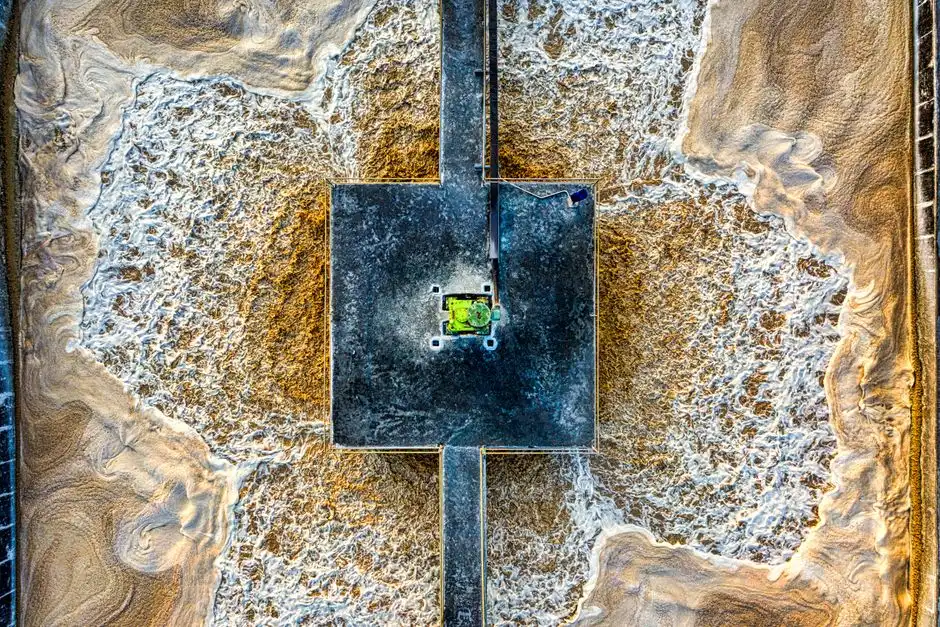
Three process trains cover roughly 90% of Jerusalem residential, hotel, hospital, and institutional bids: conventional A/O (anoxic/aerobic activated sludge) for straightforward sewer discharge, sequencing batch reactor (SBR) for intermittent or batch-flow sites such as schools, and membrane bioreactor (MBR) where the project targets reuse or operates on a tight footprint (HydropureWater field data, 2026). Selecting the right technology requires balancing discharge requirements against the sensitivity of the local karst topography. The typical secondary effluent envelope is BOD below 30 mg/L, COD below 100 mg/L, and TSS below 30 mg/L for sewer discharge; reuse irrigation in Israel typically requires BOD below 20 mg/L, TSS below 10 mg/L, and reliable disinfection (source: typical Israeli reuse specifications as cited in the Green Now 2024 regional context). The 2024 Green Now report estimates that 38 million cubic meters per year of Palestinian sewage and 5 million cubic meters per year of inadequately treated Israeli effluent enter the regional environment, draining through limestone terrain toward the Mountain Aquifer. That receiving-water reality makes tertiary polishing (MBR or UF) the expected standard for new builds. Jerusalem's limestone terrain amplifies the cost of incomplete nitrification or sludge carryover, as soluble nitrogen and fine solids travel long distances through karst pathways before reaching a receptor well. Selection should follow the discharge path first, the reuse target second, and the footprint constraint third.
| Process train | Typical flow range | BOD effluent (mg/L) | TSS effluent (mg/L) | Footprint | Best-fit Jerusalem use |
|---|---|---|---|---|---|
| A/O activated sludge (buried package) | 1–80 m³/h (24–1,920 m³/day) | <30 | <30 | Low (buried) | Residential, hotel — sewer discharge |
| SBR | 10–500 m³/day | <30 | <30 | Moderate | Intermittent flow, schools, camps |
| MBR | 5–2,000 m³/day | <10 | <5 | Higher (membrane skid) | Reuse, hospitals, tight sites |
Sizing a Packaged Sewage Plant: A Jerusalem Worked Example
The defensible design basis for a Jerusalem residential development is 150–200 L/cap/day, with a peaking factor of 2.0–2.5 applied to the average dry-weather flow to capture the diurnal peak (HydropureWater field data, 2026). Accurate sizing requires calculating organic load at roughly 60 g BOD/cap/day and 12 g NH₃-N/cap/day for the biological reactor. For a 1,000-resident community at 200 L/cap/day, the average flow is 200 m³/day and the peak hydraulic load lands between 400 and 500 m³/day—a range that maps to a single skid or buried package. The WSZ underground packaged sewage plant in its standard 1–80 m³/h (24–1,920 m³/day) envelope covers the 200 m³/day site directly, and two parallel units cover the 400–500 m³/day peak with built-in redundancy. Where the project targets landscape irrigation or a hospital-grade reuse envelope, the sizing math remains consistent, but the polishing step upgrades to an integrated MBR membrane bioreactor to push BOD below 10 mg/L and TSS below 5 mg/L. Engineers should validate the per-capita figure against the developer's actual fixture count, as Jerusalem residential blocks frequently run 180–220 L/cap/day once air-conditioning condensate and laundry are included.
| Parameter | Design value | Source |
|---|---|---|
| Per-capita flow (residential) | 150–200 L/cap/day | HydropureWater field data, 2026 |
| Peaking factor (diurnal) | 2.0–2.5 | HydropureWater field data, 2026 |
| BOD load per capita | ~60 g/cap/day | Standard domestic wastewater assumption |
| NH₃-N load per capita | ~12 g/cap/day | Standard domestic wastewater assumption |
| Worked example: 1,000 residents | 200 m³/day avg, 400–500 m³/day peak | Calculated |
Reuse, Discharge, and the Mountain Aquifer Compliance Test
Two realistic end uses exist for treated effluent in Jerusalem: on-site landscape irrigation within the project boundary, and discharge to the Hagihon municipal sewer. The reuse pathway pairs an MBR or A/O + UF train with UV or chlorination disinfection, consistent with the national benchmark of 80% sewage reuse (source: Water supply and sanitation in Israel, Wikipedia). The sewer pathway routes secondary effluent to a Hagihon manhole under a utility permit that typically sets BOD below 350 mg/L at the connection point, with tighter internal targets to keep the utility surcharge manageable. For any site where the hydraulic connection to the Mountain Aquifer is short or the development sits upstream of a known recharge zone, default to reuse-grade MBR effluent regardless of discharge permit allowances, as partial-treatment failures travel through karst pathways faster than regulatory response cycles. For comparison on process selection in similar dense-urban contexts, see our domestic sewage treatment in Bristol 2026 guide, and for regional containerized municipal sizing, the Turkey municipal sewage treatment plant guide covers CAPEX frameworks that translate to Mediterranean-climate bids.
Frequently Asked Questions
What permit regulates a domestic sewage plant in Jerusalem?
The Israel Water Authority, operating under the Water Law 1959 (amended 2006), sets the national regulatory frame; the Ministry of Energy and Water Resources sets policy; and Hagihon issues the site-level discharge permit for projects inside the Jerusalem municipal boundary, typically setting BOD, COD, TSS, and nitrogen limits at the sewer connection.
How do you size a packaged STP for a Jerusalem residential project?
Use 150–200 L/cap/day as the residential design flow, 60 g BOD/cap/day and 12 g NH₃-N/cap/day for the biological load, and a diurnal peaking factor of 2.0–2.5. A 1,000-resident community at 200 L/cap/day yields 200 m³/day average and 400–500 m³/day peak—a range covered by a single WSZ-class buried package or two units in parallel.
Can treated effluent be reused for irrigation in Jerusalem?
Yes. The national reuse benchmark is about 80% of collected sewage—roughly 400 billion liters per year—and reuse-grade effluent (typically BOD below 20 mg/L, TSS below 10 mg/L) is standard for landscape irrigation within the site boundary, with MBR or UF polishing plus UV or chlorine disinfection as the typical train.