What 'Domestic Sewage Treatment' Means in Manchester in 2026
Domestic sewage treatment in Manchester for 2026 follows the EU Urban Waste Water Directive 91/271/EEC envelope — 25 mg/L BOD, 125 mg/L COD, 60 mg/L TSS and 2 mg/L phosphorus for catchments serving more than 100,000 people such as the Irwell/Mersey rivers that feed Davyhulme WwTW. For sites without a sewer, a buried WSZ package plant (1–80 m³/h) or a packaged MBR (<1 μm effluent, 10–2,000 m³/day) is the standard 2026 choice.
Under 91/271/EEC, "domestic wastewater" means sewage from kitchens, laundries, WCs and baths in residential buildings — distinct from industrial effluent that must be pre-treated under a trade consent before it can enter the same sewer (Sustainability, MDPI, 2014). A 200-bedroom hotel, a hospital, a rural housing estate off the United Utilities network, and a new-build apartment block without a sewer connection all fall into this same domestic category for the purposes of sizing and discharge consent.
The two real scenarios a Greater Manchester engineer faces are: (a) a connection to the United Utilities sewer that ultimately drains to Davyhulme WwTW, where the developer's obligation ends at the manhole and United Utilities takes the consent risk; or (b) no sewer available, in which case the developer owns the treatment works, the EA permit, and the consent risk for life. Davyhulme is the historic origin of the activated-sludge process (developed 1914 by Ardern and Lockett at what was then the Manchester Corporation's Davyhulme Sewage Works), and remains the receiving works for the Irwell/Mersey catchment — relevant framing when the Environment Agency reviews any new discharge in this catchment (Sustainability, MDPI, 2014). Any 2026 discharge to the Irwell or Mersey requires an EA permit and must meet the 91/271/EEC numeric standards described in the next section.
The 2026 Manchester Discharge Standard: UWWTD 91/271/EEC and EA Consent
Any package plant discharging to the Irwell/Mersey catchment in 2026 is judged against the 91/271/EEC urban wastewater envelope: 25 mg/L BOD, 125 mg/L COD, 60 mg/L TSS, 15 mg/L total N in nitrogen-sensitive areas, and 2 mg/L total phosphorus for catchments serving more than 100,000 PE (per UWWTD 91/271/EEC, Annex I). The Irwell/Mersey are designated sensitive under the Urban Waste Water Treatment (England and Wales) Regulations 1994, which is why Manchester domestic discharges face tighter N and P targets than a rural site in a non-sensitive catchment.
The Environment Agency issues a discharge consent under the Environmental Permitting (England and Wales) Regulations 2016, with numeric limits set on a site-specific basis but anchored to the 91/271/EEC envelope. Any site discharging more than 5 m³/day to surface water or more than 10 m³/day to ground in the Irwell/Mersey catchment needs a bespoke environmental permit — a default "standard rules" permit is rarely adequate for a new residential, hotel or hospital development in this catchment. For planning submissions, the developer's design statement should show the plant is sized to meet 25 mg/L BOD, 125 mg/L COD and 2 mg/L P under the 95-percentile effluent rule, not just the average.
One consent-risk argument the EA consistently raises on the Irwell is heavy metals. Mass-balance work on small Italian plants treating domestic wastewater in compliance with 91/271/EEC shows that feces contribute 60–70% of the load of Cd, Zn, Cu and Ni in domestic wastewater (Sustainability, MDPI, 2014). For Manchester sites, that translates into a defensible case for including metals monitoring in any discharge consent — the fecal fraction cannot be diluted away by source control, only by the receiving water's own assimilative capacity, which the EA treats as finite.
| Parameter | UWWTD limit (catchment >10,000 PE) | UWWTD limit (catchment >100,000 PE) | Typical Manchester EA consent target |
|---|---|---|---|
| BOD | 25 mg/L | 25 mg/L | ≤25 mg/L (95-percentile) |
| COD | 125 mg/L | 125 mg/L | ≤125 mg/L |
| TSS | 60 mg/L | 35 mg/L | ≤30–60 mg/L |
| Total N | 15 mg/L (sensitive areas) | 15 mg/L (sensitive areas) | ≤15 mg/L |
| Total P | 2 mg/L (sensitive areas) | 2 mg/L | ≤2 mg/L (often 1 mg/L for new permits) |
Process Trains That Work in Manchester: Buried A/O, MBR, and Hybrid Packages
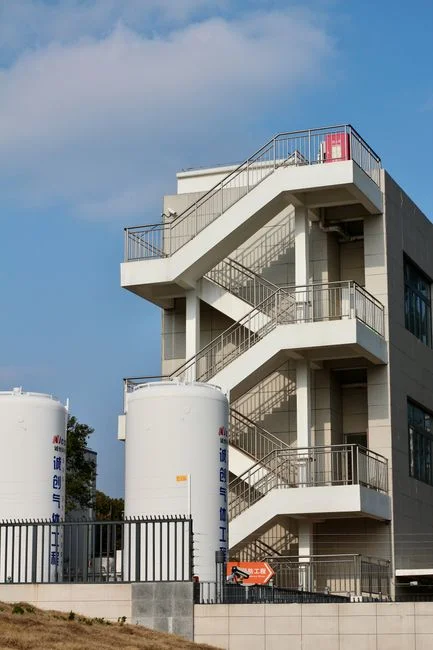
A defensible 2026 domestic process train in Greater Manchester runs: headworks (grit removal + maceration) → biological stage (A/O contact oxidation, A²/O, or MBR) → clarification (lamella or membrane tank) → disinfection (UV or chlorine dioxide) → sludge thickening/dewatering. The headworks sequence at the Manchester-by-the-Sea WwTW — raw sewage through a "Muffin Monster" grinder, then a grit removal cyclone, then to aeration — is a transferable design pattern for any small Manchester plant where rag and grit from the sewer would otherwise foul downstream biological stages (Manchester-by-the-Sea Sewage Treatment, manchester.ma.us).
For the biological stage, three configurations dominate the 2026 domestic market in the UK: A/O contact oxidation (anoxic + aerobic in a single buried tank, suited to the WSZ buried package sewage treatment plant envelope of 1–80 m³/h); A²/O for sites with a 15 mg/L total N consent where true biological nitrogen removal is required; and submerged MBR with PVDF flat-sheet membranes at 0.1 μm nominal pore size. The DF series MBR module delivers 32–135 m³/day per module, which is the unit cell that scales the packaged MBR membrane bioreactor envelope from 10 m³/day up to 2,000 m³/day (HydropureWater verified product catalog, 2026).
Clarification is the unit operation that splits the two technologies: a conventional A/O train uses a lamella clarifier at 20–40 m³/m²·h surface loading, with sludge returned to the aerobic tank; an MBR train replaces the clarifier with the membrane tank, achieving TSS <1 mg/L in the effluent without a separate settlement stage. Disinfection is typically UV (effective against chlorine-resistant Cryptosporidium and Giardia, no DBPs) for MBR, and either UV or chlorine dioxide for conventional A/O. Sludge handling matters because the EA reviews the biosolids stream even for small plants — a rotary drum thickener to 5% DS upstream of a plate and frame filter press to 18–25% DS is the standard Manchester envelope, and 50–80% of Cd, Cu, Pb and Zn in the mixed sludge stream is actually delivered by roof and street runoff rather than by sewage itself (Sustainability, MDPI, 2014), which is a design argument for separating surface water from foul upstream of any package plant.
WSZ Package Plant vs Packaged MBR: Manchester Site Decision Matrix
The WSZ buried package plant envelope covers 1–80 m³/h of A/O + sedimentation + disinfection in a single fully buried unit with no operator required (HydropureWater verified product catalog, 2026). The packaged MBR membrane bioreactor envelope covers 10–2,000 m³/day with sub-1 μm effluent and approximately 60% footprint reduction versus a conventional activated-sludge plant of equivalent duty. The choice between them is not about which technology is "better" — it is about which envelope matches the site's consent, footprint, reuse and operator constraints.
For a residential estate, a rural site, or a hotel under 50 m³/h with no reuse requirement, the WSZ is the right answer: it is engineered to meet 91/271/EEC (25 mg/L BOD, 125 mg/L COD, 60 mg/L TSS), it is buried so the developer gets the surface back as landscaping or parking, and it runs unattended between 12-monthly sludge offloads. For a water-reuse site, a hospital with a washdown demand, or a tight-footprint urban infill where the EA has set a tighter BOD/TSS target than the 91/271/EEC envelope, the MBR is the right answer: BOD <5 mg/L and TSS <1 mg/L are routine, and the <1 μm effluent can be fed straight to a UV bank for non-potable reuse under an EA controlled activity.
| Parameter | WSZ buried package plant | Packaged MBR |
|---|---|---|
| Duty envelope | 1–80 m³/h (≈ 24–1,920 m³/day) | 10–2,000 m³/day |
| Typical effluent BOD | ≤25 mg/L (91/271/EEC envelope) | <5 mg/L |
| Typical effluent TSS | ≤60 mg/L | <1 mg/L |
| Typical effluent NH₃-N | ≤15 mg/L (with A/O contact) | <1 mg/L |
| Footprint | Buried — zero above-grade footprint | ≈60% of conventional; skid-mounted above grade |
| Operator requirement | None (12-monthly sludge offload) | Quarterly membrane CIP; trained operator |
| Reuse-ready effluent | No | Yes (UV downstream → irrigation) |
| Best-fit Manchester use | Residential, rural, hotel <50 m³/h | Hospital, water-reuse, tight infill |
Manchester Sizing Worked Example: A 200 m³/day Domestic Site
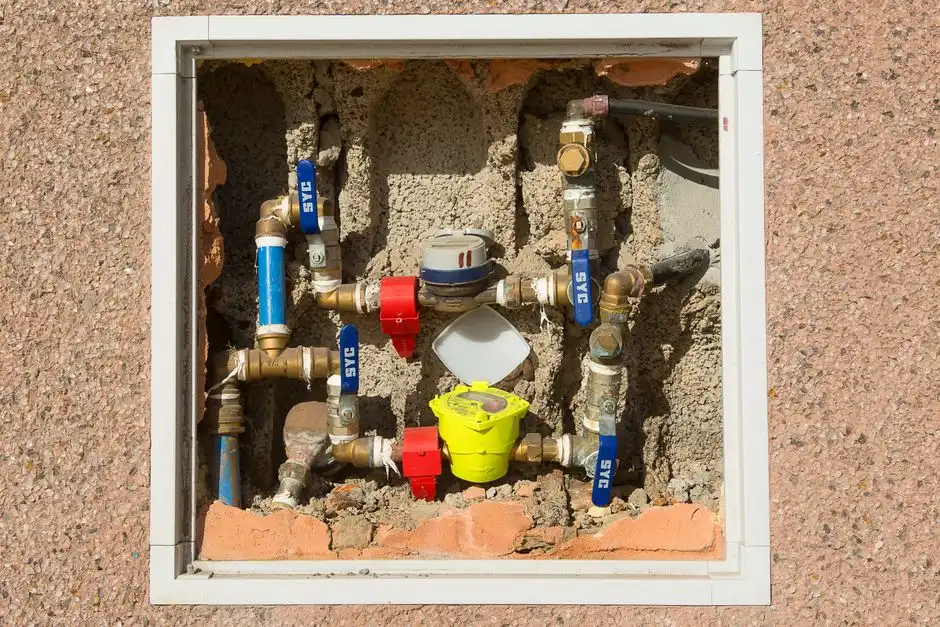
Assume a 200 m³/day residential block, approximately 1,500 PE, discharging to the Irwell/Mersey catchment under a 91/271/EEC sensitive-area consent (15 mg/L N, 2 mg/L P). The WSZ option: select 2 × WSZ-80 m³/h units in duty/standby (combined nominal capacity 160 m³/h, comfortably above the 200 m³/day average and the typical 3× peaking factor for domestic flows). Burial depth is typically 2–4 m to invert, the surface above can be landscaped or used as a car park, and the only operator intervention is a 12-monthly sludge tanker visit (HydropureWater verified product catalog, 2026). Consent risk is that the WSZ meets the 91/271/EEC envelope but not a tighter reuse consent — if the EA or United Utilities wants <10 mg/L BOD for a particular outfall, WSZ is marginal.
The MBR option: select 2 × DF225 PVDF flat-sheet modules per the DF series MBR module datasheet, producing up to 270 m³/day combined at 32–135 m³/day per module (HydropureWater verified product catalog, 2026). That single skid comfortably covers the 200 m³/day average duty with one module in standby, delivers <1 μm effluent that can be UV-disinfected and reused for irrigation under an EA controlled activity, and the modular build means future capacity can be added in single-module increments. Operator time is higher than WSZ (quarterly membrane clean-in-place), but the consent envelope is wider and the reuse credit is real. The hydraulic design logic itself is transferable from the Manchester-by-the-Sea plant, which is sized for an average daily flow of 1.2 MGD, a maximum daily flow of 3.0 MGD and an instantaneous flow of 5.0 MGD (manchester.ma.us) — i.e. peak factors of 2.5× on the daily average and 4.2× on the instantaneous, which is the right order of magnitude to apply to a 200 m³/day Manchester residential block for its forward design.
For an apples-to-apples capital comparison on a 200 m³/day site, the choice is footprint versus consent headroom. The WSZ path is cheaper on civils because it is buried and the surface is returned to the developer; the MBR path costs more in membrane modules and operator hours but unlocks reuse and a tighter effluent. Both are defensible to a planning officer and to the EA — the design statement just has to make the case for whichever is selected.
Sludge, Metals Monitoring, and the 91/271/EEC Consent Risk for Manchester Sites
For any Manchester domestic plant, sludge is not an afterthought — it is the stream the EA scrutinises most carefully when reviewing a permit application. Mass-balance data on small 91/271/EEC-compliant plants show that feces drive 60–70% of the Cd, Zn, Cu and Ni load in domestic wastewater, and that roof and street runoff contribute 50–80% of the Cd, Cu, Pb and Zn in the mixed sludge stream (Sustainability, MDPI, 2014). The consent-risk implication is direct: separating surface water from foul upstream of any package plant is not just a hydraulic best practice, it is a metals-reduction argument that the EA can be shown on a mass-balance basis.
On the biosolids side, the dewatering target should be at least 18% DS for transport economics — below that, the water fraction dominates the tanker volume and the offload cost. A small Manchester plant typically uses a rotary drum thickener to 5% DS followed by a plate and frame filter press to 18–25% DS before the cake goes to landfill or to agricultural reuse under the Sewage Sludge Directive 86/278/EEC (Sustainability, MDPI, 2014). For the 1–500 m² plate area range that covers domestic and small commercial duties, a plate and frame filter press is the standard 2026 sludge-line unit. The municipal sewage sludge 2026 process guide goes deeper on the digestion and drying envelope for sites that need it.
Final consent-risk flag for any Manchester developer: if the receiving water is the Irwell or the Mersey, the EA will almost certainly require metals monitoring in the discharge consent and the sludge monitoring record for the first three years of operation. Building that monitoring cost into the operating budget at planning stage is the difference between a consent that is granted on first review and one that gets called in for further information.
Frequently Asked Questions
Do I need an EA permit for a buried package plant in Greater Manchester?
Yes. Any discharge of more than 5 m³/day to surface water or 10 m³/day to ground in the Irwell/Mersey catchment requires an environmental permit under the Environmental Permitting (England and Wales) Regulations 2016, with numeric limits anchored to UWWTD 91/271/EEC (25 mg/L BOD, 125 mg/L COD, 60 mg/L TSS, 2 mg/L P for catchments >100,000 PE).
WSZ or MBR for a 200 m³/day Manchester residential site?
For a 200 m³/day site with no reuse requirement, 2 × WSZ-80 m³/h units in duty/standby deliver the 91/271/EEC envelope with no operator. For a site with a reuse consent or tight footprint, 2 × DF225 MBR modules produce up to 270 m³/day of <1 μm effluent suitable for UV and irrigation reuse.
Why does the EA ask about metals on a domestic Manchester consent?
Mass-balance work on small 91/271/EEC plants shows feces drive 60–70% of Cd, Zn, Cu and Ni in domestic wastewater (Sustainability, MDPI, 2014). The EA treats metals as a routine domestic-consent parameter in the Irwell/Mersey catchment, not just for industrial sites.
Related Equipment
- WSZ buried package sewage treatment plant — specifications, capacity range, and technical data
- packaged MBR membrane bioreactor — specifications, capacity range, and technical data
- DF series PVDF flat-sheet MBR module — specifications, capacity range, and technical data