
What Changes for a Richland Food Plant in 2026
A Notice of Violation from the City of Richland sewerage authority — not a federal inspection — is the document that reorders a Benton County plant manager's calendar in 2026. When a Tri-Cities food or beverage processor receives such a letter for elevated BOD, total suspended solids, or FOG, the clock starts on a 30–60 day window to submit a compliance plan with measurable effluent targets. The indirect-discharge route through the local POTW means the controlling authority is municipal, operating under a Washington Dept. of Ecology-approved pretreatment program, so a single letter from the local authority carries the same operational weight as a federal order.
Loads are rising in 2026, not falling. U.S. per-capita food waste runs 149 kg under the current EPA-2021 definition and 107 kg under the 2016 baseline (Springer Nature, 2024-12); the gap matters because it raises the official reduction target to 74 kg per capita. None of the 50 states are projected to meet that goal on policy alone, meaning food waste streams feeding industrial wastewater trains in 2026 stay at or above current strength. The same definitional change counts sewer and biological food-waste recycling as diversion, so a plant documenting low-discharge or zero-discharge claims in a 2026 audit has to account for diversion correctly or risk a documentation finding on top of an effluent finding.
Washington Dept. of Ecology administers the state pretreatment program; cities adopt and enforce local sewer use ordinances under WAC 173-216. For a Richland discharger, that means the City of Richland sewer use ordinance sits on top of the federal categorical standards, and the city can set local limits stricter than 40 CFR 432 but never weaker (per 40 CFR 403.5). Engineers who treat the NOV as a federal problem end up filing the wrong response with the wrong authority; the city is the audience.
The Four-Rule Stack Behind a 2026 NOV
Four rule layers stack on top of each other, and a 2026 NOV from the City of Richland typically cites all four. Clean Water Act §307(b) authorizes EPA to set national pretreatment standards for industrial users discharging to a POTW. The general standards — prohibited discharges, categorical standards framework, local limits — live at 40 CFR 403, and the food and beverage categorical standards live at 40 CFR 432. EPA delegates day-to-day enforcement to approved state and local programs, which is why a Richland indirect discharger hears from the city, not EPA Region 10.
40 CFR 432 is split by subpart: meat products (432.1–432.10), dairy (432.21–432.30), grain mills (432.41–432.50), canned and frozen fruits and vegetables (432.61–432.70), and beverages (432.71–432.80). Each subpart lists pollutant parameters, daily maximum limits, monthly average limits, and the applicable sub-category tied to SIC/NAICS codes. EPA's Attachment 3-1: Summary of Categorical Standards (December 2024) is the live index engineers should bookmark; local limits can be stricter than the federal floor but never weaker (per 40 CFR 403.5).
If a plant engineer cannot cite the exact 40 CFR 432 subpart, the 40 CFR 403 general standard, and the local ordinance clause being enforced, they will struggle to contest a BOD concentration finding with the sewerage authority. The cover page of a 2026 compliance plan should list all three citations before any equipment proposal — that single line tells the auditor the engineer understands the framework and is not improvising.
Which 40 CFR 432 Subpart Applies to a Tri-Cities Plant

The Tri-Cities food and beverage cluster is dominated by wineries, dairies, fruit packers, breweries, and snack-food lines — each one maps cleanly to a 40 CFR 432 subpart. The sub-sectors actually sited near Richland produce distinctly different wastewater signatures, and the equipment train changes with the subpart.
Meat and poultry plants (subpart 432.1–432.10) carry the highest FOG load — typically 800–2,000 mg/L in the raw stream — and require the DAF as the critical stage with skimmed float routed to a separate FOG tank to prevent re-emulsification. Dairy and cheese plants (subpart 432.21–432.30) discharge protein-rich waste that drives foaming and odor in the biological stage; MBBR or IFAS should be specified with 350–500 m²/m³ of media to absorb protein-bound BOD without washout. The nearby dairy operations on the Benton County side of the river fit this profile.
Beverage, brewery, and confectionery plants (subpart 432.71–432.80) produce sugar- and starch-dominated waste that spikes BOD within hours of a batch; a robust equalization basin with at least 8 hours of retention is mandatory before the biological stage, or the bugs see a COD swing they cannot absorb. Canned and frozen fruit and vegetable processors (subpart 432.61–432.70) — a meaningful sub-sector in the Mid-Columbia given the surrounding orchard and vineyard acreage — carry high TSS from pulp, seeds, and skin, and need correctly sized screening and DAF stages before any biological step. Grain mills (subpart 432.41–432.50) discharge high-COD wash water that benefits from equalization and a high-rate biological stage.
Typical 2026 Indirect-Discharge Parameter Table for a Richland POTW
Most Washington POTWs accepting food and beverage indirect discharge set limits on the parameters below. The values are typical ceilings; the engineer must verify the exact numbers in their own discharge permit and in the City of Richland sewer use ordinance before sizing any equipment.
| Parameter | Typical Daily Max | Typical Monthly Avg | Notes |
|---|---|---|---|
| BOD5 | ≤ 250 mg/L | ≤ 150 mg/L | Verify exact value in City of Richland permit |
| TSS | ≤ 250 mg/L | ≤ 150 mg/L | Lower where POTW has strict headworks screening |
| FOG (hexane extractable) | ≤ 100 mg/L | — | Stricter for meat/poultry subpart |
| pH | 6.0–9.0 SU | — | Excursions trigger automated pH dosing |
| Temperature | ≤ 40 °C (104 °F) | — | At POTW headworks |
| Ammonia (as N) | ≤ 20 mg/L | — | Lower in summer where POTW runs nitrification |
| Oil & grease | No visible sheen | — | At discharge point |
Reporting scope is also shifting: the EPA-2021 definition now counts sewer and biological food-waste recycling as diversion (Springer Nature, 2024-12). Mass limits on effluent remain unchanged, but diversion accounting affects how a plant documents zero-discharge or low-discharge claims during a 2026 audit, and a Richland reviewer will ask for diversion records alongside the DMR.
A Defensible Five-Stage Train for a Richland Food Plant
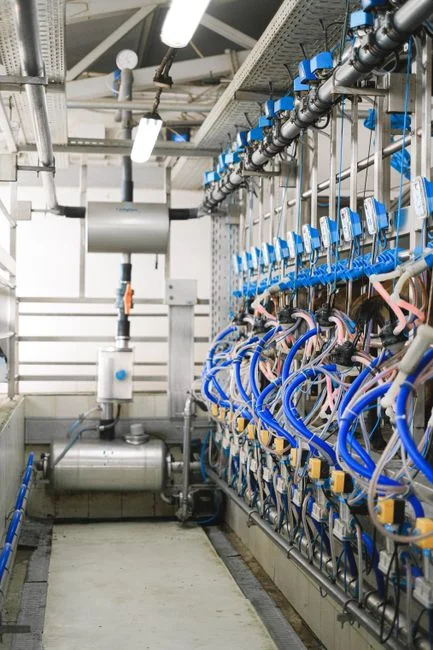
A defensible 2026 train for a Benton County food or beverage plant follows a five-stage sequence, allowing the engineer to justify each performance metric to the city reviewer. Each stage is mapped to the parameter it actually removes, and the auditor can mark off compliance parameter by parameter.
Stage 1 uses a GX series rotary mechanical bar screen with at least 6 mm opening for headworks protection, sized to remove rags, seeds, pulp, and packaging debris that would otherwise damage a DAF pump or jam the biological reactor. Routine upkeep on this stage is covered in the mechanical bar screen maintenance protocol and should appear in the operations log attached to the compliance plan.
Stage 2 — the DAF system with a PLC-controlled coagulant and polymer injection system — is the workhorse for meat, poultry, dairy, and snack-food operations. A properly coagulated DAF cut typically reduces FOG from 800–1,500 mg/L to under 100 mg/L (ALAR engineering data, 2026), and routes the skimmed float to a dedicated FOG tank. For meat and poultry sub-sectors, this is the stage that decides whether the NOV closes.
Stage 3 — equalization with at least 8 hours of retention plus PLC-controlled pH dosing — stabilizes CIP surges that shift pH from 2 to 12 in a single shift and pushes TDS swings away from the biological stage. Stage 4 covers biological polishing: an integrated MBR system delivering sub-1 µm membrane filtration and near-reuse quality effluent for tight-footprint sites, or MBBR/IFAS at 350–500 m²/m³ media area where footprint allows. Stage 5 — a plate-and-frame filter press — combines DAF float and waste activated sludge to 20–25% cake solids, cutting hauling volume 75–80% versus liquid sludge. Sub-sector stress on different stages dictates where to add capacity; the reference poultry processing wastewater treatment guide walks through a comparable high-FOG train in detail.
Sizing the 2026 Train for Peak, Not Average
Sizing a DAF-first train in 2026 requires calculating based on peak hourly flow rather than average daily flow. Design for 1.5× the average flow; the peak hourly number — not the average daily number — is what controls DAF hydraulic loading and equalization basin volume. The DAF family covers 4–300 m³/h across 13 standard models, allowing direct selection against peak FOG and TSS load (HydropureWater product data, 2026), and the integrated MBR system covers 10–2,000 m³/day in a single skid with roughly 60% smaller footprint than conventional activated sludge (HydropureWater product data, 2026).
When a NOV precludes an 8–16 week permanent install, temporary pretreatment is a proven bridge. Mead & Hunt (2024) delivered a 70,000 gpd (≈ 265 m³/day) system with pH control, FOG removal, one day of effluent storage, a temporary lift station, and a sampling plan within a 10-day window. The same approach gives a Tri-Cities plant a way to demonstrate continuous compliance inside the 30–60 day NOV response window while the permanent train is being built. For longer-term OPEX modeling, the 2026 AOP system operating cost guide covers downstream polishing economics.
Six Steps to Close Out a 2026 NOV
The defensible sequence for closing out a 2026 NOV from the City of Richland sewerage authority runs as follows. Each step produces a document the engineer can attach to the compliance plan submission.
- Baseline sampling. Run 24-hour flow-proportioned composite sampling across at least five operating days, covering both production and CIP shifts, so the data set matches what the city will see in its own sampling.
- Jar testing and DAF pilot. Run coagulant and polymer jar tests on real plant water, then a DAF pilot on the same water. Synthetic water does not survive an audit challenge.
- Written confirmation of local limits. Get written confirmation from the City of Richland sewerage authority of the exact BOD, TSS, FOG, pH, and ammonia limits in the discharge permit, and copy Washington Dept. of Ecology on the correspondence.
- Final equipment selection and PO. Size to peak hourly flow and the sub-sector FOG/TSS load, not the daily average; place the PO inside the NOV response window so the timeline is documented.
- Installation and commissioning. 8–16 weeks for a permanent DAF-plus-biological train, or 10 days for a temporary system if the NOV timeline forces it. Either path produces a commissioning report and an initial DMR.
- 90-day shakedown. Monthly discharge monitoring reports locked to the permit renewal window, with the engineer able to show continuous compliance at the next audit.
Aligning these six steps with the 2026 permit renewal window is the difference between a clean audit and an enforcement order; the 90-day shakedown is where the equipment train proves it holds the parameter table written into the permit.
Frequently Asked Questions
What 2026 indirect-discharge limits apply to a food or beverage plant near Richland, WA?
Food and beverage plants discharging to the City of Richland sewerage authority face federal categorical standards at 40 CFR 432 (subpart selected by sub-sector — meat, dairy, grain mill, fruit/vegetable, or beverage) and the general pretreatment standards at 40 CFR 403. The city applies local limits under WAC 173-216 that can be stricter than the federal floor but never weaker. Typical 2026 ceilings run BOD 250 mg/L daily max, TSS 250 mg/L daily max, FOG 100 mg/L, pH 6.0–9.0, temperature ≤ 40 °C (per 40 CFR 403.5).
How long does a Tri-Cities plant have to respond to a 2026 Notice of Violation?
The City of Richland sewerage authority typically issues a NOV with a 30–60 day window to submit a compliance plan containing measurable effluent targets, baseline sampling, and a procurement timeline. A 10-day temporary pretreatment system (Mead & Hunt, 2024) is the documented precedent for keeping a plant in compliance while the permanent 8–16 week train is being built.
Which 40 CFR 432 subpart applies to wineries, dairies, and fruit packers in the Tri-Cities?
Wineries and breweries fall under beverages (subpart 432.71–432.80), with sugar- and starch-dominated waste requiring at least 8 hours of equalization. Dairies in Benton County map to dairy products (subpart 432.21–432.30), with protein-rich waste best handled by MBBR or IFAS at 350–500 m²/m³ of media. Canned and frozen fruit and vegetable processors — the dominant Mid-Columbia sub-sector — fall under subpart 432.61–432.70, with high TSS from pulp and seeds demanding correctly sized screening and DAF stages ahead of any biological step.
What FOG removal can a DAF realistically hit for a meat or poultry plant near Richland?
A properly coagulated DAF cut typically reduces FOG from 800–1,500 mg/L in the raw stream to under 100 mg/L (ALAR engineering data, 2026), with the skimmed float routed to a separate FOG tank to prevent re-emulsification. The DAF is the controlling stage for the meat and poultry subpart under 40 CFR 432, and the engineering data should be cited directly in the compliance plan.
What cake solids should a plate-and-frame filter press hit for a food plant in 2026?
A plate-and-frame filter press combining DAF float and waste activated sludge typically dewaters to 20–25% cake solids, reducing hauling volume 75–80% versus liquid sludge. The 20–25% target is the standard engineering range for food and beverage sludge and should appear verbatim in the solids-handling section of any 2026 compliance plan.