How UK Pharmaceutical Wastewater Is Regulated in 2026
Pharmaceutical wastewater treatment in the UK in 2026 sits on three regulatory pillars: the Environment Agency EPR permit for any direct discharge to surface water or controlled waters, the Water UK Trade Effluent Consent for discharges to sewer administered by the relevant Sewerage Undertaker, and the post-Brexit UK BAT conclusions for the chemical and pharmaceutical sectors (GB BAT reference document, 2024 update) which set the benchmark techniques the regulator expects an operator to assess. Sites discharging to sewer typically face a standard consent template with numerical limits on COD (often 1,000–5,000 mg/L), TSS (200–500 mg/L), pH (6–10), temperature (≤ 38–43 °C), ammoniacal nitrogen (50–100 mg/L), oil/grease (≤ 50 mg/L) and named toxic substances with site-specific trigger levels. The Environment Agency's Watch List continues to flag pharmaceutical substances — including diclofenac, the macrolide antibiotics and 17-beta-estradiol — for enhanced monitoring, and these substances increasingly appear as specific consent parameters at both sewer- and surface-water-discharging sites. For an engineer scoping a new or upgraded ETP, the practical consequence is that the biological stage alone rarely satisfies the consent; refractory COD and trace APIs must be addressed by tertiary or AOP polishing to demonstrate BAT and protect the operator from enforcement.
What Is Actually in UK Pharmaceutical Effluent
Veolia's survey of 50 pharmaceutical manufacturing plants (cited in their 2020 Wastewater Guide, still the most-cited characterisation source) shows just how wide the influent envelope is: daily flows of 30–600 m³/d, COD of 400–62,000 mg/L (with one outlier plant at 300,000 mg/L), and COD/BOD5 ratios of 1–15. The ratio matters more than the absolute COD: once it exceeds roughly 3, the bulk of the organic load becomes difficult to biodegrade and a biological-only train will not reach typical UK consent limits. Multi-product and batch facilities produce simultaneous peaks in flow, load and toxicity that equalisation must flatten, because a single CIP washout or solvent campaign can shift influent COD by an order of magnitude inside one shift.
| Parameter | Typical range (Veolia, 50-plant survey) | Engineering implication |
|---|---|---|
| Daily flow | 30–600 m³/d | Equalisation basin sized to ≥ 24 h flow |
| Influent COD | 400–62,000 mg/L (outlier 300,000 mg/L) | Robust biological stage + AOP likely required |
| COD/BOD5 ratio | 1–15 | Ratio > 3 signals significant refractory COD |
| Process solvents | 30+ regularly used (methanol, ethanol, acetone, IPA, acetic acid) | Stripping/emission control + DAF pre-stage |
| Salinity | Elevated in fermentation streams | Limits biomass, accelerates membrane corrosion |
| Surfactants / cleaning agents | From CIP, equipment and floor washing | Drives foam in aeration tanks; DAF pre-treatment advised |
Solvent residues from chemical synthesis and mother-liquor recovery typically drive the high COD; fermentation and biologics streams add salinity, nutrients and biologically active substances that need controlled deactivation; CIP detergents drive the foaming that often forces operators to over-design DAF pre-treatment. Refractory COD — also called hard, ultimate or persistent COD — is the fraction that resists biological oxidation because the molecules are intrinsically stable (e.g. aromatic rings, halogenated APIs) or because they inhibit biomass. It is the parameter that makes or breaks a UK consent.
The Core UK Process Train: Equalisation to Discharge
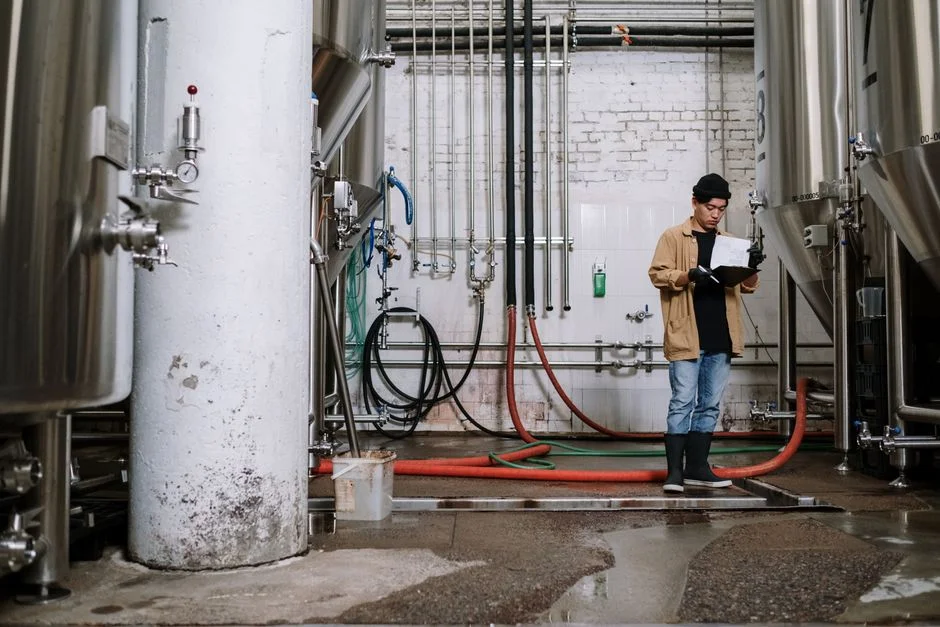
A compliant UK pharma effluent treatment line in 2026 typically runs through six unit operations. The equalisation and pH-correction stage holds influent for 24–48 hours, dampens batch peaks in flow, COD and toxicity, and lifts pH into the 6.5–8.5 band the biomass prefers. From there, primary separation with a rotary bar screen (2–6 mm aperture) followed by a dissolved air flotation unit removes free oil, surfactants, suspended solids and the foam-promoting detergents that would otherwise blanket the aeration tank. The biological stage is the workhorse: an MBBR (moving bed biofilm reactor) handles shock loads cheaply and tolerates variability, while an integrated MBR membrane bioreactor delivers reliably TSS < 5 mg/L and COD reductions of 90–95% on the biodegradable fraction, with the additional benefit of retaining slow-growing biomass able to attack some refractory APIs. Tertiary polishing — multi-media filtration, granular activated carbon (GAC), UF and a polishing industrial RO system — polishes the effluent to the consent and, on sites with water-stressed permits, returns 50–80% of treated water to cooling-tower make-up or CIP. Sludge handling closes the loop: a plate-and-frame filter press dewaters the biological/API-bearing sludge to a 22–28% dry cake suitable for incineration or hazardous waste disposal.
Advanced Oxidation and API Removal: What the 2025 Data Shows
For the refractory fraction and for sites whose consent names specific APIs (cytotoxics, hormones, antibiotics), an advanced oxidation step is increasingly standard. The 2025 RSC Adv. review of hybrid photoelectrocatalytic (PEC) AOPs reports pharmaceutical removals of 75–100% across the systems studied, with PEC/PMS delivering 98% sulfamethoxazole removal in 90 min, 100% norfloxacin in 25 min, and 91.3% tetracycline in 30 min, while ozone-assisted PEC achieved 96% cefadroxil removal with 57.6% TOC reduction. The critical caveat is that most of the headline numbers are lab-scale on single APIs in synthetic matrices. Standalone UV/H2O2 and ozone are the AOPs that UK plants are most likely to actually deploy — the UV-C steriliser range with peroxide dosing and skid-mounted ozone generation are off-the-shelf, scalable and easier to permit than novel PEC reactors. Practical barriers before scale-up remain: catalyst deactivation, oxidant consumption, transformation-product toxicity (sometimes higher than the parent API) and the need for real-effluent piloting rather than relying on synthetic spike data.
| AOP configuration | Target compound | Reported removal | Contact time |
|---|---|---|---|
| PEC / PMS | Sulfamethoxazole | 98% | 90 min |
| PEC / PMS | Norfloxacin | 100% | 25 min |
| PEC / PMS | Tetracycline | 91.3% | 30 min |
| PEC / PDS | Bisphenol A | 65.0% → 85.9% | 60 min |
| Ozone-assisted PEC | Cefadroxil | 96% (57.6% TOC) | — |
| PEC / H2O2 | Tetracycline | 95% | 90 min |
For procurement, the choice between UV/H2O2 and ozone is usually driven by influent matrix: ozone wins on the higher COD streams (5,000+ mg/L) where UV screens out, while UV/H2O2 is the default for clear, low-COD polishing duty downstream of MBR.
MBR vs MBBR vs Hybrid AOP: Choosing the Right Train for the UK
Selection in a UK context is constrained by consent, footprint, and whether the operator is trying to reuse water or just discharge to sewer. A small multi-product API site under 50 m³/d with a moderate consent typically gets the cheapest answer with an MBBR + GAC train: low CapEx, no membranes to replace, easier planning. Sites above ~50 m³/d that need water reuse, tight consents or API-specific limits are better served by an MBR (+ optional RO polish) because the absolute effluent quality and the closed-loop reuse case outweigh the membrane replacement cost. Where the consent names specific APIs — cytotoxics, hormones, antibiotics — only a hybrid train (MBR + UV/H2O2 or ozone) reliably hits single-digit µg/L targets.
| Option | Footprint (m² per m³/d) | Typical effluent COD (mg/L) | Refractory-COD tolerance | Indicative 2026 UK CapEx (£/m³/d) | Indicative 2026 UK OpEx (£/m³ treated) |
|---|---|---|---|---|---|
| MBBR + GAC | 0.3–0.5 | 120–250 | Limited | 1,800–2,800 | 0.45–0.75 |
| Packaged MBR | 0.15–0.25 | 40–100 | Moderate | 2,800–4,500 | 0.70–1.10 |
| MBR + AOP (UV/H2O2 or ozone) | 0.20–0.35 | < 60, with API removal to single-digit µg/L | High | 4,500–6,500 | 0.95–1.50 |
These UK engineering estimates are not catalogue prices — they include civils, instrumentation, installation, and a 20–30% contractor margin typical of 2026 pharma ETP tenders. Note that the MBR + AOP CapEx range is broadly consistent with the £2,800–£6,500 per m³/d new-build envelope cited in the opening of this guide.
CapEx, OpEx and ROI for a UK Pharma ETP in 2026
Indicative 2026 UK CapEx is in the region of £2,800–£4,500 per m³/d for a packaged MBR and £4,500–£6,500 per m³/d for an MBR + AOP line, depending on civils, consenting, and whether RO reuse is bundled in. OpEx is dominated by energy (aeration is the largest single load, typically 0.4–0.7 kWh per m³ treated), membrane replacement (membranes typically replaced on a 5–8 year cycle, ~12–18% of the membrane module cost per year), chemical dosing, sludge disposal (incineration routes for API-bearing cake at £300–£600 per tonne) and oxidant cost for AOP stages. The single biggest ROI lever is water reuse: an MBR + RO polish step that returns 50–80% of treated water to cooling-tower make-up or CIP can offset mains abstraction charges and the Ofwat-imposed environmental incentive tariff. Sector direction is set by the Novo Nordisk trials pharma wastewater reuse at Hillerød, eyes 50% water cut programme, which targets a 50% reduction in mains water use by recovering high-purity water from treated effluent — a benchmark that UK operators will increasingly be asked to match under tightened EPR permits.
| Cost driver | Typical 2026 UK range | Notes |
|---|---|---|
| Packaged MBR CapEx | £2,800–£4,500 per m³/d | Containerised / skid-built |
| MBR + AOP CapEx | £4,500–£6,500 per m³/d | UV/H2O2 or ozone |
| Aeration energy | 0.4–0.7 kWh/m³ treated | Largest single OpEx line |
| Membrane replacement | 12–18% of module cost per year | 5–8 year cycle |
| Hazardous sludge disposal | £300–£600 per tonne | Incineration, API-bearing cake |
UK Compliance Checklist Before You Procure a Pharmaceutical ETP
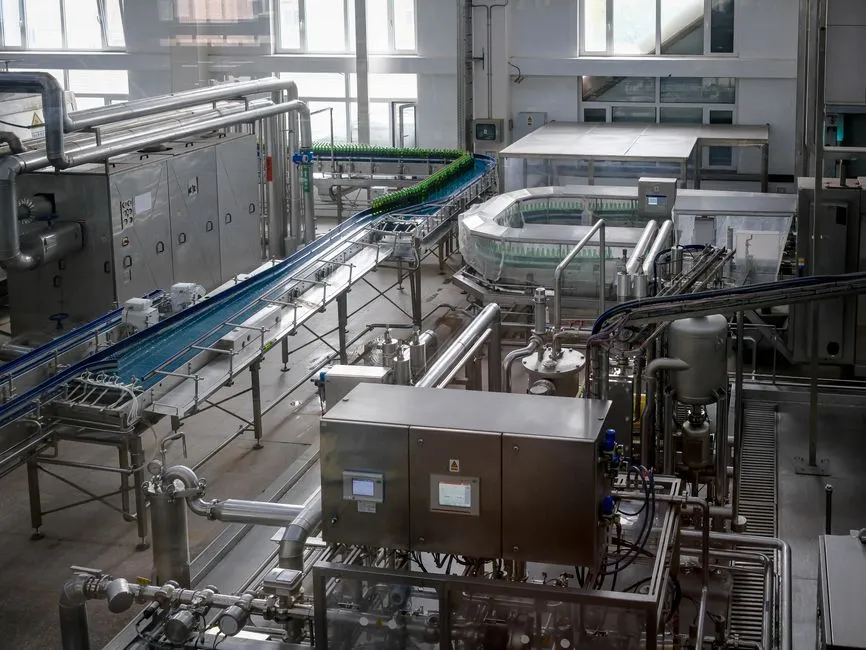
Before signing a purchase order, run through the following with your consultant and supplier: (1) confirm the discharge route — sewer (Water UK Trade Effluent Consent) or surface water (full Environment Agency EPR permit) — because the limits, the application lead time and the BAT assessment are different; (2) compile a 12-month composite influent characterisation covering COD, BOD, TSS, ammoniacal nitrogen, pH, temperature, salinity, surfactants, named APIs and trace metals; (3) run a bench- or pilot-scale test on the most refractory stream — at minimum a 30-day jar/Zahn-Wellens test and ideally an on-site AOP pilot — before finalising the polishing stage; (4) specify online monitoring for COD, pH, conductivity, flow and toxicity against your consent parameters, with PLC/SCADA integration to a continuously logged historian. For reagent dosing, specify an automatic chemical dosing system with flow-paced control to avoid the consent excursions that follow hand-dosing during night shifts. Finally, retain a copy of the BAT assessment for the permit file — the regulator will ask for it on first inspection.
Frequently Asked Questions
What consent do I need to discharge pharmaceutical effluent in the UK?
You need a Water UK Trade Effluent Consent from the local Sewerage Undertaker for any discharge to sewer, or an Environment Agency EPR permit for any discharge to surface water or controlled waters. Both impose numerical limits on COD, TSS, pH, ammoniacal nitrogen and named toxic substances.
Can a biological stage alone meet a UK pharma discharge consent?
Usually not. Veolia's 50-plant survey shows COD/BOD5 ratios of 1–15 in API streams, and a ratio above ~3 means a large fraction is refractory COD. A typical consent of 1,000 mg/L COD at the sewer is only achievable on refractory streams with a tertiary or AOP polishing step downstream of the biological stage.
When is an advanced oxidation process worth the extra CapEx on a UK pharma ETP?
When the consent names specific APIs (cytotoxics, hormones, antibiotics) at low µg/L trigger levels, or when the site is targeting 50–80% treated-effluent reuse. The 2025 RSC PEC-AOP review reports 75–100% removal across the systems studied, but practical UK deployments rely on UV/H2O2 and ozone rather than PEC, with real-effluent piloting always required.
How much does a UK pharmaceutical wastewater treatment plant cost in 2026?
Indicative 2026 UK engineering estimates are £2,800–£4,500 per m³/d for a packaged MBR and £4,500–£6,500 per m³/d for an MBR + AOP train, before civil works and consenting fees. OpEx typically runs £0.70–£1.50 per m³ treated, dominated by aeration energy and membrane replacement.
Related Equipment
- DF series flat-sheet MBR module — specifications, capacity range, and technical data