
Why Lyon's 2026 Data Center Water Profile Is Different
A 100 MW hyperscale hall draws up to 2,000,000 L/day of water for cooling (IDE-Tech, 2026), and a 40 MW colocation hall on the Lyon-Confluence or Part-Dieu footprint scales to roughly 800 m³/day. The source matters: the Métropole de Lyon blends approximately 80% Rhône surface water with alluvial groundwater (Eau du Grand Lyon annual service reports), producing a feed at 300–500 µS/cm conductivity, 15–25 °f hardness, low bromide, and periodic chloramination. That is moderately hard, not aggressive, and almost silica-limited rather than sulfate-limited. Receiving-body sensitivity is the primary Lyon constraint. The Saône/Rhône confluence is a CSWD (Convention de Solidarité sur la ressource en Eau) territory, and the Métropole de Lyon pretreatment bylaws cap non-domestic discharge at 2,000 mg/L TDS, 35 °C, and trace metals below the 2018 DCE Article 4(7) "no deterioration" thresholds. The 2026 regulatory stack — ICPE rubrique 2921 (>50 kW cooling-tower thermal power), EU Urban Wastewater Treatment Directive 91/271/EEC, CSRD ESRS E3, and EU AI Act Article 12 — converts what looks like comfortable water into a compliance problem the moment a 40 MW hall starts pushing 3,000–5,000 mg/L TDS blowdown into the Grand Lyon sewer.
What Is in Lyon Data Center Cooling Tower Blowdown
Cycles of concentration (CoC) is the ratio of dissolved solids in the circulating water to dissolved solids in the makeup water. The cycles of concentration ratio (CCR) is the inverse — makeup-to-circulating water — and is the figure most Lyon operators read on their conductivity controller. At 4 CoC, a typical Rhône-source feed yields a blowdown near 1,200 mg/L TDS, suitable for reuse with side-stream filtration alone; at 6 CoC, the same feed climbs to roughly 5,800 mg/L TDS, shifting the chemistry from "pretreat for discharge" to "engineer for membrane scaling." The table below is a Lyon-typified CTBD profile at 25 °C basin temperature, pH 8.0, with a standard phosphonate–isothiazolinone chemical program.
| Parameter | Makeup (Rhône blend) | CTBD @ 4 CoC | CTBD @ 6 CoC | Unit |
|---|---|---|---|---|
| TDS | 400 | 1,200 | 5,800 | mg/L |
| Conductivity | 500 | 1,800 | 7,500 | µS/cm |
| Cl⁻ | 30 | 150 | 700 | mg/L |
| SO₄²⁻ | 40 | 200 | 900 | mg/L |
| Ca²⁺ (as CaCO₃) | 120 | 580 | 1,400 | mg/L |
| SiO₂ (reactive) | 8 | 38 | 95 | mg/L |
| pH | 7.6 | 8.2 | 8.6 | — |
| TSS | <2 | 10 | 50 | mg/L |
Treatment chemicals concentrate in the same ratio: oxidizing biocides (Cl₂, ClO₂, bromine), non-oxidizing biocides (isothiazolinones, labelled aquatic-acute-1 under EU CLP), phosphonate scale inhibitors (HEDP, ATMP), polyacrylate dispersants, and molybdenum- or zinc-based corrosion inhibitors (Genesis Water Tech, 2026). French-specific flags: Grand Lyon sewer permits cap molybdate at 0.5 mg/L and total phosphorus at 10 mg/L; isothiazolinone ecotoxicity labelling under CLP Annex VI triggers SDS Section 12 disclosure; phosphonate loading is regulated indirectly through DCE watch-list monitoring. The 10–50 mg/L TSS from corrosion products and biofilm defines the side-stream filter duty before any UF or RO can operate.
The Standard 2026 Treatment Train for a Lyon Site
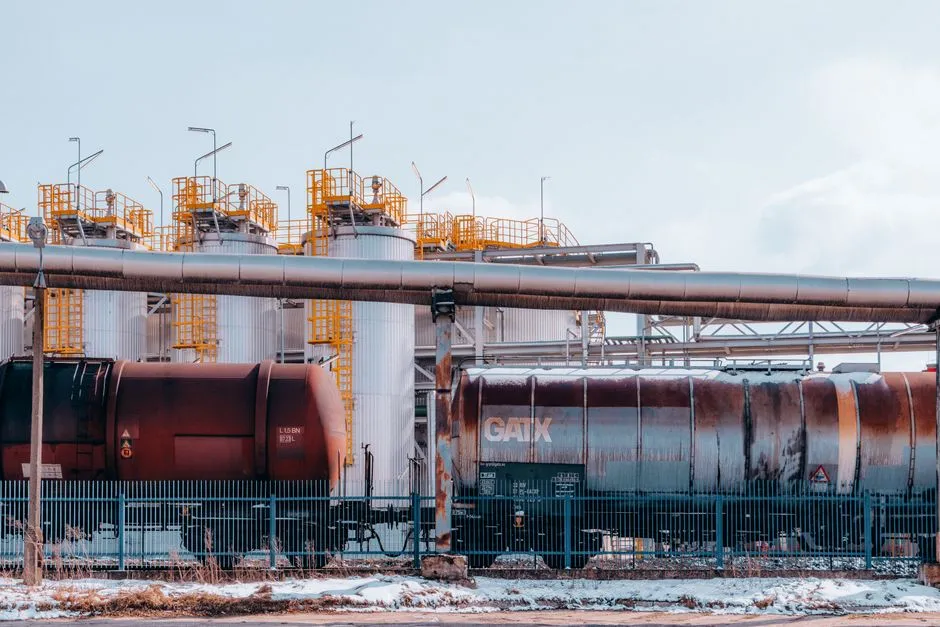
Four stages handle the chemistry above without oversizing membranes. Stage 1 — Side-stream filtration. 1–5% of circulation flow through 10–25 µm self-cleaning spiral filters, dosed with a bio-organic flocculant, holds TSS ≤10 mg/L and SDI < 3 ahead of the membranes (Genesis, 2026). A multi-media filter polishes the slipstream to ≤15 µm when the project is new-build. Stage 2 — Ultrafiltration. 0.03 µm PVDF hollow-fibre modules at 10–30 psi, 90–95% recovery, automatic backwash plus air scour on a 30–60 minute interval; turbidity acceptance up to 300 NTU makes UF the right insurance for Lyon's occasional Rhône turbidity spikes. A PVDF hollow-fibre ultrafiltration system sized at 2,000–40,000 L/h is the typical envelope for a 40 MW hall. Stage 3 — Reverse osmosis. A brackish-water RO at 75–80% recovery is the baseline; a high-recovery brine desalter pushes the same train to 95% by harvesting CaCO₃ and SiO₂ as a controlled solid in a fluidised-bed reactor (IDE-Tech MAXH₂O logic, 2026). Permeate at 10–50 mg/L TDS is suitable for cooling-tower makeup; a industrial reverse osmosis system with up to 95% recovery covers most Lyon 40 MW envelopes. Stage 4 — Brine management. Three options, picked per site: (a) discharge to the Grand Lyon sewer after TDS polishing to meet the 2,000 mg/L cap, (b) MVC evaporation at 95–98% recovery with distillate under 10 mg/L TDS returning to the loop, or (c) a crystallizer for true zero liquid discharge. A PLC-controlled antiscalant and biocide dosing skid ties the antiscalant program to the conductivity probe so the Lyon's Ca²⁺/SiO₂ ratio is never breached.
Comparing Reuse, Discharge and Zero Liquid Discharge for Lyon
For a 40 MW Lyon site producing ~800 m³/day of feed and ~120–200 m³/day of blowdown, the decision reduces to three metrics: €/m³/day CAPEX, €/m³ OPEX, and discharge-fee avoidance. Converting the Genesis 2026 USD figures at €1 ≈ $1.08, the matrix below is the engineer-ready envelope for a Lyon RFQ.
| Strategy | Influent target | CAPEX (€ / m³/day) | OPEX (€ / m³ treated) | Best-fit Lyon profile |
|---|---|---|---|---|
| Cooling-tower makeup reuse (RO only) | 1,200–3,000 mg/L TDS | 460–920 | 1.20–2.45 | Colocation hall, no sewer cap headroom |
| Process-water reuse (irrigation/washdown) | <1,000 mg/L TDS, TSS <10 | 230–460 | 0.90–1.80 | Edge sites adjacent to landscaped campuses |
| Partial ZLD (RO + MVC at 85–95% overall) | Up to 6,000 mg/L TDS | 1,150–2,300 | 3.80–7.20 | 40 MW+ where Grand Lyon sewer TDS cap is binding |
| Full ZLD (RO + MVC + crystallizer) | Any CTBD | 2,800–6,950 | 7.20–11.30 | Sites in future sécheresse-arrêté zones only |
Partial ZLD is the Lyon sweet spot: it meets the Métropole de Lyon 2,000 mg/L TDS sewer ceiling, costs roughly 40% less than full ZLD, and produces a low-volume brine that can be trucked to a licensed hazardous-waste facility or — for sites co-located with the Lyon-Gerland biomass plant or a coal-fired retrofitter — co-crystallized. Any direct discharge to the Saône/Rhône also requires a DCE Article 4(7) "no deterioration" status assessment for the receiving water body; that assessment is a Lyon-specific blocker for any direct-discharge scheme above 50 m³/day.
Lyon 2026 Regulatory Stack for Data Center Water
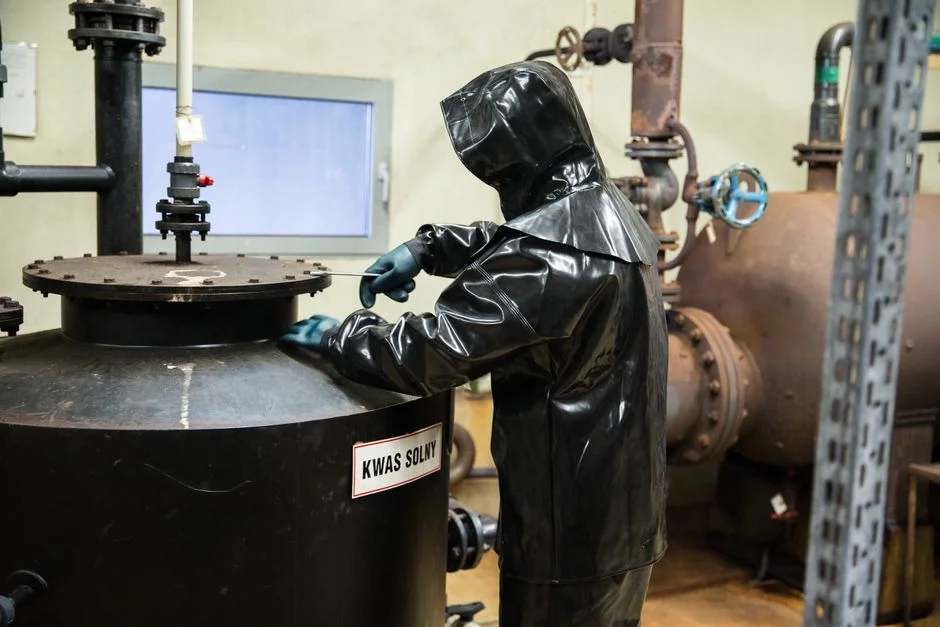
ICPE rubrique 2921 covers cooling towers with installed thermal power above 50 kW and triggers either registration (Déclaration) or authorisation (Enregistrement/Autorisation) depending on flow — a 40 MW hall sits firmly in the Enregistrement band, with mandatory flow metering and a biocide log. ICPE rubrique 2920 applies when diesel backup generators are in scope, and carries its own aqueous discharge rules for generator coolant and floor wash. The Arrêté du 23 janvier 1997, updated in 2024, governs substances dangerous to water: antiscalants, corrosion inhibitors, and any PFAS-bearing legacy stocks must be tracked through the register. Indirect discharge to the Grand Lyon POTW at La Feyssine or Pierre-Bénite falls under EU Urban Wastewater Treatment Directive 91/271/EEC plus the Métropole de Lyon Règlement d'assainissement. CSRD (Directive (EU) 2022/2464) is now in its first reporting wave on FY2024 data; ESRS E3 water and marine resources KPIs — withdrawal, consumption in water-stressed areas, water reuse rate — are mandatory for in-scope data-center operators (per EFRAG implementation guidance 2025-08). The EU AI Act (Regulation (EU) 2024/1689), Article 12, requires general-purpose AI providers to report environmental impact including water consumption, with phased applicability such that most large French data-center operators must publish a 2026 baseline by 31 August 2027. The Décret tertiaire (Décret n° 2019-771) adds water consumption as a declared operational indicator for any office-like data-center support space above 1,000 m².
Heat Reuse to Lyon's District Heating Network Changes the Math
The Compagnie de Chauffage Urbain de Lyon (GL HPL, now ENGIE Solutions) operates one of France's largest low-temperature district-heating networks, fed partly by data-center waste heat since the Lyon-Confluence and Part-Dieu retrofits in the 2010s. When a Lyon site exports heat to the GL HPL loop, the blowdown mass balance shifts: the cooling tower still rejects latent heat, but the available ΔT for evaporation narrows, allowing the operator to push to higher cycles of concentration and shrink blowdown volume. A smaller, more concentrated brine makes a higher-recovery RO plus on-site crystallizer cost-effective rather than marginal, and the same investment case can claim a CSRD ESRS E1 climate-mitigation credit on top of the ESRS E3 water-reuse credit. This pairing is an under-publicised 2026 opportunity for a Lyon data-center water engineer and is the structural difference between a Lyon retrofit and a comparable Athens or Madrid build — see the parallel logic in our Alexandria data-center blowdown treatment guide and the heat-reuse framing in our Guayaquil data-center blowdown treatment guide for site archetypes that do not share the same district-heating adjacency.
Frequently Asked Questions
What is the minimum treatment needed to discharge cooling-tower blowdown to the Grand Lyon sewer in 2026?
At
Frequently Asked Questions
What treatment does a data center in Lyon, France need for cooling tower blowdown in 2026?
In 2026, Lyon data centers must manage blowdown to comply with strict local discharge permits. Standard treatment trains typically require multi-stage filtration to remove suspended solids, followed by chemical scale and corrosion inhibition. If the facility operates at high cycles of concentration (CoC), reverse osmosis (RO) is increasingly necessary to reduce total dissolved solids (TDS) and silica concentrations before discharge or reuse.
Can a Lyon data center discharge cooling-tower blowdown directly to the Grand Lyon sewer?
Direct discharge to the Grand Lyon municipal sewer system is subject to specific "convention de déversement" (discharge agreements). Operators must strictly adhere to local limits regarding temperature (usually capped at 30°C), pH levels (typically 5.5 to 9.5), and concentrations of heavy metals or biocides. Non-compliance leads to significant surcharges or mandatory onsite pretreatment to meet municipal wastewater quality standards.
What is the typical CAPEX in euros for a 500 m³/day blowdown reverse osmosis system?
For a 500 m³/day industrial-grade reverse osmosis system tailored for cooling tower blowdown, the estimated CAPEX ranges between 350,000 and 550,000 euros. This cost includes the skid-mounted RO units, pre-filtration systems, automated control panels, and necessary chemical dosing skids, excluding civil engineering works and installation labor, which can add a further 20-30% to the total project budget.
Is zero liquid discharge required for data centers in France?
As of 2026, Zero Liquid Discharge (ZLD) is not a blanket legal requirement for all data centers in France. However, it is increasingly mandated for new facilities located in water-stressed areas or those subject to specific prefectural decrees (Arrêtés Préfectoraux) intended to protect local groundwater quality. Facilities aiming for BREEAM Outstanding or LEED Platinum certifications often implement ZLD voluntarily to minimize their environmental footprint.
How does the EU AI Act affect water reporting for a French data center in 2026?
While the EU AI Act primarily targets algorithmic safety, it complements the Corporate Sustainability Reporting Directive (CSRD), which mandates that large data centers report comprehensive water usage and discharge data. By 2026, operators must provide transparent metrics on water consumption effectiveness (WUE) and the chemical composition of discharged blowdown, ensuring that the environmental impact of AI-driven high-density compute clusters is fully disclosed to regulatory bodies.