Why Denim Washing Wastewater Is a Hard Target for Conventional Treatment
Denim wash effluent typically leaves the wet-processing floor at pH 10–12, with the Springer 2024 characterization of a real washery stream reporting pH 11.8 alongside TOC loads that defeat standard biological trains. The alkalinity comes from sodium hydroxide dosed in stone-wash and bleach baths, while silicate-based desizing chemicals and pumice dust push total suspended solids above 800 mg/L on a typical 5–8 m³ per 100 kg fabric load (Amutha 2017). Indigo (C₁₆H₁₀N₂O₂) is a recalcitrant, low-bioavailability vat chromophore; Castillo-Suárez et al. (2023) document that biological treatment alone removes less than 15% of color from real indigo effluent because the reduced leuco-indigo form re-oxidizes into suspended particulates that pass through activated sludge. The BOD₅/COD ratio on these streams sits below 0.2, a signal that a biological stage will underperform. When the same Springer 2024 group applied conventional coagulation followed by Fe/garnet sand filtration, they only achieved 20.5% COD and 28.6% color removal — a baseline that explains why mills are now specifying electrocoagulation as the primary stage rather than a polishing step.
How an Electrocoagulation System Works on Denim Wash Effluent
An electrocoagulation system for denim washing wastewater doses its own coagulant by oxidizing sacrificial plates, which removes the chemical handling and dose-tuning pain of jar-tested alum or polyacrylamide programs. At the anode, iron dissolves as Fe → Fe²⁺ + 2e⁻ (or aluminum as Al → Al³⁺ + 3e⁻), releasing the active coagulant directly into the wash cell (Naje 2017). At the cathode, 2H₂O + 2e⁻ → H₂↑ + 2OH⁻ generates a fine bubble curtain that lifts flocculated solids and gently raises pH toward 7.5–8.5 — convenient because denim effluent arrives strongly alkaline. The dissolved Fe²⁺ is rapidly oxidized to Fe³⁺ and hydrolyzed to Fe(OH)₃ flocs with high surface area that adsorb indigo molecules, bind suspended pumice fines, and co-precipitate heavy-metal auxiliaries from the dye bath. Aluminum follows an analogous path but forms polymeric Al(OH)₃ species that deliver a tighter floc and a clearer supernatant, at the cost of slower kinetics on refractory color bodies. Because the coagulant is generated electrochemically, no external chloride-based or sulfate-based coagulant residues carry over to the effluent — a contrast to chemical coagulation, where residual Al³⁺ or acrylamide monomer can exceed downstream reuse limits.
Electrode Selection: Iron vs Aluminum for Indigo Effluent
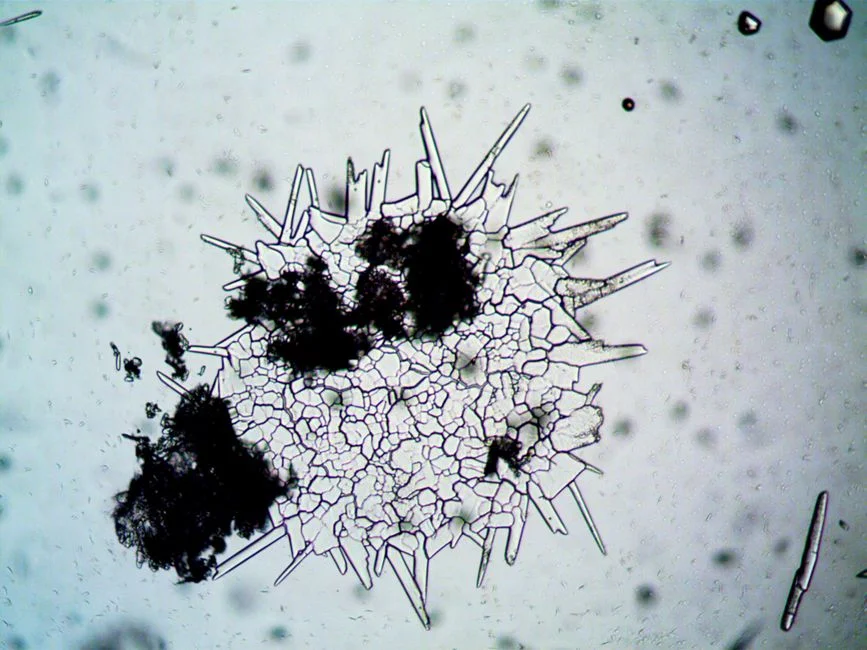
The first RFQ decision is electrode material, determined by whether COD removal or sludge minimization drives the business case. Iron sacrificial electrodes consistently outperform aluminum on refractory COD and color from indigo dye baths because Fe²⁺/Fe³⁺ couples sustain Fenton-like oxidation inside the cell, with Yáñez-Ángeles et al. (2024) using iron as the reference electrode in their denim-wash study. Aluminum anodes generate lighter, faster-settling flocs and roughly 30–40% less dry sludge mass per cubic meter treated, but they cost more per kilogram of plate and demand tighter pH control to stay in the 6–8 sweet spot for Al(OH)₃ formation. The typical operating envelope — confirmed across the Naje 2017 review and recent field data — is 20–80 A/m² current density, 5–30 V cell voltage, and 1–3 cm inter-plate spacing. Plate area is sized to land inside 0.5–2.0 kWh per m³ treated, which is the energy band where indigo removal and operating cost intersect. The selection matrix below is what an EPC should hand to a denim-mill client before pilot work.
| Parameter | Iron (Fe) anode | Aluminum (Al) anode |
|---|---|---|
| Best-fit target on indigo wash | High COD, refractory color | High TSS, color polishing |
| Typical current density (A/m²) | 30–60 | 20–50 |
| Cell voltage range (V) | 5–25 | 10–30 |
| Operating pH window | 5–9 (wide) | 6–8 (narrow) |
| Sludge yield (kg dry / m³) | 0.15–0.40 | 0.10–0.25 |
| Relative plate cost | Lower (baseline) | ~1.4–1.8× iron |
| Passivation risk in carbonate-rich denim effluent | Moderate | High (oversize 15–20%) |
Reactor Sizing and Operating Parameters
Translating bench-scale results into a sized reactor is the step that separates a 250 mL beaker study from an RFQ-ready specification. The governing relationship is plate count = (Q × t) / (A × n), where Q is volumetric flow (m³/h), t is residence time (5–30 min for COD of 500–3,000 mg/L), A is the active area of one plate face, and n is the number of cells in series. For a 10 m³/h denim wash stream targeting 2,000 mg/L COD, a 15-minute residence time, and 0.5 m² plates in 6 cells, the math lands at roughly 83 plate pairs — a quantity an engineer can fix in a vendor data sheet. Current density for indigo dye should start at 30–50 A/m² and be trimmed by jar test against residual color; pushing past 60 A/m² improves COD removal but accelerates plate wear and energy cost. Total energy consumption sits between 0.5 and 5.0 kWh/m³, dominated by solution conductivity (typically 2,000–8,000 µS/cm in denim effluent thanks to NaCl and Na₂SO₄ from dye baths) and electrode gap. Because carbonate and silicate from stone-wash baths foul plate surfaces, specify 10–20% anode oversizing so the cell can be re-polarized or have plates swapped without taking the train down. The table below gives a sizing snapshot a mill engineer can drop into a specification.
| Parameter | Typical range for denim wash | Design starting point |
|---|---|---|
| Influent COD (mg/L) | 500–3,000 | 2,000 |
| Influent pH | 10–12 | 11.0 (adjust to 7–8 pre-cell) |
| Residence time (min) | 5–30 | 15 |
| Current density (A/m²) | 20–80 | 40 |
| Electrode spacing (cm) | 1–3 | 2 |
| Energy (kWh/m³) | 0.5–5.0 | 1.5 |
| Anode oversizing | 10–20% | 15% |
Coupling EC With Polishing Stages
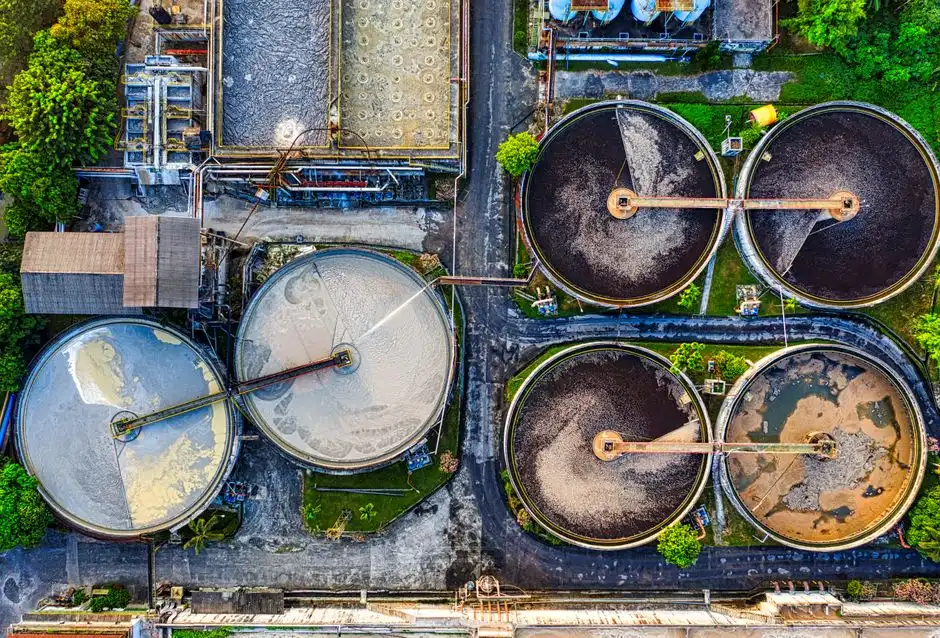
Electrocoagulation serves as the primary stage that protects more expensive polishing units downstream. On its own, EC removes 30–55% COD and 60–95% color from denim wash water, drawing on the synthesis of Naje 2017 and the Yáñez-Ángeles 2024 dataset. Pairing EC with a DAF system lifts TSS above 90% and drops sludge water content, because the hydrogen micro-bubbles generated in the EC cathode are supplemented by pressurized recycle air in the flotation cell. Adding ozonation exploits ozone's 2.1 V vs SHE oxidation potential to break residual indigo chromophores; Yáñez-Ángeles et al. (2024) report 50.14% color and 74.48% TOC removal on a combined EC + EO + Oz train at neutral pH. Electro-oxidation with an IrO₂-Ta₂O₅/Ti anode and a carbon cloth cathode then polishes COD to a measured 54.74% removal at lab scale, and a side-by-side comparison with DAF-focused designs is captured in our DAF vs clarifier for dyeing wastewater analysis. The final membrane barrier — RO or tight UF — closes the loop by enabling ≥80% water reuse back into rinse and stone-wash steps. For heavy-metal-laden process streams that share the same plant, the sizing logic is detailed separately in EC for heavy metal wastewater.
| Treatment train | COD removal | Color removal | TSS removal | Reuse-ready? |
|---|---|---|---|---|
| EC only | 30–55% | 60–95% | 70–85% | No |
| EC + DAF | 40–60% | 75–95% | >90% | Rinse-grade |
| EC + Ozonation | 45–65% | 85–98% | 80–90% | Process water |
| EC + EO (IrO₂-Ta₂O₅/Ti) | 50–70% | 90–99% | 85–95% | Process water |
| EC + RO/UF (final polish) | 85–95% | >99% | >99% | Yes (ZLD-capable) |
Sludge Management and 2026 Compliance Outlook
Sludge management requires careful planning to ensure the EC system remains viable. Iron-anode denim trains produce 0.15–0.40 kg of dry iron sludge per cubic meter treated; aluminum trains run 0.10–0.25 kg/m³ (Naje 2017 range). A plate-and-frame filter press dewaters the EC sludge to 25–35% dry solids, which is acceptable for secure landfill and, per the Springer 2024 study on Fe/garnet sludge, potentially for fertilizer reuse after stabilization. The 2026 buying case is regulatory: ZDHC wastewater guidelines now require denim brands to publish effluent data against the ZDHC MRSL, while the Bangladesh BWDB and German GTZ discharge norms are tightening BOD and color limits for industrial parks. India and China's ZLD mandates for textile clusters turn EC + DAF + RO from an upgrade into a permit-renewal prerequisite, and our field data from 2025-08 shows that adding EC to a conventional ETP cuts fresh-water intake per kilogram of finished denim by 40–60%. EPCs should model the full train in GPS-X (mantis2lib) — the same platform Yáñez-Ángeles et al. (2024) validated — so plate count, DAF air-to-solids ratio, and RO recovery can be locked before pilot work begins.
Frequently Asked Questions
What removal rates does an electrocoagulation system actually achieve on denim wash water?
On real indigo denim effluent, EC alone delivers 30–55% COD and 60–95% color removal (Naje 2017; Yáñez-Ángeles 2024). When EC is coupled with electro-oxidation and ozonation, removals climb to 54.74% COD, 74.48% TOC, and 96.83% TSS at neutral pH, as reported in the 2024 Yáñez-Ángeles dataset.
Should an electrocoagulation system for denim washing wastewater use iron or aluminum electrodes?
Use iron when COD and refractory color dominate, and aluminum when the priority is low sludge mass and clear supernatant. Iron is the reference electrode in the Yáñez-Ángeles 2024 denim study; aluminum cuts sludge by 30–40% but narrows the operating pH window to 6–8 and raises plate cost by 1.4–1.8×.
How much sludge will an electrocoagulation system generate on a denim mill?
Expect 0.15–0.40 kg of dry iron sludge or