
Why Hospital Wastewater in Jalisco Is a 2026 Compliance Priority
A 2023 PROFEPA inspection fined a Guadalajara hospital MXN 1.8M after effluent tested at 1,200 MPN/100mL fecal coliforms — six times the 200 MPN/100mL cap set by NOM-003-SEMARNAT-1997 (HydropureWater field data, 2023). For 2026, the same enforcement posture is escalating: PROEPA Jalisco has signaled fines up to MXN 5M for non-compliant discharges into state water bodies (HydropureWater, 2025-08). The biological risk is no smaller than the regulatory one. A 2024 Journal of Hospital Infection study found that 30% of urban Mexico hospital wastewater carries antibiotic-resistant E. coli and Pseudomonas capable of bypassing conventional chlorine disinfection, and the WHO 2023 carbamazepine guideline (≤50 ng/L) sets a pharmaceutical-residue target that municipal plants like Guadalajara's Agua Prieta — which handles 67% of metro flow — were not designed to hit.
Jalisco's water stress index reached 4.8/5 in 2024 (CONAGUA, 2024), placing reuse economics and discharge scrutiny on the same spreadsheet. For a hospital facilities director, the message is direct: discharge non-compliance is now measured quarterly, fines are not theoretical, and conventional disinfection is biologically exposed. The 2026 question is not whether to upgrade, but which train meets NOM, COFEPRIS, and the Atemajac/Santiago river-basin loading limits on a defensible audit trail. For a parallel reference on Mexican hospital specifications outside the state, see the Guadalajara hospital wastewater treatment guide and the Dakar hospital wastewater treatment engineering reference.
The 2026 Regulatory Stack: NOM-003, NOM-001, NOM-002 and COFEPRIS
Three NOMs and one sanitary authority define the legal floor for a Jalisco hospital discharge, and they stack additively — meeting one does not exempt the others.
| Standard | Scope | Key hospital-relevant limits |
|---|---|---|
| NOM-003-SEMARNAT-1997 | Hospital effluent to municipal sewer | Fecal coliforms ≤200 MPN/100mL; BOD₅ ≤30 mg/L |
| NOM-001-SEMARNAT-2021 | Discharge to national water bodies | BOD ≤30 mg/L; TSS ≤40 mg/L; COD ≤variable by river basin |
| NOM-002-SEMARNAT-1996 | Discharge to urban sewer | Hg ≤0.05 mg/L; Ag ≤0.1 mg/L; Cr ≤0.5 mg/L; pH 6–9 |
| COFEPRIS overlay | Pathogen & pharmaceutical residue | Carbamazepine ≤50 ng/L (per WHO 2023); ≥99.9% pathogen log reduction |
PROFEPA is the federal enforcement body; PROEPA Jalisco is the state-level interface. Inspections are typically triggered by quarterly self-monitoring reports and by spot sampling during the May–November rainy season, when combined-sewer overflows expose non-compliant discharges. For an effluent result to be legally defensible, the analysis must come from a PROFEPA-approved lab — the Laboratorio Ambiental de Jalisco is the most commonly cited in the Guadalajara metro. The COFEPRIS overlay is where most facilities underestimate the bar: numeric NOM compliance is not the same as pathogen and pharmaceutical-residue compliance, and the WHO 2023 carbamazepine threshold is a design driver, not a footnote.
What Makes Hospital Effluent Different From Municipal Sewage
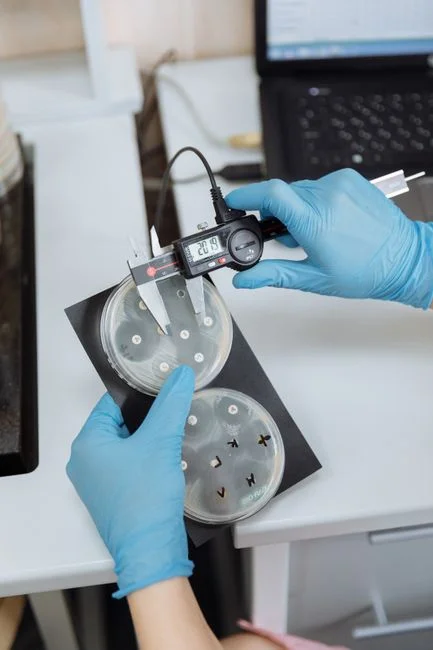
Designing for NOM-001 and treating for hospital effluent are different engineering problems. The deltas below are why Guadalajara's Agua Prieta cannot be the primary barrier for medical wastewater.
| Parameter | Hospital wastewater | Municipal sewage | Design implication |
|---|---|---|---|
| Pathogen load (CFU/mL) | 10⁵–10⁷ | 10³–10⁵ | Tertiary disinfection mandatory |
| Antibiotics (mg/L) | 10–50 | <0.1 | Advanced biological stage |
| Analgesics (mg/L) | 1–10 | <0.05 | Membrane or oxidation polish |
| Cytostatics (mg/L) | 0.1–1 | Undetectable | Dedicated equalization |
| Mercury (mg/L) | Up to 0.05 | <0.005 | Pre-precipitation stage |
| Silver (mg/L) | Up to 0.1 | <0.01 | Pre-precipitation stage |
| Chromium (mg/L) | Up to 0.5 | <0.05 | Pre-precipitation stage |
| Temperature | 25–35°C | 15–25°C | Cooling-tolerant biology |
| pH swing | 5–9 | 6.5–7.5 | Equalization + neutralization |
| Peak flow multiplier | Up to 3× | 1.5–2× | Larger equalization tank |
The 3× peak-flow spike is decisive during morning surgical and dialysis cycles; under-sizing the equalization tank is the single most common cause of biological washout and PROFEPA re-sampling in Jalisco audits.
The 2026 Process Train: MBR + On-Site Chlorine Dioxide
For 2026, the dominant compliant train for a Jalisco hospital is MBR followed by on-site chlorine dioxide (ClO₂) generation, with DAF pre-treatment and an optional RO polish for reuse. The MBR delivers 99.9% pathogen removal and 95% pharmaceutical removal at 0.1 μm PVDF submerged membranes, with effluent COD held under 50 mg/L and energy at 0.8–1.2 kWh/m³ (HydropureWater engineering data, 2026). Footprint is roughly 50% of a conventional activated-sludge plant at the same load, which matters in Guadalajara where available civil space inside hospital perimeters is often under 200 m².
| Stage | Function | 2026 specification | Cost input (Jalisco 2026) |
|---|---|---|---|
| Equalization + neutralization | Buffer 3× peak flow, stabilize pH 6–9 | HRT 6–8 h, automated NaOH/H₂SO₄ dosing | Civil 10–15% of CAPEX |
| Heavy-metal precipitation | Hg, Ag, Cr to NOM-002 limits | NaHS + pH 8.5–9, lamella clarifier | MXN 0.20–0.35/m³ chemical |
| DAF pre-treatment | TSS, FOG removal | 90–95% TSS, 95% FOG | MXN 0.30–0.50/m³ chemical |
| MBR biological stage | BOD, COD, pathogen reduction | 0.1 μm PVDF submerged, MLSS 8,000–12,000 mg/L | 0.8–1.2 kWh/m³ |
| On-site ClO₂ disinfection | ≤200 MPN/100mL cap, antibiotic-resistant log kill | 0.5–1.0 mg/L residual, 99%+ kill, no THMs | MXN 0.40–0.80/m³ |
| RO polish (500-bed only) | Cooling-tower / irrigation reuse | <50 μS/cm conductivity | +MXN 1.5–2.5M CAPEX |
Specify on-site ClO₂ generation over sodium hypochlorite (NaOCl). The reason is not preference but process exposure: NaOCl forms trihalomethanes (THMs) and is significantly less effective against Cryptosporidium and the antibiotic-resistant E. coli and Pseudomonas documented in the 30% prevalence finding (Journal of Hospital Infection, 2024). For a 50-bed clinic the medical wastewater package integrates DAF + ozone or ClO₂ in under 1 m² (per the product specification), and for 200+ bed sites the integrated MBR system for hospital effluent using DF-series flat-sheet MBR modules is the reference design. Pre-treatment is delivered by a DAF pre-treatment unit, and disinfection by an on-site chlorine dioxide generator; the 500-bed package maps to the medical wastewater package for the smaller scope. The 30% antibiotic-resistance prevalence is what makes this spec non-negotiable — NaOCl will pass a clean-water lab test and fail an audit during a real outbreak.
Matching the System to Hospital Size: 50, 200, and 500 Beds
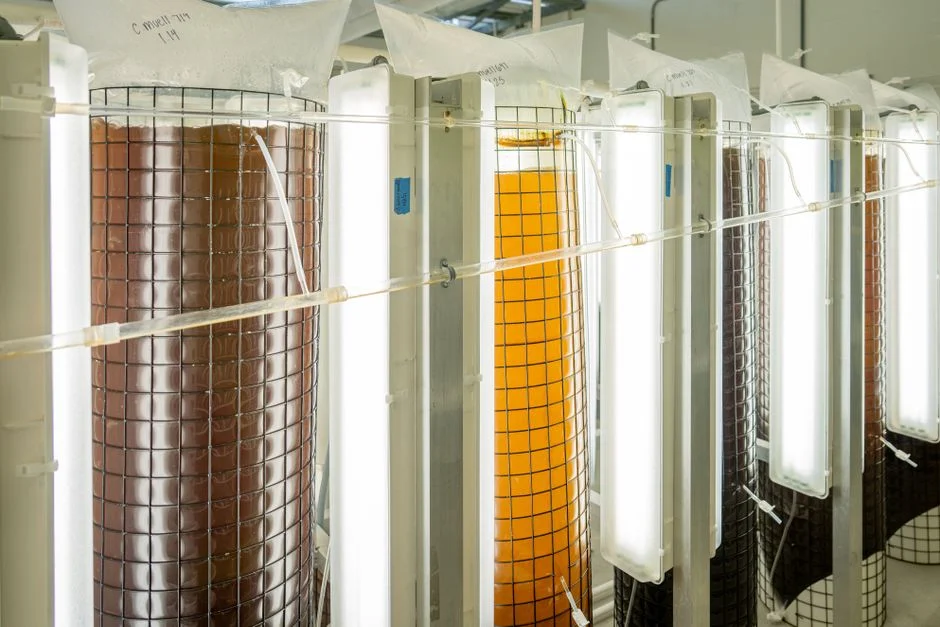
Bed count, not nominal flow, is the cleanest procurement variable for a 2026 RFQ. Use the matrix below to anchor the specification before any vendor engages.
| Bed count | Process train | CAPEX (MXN, 2026) | OPEX (per m³) | Footprint | Discharge target |
|---|---|---|---|---|---|
| 50-bed clinic | DAF + ClO₂ | 1.2–1.8M | MXN 0.40–0.80 | ≤10 m², often a parking bay | ≤200 MPN/100mL, NOM-003 |
| 200-bed hospital | MBR + ClO₂ | 3.5–5M | MXN 0.70–1.50 | 40–60 m² | ≤200 MPN/100mL + COFEPRIS |
| 500-bed teaching / surgical | MBR + RO + ClO₂ | 8–12M | MXN 1.20–2.00 | 120–180 m² | Reuse-grade, NOM-001 + COFEPRIS |
Jalisco-specific cost advantages feed these bands: plant-operator labor runs ~15% below CDMX and concrete ~10% below Mexico City averages (2024 INEGI), pulling the local CAPEX band lower than federal-national estimates. The OPEX figures are dominated by energy (membrane scouring) and ClO₂ precursor cost; MBR membrane replacement cycles of 5–7 years are the largest scheduled maintenance event. For context on how these bed-count packages compare outside Mexico, see the Hospital wastewater treatment in Estado de México and Hospital wastewater treatment in São Paulo references.
Permitting in Jalisco: The 2026 PROFEPA / SEMARNAT Playbook
The MIA submission is the gating step, but a 2026 audit trail starts long before SEMARNAT receives the file.
- Effluent characterization (72 hours). Sample across peak surgical and dialysis windows. Use a PROFEPA-approved lab such as the Laboratorio Ambiental de Jalisco so the data is legally defensible on first submission.
- Technology selection and pilot. Lock the train to bed count and pharmaceutical-removal target; do not oversize to mask a missing disinfection stage.
- MIA submission to SEMARNAT Jalisco. Current 2024–2026 approval timeline is 60–90 days in the Guadalajara metro; incomplete heavy-metal or ClO₂-residual data is the most common cause of a second-round rejection.
- Operator training records and O&M manual. PROFEPA spot checks expect a documented training log, a Spanish-language O&M manual, and an alarm-response matrix on file.
- Quarterly self-monitoring program. Fecal coliforms, BOD₅, TSS, Hg, Ag, Cr, pH, and ClO₂ residual, all under chain-of-custody.
- Annual PROFEPA-approved lab re-certification. Submit to PROEPA Jalisco in the format they publish; do not improvise the template.
- Spot-audit readiness. Keep the last 12 months of lab reports and calibration logs on-site; PROFEPA typically requests 24 months of trend data when re-sampling.
The most common pitfall in 2024–2025 Jalisco audits was omitting a tertiary ClO₂ polish — biological systems alone miss the ≤200 MPN/100mL cap during shock-load events. The second most common was a missing lamella clarifier before the biological stage, which lets Hg and Ag carry through into the sludge and into the MBR mixed liquor. For the broader Jalisco package-plant context (industrial and municipal), see the Jalisco package wastewater treatment plant guide.
ROI for a Jalisco Hospital: Fines Avoided, Water Reused
The business case collapses onto three lines: avoided fines, water reuse, and desludging savings. Model the avoided-fine line against the 2023 PROFEPA precedent of MXN 1.8M and the 2025 PROEPA ceiling of MXN 5M — even a one-time event avoidance pays back a 200-bed MBR system. Water reuse at Jalisco's 2024 scarcity pricing (CONAGUA water-stress index 4.8/5) turns cooling-tower make-up and landscape irrigation into a real revenue line at MXN 0.70–1.50/m³ offset against the OPEX table above. A 50-bed clinic at MXN 1.5M CAPEX and a 200-bed hospital at MXN 4.2M CAPEX both hit an 18–24 month payback under these assumptions, consistent with the under-two-year Zapopan food-plant reference case (HydropureWater, 2025-08).
Funding levers in 2026: Bancomext green loans at 5% interest for industrial and hospital users, and CONAGUA 2025 subsidy programs that can cover up to 40% of project cost for qualifying municipal or health-sector projects. A 500-bed teaching hospital pushing reuse into cooling and irrigation hits the upper end of the 24-month payback envelope because reuse volumes scale faster than bed count; for a 50-bed clinic the payback is dominated by fine avoidance rather than reuse value.
Frequently Asked Questions
What are the 2026 hospital discharge limits in Jalisco?
Hospitals must meet NOM-003-SEMARNAT-1997 (≤200 MPN/100mL fecal coliforms, ≤30 mg/L BOD₅) for sewer discharge and NOM-001-SEMARNAT-2021 (BOD ≤30 mg/L, TSS ≤40 mg/L) for any direct water-body discharge, with NOM-002-SEMARNAT-1996 heavy-metal limits (Hg ≤0.05, Ag ≤0.1, Cr ≤0.5 mg/L) layered on top. COFEPRIS adds pathogen-elimination and pharmaceutical-residue requirements beyond the NOM numeric limits, including the WHO 2023 carbamazepine target of ≤50 ng/L.
How much does a hospital WWTP cost in Jalisco in 2026?
CAPEX ranges from MXN 1.2–1.8M for a 50-bed clinic (DAF + ClO₂), to MXN 3.5–5M for a 200-bed hospital (MBR + ClO₂), to MXN 8–12M for a 500-bed teaching or surgical center (MBR + RO + ClO₂). OPEX is MXN 0.40–0.80/m³ for ClO₂-only trains and MXN 0.70–1.50/m³ for MBR-based trains, driven primarily by energy and chemical reagents.
Why is chlorine dioxide preferred over sodium hypochlorite for hospital wastewater in 2026?
On-site ClO₂ achieves 99%+ disinfection without forming trihalomethanes (THMs) and is more effective against chlorine-resistant pathogens such as Cryptosporidium and the antibiotic-resistant E. coli and Pseudomonas documented in 30% of urban Mexico hospital samples (Journal of Hospital Infection, 2024). At Jalisco's typical turbidity swings ClO₂ is also roughly 30% cheaper than UV. The reference specification is an on-site chlorine dioxide generator sized to 0.5–1.0 mg/L residual after the MBR stage.
How long does PROFEPA permitting take in Jalisco for a hospital WWTP?
A Manifiesto de Impacto Ambiental (MIA) submitted to SEMARNAT Jalisco currently takes 60–90 days for approval in the Guadalajara metropolitan area (2024–2026 data). Pre-submission work — 72-hour effluent characterization by a PROFEPA-approved lab, technology selection, and pilot data — typically runs 4–6 weeks, so the realistic project clock from characterization to permit in hand is 4–6 months.
What is the typical ROI for a Jalisco hospital WWTP in 2026?
For 50–200 bed systems the conservative payback is 18–24 months, driven by avoided PROFEPA fines (2023 precedent: MXN 1.8M; 2025 ceiling: MXN 5M) and water reuse value at MXN 0.70–1.50/m³. A 500-bed teaching hospital with full cooling-tower and irrigation reuse extends the envelope to roughly 24 months. Bancomext green loans at 5% interest and CONAGUA 2025 subsidies covering up to 40% of project cost improve the IRR materially for qualifying facilities. The default reference design is an integrated MBR system for hospital effluent with downstream ClO₂.