

Why the Bellville Sewer Path Is a Different Rulebook Than NPDES
Mining and metals plants near Bellville, IL meet sewer pretreatment limits by complying with the federal categorical standard — 40 CFR Part 437 (Ore Mining and Dressing) or 40 CFR Part 433 (Metal Finishing) — and by satisfying the tighter numerical ceilings in the City of Belleville's Chapter 51 Industrial Pretreatment ordinance, which the POTW enforces through 24-hour equalization, slug control plans, and a prohibition on dilution. The 2026 cycle adds Lead and Copper Rule Revisions pushing lead action levels toward 10 µg/L, PFAS monitoring under the 2024 Multi-Sector General Permit, and tighter 2025 ore-mining BAT revisions.
The mental model that breaks most pretreatment projects is treating a sewer manhole as if it were a receiving stream. It is not. Under the Clean Water Act, surface-water discharge is governed by §402 and enforced through NPDES permits; sewer discharge to a publicly owned treatment works is governed by §307(b) and 40 CFR Part 403, with enforcement delegated to the local control authority through its sewer-use ordinance (per EPA NPDES program structure). Most mining operations carry both authorizations in parallel because they have separate stormwater outfalls, but the binding compliance constraint on process wastewater is the local ordinance — and the local ordinance is tighter, sampled more often, and enforced with penalties that can run $25,000/day per violation under CWA §309.
Chapter 51 of the Belleville municipal code, as published through American Legal Publishing, sets the three rules that change equipment sizing most. First, §51.035 reserves the city's right to set limits "more stringent than" the federal categorical floor when needed to protect the POTW. Second, §51.040 prohibits dilution as a substitute for treatment and gives the Director authority to convert numeric limits into mass-based limits the moment dilution is detected — turning a cheap blending trick into a 24-hour mass budget that is far harder to clear. Third, §51.045 forces every user discharging more than 25,000 gpd or more than 0.4 MAD (5% of POTW average daily flow), whichever is lesser, to install an on-site 24-hour equalization and flow-control facility at the user's expense, with plans approved by the city before construction. The same section requires a slug control plan covering non-routine batch discharges, stored chemicals, notification procedures, and containment — provisions that map directly onto leach-pad dump cycles, mill clean-outs, and reagent-mix changeovers in a mining operation. The 2026 risk layer stacks on top: the LCRR is forcing POTWs to re-derive local lead limits near 10 µg/L; the 2024 MSGP added PFAS monitoring (PFOS, PFOA, PFHxS, PFNA) that local control authorities are now adopting; and the 2025 ore-mining BAT revisions tightened the cost-benefit case for total recoverable metals (per EPA 2024 MSGP, finalized 2024-09; 2025 ore-mining BAT revisions, 2025-03). Treat all three as the next permit-cycle risk when sizing equipment.
The 2026 Numerical Targets: Federal Floor vs Local Ceiling
40 CFR Part 437 sets the categorical floor for ore mining and dressing; 40 CFR Part 433 covers metal finishing lines that frequently co-exist at mining and metals sites. The Belleville POTW, like most industrial-receiving utilities, sets local limits at or below those floors because the receiving plant's biomass, sludge, and worker safety drive the local headroom calculation — not the assimilative capacity of a stream. The table below shows the spread an engineer must design to.
| Parameter | 40 CFR Part 437 Daily Max (mg/L) | 40 CFR Part 437 Monthly Avg (mg/L) | Typical 2026 Local POTW Limit (mg/L) |
|---|---|---|---|
| Total Suspended Solids | 50 | 30 | 30–45 |
| Copper (Cu) | 1.0 | 0.5 | 0.3–0.5 |
| Lead (Pb) | 0.91 | 0.43 | 0.1–0.3 |
| Zinc (Zn) | 1.27 | 0.61 | 0.3–1.0 |
| Arsenic (As) | 0.86 | 0.41 | 0.1–0.2 |
| Total Chromium (Cr) | 1.0 | 0.5 | 0.5–1.0 |
| pH (instantaneous) | 6.0–9.0 | — | 5.0–10.0 acceptable; 6.5–9.0 standard |
Plants with plating, pickling, or anodizing lines must additionally meet 40 CFR Part 433.15 categorical limits, where copper is capped at 3.38 mg/L daily-max and 2.07 mg/L monthly-average, and total chromium at 2.77 mg/L daily-max and 1.71 mg/L monthly-average — and local ceilings on these parameters are routinely tighter still (per 40 CFR 433.15). The penalty exposure for designing to the wrong number is asymmetric: a single excursion triggers civil penalties up to $25,000/day under CWA §309, plus a Significant Noncompliance (SNUR) public notice, so the cost of one bad day dwarfs the capital cost of designing to the local ceiling rather than the federal floor. Two variance pathways exist — the 40 CFR §403.15 net/gross adjustment and the 40 CFR §403.13 fundamentally-different-factor (FDF) variance — but Chapter 51 §51.030 expressly forbids a special agreement from waiving any categorical standard, so variance requests are the only relief valve and they rarely move the numbers an engineer needs to plan around.
Influent Reality: What Mine and Mill Streams Actually Look Like
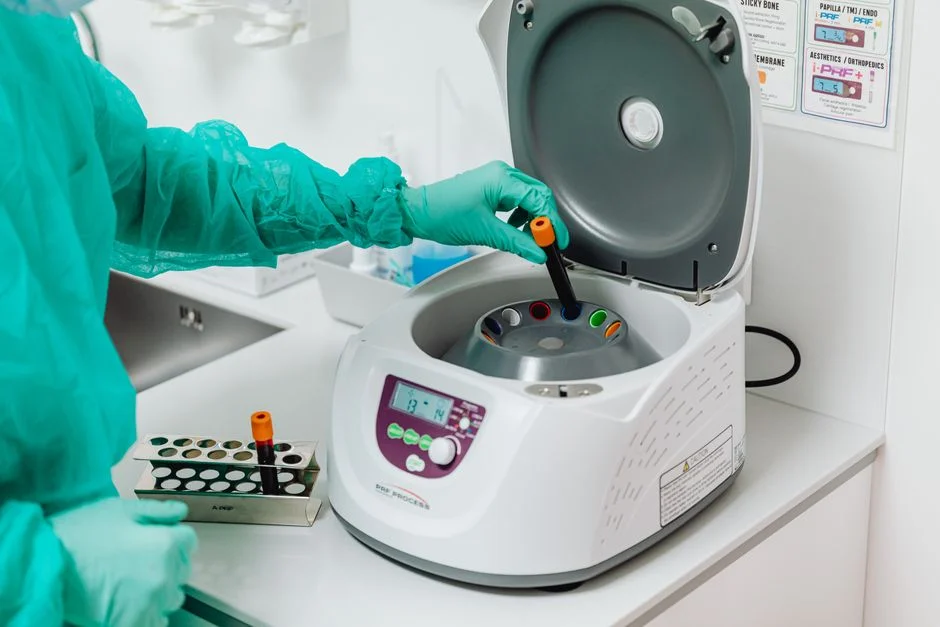
Raw acid mine drainage and spent process solutions arrive at the head of the plant at pH 2–4, with total suspended solids in the hundreds to several thousand mg/L, dissolved heavy metals (Pb, Cu, Zn, Cd, Ni, As), and elevated sulfate and TDS in leach-pad runoff and brine streams. The chemistry is the same whether the discharge path is sewer or surface water, but the numerical targets and the consequence of a single excursion are not — that is the design constraint that shapes every downstream decision.
Seasonal and operational swings drive the worst excursions. Shift-change dump-leach cycles, mill clean-outs, and storm events on the mill yard push TSS into the 800–2,000 mg/L range faster than an undersized equalization basin can absorb, and a 4-hour hydraulic retention basin passes those spikes straight to the clarifier where they show up in the next 24-hour POTW composite. Stormwater surge from a 25-year event is the right sizing envelope for a Belleville-area plant. A defensible 2026 design starts from a 30-day composite sampling campaign covering pH, ORP, TSS, TDS, sulfate, oil and grease, and total recoverable Cu, Pb, Zn, and As, with storm-event grabs layered on top.
Equalization, pH Correction, and Precipitation Chemistry
The equalization basin is the most undersized piece of equipment in most mining/metals pretreatment plants, and the most expensive to retrofit. Specify the basin at 8–24 hours of average daily flow to dampen batch discharges from shift changes, dump-leach cycles, and mill clean-outs; a 4-hour basin passes every upstream spike straight to the clarifier. For any Belleville-area facility discharging more than 25,000 gpd or more than 0.4 MAD (whichever is lesser), §51.045(B) of Chapter 51 mandates a 24-hour storage and flow-control facility on the user's property, at the user's expense, with plans submitted to and approved by the city before construction. Cover the basin if ferrous iron or sulfide odor is in the influent profile, and mix it — unmixed equalization does not equalize chemistry.
pH correction sits immediately downstream. Lime (Ca(OH)₂) is cheaper per ton but generates 3–5× more sludge; sodium hydroxide carries higher reagent cost but lower sludge volume and is often justified on high-TDS mining streams. Target pH 6.5–9.0 to satisfy virtually every POTW's instantaneous range, and stage the dosing in two reactors when influent swings more than 2 pH units, because each 1 pH unit away from the metals-precipitation optimum can cut removal efficiency by an order of magnitude — sending zinc from below 1 mg/L to above 10 mg/L with no other change to the chemistry. The practical control hardware is a PLC-controlled chemical dosing skid that handles both pH adjustment and coagulant feed on a single controller, keeping pH inside a ±0.2 band — the difference between meeting and missing a 0.3 mg/L zinc monthly average.
Hydroxide precipitation with NaOH or lime is the default because the reagent is cheap and the chemistry is well understood. Sulfide precipitation (NaHS, FeS, Na₂S) is reserved for streams that must drop below 0.1 mg/L residual — sulfide residuals are typically 0.01–0.05 mg/L for Cu, Zn, Cd, and Ni, an order of magnitude lower than hydroxide — but the reagent runs 2–4× higher cost and the system requires sealed reactors with H₂S scrubbing. Properly controlled precipitation systems in operating mining/metals installations routinely achieve 85–95% total metals removal (per Fluence, 2024-11). A polymer coagulant aid dosed at 0.5–3 mg/L floccs the metal-hydroxide particles fast enough for the clarifier to operate at 20–40 m/h hydraulic loading without carryover.
DAF vs Lamella: The 2026 Clarifier Decision
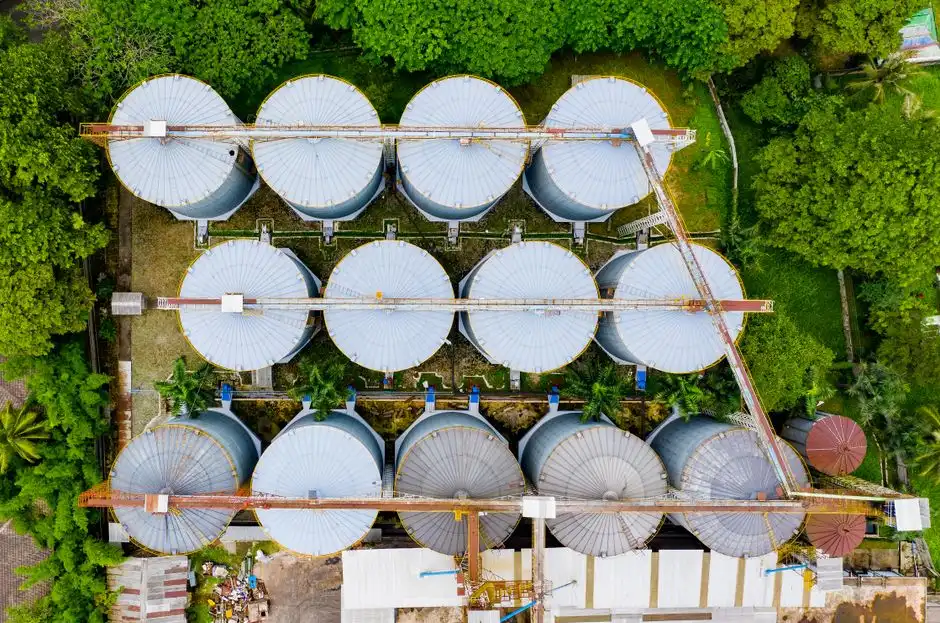
The clarifier decision is the single most consequential equipment choice in the train. Both DAF and lamella work; neither is universally better. The decision is driven by influent character, not by preference.
| Criterion | DAF | Lamella Clarifier | Decision Trigger |
|---|---|---|---|
| Hydraulic loading | 5–25 m/h | 20–40 m/h | Lamella wins on footprint; DAF wins on colloidal capture |
| Footprint vs conventional | ~½ | ~⅓ | Lamella where civil work is constrained |
| FOG / oil removal | 85–95% | Limited (requires upstream removal) | DAF when free oil or grease is present |
| TSS removal (mining duty) | 90–98% | High on hydroxide flocs | DAF on colloidal fines; lamella on dense sludge |
| Chemical OPEX | Higher (reagent + saturator) | Lower (sludge blanket recirculation cuts coagulant up to 30%) | Lamella for steady-state hydroxide service |
| Flow range (covered models) | 4–300 m³/h across 13 models | Skid to large custom | DAF scales linearly; lamella for >100 m³/h steady flow |
| CAPEX adder at clarifier scale | 15–25% over lamella | Baseline | DAF CAPEX is offset by eliminated FOG stage |
Use the heuristic: DAF when the stream carries oil, grease, or colloidal fines; lamella when the stream is primarily a metal-hydroxide sludge at high flow and footprint is constrained. A common 2026 retrofit pairs a DAF system ahead of an existing lamella clarifier — the DAF handles FOG and storm surges, the lamella carries steady-state load at lower chemical cost. For a deeper side-by-side of the two, see the DAF vs clarifier for mining wastewater factory guide.
Polishing, Disinfection, and Sludge Dewatering
A multimedia filter is the safety net between the clarifier and the sewer manhole. Anthracite over sand over garnet at 1–2 m/h filtration rate strips residual TSS to under 10 mg/L and provides a buffer for the days when the clarifier underperforms because of a polymer mis-dose or a hydraulic surge. Pair the filter with backwash triggered on differential pressure and sized for the backwash cycle, not the average flow. A purpose-built multimedia filter sized for the backwash cycle is the right hardware.
Disinfection shows up in the local sewer-use ordinance whenever the POTW's collection system has long force mains or siphons, or whenever an industrial discharge could plausibly carry pathogens. A chlorine dioxide generator dosed at 1–5 mg/L provides the residual the POTW asks for without forming the regulated trihalomethanes that chlorine produces — which matters when the receiving plant already runs close to its chlorine residual ceiling.
Sludge from the clarifier and DAF is itself a regulated waste. A plate and frame filter press dewaters the sludge to 25–35% dry solids, producing a stackable cake for Subtitle-D landfill or, where recoverable metals justify haul distance, return to a smelter. Filtrate returns to the head of the plant. Size the press off clarifier underflow — concentrated and intermittent — not off average wastewater flow, or the duty cycle breaks under real operating conditions.
The 2026 Selection Matrix a Vendor Will Actually Accept
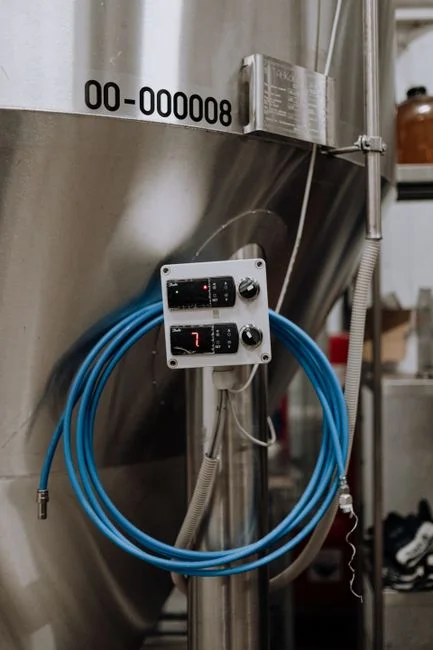
Walk into a vendor meeting with this matrix. Map influent character to equipment scope, priced against the local ceiling and the 2026 risk layer.
| Influent Scenario | Equipment Scope | Sizing Driver |
|---|---|---|
| Row 1: Steady flow >20 m³/h, low FOG, no on-site reuse plan | Equalization (24-hr HRT per Chapter 51) + PLC chemical dosing skid + lamella clarifier + multimedia filter + filter press | Average daily flow; largest single batch slug |
| Row 2: Batchy flow or FOG intermittent | Add DAF ahead of lamella; DAF adds 15–25% to clarifier CAPEX but eliminates a separate oil-removal stage | Peak batch flow; FOG spike envelope |
| Row 3: Chronic FOG and TSS routinely >500 mg/L | DAF + lamella + multimedia + filter press is the 2026 default | Storm surge; FOG mass loading |
| Row 4: Local limits forcing sub-ppm metals, or 5-year plan for reuse / ZLD | Add industrial RO polishing; oversize multimedia filter; specify higher cake-dryness filter press | Local limit; reuse recovery target |
RO is the single largest cost line in the train and should be justified on tightening local limits or on a real reuse trajectory, not on categorical compliance alone (per the parallel Salt Lake City mining pretreatment 2026 guide and the 2026 pretreatment compliance playbook). Design for the peak 2-hour flow with 20–30% turndown capacity, and treat to the local POTW's sewer-use ordinance — not just to the federal categorical standard.
Frequently Asked Questions
Is sewer discharge from a mine covered by an NPDES permit?
No. NPDES permits under CWA §402 govern direct discharge to surface water. Sewer discharge to a POTW is regulated under CWA §307(b) and 40 CFR Part 403, with categorical standards in 40 CFR Part 437 (Ore Mining and Dressing) and 40 CFR Part 433 (Metal Finishing) where applicable. Most plants carry both authorizations because they have separate stormwater outfalls (per EPA NPDES program structure).
What are typical 2026 local limits vs the federal categorical standard?
Local sewer-use ordinances in 2026 typically set zinc at 0.3–1.0 mg/L monthly average and copper at 0.3–0.5 mg/L monthly average, which is tighter than the 40 CFR Part 437 categorical standard of 1.27 mg/L zinc daily-max / 0.61 mg/L monthly-average and 1.0 mg/L copper daily-max / 0.5 mg/L monthly-average. Always confirm against the specific POTW ordinance before sizing equipment, because the federal floor is rarely the binding number.
When is sulfide precipitation justified over hydroxide?
Sulfide precipitation (NaHS, FeS) achieves residual metals of 0.01–0.05 mg/L versus 0.5–2.0 mg/L for hydroxide, which matters when the local limit is below 0.3 mg/L. Reagent cost runs 2–4× higher and the system requires sealed reactors with H₂S scrubbing. For most mining flows, hydroxide precipitation with sulfide polishing on a slipstream is the cost-effective compromise.
What does the Belleville ordinance specifically require?
Chapter 51 §51.045(B) requires any user discharging more than 25,000 gpd or more than 0.4 MAD (5% of POTW average daily flow), whichever is lesser, to install a 24-hour equalization basin on-site at the user's expense. §51.040 prohibits dilution as a substitute for treatment and authorizes mass-based limits when dilution is detected. §51.046 requires every industrial user to develop a slug control plan addressing non-routine batch discharges, stored chemicals, notification procedures, and containment.
Does my plant need DAF or a lamella?
DAF when the stream carries free oil, grease, or fine colloidal metals — it removes 85–95% of FOG and 90–98% of TSS in mining/metal-finishing service across 4–300 m³/h. Lamella clarifier when the stream is primarily a metal-hydroxide sludge at high flow and footprint is constrained — 20–40 m/h surface loading in roughly one-third the footprint, with lower chemical OPEX from sludge-blanket recirculation. The two are often paired: DAF upstream for FOG and storm surges, lamella downstream for steady-state load.