
How Much Wastewater Does a Gaborone Hotel Actually Produce?
A 100-room Gaborone hotel typically generates 100–150 m³/d of sewage, while a 200-bed five-star property runs closer to 250 m³/d at 60–80% occupancy (per Imemflo S1 hotel benchmark, 2025). The practical sizing rule is 1.0–1.5 m³ per guest per day, with kitchen, restaurant, bar, and pool backwash adding another 10–20% on top. The cleanest way to defend the design flow to a client is to itemise the four load sources: guest-room fixtures, kitchen grease and food waste, laundry (many Gaborone hotels run a separate on-site laundry that the Imemflo guidance flags as a candidate for a dedicated greywater stream), and pool backwash dumped at off-peak hours.
Hotel flows are not flat. A typical Gaborone site shows a morning peak from guest showers and toilets between 06:30 and 09:30, a midday plateau, and an evening peak between 18:30 and 21:30 driven by kitchens and bars. That diurnal pattern is the reason a packaged MBR supplier will size the equalisation tank at roughly 25–35% of daily flow — enough to ride out a two-hour peak without shocking the biological stage or pushing the membrane flux beyond its rated L/m²·h envelope. For a 150 m³/d design, that is a 40–50 m³ EQ basin, usually integrated into the front of a skid-mounted unit like the WSZ underground integrated packaged STP range, which is increasingly used as the upstream buffer for hotel MBR retrofits.
What Is a Packaged MBR STP and How Does It Work in a Hotel Setting?
A packaged membrane bioreactor (MBR) is a two-stage system on a single skid or in a single container: an activated-sludge biological stage that reduces BOD, COD, and nutrients, followed by submerged ultrafiltration membranes that physically separate solids from the mixed liquor. The biological stage runs at mixed-liquor suspended solids (MLSS) of 8,000–12,000 mg/L, roughly 3–4× the concentration of a conventional activated-sludge plant, which is what eliminates the need for a separate clarifier tank. The membrane stage then acts as the physical barrier: a DF-series flat-sheet MBR membrane module with a 0.1 μm nominal pore size, or a hollow-fibre module at 0.03–0.04 μm, both small enough to retain bacteria and most viruses while passing water (HydropureWater DF/UF specifications, 2026).
For the hotel use case, the packaged form almost always wins over a built-in-place concrete MBR. A packaged unit arrives factory-tested with the blower, permeate pump, control panel, and membrane cassettes pre-commissioned, which compresses a 12–18-month concrete build into a 6–10-week install on a tight hotel site. The submerged flat-sheet configuration also handles the grease and surfactant spikes that come from hotel kitchens more gracefully than side-stream tubular membranes, because the flat sheets tolerate backwash and chemical cleaning cycles that would foul a hollow-fibre bundle. Removal performance sits in the 90–95% range for total contaminants (per Imemflo S1, 2025), with sub-1 μm effluent suitable for landscape irrigation, cooling-tower make-up, and toilet flushing once residual chlorine is added.
Engineers who want the full process-and-cost picture before writing a spec should review the broader guide to prefabricated wastewater plant engineering and cost (2025), which covers the same plant architecture from a different angle.
Packaged MBR vs Conventional Packaged A/O: Which Suits a Gaborone Hotel?
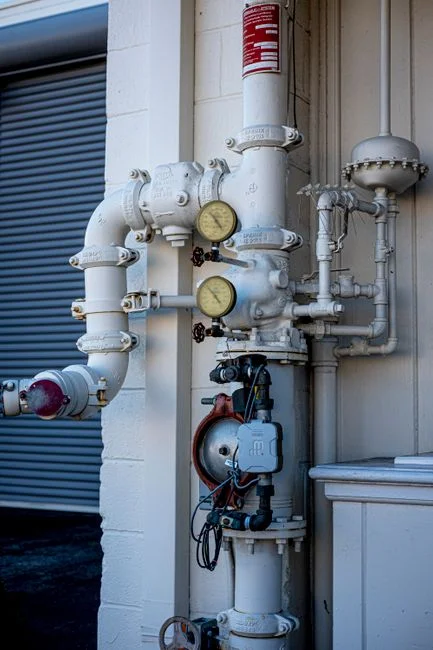
The two packaged options a Gaborone consultant is most likely to evaluate head-to-head are a submerged MBR and a WSZ-style underground anoxic/oxic (A/O) activated-sludge plant. The MBR wins on effluent quality, footprint, and reuse-readiness; the A/O wins on capital cost and operational simplicity. The right answer depends on the site.
| Parameter | Packaged MBR | Packaged WSZ A/O |
|---|---|---|
| Footprint vs conventional AS | ~40% smaller (no clarifier) | ~70% of conventional AS |
| Typical effluent TSS | <10 mg/L (membrane barrier) | 20–30 mg/L (settling dependent) |
| Coliform removal | Complete (per ScienceDirect S3, 2025) | Partial; disinfection typically required |
| Sludge volume | Concentrated, low-volume WAS | Settling-tank WAS, higher water content |
| CAPEX (50–250 m³/d) | Higher membrane premium | Lower upfront spend |
| OPEX drivers | Membrane replacement 5–8 yr, air-scour energy | Aeration energy, sludge hauling |
| Reuse-ready effluent | Yes, near-reuse quality | Only after tertiary polishing |
| Best-fit Gaborone scenario | Constrained footprint, reuse planned, stringent WUC limits | Open ground, tight CAPEX, discharge to sewer only |
The decision rule a consulting engineer can put in a memo to ownership is straightforward. Specify the packaged MBR when the hotel site is footprint-constrained, the client wants reuse for irrigation or toilet flushing, or the Botswana Water Utilities Corporation discharge limit at the receiving manhole is tight. Specify the WSZ A/O when the site has open ground for burial, the budget is hard-capped, and the effluent is going to a municipal sewer with no reuse obligation. The WSZ underground integrated packaged STP remains a defensible answer for three- and four-star Gaborone properties on a tight capex envelope, while the HydropureWater packaged MBR wastewater treatment system is the right call once reuse enters the brief. For a peer-market cross-check, the 2026 MBR engineering guide for a neighbouring East African market (Tanzania) reaches a similar conclusion on footprint and reuse economics.
What Removal Performance Should a Buyer Expect From a Hotel MBR?
The cleanest published hotel-specific MBR performance numbers come from the 800 KLD submerged UF-MBR at Trident Nariman Point, Mumbai, monitored over four months and published in Desalination and Water Treatment in 2025 (per ScienceDirect S3). Those are the figures a Botswana buyer should write into a supplier performance guarantee, because they come from a real five-star hotel rather than a municipal or industrial plant.
| Parameter | Influent (typical hotel) | Trident Mumbai effluent (S3, 2025) | Removal % | Buyer spec target |
|---|---|---|---|---|
| TSS | 200–400 mg/L | ~5–8 mg/L | 98.13% | <10 mg/L |
| BOD | 200–300 mg/L | ~8–12 mg/L | 96.34% | <10 mg/L |
| COD | 400–600 mg/L | ~50–70 mg/L | 88.63% | <50 mg/L |
| Total Nitrogen | 40–60 mg/L | ~10–14 mg/L | 77.38% | <15 mg/L |
| Total Phosphorus | 6–10 mg/L | ~1–2 mg/L | 84.80% | <2 mg/L |
| Total / Fecal Coliforms | 10⁶–10⁷ MPN/100 mL | Not detected | ~100% | Not detected |
| Flux (post-cleaning) | — | 27 → 31 L/m²·h | ~15% recovery | >25 L/m²·h |
Imemflo's published 90–95% overall removal claim (S1, 2025) sits at the conservative end of the same envelope — a useful negotiation floor when the supplier's literature quotes the higher Trident numbers. The flux recovery from 27 to 31 L/m²·h after chemical cleaning is the maintenance benchmark a buyer should expect: routine clean-in-place every 2–4 weeks and a recovery clean every 6–12 months is the operating rhythm to budget against.
Botswana-Specific Sizing, Compliance and Power Considerations
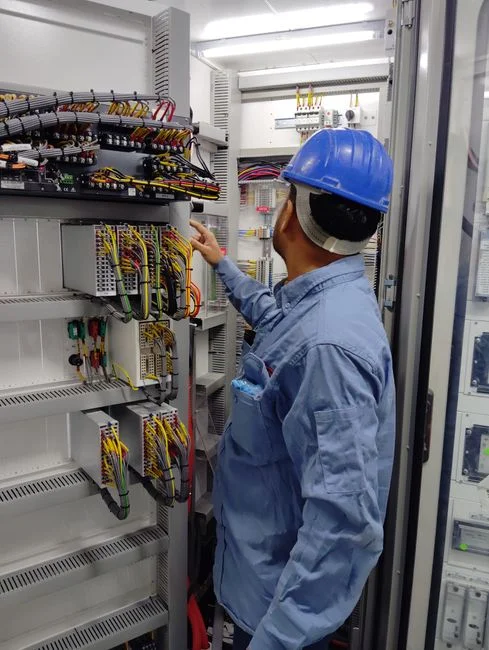
Generic MBR guidance stops at the plant boundary. A Gaborone specification has to address three local realities before the order is placed. First, compliance. Discharge to a Botswana Water Utilities Corporation (WUC) sewer manhole is governed by WUC's sewer discharge parameters, and any reuse for irrigation or cooling-tower make-up falls under the Department of Water Affairs effluent guidelines and the Botswana Bureau of Standards. Confirm the current revision of both with WUC at the design freeze stage — limits tighten periodically, and a 2024-vintage spec can be out of date by the time the plant is commissioned. Second, climate. Gaborone sits in a hot semi-arid zone with summer daytime peaks above 35 °C, which pushes biological activity hard and can foul membranes faster if mixed-liquor temperature drifts above the 35–40 °C comfort band. Specify shading, insulation, or a buried skid for the membrane cassette to stabilise temperature and protect membrane integrity. Third, grid reliability. Membrane air-scour cannot tolerate a long outage — within 2–4 hours, sludge cakes onto the membrane surface and irreversible fouling follows. Size the backup generator or UPS for the MBR air-scour load plus the permeate pump, and verify the transfer-switch rating covers simultaneous inrush.
The water-stress context makes the case for MBR over A/O even when the budget is tight. Gaborone sits in the Notwane River catchment, one of the more stressed catchments in southern Africa, and high-reuse effluent for landscape irrigation, toilet flushing, and cooling-tower make-up is an economic driver, not a sustainability tagline. Every cubic metre of reuse displaces a cubic metre drawn from the municipal supply at Gaborone's tariff, which is the metric the CAPEX payback case has to be built on.
Cost Framework and Supplier Shortlist for a Gaborone Hotel MBR
No Botswana-specific packaged MBR CAPEX figure is published, so a representative band for a 50–250 m³/d skid-mounted unit sits roughly 20–40% below a built-in-place concrete MBR of equivalent capacity, with the cost drivers being the stainless skid, PVDF membrane cassettes, duty/standby blowers, the control panel, and containerisation for shipping. The OPEX picture is more predictable: membrane replacement every 5–8 years, chemical cleaning 2–4 times per year, aeration energy as the largest single line, and quarterly sludge hauling. Payback against Gaborone's municipal water tariff is typically 4–7 years for a 150–250 m³/d hotel MBR when reuse displaces 50–70% of the non-potable demand, which is the realistic ceiling for a hotel operation.
| Cost line | Driver | Typical range / frequency |
|---|---|---|
| CAPEX (packaged 50–250 m³/d) | Skid, PVDF membranes, blower, controls | 20–40% below built-in-place MBR (no BWP figure published) |
| Membrane replacement | PVDF / flat-sheet cassettes | Every 5–8 years |
| Chemical cleaning | NaOCl + citric acid CIP | 2–4× per year |
| Aeration energy | Largest OPEX line | ~0.3–0.5 kWh/m³ treated |
| Sludge hauling | WAS dewatering + offsite | Quarterly |
| Payback vs Gaborone tariff | Reuse displaces 50–70% of non-potable draw | 4–7 years for 150–250 m³/d |
Supplier due-diligence questions to put on the tender shortlist: what flux guarantee is offered in writing, which membrane source is fitted (Suez, Toray, Mitsubishi, Dow/DuPont, or a HydropureWater DF series, all of which appear in the Imemflo S1 supplier list), is there a southern-African service partner with spares on the shelf, and can the supplier produce reference installations in Botswana, Namibia, or South Africa. The cross-market reference points in the guide to prefabricated wastewater plant engineering and cost (2025) and the neighbouring-market 2026 MBR engineering guide for Tanzania are useful benchmarks when the supplier's reference list is thin.
Frequently Asked Questions
What is the typical design flow per room for a packaged MBR STP in a Gaborone hotel?
Apply 1.0–1.5 m³ per guest per day at 60–80% occupancy, which gives 100–150 m³/d for a 100-room hotel and roughly 250 m³/d for a 200-bed five-star property (per Imemflo S1 hotel benchmark, 2025). Add 10–20% for kitchen, laundry, and pool backwash loads.
Should a Gaborone hotel specify a packaged MBR or a built-in-place MBR?
Specify a packaged MBR for delivery speed and capital predictability on a 6–10-week install, and reserve built-in-place concrete MBR for plants above ~500 m³/d where the civil works economy of scale kicks in. The packaged form is factory-tested with the blower, permeate pump, and control panel pre-commissioned (HydropureWater packaged MBR specifications, 2026).
What effluent quality can a hotel MBR realistically deliver for reuse?
A submerged UF-MBR at the Trident Nariman Point, Mumbai hotel delivered 98.13% TSS, 96.34% BOD, 88.63% COD, and complete Total and Fecal Coliform removal, with effluent typically <10 mg/L TSS and <10 mg/L BOD (per ScienceDirect S3, 2025). That envelope is the right spec target for landscape irrigation, cooling-tower make-up, and toilet flushing after residual chlorination.
Which Botswana standards govern packaged STP discharge?
Discharge to a WUC sewer manhole is governed by Botswana Water Utilities Corporation sewer discharge parameters, and reuse applications fall under the Department of Water Affairs effluent guidelines and the Botswana Bureau of Standards. Confirm the current revision with WUC at the design freeze stage.
How often do MBR membranes need replacement on a hotel plant?
PVDF flat-sheet or hollow-fibre MBR membranes typically run 5–8 years between replacements in hotel service, with chemical cleaning 2–4 times per year and a flux recovery clean every 6–12 months (per Imemflo S1, 2025; ScienceDirect S3, 2025).
What CAPEX should a Gaborone hotel budget for a packaged MBR?
No Botswana-specific CAPEX figure is published, but a packaged MBR in the 50–250 m³/d range typically sits 20–40% below a built-in-place concrete MBR of equivalent capacity, with payback of 4–7 years when reuse displaces 50–70% of non-potable municipal draw at Gaborone's tariff.