
The Regulatory Chain a Henderson Mining Plant Actually Discharges Under
A facility that sends process wastewater to a Henderson sanitary sewer is not regulated under an NPDES surface-water permit — it is regulated as a Categorical Industrial User under the federal pretreatment program. The legal chain runs from Clean Water Act §307(b) through 40 CFR Part 403, layered with the applicable categorical standard — 40 CFR Part 437 (Ore Mining and Dressing) for most Henderson-area mining operations and 40 CFR Part 433 (Metal Finishing) for plants with plating, pickling, or anodizing lines — and finally enforced locally through Title 13 of the Henderson Municipal Code by City of Henderson Utilities as the POTW control authority (per EPA 40 CFR Part 403 framework; City of Henderson Utilities sewer-use ordinance, Title 13). For a broader primer on how the federal floor and the local ceiling interact for this sector, see the federal categorical vs local limit primer for mining and metals plants.
The distinction matters because the numerical targets are not the same. The federal categorical standard sets a daily-maximum and monthly-average floor; the local POTW's sewer-use ordinance almost always sets a tighter ceiling, especially for zinc, copper, lead, and ammonia, and the equipment train must be designed to the local number, not the federal floor. Enforcement runs through sampling, inspections, Notices of Violation, Significant Noncompliance public notice, and civil penalties — exposure under CWA §309 can reach up to $25,000 per day per violation. Conflating the sewer pathway with an NPDES direct-discharge permit is the single most common reason a plant invests in the wrong unit operations. The chemistry is identical; the numerical target and the consequence of a single excursion are not.
Pollutant Profile and the 2026 Limit Numbers You Have to Hit
Raw streams arriving at the head of a Henderson pretreatment train look the same across the sector: acid mine drainage and spent process solutions at pH 2–4, total suspended solids from the hundreds to several thousand mg/L, dissolved Pb, Cu, Zn, Cd, Ni, and As in the single-digit to tens of mg/L range, and elevated sulfate and TDS in leach-pad runoff and brine streams. The compliance budget must absorb that range and still meet the local manhole number on the worst day of the month.
The table below consolidates the federal floor and a representative 2026 local POTW ceiling. Local numbers vary by sewer-use ordinance; the figures shown are the operational range a Henderson-area plant must engineer to.
| Parameter | 40 CFR Part 437 Daily Max (mg/L) | 40 CFR Part 437 Monthly Avg (mg/L) | Typical 2026 Local POTW Monthly Avg (mg/L) |
|---|---|---|---|
| TSS | 50 | 25 | 20–30 |
| Zinc (total) | 1.0 | 0.5 | 0.3–1.0 |
| Copper (total) | 1.0 | 0.5 | 0.3–0.5 |
| Lead (total) | 0.5 | 0.25 | 0.05–0.2 (LCRR-driven re-derivations in progress) |
| Cadmium (total) | 0.5 | 0.25 | 0.05–0.2 |
| pH (instantaneous) | 6.0–9.0 | 6.0–9.0 | 6.5–9.0 |
Plants with finishing operations also carry 40 CFR Part 433 categorical limits on the same site: copper 3.38 mg/L daily-max / 2.07 mg/L monthly-average and total chromium 2.77 mg/L daily-max / 1.71 mg/L monthly-average (per 40 CFR 433.15). The federal Part 437 numbers in the table are representative subcategory values per 40 CFR 437.40–437.47; confirm the active subcategory against your permit. The Lead and Copper Rule Revisions (LCRR) are pushing the lead action level toward 10 µg/L, and Henderson Utilities is re-deriving local limits at much lower numbers for many users as a result. Treat any discharge carrying lead as a sub-100-µg/L target in 2026 planning, even if the renewal permit has not yet caught up.
Three 2024–2026 EPA Trends Reshaping What Counts as Compliant
Three federal moves are already landing on the next permit cycle and should be built into the 2026 sampling plan even where the renewal letter has not yet arrived.
- PFAS monitoring. EPA's 2024 Multi-Sector General Permit (finalized 2024-09) added PFAS analytical requirements for PFOS, PFOA, PFHxS, and PFNA on sectors that include metal mining, and the local control authority is adopting the same suite for sewer users (per EPA 2024 MSGP, 2024-09). Mining plants in the Henderson service area should be running PFAS in 2026 self-monitoring at the cadence the local POTW prescribes.
- Ore-mining BAT revisions. EPA's 2025 ore-mining Best Available Technology revisions (issued 2025-03) tightened the cost-benefit envelope on total recoverable metals, raising the floor on what counts as demonstrated treatment capability in 2026.
- LCRR-driven lead re-derivation. The Lead and Copper Rule Revisions are pushing the lead action level toward 10 µg/L, which propagates into local sewer-use limits and, for plants discharging any lead-bearing stream, into bioassay testing requirements the next time the permit cycles.
The operational consequence: every mining or metals plant in the Henderson service area should be screening for PFAS and LCRR-adjusted lead in 2026 self-monitoring, regardless of whether the renewed permit has caught up to the rule.
Equalization and pH Correction — The Two Pieces Most Often Undersized
The equalization basin is the most undersized piece of equipment in most mining and metals pretreatment plants, and the most expensive to retrofit after the fact. Spec the basin at 8–24 hours of average daily flow to dampen batch discharges from shift changes, dump-leach cycles, and mill clean-outs; a 4-hour basin passes every upstream spike straight to the clarifier and overwhelms it (HydropureWater field data, 2026). Mechanical mixing and a drop in influent velocity are what makes the basin actually equalize — a tank with no mixer is just a holding pond.
pH correction comes immediately downstream. Lime is cheaper per ton but generates 3–5× more sludge, so high-TDS mining streams often justify the higher reagent cost of NaOH. Target pH 6.5–9.0 to satisfy virtually every POTW's instantaneous range, and stage the dosing in two reactors if the influent swings more than 2 pH units between batches. The downstream consequence of sloppy pH control is severe: each 1 pH unit away from the metals-precipitation optimum can cut removal efficiency by an order of magnitude, sending zinc from less than 1 mg/L to 10+ mg/L with no other change in chemistry. A PLC-controlled automatic chemical dosing system that holds pH in a ±0.2 band is the practical difference between hitting and missing a 0.3 mg/L zinc monthly average.
Hydroxide Precipitation with Sulfide Polishing for Sub-0.1 mg/L Residuals
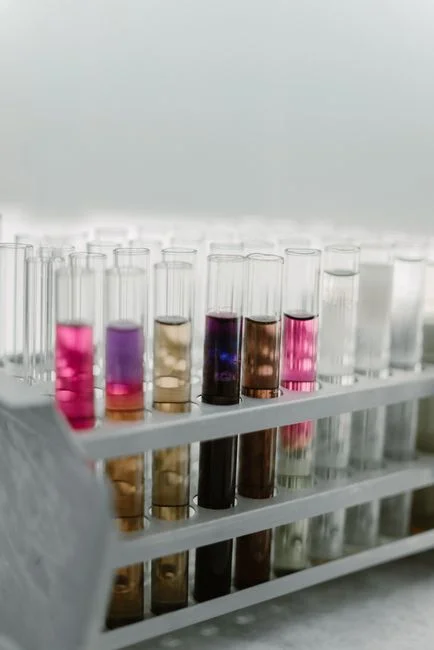
Hydroxide precipitation with NaOH or lime is the default for most Henderson plants because the reagent is cheap and the chemistry is well understood. The operating window is parameter-specific and must be locked in with jar testing, not vendor literature: zinc and cadmium precipitate near pH 8–9, copper and lead near pH 7–8, and nickel and chromium require pH 9–10. Properly controlled precipitation systems in operating mining and metals service routinely achieve 85–95% total metals removal (per Fluence, 2024-11).
Sulfide precipitation with NaHS, FeS, or Na₂S drives residuals to 0.01–0.05 mg/L for Cu, Zn, Cd, and Ni — about one order of magnitude lower than hydroxide — but reagent cost runs 2–4× higher and the system requires sealed reactors with H₂S scrubbing on the off-gas to protect operators and neighbors. The standard 2026 arrangement is a hydroxide main reactor treating the full flow plus a sulfide polishing step on a slipstream, which is the cost-effective compromise between compliance margin and reagent cost.
DAF vs Lamella: Choosing the Right Clarifier for Henderson Mining Streams
This is the decision most engineers actually face in a real project: DAF or lamella. Both work; neither is universally better. DAF at 5–25 m/h hydraulic loading achieves 90–98% TSS removal and 85–95% oil/grease removal in mining and metal-finishing service because microbubbles attach to oil-coated and colloidal particles. Lamella at 20–40 m/h surface loading occupies roughly one-third the footprint of a conventional clarifier, has lower chemical consumption because the sludge blanket is denser, and handles heavy metal-hydroxide flocs very well — but it does not remove free oil or colloidal fines as effectively as DAF.
Use this heuristic: DAF when the stream carries free oil, grease, or fine colloidal metals; lamella when the stream is primarily a metal-hydroxide sludge at high flow and the civil footprint is constrained. The dissolved air flotation system covers 4–300 m³/h across 13 models at 5–25 m/h hydraulic loading, which fits the typical plant envelope without civil redesign. For a high-flow metal-hydroxide stream where footprint is the binding constraint, the high-efficiency lamella clarifier is the right call. Polymer coagulant aid at 0.5–3 mg/L flocs metal-hydroxide particles fast enough to operate at 20–40 m/h without carryover, and reduces TDS bleed by collapsing the colloidal fraction before settling. For a deeper side-by-side, see the DAF vs clarifier comparison for mining wastewater and the DAF vs clarifier factory guide for mining and metals wastewater.
| Stream Character | Preferred Clarifier | Loading Rate | Typical Removal |
|---|---|---|---|
| Free oil, grease, colloidal fines; flow <200 m³/h | DAF | 5–25 m/h | 90–98% TSS; 85–95% O&G |
| Metal-hydroxide sludge, no free oil; flow >100 m³/h; tight footprint | Lamella | 20–40 m/h | 80–95% TSS; lower O&G |
Multimedia Filtration, Disinfection, and Sludge Dewatering
The clarifier is the workhorse; the units downstream are the safety net that bridge clarifier effluent to the sewer manhole. A multimedia filter with anthracite over sand over garnet, operating at 1–2 m/h filtration rate with backwash triggered on differential pressure, strips residual TSS to <10 mg/L and absorbs the days when the clarifier underperforms because of a polymer mis-dose or a hydraulic surge. Size the filter for the backwash cycle, not the average flow.
Disinfection shows up in the local sewer-use ordinance whenever the POTW's collection system has long force mains or siphons, or whenever the industrial discharge could plausibly carry pathogens. A chlorine dioxide generator dosed at 1–5 mg/L provides the residual the POTW asks for without forming the regulated trihalomethanes that chlorine produces — a material difference when the receiving POTW tracks THMs in its biosolids. Sludge from the clarifier and DAF is itself a regulated waste. A plate and frame filter press dewaters the sludge to 25–35% dry solids, producing a stackable cake that can be hauled to a Subtitle-D landfill or, for recoverable metals, shipped to a smelter; filtrate returns to the head of the plant. Design the whole train for the peak 2-hour flow with 20–30% turndown capacity, not just average flow, and treat to the local ordinance, not the federal categorical daily maximum.
Worked Example: Hitting a 0.5 mg/L Zinc Monthly Average at the Manhole
Take a 2026 local limit of 0.5 mg/L zinc monthly average at the manhole. Back-allocate the budget: 0.7–1.0 mg/L at the clarifier effluent (accounting for monthly-average averaging), <0.3 mg/L after multimedia polishing, leaving margin for the worst day of the month and for a single clarifier upset. The clarifier is sized against the 0.7–1.0 mg/L target, not the 0.5 mg/L manhole number, because the multimedia filter must have something left to remove.
Control pH to ±0.2 around the zinc optimum near 9.0. A 1-unit drift in pH can multiply the clarifier-effluent zinc tenfold, blowing the monthly average on a single bad day. A sulfide polishing slipstream treats a fraction of the clarifier underflow and reduces the worst-case clarifier effluent by an order of magnitude — compliance buffer without re-treating the full flow. The unit operations that produce this budget are well-known: 85–95% total metals removal in hydroxide precipitation, 90–98% TSS removal in the DAF or lamella, with jar-tested reagent doses locked in before the unit is purchased (HydropureWater field data, 2026). For a parallel compliance blueprint on the NPDES side of the same operation, see the mining pretreatment for NPDES compliance engineering guide.
Frequently Asked Questions
Does a Henderson mining plant need an NPDES permit if it only discharges to the sewer?
No. Sewer discharge is governed by CWA §307(b) and 40 CFR Part 403, not NPDES. Most plants also hold an NPDES permit for separate stormwater outfalls, but the sewer pathway is enforced through the local POTW's sewer-use ordinance, not the state NPDES program.
What are typical 2026 local POTW limits for zinc and copper near Henderson?
Local monthly averages in 2026 typically run zinc 0.3–1.0 mg/L and copper 0.3–0.5 mg/L, tighter than the 40 CFR Part 437 categorical standard of 1.0 mg/L daily-max / 0.5 mg/L monthly-average. Always confirm against the specific Henderson Utilities sewer-use ordinance before sizing equipment.
When is sulfide precipitation worth the 2–4× higher reagent cost?
When the local limit is below 0.3 mg/L. Sulfide polishing on a slipstream of the clarifier effluent reaches 0.01–0.05 mg/L residuals and is the cost-effective way to buy compliance margin without re-treating the full flow.
What DAF flow range fits a typical Henderson-area plant?
The DAF line covers 4–300 m³/h across 13 models at 5–25 m/h hydraulic loading. Below 10 m³/h, packaged skid systems are common; above 100 m³/h, parallel DAF trains or a lamella clarifier typically becomes more economical.
Which federal categorical standard applies — 40 CFR Part 437 or Part 433?
Part 437 (Ore Mining and Dressing) for ore mining and primary processing; Part 433 (Metal Finishing) for plating, pickling, and anodizing lines. A single site with both operations can carry both categorical standards in parallel.