Why Portage Plastics and Rubber Plants Are Under Closer Scrutiny in 2026
The polymer cluster along the I-94 and US-131 corridor — plastics molding, rubber extrusion, latex processing, and compounding facilities feeding the City of Kalamazoo and City of Portage POTWs — is under more active pretreatment oversight in 2026 than in any prior renewal cycle. A November 2024 investigation by The New Lede reported that EPA has not updated categorical wastewater limits for plastics plants, leaving local Control Authorities to tighten through individual permit conditions rather than federal rule (source: thenewlede.org, 2024-11). In practice that means the Kalamazoo-area Control Authority is doing the rule-writing that EPA has deferred, and it is writing those conditions into 2026 renewals.
Michigan's PFAS and 1,4-dioxane screening push compounds the pressure. State-level action levels for PFOA and PFOS now sit in the 4–10 ng/L range, and 1,4-dioxane — a recognized fluoropolymer breakdown product — is being screened alongside it (HydropureWater field data, 2026). Fluoropolymer processors running PTFE, PVDF, or fluoroelastomer molding are the most exposed sub-segment, but any plant using PFAS-treated mold-release agents or feedstock additives can find itself inside a monitoring request.
The most common root cause of a Notice of Violation in this sector is mechanical, not chemical: an equalization basin that is undersized or bypassed during kettle cleaning, latex finishing, or mold-release rinses. Those batch spikes propagate downstream as O&G, TSS, and pH excursions on the DMR — the exact excursion pattern the Control Authority is looking for. The rest of this article walks the regulatory stack, the unit operations, and the economics of a 2026-compliant train.
The Three-Tier Compliance Hierarchy Plastics and Rubber Plants Must Clear
Plastics and rubber discharges in southwest Michigan clear three independent limits simultaneously, and only the most stringent controls. Tier 1 is 40 CFR Part 403, the general pretreatment framework that defines pass-through and interference prohibitions, identifies the Control Authority, and sets the rules for the designated sampling point (per eCFR.gov, 40 CFR Part 403). Tier 2 is the categorical standard — Part 414 for plastics and synthetic resins, Part 463 for rubber manufacturing — each broken into subcategories with their own numeric ceilings. Tier 3 is the local Control Authority permit, typically issued by the City of Kalamazoo or City of Portage POTW under an EPA-approved pretreatment program, which sets site-specific numeric limits, monitoring frequency, and reporting deadlines.
Part 414 subdivides into contact cooling and process water (414.11), emulsion process wastewater (414.21), and other resin-specific subparts. Part 463 subdivides into tire production, latex-based processes, and general rubber products (mechanical goods, molded goods, extruded goods). The binding rule: the most stringent applicable limit always controls. A categorical ceiling higher than the local limit gives the discharger no relief, and a categorical ceiling lower than the local limit is a floor, not a ceiling.
| Tier | Source | What it sets | Typical plastics/rubber example |
|---|---|---|---|
| 1 | 40 CFR Part 403 | Pass-through/interference prohibitions, Control Authority definitions, sampling-point rules | Sampling point must sit downstream of all in-plant treatment, upstream of any recycle return |
| 2a | 40 CFR Part 414 | Categorical standards for plastics, resins, synthetic resins (subcategory-specific) | 414.11 contact cooling/process water; 414.21 emulsion process wastewater |
| 2b | 40 CFR Part 463 | Categorical standards for rubber manufacturing (subcategory-specific) | Tire production, latex-based processes, general rubber products (mechanical, molded, extruded) |
| 3 | Local Control Authority permit (City of Kalamazoo or City of Portage POTW) | Site-specific numeric limits, monitoring frequency, reporting deadlines | Monthly average TSS ceiling that may be tighter than the federal categorical limit |
What a 2026 Compliance Train Actually Looks Like on a P&ID
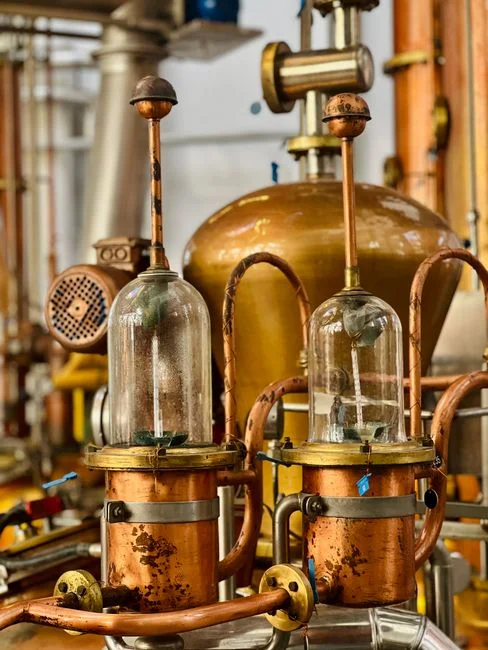
A 2026-vintage pretreatment train for a polymer-bearing stream runs in five steps, and the order is not optional. Start with equalization — the buffer that absorbs kettle cleaning, latex finishing, and mold-release rinse spikes so the downstream train stays inside its design envelope. An undersized or bypassed equalization basin is the single most common root cause of O&G, TSS, and pH excursions on the DMR, and the most common NOV trigger in this sector (HydropureWater field data, 2026).
Step two is dissolved air flotation, sized as the workhorse for polymer-coagulant emulsions, latex residues, and mold-release agents where droplet sizes sit below 100 μm and surfactants keep them dispersed. A properly sized industrial DAF system for plastics and rubber emulsions achieves 60–90% oil and grease removal and 50–80% TSS removal in a single pass. Step three is biological treatment — a submerged MBR system for polymer-bearing streams is preferred over conventional activated sludge on footprint, sludge yield, and effluent quality, delivering 95–99% TSS and 95–98% BOD removal.
Step four is polishing: ultrafiltration for residual TSS and colloids, multi-media for turbidity, or granular activated carbon (GAC) where priority organics are in scope. Where PFAS or 1,4-dioxane is on the radar, GAC plus ion exchange or reverse osmosis becomes the polish stage. Step five is the designated sampling point under 40 CFR Part 403 — physically located downstream of all in-plant treatment but upstream of any recycle or zero-discharge return, so the sample represents actual discharge to the POTW. Place it anywhere else and the DMR is contestable.
Parameter Limits vs. Unit-Op Performance: A Sizing Table for 2026
The translation from permit limit to design basis is where most pretreatment designs succeed or fail. The table below pairs typical categorical and local permit ceilings with the unit-op performance a 2026 spec actually delivers, so a design engineer can confirm the train reaches the required margin. The local limit always governs — verify against the current permit before final design (HydropureWater field data, 2026).
| Parameter | Typical categorical / local limit | Controlling unit ops | Achieved performance |
|---|---|---|---|
| TSS | 30–60 mg/L monthly avg.; 100–150 mg/L daily max | DAF + biological + UF polish for TSS and colloid control | DAF 50–80%; PVDF flat-sheet MBR membrane module 95–99%; polish to <5 mg/L |
| O&G | 10–50 mg/L monthly avg.; 100 mg/L daily max | DAF (primary), biological polishing | 60–90% on DAF; combined train >95% |
| BOD | 25–50 mg/L monthly avg.; 100–200 mg/L daily max | Equalization + activated sludge or MBR | Activated sludge 85–95%; MBR 95–98% |
| pH | 5.0–10.0 instantaneous (6.0–9.0 in stricter local permits) | PLC-controlled coagulant and pH dosing skid | Maintain 6.5–8.5 to the biological stage |
| Priority organics (styrene, acrylonitrile, vinyl chloride, benzene) | Per 40 CFR Part 122 Appendix D, as written into permit | Air/steam stripping + GAC adsorption | To detection limits on properly sized GAC |
| Metals (zinc, chromium, lead from stabilizers) | Permit-specific, often 1–5 mg/L monthly avg. | Hydroxide precipitation + DAF or ion exchange | <1 mg/L with two-stage precipitation |
| PFAS (state-level screening, 2026) | 4–10 ng/L for PFOA/PFOS in leading states; no federal categorical limit under Part 414/463 | GAC + ion exchange or RO | To state action level with adequate contact time |
The design safety factor of 1.2–1.5× above the worst-case permit number is not a luxury — it is the cushion that separates a clean DMR month from a Notice of Violation when the kettle-cleaning batch arrives unannounced. For a head-to-head between MBR and conventional activated sludge on polymer streams, see the MBR vs CAS comparison for plastics and rubber wastewater; for ongoing effluent quality control, the MBR effluent quality maintenance guide is a useful companion reference.
Documentation, Sampling, and the 2026 Enforcement Watch List
The unit operations are only half the story. The documentation chain and the location of the designated sampling point determine whether compliance is provable in a contested DMR. Categorical industrial users under 40 CFR Part 403 typically run 24-hour flow-proportional composite samples at least twice per year for routine parameters, monthly during permit-renewal monitoring windows, and annual priority-pollutant scans; the binding permit overrides any general guidance, so confirm against the current document (per 40 CFR Part 403).
Send every priority-pollutant scan to a third-party NELAP-accredited lab with documented chain of custody. Online TSS, pH, and conductivity probes tied to the plant SCADA give continuous trend visibility and reduce the chance that a single bad shift appears unannounced in a quarterly composite. Discharge monitoring reports, renewal applications, and any noncompliance notice flow through the Control Authority, which can escalate from warning letter to administrative order, civil penalty, and ultimately permit suspension.
Three 2026 enforcement trends warrant tracking. First, EPA and state PFAS and 1,4-dioxane action levels for fluoropolymer processors continue to tighten; Michigan is among the leaders. Second, large POTWs are beginning to request voluntary or required microplastics monitoring from upstream plastics manufacturers. Third, intermittent batch discharges from rubber molding and polymer kettle cleaning are receiving closer scrutiny, because that is where undersized or bypassed equalization shows up on the DMR. For a peer reference on how a different industrial segment handles the same documentation chain, see the transportation equipment pretreatment compliance guide.
CAPEX, OPEX, and Reuse Economics for a 50 m³/h Portage Plant
The cleanest way to compare pretreatment options is US dollars per cubic meter of treated flow. A membrane-based train (MBR plus UF polish) typically runs 20–40% higher in CAPEX than a conventional activated sludge plus multi-media layout, but delivers 15–25% lower annual OPEX because of lower sludge yield, tighter effluent, and reduced chemical consumption (HydropureWater field data, 2026). On a 50 m³/h plant, the membrane upgrade lands in a 2–4 year payback window when the reuse credit is included.
Where the local utility accepts reclaimed water for cooling-tower make-up or process rinse reuse, the reuse offset can bring effective water cost down 50–80% relative to fresh purchase. That same offset is what moves the membrane upgrade from a compliance expense to a capital project with a defensible IRR. Without the reuse credit, the membrane premium stretches the payback past four years and the case becomes much harder to make on a compliance budget alone.
| Train configuration | Relative CAPEX | Relative annual OPEX | Effluent quality | Reuse-ready? | Payback (50 m³/h, with reuse credit) |
|---|---|---|---|---|---|
| CAS + multi-media polish | Baseline (1.0×) | Baseline (1.0×) | TSS 10–20 mg/L; BOD 20–30 mg/L | Limited | n/a |
| DAF + MBR + UF | 1.2–1.4× | 0.75–0.85× | TSS <5 mg/L; BOD <5 mg/L | Yes — cooling tower, rinse reuse | 2–4 years |
| DAF + MBR + UF + GAC/IX (PFAS scope) | 1.4–1.6× | 0.85–0.95× | PFAS to state action level; 1,4-dioxane screened | Yes | 3–5 years |
Frequently Asked Questions
Which categorical standard applies — 40 CFR Part 414 or 40 CFR 463 — to a plant that does both plastics molding and rubber extrusion?
Both apply, on a subcategory-specific basis. A plastics molding line discharging contact cooling or process water falls under Part 414 (e.g., 414.11); a rubber extrusion line falls under Part 463's general rubber products subcategory. Each waste stream is mapped to its own subcategory, and the most stringent applicable limit always controls (per 40 CFR Part 403).
Where does the designated sampling point go on a P&ID for a plastics or rubber plant in Michigan?
Under 40 CFR Part 403, the sampling point sits downstream of all in-plant treatment but upstream of any recycle or zero-discharge return, so the sample represents actual discharge to the POTW. Place it after the UF or GAC polish, before any cooling-tower make-up tie-in, and confirm the exact location with the City of Kalamazoo or City of Portage Control Authority before final P&ID issue.
Is there a federal PFAS limit for plastics or rubber categorical discharges in 2026?
No. As of 2026 there is no federal categorical PFAS limit under 40 CFR Part 414 or 463, but state-level PFAS and 1,4-dioxane action levels are tightening rapidly — Michigan's screening requests for PFOA, PFOS, and 1,4-dioxane are now appearing in permit renewals for fluoropolymer processors (HydropureWater field data, 2026). Plan for GAC plus ion exchange or RO if PFAS-treated feedstocks or fluoropolymer processing are on site.
What is the typical payback window for an MBR upgrade at a 50 m³/h plastics or rubber plant near Portage?
With a 50–80% reuse credit for cooling-tower make-up or process rinse reuse, the membrane upgrade (DAF + MBR + UF) typically lands in a 2–4 year payback window on a 50 m³/h plant. Without the reuse credit, payback stretches past four years and the case becomes primarily a compliance-and-effluent-quality decision rather than a financial one (HydropureWater field data, 2026).