Why Mount Juliet Pulp and Paper Sites Hit a Footprint Wall
A 1,000 m³/d converting or specialty pulp mill in Mount Juliet, Tennessee is almost always civil-constrained long before it is budget-constrained. The plant's aeration basin usually predates the current production line, and any expansion has to fit between an operating converting line, a paper machine hall, and a stormwater swale — concrete volume, not the CAPEX line, becomes the binding decision variable. For a brownfield retrofit, the contest between the 2026 HydropureWater pulp-and-paper footprint verdict applied to Middle Tennessee reduces to a single question: which system removes the design BOD load in the concrete the plant already owns.
Mount Juliet sits inside the Cumberland River watershed, and industrial discharge in Tennessee is administered by the Tennessee Department of Environment and Conservation (TDEC) Division of Water Resources under Rule 1200-04-05 (Industrial Multi-Sector) and the NPDES general permit 1200-04-04 for non-contact cooling and process water. Pulp and paper operations are also covered by the federal 40 CFR Part 430 effluent guidelines, which apply regardless of state — so any retrofit has to clear both the state pathway and the sector-specific federal limits. The dominant industrial mix around Mount Juliet is converting, packaging, and recycled-fibre, not virgin kraft: influent BOD typically lands at 400–1,200 mg/L, with Pt-Co colour below 500 on unbleached furnish and 800–2,000 on bleached grades. A 20–40% capacity uplift inside the existing basin envelope is the realistic planning horizon, and that is the scenario the rest of this guide is sized against.
Influent Envelope That Drives the MBR vs CAS Decision
Three wastewater streams define the design envelope at a Middle-Tennessee converting or specialty mill, and each one stresses a conventional activated sludge (CAS) basin and a membrane bioreactor (MBR) differently.
Fibre colour wastewater — washer filtrate and bleached pulp filtrate — carries colour at 500–2,500 Pt-Co units, suspended solids in the 200–1,500 mg/L range, and BOD that swings with furnish changes between hardwood, softwood, and recycled fibre (typically 400–2,000 mg/L). The biological load is not exotic, but the chromophore load is: residual colour is dominated by high-molecular-weight lignin fragments and chlorinated phenolic oligomers in the 0.1–1,600 mg/L total-phenols envelope reported for pulp and paper phenol streams. The specialist biomass that degrades these compounds has a population doubling time of 2–5 days, which means a CAS clarifier washing biomass out on a bulking day also washes out the very organisms the plant needs for colour removal.
Condensate wastewater from evaporators and batch digester blow arrives with TSS often below 50 mg/L but BOD at 5,000–10,000 mg/L, driven by methanol and ethanol. Condensate is essentially non-flocforming — it slips through a CAS clarifier as pin floc, lifts effluent COD, and starves the sludge blanket of the dense biomass operators rely on for stable settling. In an MBR, the same condensate blends into mixed liquor at 8,000–12,000 mg/L MLSS, where methylotrophs (Methylobacterium, Hyphomicrobium) consume methanol on a 12–24 h turnover that a CAS washout cannot retain. Storm inflow and infiltration through aging yard piping is the third stress: a 2×–3× hydraulic surge during a winter frontal passage can collapse clarifier settleability in a CAS train, while the same surge only forces a flux setback on a 0.04–0.2 µm membrane (per the MBR viability literature).
MBR vs CAS Side by Side for a Mount Juliet Retrofit
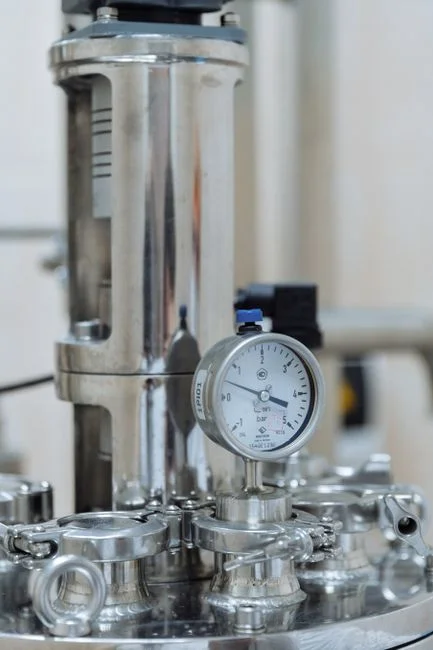
The procurement engineer will screenshot this table. Every cell is sized for a Middle-Tennessee retrofit at 1,000 m³/d, with the Mount Juliet winter-mixed-liquor note added to the parameter envelope.
| Parameter | CAS (conventional activated sludge) | MBR (submerged PVDF) |
|---|---|---|
| MLSS | 2,000–4,000 mg/L | 8,000–12,000 mg/L |
| F/M ratio | 0.2–0.4 kg BOD/kg MLSS·d | 0.1–0.2 kg BOD/kg MLSS·d |
| HRT | 6–10 h | 3–6 h |
| SRT | 5–15 d (20 °C ref.); +4–6 d at 10 °C MLSS | 15–30 d; biology retained independent of clarifier |
| Footprint factor (equal BOD load) | 1.0× | 0.40–0.55× |
| Specific energy | 0.3–0.6 kWh/m³ | 0.6–1.1 kWh/m³ (scour + CIP auxiliaries) |
| Direct GHG emissions | 0.85 kgCO2eq/m³ | 0.91 kgCO2eq/m³ |
| Effluent TSS | 10–30 mg/L (settling-dependent) | <5 mg/L |
| Effluent turbidity | Variable, often 5–30 NTU | <1 NTU |
| Membrane pore range | — | 0.04–0.2 µm (Grasmick viability thesis); 0.1 µm flat-sheet geometry typical (per DF series PVDF flat-sheet membrane module) |
| OPEX line items | Aeration blower kWh, sludge hauling | Scour-blower kWh, CIP chemicals (NaOCl, citric acid), membrane replacement reserve (1 cassette every 5–7 years) |
Mount Juliet climate delta: winter mixed-liquor temperature falls to 8–12 °C versus the 20 °C reference used in the S3 envelope, and nitrification rate at 10 °C is roughly half the 20 °C rate. A CAS basin has to extend SRT by 4–6 days or add a floating-media stage to keep ammonia limits; an MBR holds the slow-growing nitrifiers and the chlorophenol-degrading specialists regardless of clarifier settleability, so winter operation is a flux-and-scour-air problem, not a biomass-retention problem. The trade-off lands on the OPEX line: scour-blower kWh rises about 10–20% in winter to keep crossflow velocity above the membrane vendor's minimum (typically 0.1–0.3 m/s at the cassette face), and CIP chemical dosing frequency steps up to manage冬季 viscosity-driven fouling. A 1,000 m³/d retrofit can be packaged as a single skid on the HydropureWater integrated MBR system, which is rated for 10–2,000 m³/d duty with submerged PVDF membranes.
Equal-Load Worked Example: 1,000 m³/d Converting-Mill Stream
Run the same numbers a CAPEX reviewer would run, but with a Mount Juliet winter twist: flow 1,000 m³/d, influent BOD 800 mg/L, target effluent BOD 30 mg/L, MLSS temperature 10 °C instead of the 20 °C reference in the source envelope.
CAS design: F/M = 0.3 kg BOD/kg MLSS·d at MLSS 3,000 mg/L gives a basin volume of about 270 m³ (HRT ≈ 6.5 h) and a secondary clarifier footprint of roughly 90 m² at the conventional 1 m² per 11 m³/d hydraulic loading. Total civil footprint, including the aeration lane, clarifier, and RAS pumping station, lands near 200 m². Winter operation forces the operator to either extend SRT (which means more tankage the plant does not have) or accept partial nitrification, both of which move the CAS design off the envelope above.
MBR design: F/M = 0.15 kg BOD/kg MLSS·d at MLSS 10,000 mg/L — half the F/M, 3–4× the MLSS — fits the same BOD removal into about 130 m³ of basin volume (HRT ≈ 3.1 h). The secondary clarifier disappears; the membrane cassette zone occupies roughly 30–40 m² at 15–25 L/m²·h flux for 0.1 µm flat-sheet geometry. Total MBR civil footprint lands at ~90 m², or about 45% of the CAS case, matching the 0.4–0.55× factor in the table. Equal-load math ignores membrane-tank auxiliaries, scour-blower skids, and CIP chemical dosing. Real brownfield retrofits land at 40–55% footprint savings, not 60% or more, and the first-year OPEX line always carries a membrane-replacement reserve. Treat any vendor quoting 70%+ as either ignoring auxiliaries or quoting a different influent envelope.
Retrofit Playbook for a Wilson County Plant
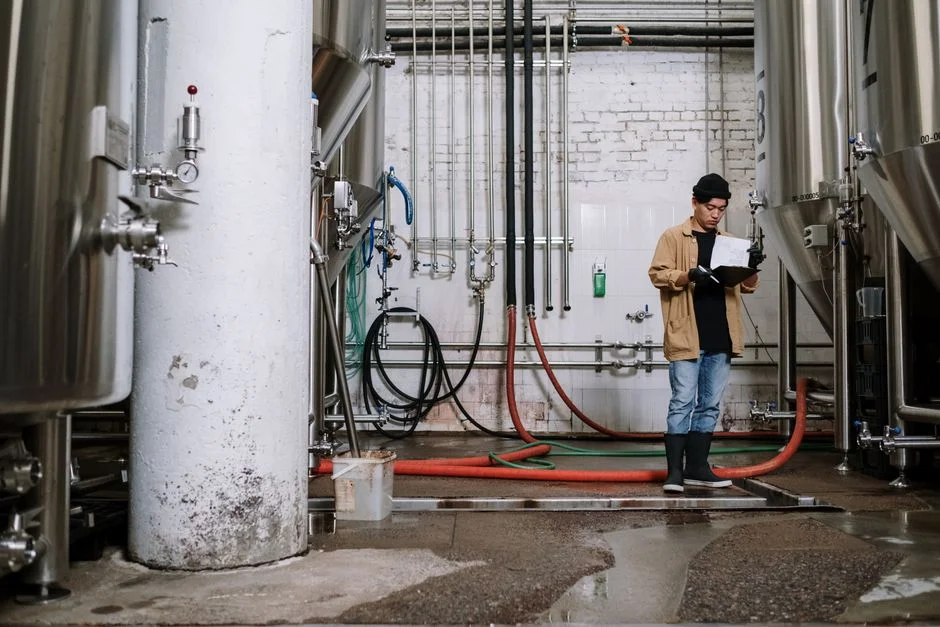
The standard MBR brownfield move is well established: baffle-wall one of the parallel aeration lanes into a membrane cassette zone, reroute the second lane as a pre-aeration equalisation cell, and drop the secondary clarifier. The existing aeration basin stays in service for the cutover window, which is what makes the sequence acceptable to a converting-line operations manager who cannot afford a 48-hour shutdown. For a 10–2,000 m³/d retrofit, the HydropureWater integrated MBR system ships as a factory-skidded cassette module, scour-blower skid, CIP chemical dosing panel, and PLC — the field work is concrete the cassette foundation, set the blower skid, tie in the CIP dosing lines, and commission.
Sludge handling changes: dropping the clarifier removes the RAS line, and the MBR waste-activated sludge (WAS) stream goes directly to the existing sludge dewatering train (plate-and-frame press) without a thickener add-on at most flows. Two permit consequences follow. First, any change to the biological reactor configuration triggers a TDEC permit modification under Rule 1200-04-04 — file the modification before construction, not after, because TDEC review on a substantive change typically runs 60–90 days. Second, the influent flow meter and sampling location often need to move to the new equalisation cell, which is itself a permit-map revision. A Wilson County buyer should budget 4–6 months of permit lead time on top of the mechanical construction window, with the membrane cassette arrival scheduled for the 8–10 week mark so civil work and module install run in parallel.
Tennessee Permitting and Cumberland River Considerations
Industrial wastewater discharge in Tennessee is administered by TDEC Division of Water Resources under Rule 1200-04-05 (Industrial Multi-Sector) and the NPDES general permit 1200-04-04; pulp and paper mills additionally fall under 40 CFR Part 430 effluent guidelines at the federal level. Confirm the current rule versions with the TDEC regional office in Cookeville before committing to a permit pathway, because the Industrial Multi-Sector general permit is reissued on a five-year cycle and the effluent-monitoring requirements track that reissue (per EPA NPDES program structure, 2025-08 cycle).
Antidegradation review under Tennessee Rule 1200-04-03 applies if the project increases pollutant load to a Tier 2 or Outstanding National Resource Water (ONRW) segment. The Cumberland River near Mount Juliet is not designated ONRW, but Tier 2 review can still apply on a site-specific basis, and any reuse-loop that reduces river withdrawal strengthens the antidegradation narrative. The Cumberland River 7Q10 low-flow window falls in July through September, when effluent temperature and BOD mass-loading constraints are tightest; a 0.91 vs 0.85 kgCO2eq/m³ GHG delta is small but a permit reviewer will want it quantified, and any reuse-loop (boiler-feed dilution, papermachine shower water) reduces river withdrawal and is viewed favourably. The combined permit deliverable for a Mount Juliet retrofit is therefore: an NPDES permit modification under Rule 1200-04-04, a Rule 1200-04-03 antidegradation review if load increases, and a 40 CFR Part 430 sector compliance demonstration — all three should be in the procurement engineer's scope letter before any vendor proposal is opened.
Frequently Asked Questions
How much smaller is an MBR footprint versus CAS for a 1,000 m³/d pulp and paper stream in Mount Juliet?
An MBR retrofit at 1,000 m³/d and 800 mg/L influent BOD lands at approximately 90 m² total civil footprint versus about 200 m² for CAS — roughly 45% of the CAS case, consistent with the 0.40–0.55× footprint factor in the 2026 MBR-vs-CAS envelope. Real brownfield retrofits, once scour-blower skids and CIP chemical dosing are included, deliver 40–55% savings, not 60% or more.
What influent envelope should a Mount Juliet converting mill use for MBR sizing?
For fibre colour wastewater, plan on colour 500–2,500 Pt-Co units, TSS 200–1,500 mg/L, and BOD 400–2,000 mg/L; for condensate, TSS below 50 mg/L and BOD 5,000–10,000 mg/L dominated by methanol and ethanol; for total phenols, 0.1–1,600 mg/L. Winter MLSS temperature at 8–12 °C in Mount Juliet drops nitrification rate about 50% versus the 20 °C reference, so an MBR is sized with SRT 15–30 days to retain slow-growing nitrifiers and chlorophenol-degrading specialists.
What TDEC permits are required for a brownfield MBR retrofit at a Wilson County pulp and paper mill?
A TDEC permit modification under Rule 1200-04-04 (NPDES general permit for non-contact cooling and process water) is required for any change to the biological reactor configuration, plus a Rule 1200-04-03 antidegradation review if pollutant load increases to a Tier 2 water. Federal 40 CFR Part 430 effluent guidelines for pulp and paper apply regardless of state. File the permit modification 60–90 days before construction, and confirm the current rule versions with the TDEC regional office in Cookeville before committing to a pathway.
Does an MBR reuse-quality filtrate eliminate the need for a tertiary polish at a Mount Juliet mill?
Yes — a submerged PVDF MBR with 0.04–0.2 µm membranes delivers <5 mg/L TSS and <1 NTU turbidity, which is directly usable as boiler-feed dilution or papermachine shower water without a tertiary polish (per the MBR viability literature, 2026 HydropureWater field data). If the plant needs higher reuse quality for closed-loop boiler makeup, a downstream RO step is added; for bleach-plant dilution showers and yard wash, the MBR filtrate alone is typically sufficient.
How do I size an MBR for bleach E-stage effluent specifically?
Bleach E-stage effluent is the most colour- and chlorophenol-loaded stream in a kraft sequence, and the sizing procedure is laid out in the step-by-step 2026 MBR sizing guide for bleach E-stage effluent. The short version: target MLSS 8,000–12,000 mg/L, F/M 0.1–0.15, HRT 4–6 h, and verify with a bench-scale jar test on a 24-h composite before committing cassette area.