Why La Porte Inorganic Chemicals Plants Are Re-asking the MBR vs CAS Question in 2026
For a La Porte inorganic chemicals plant in 2026, a membrane bioreactor (MBR) typically beats conventional activated sludge (CAS) on effluent quality, footprint (about 60% smaller) and resistance to high-TDS bulking, but costs more to run — a plant-wide study reported direct GHG emissions of 0.85 kgCO₂eq/m³ for CAS versus 0.91 kgCO₂eq/m³ for MBR. Pick CAS if OPEX dominates; pick MBR if reuse, TCEQ permit tightening or salt stress are the binding constraints.
The Houston Ship Channel corridor between La Porte and Deer Park hosts one of the densest inorganic chemicals clusters in North America: chlor-alkali, sulfuric acid regeneration, titanium dioxide pigments, inorganic salt production and metal-finishing support streams. Effluents from these units are rich in NaCl (often 3–10 g/L), Na₂SO₄, calcium hardness and trace heavy metals — exactly the chemistry that stresses floc-forming biomass in a conventional aeration basin.
Two forces are pushing plant engineers back to the comparison in 2026. First, the 2026 TCEQ TPDES renewal cycle is tightening metals and chloride limits across the Ship Channel, narrowing the operating window for any biological stage that occasionally washes solids. Second, the MBR market itself has matured: global market value grew from $217 million in 2005 to a projected $360 million by 2010, driven almost entirely by stricter discharge rules (per academic review data, S2). What was a European municipal novelty a decade ago is now a routine bid-item on Texas bid tabs.
This article covers only the biological stage. Screening, equalization, DAF and RO pretreatment are out of scope and are treated in the related footprint and reuse guides linked at the end of the comparison.
How Each System Works in an Inorganic Chemicals Duty
Both CAS and MBR are suspended-growth activated sludge processes — the difference is the separator, not the biology.
Conventional activated sludge (CAS) treats wastewater in an aeration basin where floc-forming bacteria oxidize organics and nitrify ammonia. Mixed liquor flows to a secondary clarifier, where biomass settles by gravity and is returned to the aeration basin as return activated sludge (RAS). Wasting is controlled by the sludge retention time (SRT), typically 3–10 days for industrial duty. Clarifier performance depends on floc density, which in turn depends on biology behaving well.
Membrane bioreactor (MBR) runs the same aeration basin but replaces the clarifier with a submerged microfiltration or ultrafiltration membrane module, typically PVDF flat-sheet or hollow fibre with a nominal pore size of 0.1–0.2 µm. The HydropureWater integrated MBR skid operates at <1 µm, so the barrier is finer than typical. Because the membrane retains biomass physically, the system can hold mixed liquor suspended solids (MLSS) at 8–12 g/L — roughly 3–4× a CAS basin — and run SRTs of 20–40 days. That high SRT is the key mechanism for degrading recalcitrant compounds and for surviving toxicity spikes from upstream spills (per S2, S3).
Three MBR features matter most for inorganic chemicals duty. First, the long SRT favours slow-growing nitrifiers and resists washout at high TDS. Second, the observed cell yield is lower, so less waste sludge is produced. Third, the physical membrane barrier delivers absolute solids retention — a clarifier's floc never has a bad day, but a membrane's pore size doesn't change with temperature or salinity (per S2, S3). MBR is not a substitute for proper equalization or toxicity management upstream of a chlor-alkali or acid-spill event, but it tolerates a much wider envelope of operating error.
Where CAS Breaks Down on Inorganic Streams
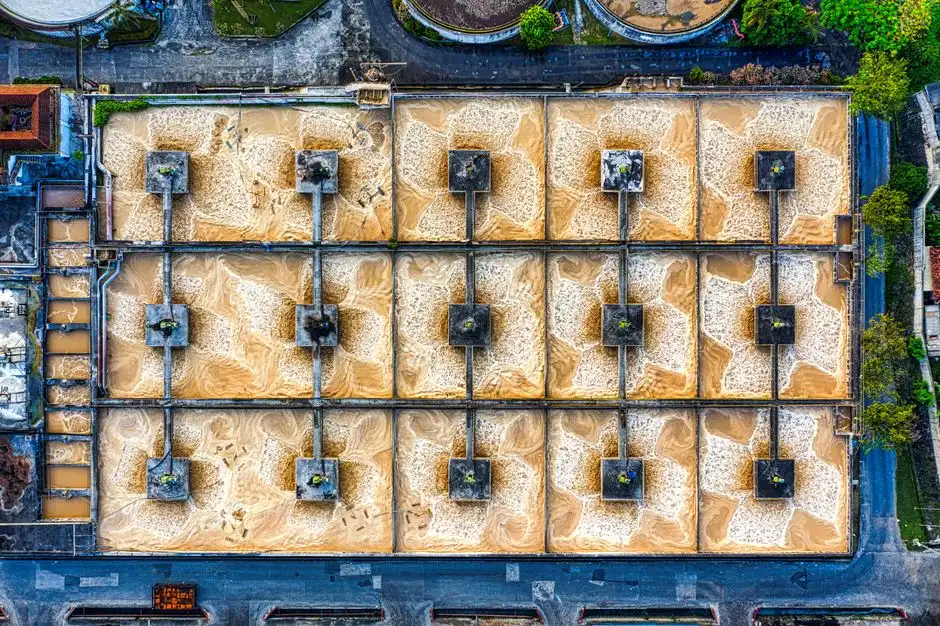
La Porte engineers running CAS on inorganic duty have seen most of these failure modes. They are not theoretical.
Bulking and foaming appear as soon as NaCl climbs above roughly 5–8 g/L in a CAS basin. Sulfate-reducing bacteria (SRB) and filamentous organisms proliferate, floc density drops, and the clarifier cannot retain the biomass. The MLSS drifts, the sludge volume index (SVI) climbs above 200 mL/g, and the basin loses capacity. Above 10 g/L NaCl, nitrification in CAS typically fails entirely; un-ionized ammonia and free nitrous acid accumulate, raising effluent toxicity and TCEQ reporting risk.
Clarifier failure follows any swing in influent temperature or salinity. Dispersed floc escapes over the weirs, rising sludge blankets form in the cone, and operators are forced to bypass partially treated effluent to the TPDES outfall. Each bypass is a permit excursion; cumulatively, they are the reason permit renewals are getting harder. Sulfide odors and H₂S release from anaerobic pockets in the clarifier or in the RAS line are a recurring TCEQ odor-nuisance trigger in Ship Channel plants — and they are also a corrosion problem for downstream equipment.
Heavy-metal inhibition of nitrifiers is the most stubborn mode. Nitrifiers need a long SRT to recover from a metal slug (Cu, Ni, Zn, Cr are common in inorganic streams), but a long SRT in CAS means a dilute, slowly settling MLSS that the clarifier cannot hold. The clarifier is the binding constraint, not the biology. MBR decouples the two: SRT is set by wasting, not by settling.
Head-to-Head Parameter Comparison
The table below summarizes the operating envelope a 2026 La Porte engineer is signing up for. Numbers are drawn from the cited sources and the HydropureWater product catalog (S2, S3, S6).
| Parameter | CAS (conventional activated sludge) | MBR (membrane bioreactor) |
|---|---|---|
| COD removal | 85–95% | >95% (per S2) |
| TSS in effluent | 10–30 mg/L (clarifier-dependent) | <5 mg/L (typically <1 with HydropureWater integrated MBR skid) |
| SRT range | 3–10 days | 20–40 days (per S3) |
| HRT | 6–12 h | 4–8 h |
| MLSS | 2–4 g/L | 8–12 g/L (per S3) |
| Footprint | Baseline (largest) | ~60% smaller (per S6) |
| Effluent microplastics | ~1.0 MP/L | ~0.4 MP/L (per S3) |
| Direct GHG | 0.85 kgCO₂eq/m³ | 0.91 kgCO₂eq/m³ (per S3) |
| Membrane flux | N/A (settling) | 10–100 L/m²·h (per S2) |
| Specific energy demand | 0.3–0.6 kWh/m³ | 0.5–0.9 kWh/m³ (membrane aeration) |
| Chemical cleaning | Polymer for clarification | CIP on membranes (NaOCl + acid, monthly–quarterly) |
| Duty envelope | Any scale, clarifier-limited | 10–2,000 m³/day on the integrated skid (S6) |
Two rows deserve extra emphasis. The MLSS row is the mechanism behind everything else: at 8–12 g/L, the MBR basin can be one-third the volume of a CAS basin, the SRT can be quadrupled, and the clarifier disappears. The GHG row is the mechanism behind the OPEX story: MBR emits 0.91 vs 0.85 kgCO₂eq/m³, a ~7% premium that is almost entirely from membrane aeration. That premium is partially offset by lower sludge hauling (low observed yield) and no return-activated-sludge pumping — a CAS train that runs 4,000 mg/L MLSS needs 50–80% of the basin flow pumped back as RAS.
TCEQ and EPA Discharge Compliance Lens for 2026
2026 TCEQ TPDES permits for inorganic chemicals duty on the Ship Channel typically require BOD₅ in the 20–30 mg/L range, TSS around 30 mg/L, seasonal ammonia-nitrogen limits, and site-specific metals and chloride limits. A well-run CAS train plus polishing can meet 30/30 in calm conditions, but compliance headroom is thin. MBR routinely delivers <10 mg/L TSS and stabilizes nitrification at SRTs CAS cannot match (per S2, S6). That headroom is the real product: when TCEQ tightens metals or chloride limits in the next renewal cycle, the MBR plant has somewhere to go; the CAS plant does not.
For water-reuse routes — cooling tower make-up, scrubber supply, boiler feed pretreatment — MBR effluent is essentially RO-ready. CAS effluent needs additional multimedia filtration or UF ahead of RO, which adds capex and another fouling surface to manage. If the 10-year plan includes reuse, the MBR/RO train usually wins on total installed cost; if reuse is not in the plan, CAS still has a legitimate seat at the table.
The long-horizon economics study most often cited (Karim & Mark 2017, summarized in S3) found that MBR becomes the lowest total cost when effluent-quality value is monetized — that is, when discharge savings, reuse offset, and avoided permit excursions are priced in. For a 5–15 year planning horizon, that crossover rarely happens; for a 30+ year asset, it usually does.
Capex, Opex and Footprint for a 500 m³/day La Porte Duty
A 500 m³/day duty is a realistic mid-size package for a chlor-alkali or acid-regeneration plant. A CAS train needs large aeration basins plus two secondary clarifiers (one duty, one standby) and a RAS pump station. An MBR train of the same throughput replaces the clarifier with a compact membrane tank and runs MLSS 3–4× higher, so the biological-stage footprint drops by roughly 60% (per S6). On a constrained Ship Channel parcel, that is often the difference between a feasible and an infeasible layout.
On OPEX, MBR pays a 20–40% energy premium for membrane aeration and recirculation. The offset comes from lower waste sludge (low observed yield per S2), no polymer for clarification, and no return-pumping duty. Net OPEX for MBR is typically 10–25% above CAS in industrial duty — close, but rarely lower.
The picture flips when the plant factors in capex compression. The HydropureWater integrated MBR skid packages the MBR, DAF pretreatment and chemical dosing on one factory-built unit, which compresses field labor, civil work and commissioning versus a stick-built CAS + clarifier train of equivalent throughput. For a 10–2,000 m³/day envelope, packaged MBR is now cost-competitive on capex as well as footprint, especially when the existing CAS basin is being repurposed rather than built new. HydropureWater DF-series flat-sheet MBR modules are individually replaceable, which keeps long-term maintenance localized and predictable.
Decision Framework: When to Pick MBR, When to Stay with CAS
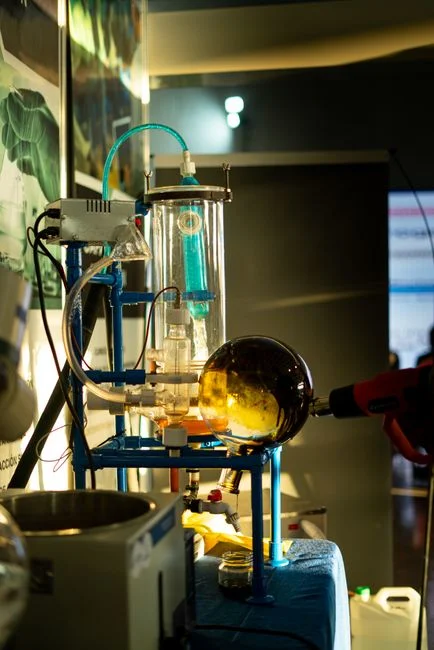
For a 2026 La Porte inorganic chemicals project, the selection rule below captures the dominant decision drivers. It is deliberately simple — most projects come down to two or three of these constraints.
| Plant condition | Recommendation |
|---|---|
| Influent TDS consistently high (NaCl > 5 g/L) or swings widely | Pick MBR — long SRT stabilizes nitrification and resists bulking |
| Footprint < 60% of CAS layout; site is constrained | Pick MBR |
| Effluent will be reused (cooling, scrubber, RO feed) within 10 years | Pick MBR — effluent is RO-ready, fewer polishing stages |
| TCEQ metals or chloride limits expected to tighten next renewal | Pick MBR — built-in compliance headroom |
| Moderate-strength, well-buffered influent; existing clarifier in good condition | Stay with CAS — lower OPEX, familiar operations |
| No reuse planned in next 10 years; OPEX dominates the business case | Stay with CAS |
| Existing CAS overloaded on a problematic sidestream (e.g., a high-TDS chlor-alkali blowdown) | Hybrid: keep CAS as roughing, add side-stream MBR polishing on the sidestream |
| Inorganic scaling risk (calcium, silica) and no pilot data | Pilot first — membrane fouling from inorganic scaling does not follow municipal MBR data |
Two cautions apply regardless of which row a plant falls into. First, always pilot with site wastewater: municipal MBR fouling data under-predicts inorganic scaling on a Gulf Coast salt stream. Second, train operators on the membrane CIP cycle before commissioning — the most common cause of early membrane failure is not chemistry, it is missed cleans. The MBR vs activated sludge footprint guide for FOG duty covers similar trade-offs in a high-BOD context, and the MBR vs MBBR reuse-turbidity guide covers the reuse-turbidity angle if a cooling-tower make-up line is in the plan.
Frequently Asked Questions
What effluent TSS can a La Porte plant expect from MBR versus CAS?
MBR effluent TSS is typically <5 mg/L and routinely below the detection limit of standard TSS methods. A well-run CAS clarifier delivers 10–30 mg/L. The difference matters most when the next stage is RO, because MBR effluent is essentially RO-ready while CAS effluent still needs multimedia or UF polishing.
What flux and membrane pore size should a 500 m³/day inorganic-chemicals MBR be designed for?
MBR systems typically operate at 10–100 L/m²·h flux with submerged PVDF membranes (per S2). The HydropureWater DF-series flat-sheet modules run in that band with <1 µm nominal pore size, which is the safe operating point for inorganic streams that carry calcium and silica scaling risk.
At what NaCl concentration does MBR become the safer biological choice?
For a chlor-alkali or sulfuric acid plant in La Porte, MBR is the safer biological choice above roughly 5 g/L NaCl because the long SRT (20–40 days) stabilizes nitrification and resists bulking. CAS nitrification typically fails at 8–10 g/L NaCl; MBR tolerates significantly higher concentrations, though pilot data on the specific brine is always recommended.
Do 2026 TCEQ TPDES limits force a plant to MBR?
No. Conventional parameters (BOD₅, TSS, ammonia) are met by either technology on inorganic-chemicals duty. The deciding factors are footprint, reuse intent and TDS tolerance, not carbon footprint (0.85 vs 0.91 kgCO₂eq/m³, per S3). MBR becomes effectively required only when permit limits tighten below what a clarifier can hold, or when the effluent is destined for RO.
How long do MBR membranes last on industrial duty?
Membrane life is typically 5–8 years with a routine CIP cycle (NaOCl plus a mineral acid, monthly to quarterly depending on fouling rate). Modules such as the HydropureWater DF-series flat-sheet are individually replaceable, so a single fouled or scaled module can be swapped without taking the whole train offline — a significant advantage over hollow-fibre cassettes that must be replaced as a rack.