
Why the Question Is Really About Campus Domestic Sewage, Not the Blowdown
On a data center campus, the sewage treatment plant is sized for human waste, not for the cooling loop. Restrooms, cafeterias, security gates, admin blocks, and the on-site dormitories that house shift technicians typically generate 50–150 L per employee per day of domestic sewage, with sharp diurnal peaks of 2.0–2.5× average flow across an 8–12 hour window (HydropureWater field data, 2026). A 200 MW hyperscale campus with 1,000–5,000 staff produces a domestic sewage load in the 50–500 m³/day range—squarely inside the domain where a factory-built packaged STP is the default 2026 choice.
Cooling tower blowdown is a separate stream governed by a different physics. The HVAC Laboratory rule of thumb is roughly 1% evaporation per 10°F of cooling, and raising cycles of concentration from 3 to 6 cuts makeup water by 20% and blowdown by 50% (HVAC Laboratory, 2025). That blowdown is high in TDS, sulfates, chlorides, phosphates, and treatment chemicals—feed water for a UF/RO reuse train, not a biological STP. Offsite transport and treatment through a service like Valicor is a valid operational alternative during commissioning or upset events, but it is not the same procurement decision as the campus domestic STP serving 200–5,000 staff.
The real comparison a 2026 buyer needs is: packaged STP or cast-in-place concrete STP for the domestic train, with the blowdown handled by a separate membrane recycle skid. This article outlines the specific factors driving that procurement choice.
Packaged STP vs Cast-in-Place Concrete STP: 2026 Head-to-Head Matrix
A factory-built packaged STP wins 5 of 7 procurement rows against a cast-in-place concrete STP for a new 2026 data center campus in the 50–500 m³/day domestic flow band. The table below uses ranges a buyer can quote into a board deck or RFP scoring matrix.
| Parameter | Packaged STP (WSZ / MBR skid) | Cast-in-Place Concrete STP | 2026 Winner (≤500 m³/day) |
|---|---|---|---|
| CAPEX (USD per m³/day of design flow) | $150–$400 | $250–$700 + civil works | Packaged |
| Lead time (order to commissioning) | 6–10 weeks | 5–8 months | Packaged |
| Footprint (m² per m³/day) | 0.05–0.15 | 0.10–0.30 | Packaged |
| Operator burden (FTE) | 0.2–0.5 | 0.5–1.0 | Packaged |
| Hydraulic retention time (hr) | 8–14 (anoxic/aerobic MBR) | 12–24 (CAS / SBR) | Packaged |
| Modular scalability | 25–100 m³/day increments | Single fixed basin | Packaged |
| Structural / seismic integration | Below-grade, landscaping above | Basin can double as seismic mass or fire-water reservoir | Cast-in-place |
The verdict flips above roughly 2,000 m³/day on a single train, where duplicating blowers, controls, and tanks across modular skids stops paying for itself and a poured basin becomes structurally cheaper per cubic meter.
Where the Packaged STP Wins: Modularity, Speed, and Hidden Cost Savings
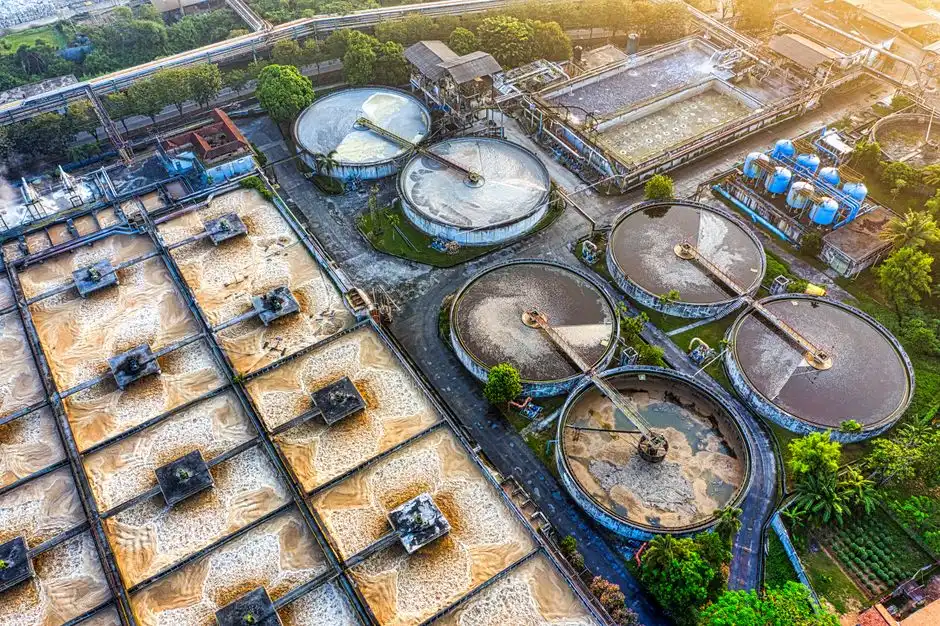
A packaged underground STP can be added in identical 25–100 m³/day increments as the campus phases online, which removes the day-one over-build that a poured basin forces on the buyer. If the first phase lands 150 staff and the second adds 800, the second skid ships in 6–10 weeks and bolts onto the same discharge header—no re-permitting, no new excavation footprint, and no second concrete pour (HydropureWater field data, 2026).
Factory QA provides additional savings. Welding, epoxy coating, pump alignment, instrumentation, and PLC FAT happen under one roof on a climate-controlled line, rather than in monsoon mud or winter frost on a site lacking a permanent labor camp. The audit trail is cleaner: every panel has a serial number, every MBR module has a factory test certificate, and the controls logic is bench-simulated before it ships.
Buried and integrated mounting is the third advantage. A packaged underground STP sits below finished grade with landscaping or a service road above it, preserving the setback and sightline rules that hyperscalers apply to security perimeters. A trailer-mounted WSZ variant is also available for the commissioning window or a temporary construction camp; the same unit can be relocated to the next campus when Phase 2 comes online, which a poured concrete basin cannot do.
For a packaged modular MBR system, hydraulic retention time drops to 8–14 hours versus 12–24 hours for a conventional activated-sludge basin, and the effluent is already low in TSS and BOD—close to reuse-grade without tertiary polishing.
Where Cast-in-Place Concrete STPs Still Earn the Spec
Cast-in-place concrete remains the right answer in four specific conditions. First, for single-train flows above roughly 2,000 m³/day, where duplicating blowers, controls, and tanks across modular skids becomes cost-prohibitive. Second, for sites where the STP basin doubles as a fire-water reservoir, a structural basement, or seismic mass. Third, for locations with extreme ambient conditions—permafrost, high water table, or corrosive soil—where factory-coated steel skids are harder to warranty than a 300 mm poured wall with a proper waterproofing membrane. Fourth, for projects where the EPC has already mobilized a permanent concrete crew for the data center shell and the marginal cost of a basin is minimal.
For most new 2026 data center campuses, none of these apply. The campus is greenfield, the flow is under 500 m³/day, the soils are reasonable, and the concrete crew is focused on the data hall slab. In that case, the cast-in-place STP is a critical-path civil work package that delays power-on, while a packaged unit is a scheduled deliverable.
Design Loadings the Buyer Should Lock Into the Spec
Locking the influent and effluent parameters into the RFP ensures every vendor bids against the same performance envelope. The numbers below represent the typical 2026 domestic sewage envelope for a data center campus with cafeteria, dormitory, and admin buildings.
| Parameter | Influent range | Effluent target (discharge or reuse) |
|---|---|---|
| BOD | 250–400 mg/L | ≤30 mg/L |
| COD | 500–800 mg/L | ≤100 mg/L |
| TSS | 250–350 mg/L | ≤30 mg/L |
| NH3-N | 30–50 mg/L | ≤5 mg/L |
| Total nitrogen | 40–60 mg/L | ≤15 mg/L |
| Oil & grease | 30–80 mg/L | ≤10 mg/L |
| pH | 6.5–8.5 | 6.5–8.5 |
| Average flow | 50–500 m³/day | — |
| Peak factor (diurnal) | 2.0–2.5× over 8–12 hr | — |
| HRT (anoxic/aerobic MBR) | — | 8–14 hr |
If the campus intends to reuse treated effluent for cooling tower makeup—a move that supports 2026 water reuse targets—the STP effluent should be RO-polished through an industrial RO system, with a UF unit upstream to protect the RO membranes from particulates and oil residues. Reuse of cooling tower blowdown reduces water footprint by 13% (HVAC Laboratory, 2025) when paired with cycle-of-concentration optimization.
Blowdown Side: Don't Send It to the STP, Recycle It
Cooling tower blowdown is too high in TDS, sulfates, chlorides, phosphates, and treatment chemicals (HVAC Laboratory, 2025) for a domestic-scale biological STP, as the biology will not survive the salinity shock. The correct 2026 path is a separate membrane train: XtremeUF ceramic or polymeric ultrafiltration removes oils, grease, precipitated by-products, particulates, and microbes (Saltworks), followed by a single-stage RO that typically delivers 50–60% recovery on blowdown feed (HVAC Laboratory, 2025). Raising cycles of concentration from 3 to 6 cuts makeup water by 20% and blowdown by 50% (HVAC Laboratory, 2025).
For hyperscaler campuses, the cleanest architecture is two independent trains with a shared utilities SCADA: the packaged domestic STP handling staff sewage, and a dedicated blowdown UF/RO skid feeding back into the cooling loop. Polishing before return to the tower is typically handled with an on-site UV sterilizer for biological control and an on-site ClO2 generator for biofilm and Legionella compliance. These two trains share an operator dashboard but maintain separate process equipment.
2026 ESG and Commissioning Angle: Why the Choice Matters Beyond Cost
Packaged STPs cut on-site concrete volume by an estimated 60–80% versus an equivalent cast-in-place plant, which directly lowers the embodied carbon reported under Scope 3. Factory-built plants also free civil-works bandwidth for water reuse skids, supporting the 2026 hyperscaler commitment to water reuse—with cooling blowdown recycling at 13% (HVAC Laboratory, 2025) serving as the baseline.
The commissioning argument is equally direct. A 6–10 week packaged lead time means the STP can be live during the flush-water and early-occupancy window, removing offsite haul costs during the first 6 months of campus commissioning (Valicor). The packaged unit arrives as a scheduled deliverable rather than a critical-path civil work package—on a 2026 hyperscale build, every month of critical-path slip on utilities translates to a month of delayed revenue per MW.
Decision Framework: When to Pick Which
Pick a packaged STP if design flow is under 2,000 m³/day, the campus is a new-build, the commissioning timeline is under 12 months, ESG/Scope 3 reporting is a board-level metric, or future expansion is uncertain. Pick a cast-in-place concrete STP if single-train flow is above 2,000 m³/day, the basin doubles as a structural element, or the site has unforgiving soil or climate constraints. The dominant 2026 pattern for greenfield hyperscale campuses is the hybrid: a packaged domestic train plus a dedicated blowdown RO train, both reporting into a shared utilities SCADA.
Frequently Asked Questions
Which STP form factor wins for a new 2026 data center campus with 200–5,000 staff?
A factory-built packaged STP wins 5 of 7 procurement rows for the typical 50–500 m³/day domestic flow band, costing roughly $150–$400 per m³/day of design flow versus $250–$700 plus civil works for cast-in-place, with a 6–10 week lead time versus 5–8 months. Cast-in-place only pulls ahead above
Frequently Asked Questions
Which is better for a data center campus — a packaged STP or a cast-in-place concrete STP?
For data center campuses, packaged STPs are generally superior due to their modularity, smaller physical footprint, and predictable performance. They are ideal for rapid deployment cycles typical of hyperscale builds, whereas cast-in-place concrete systems require extensive on-site civil works, longer construction timelines, and are difficult to scale or relocate if the facility layout changes.
How much does a packaged STP cost per m³/day in 2026?
In 2026, the capital expenditure for a high-specification packaged STP typically ranges from $1,200 to $2,500 per m³/day of capacity. This cost variance is driven by the level of automated control integration, the inclusion of advanced tertiary treatment stages like membrane bioreactors (MBR) for high-quality reuse, and the materials used for the structural enclosure, such as marine-grade stainless steel or epoxy-coated carbon steel.
Can a packaged STP handle cooling tower blowdown at a data center?
Yes, but it requires specialized pre-treatment to manage the unique chemistry of cooling tower blowdown. Because blowdown contains high concentrations of dissolved solids (TDS), silica, and chemical inhibitors, the packaged STP must be equipped with automated pH neutralization, selective ion exchange, or reverse osmosis stages to prevent the biological sludge in the STP from becoming inhibited or toxic.
What is the lead time difference between a packaged STP and a concrete STP?
Packaged STPs offer significantly shorter lead times, typically ranging from 12 to 20 weeks from order to delivery, as they are manufactured in a controlled factory environment simultaneously with site foundation work. In contrast, cast-in-place concrete STPs often require 9 to 14 months for completion due to the complexities of site-specific engineering, concrete curing times, and the labor-intensive nature of installing internal mechanical components on-site.
How do packaged STPs support ESG or Scope 3 reporting on a hyperscaler campus?
Packaged STPs provide granular, real-time data on water discharge volume and quality, which is essential for accurate Scope 3 reporting on water-related environmental impacts. By enabling high-efficiency water reclamation for cooling tower makeup or site irrigation, these systems directly reduce the total volume of freshwater withdrawal and wastewater discharge, allowing operators to report verifiable improvements in water intensity metrics and circular economy compliance.