Why Generic MBR-vs-MBBR Comparisons Fail at a Midstream Facility
For oily and produced water at an oil and gas midstream facility, MBR wins on reuse turbidity (typically <1 NTU, oil <2 mg/L) while MBBR wins on operator burden and CAPEX; a hybrid MBBR followed by a ceramic MBR — proven at CNOOC Zhanjiang on feedwater of 20,000–76,000 mg/L COD and 600–2,200 mg/L oil (MDPI IJERPH, 2020) — is the 2026 choice when reuse is the end goal. Generic MBR-vs-MBBR comparisons do not survive contact with this envelope, and the failure is not subtle.
The midstream feed envelope is defined by stressors that municipal and textile benchmarks never measured against. Free oil routinely runs 600–2,200 mg/L before an API separator and stays in the 50–200 mg/L range downstream of a DAF, with sub-100 µm emulsified droplets that pass straight through a CPI. COD spans 500–76,000 mg/L depending on whether the stream is flowback, dewatering brine, or gas-plant condensate; TDS lands in the 30,000–200,000 mg/L window (MDPI, 2020). Temperature swings from 25 °C winter to 70 °C summer at a tank battery, plus dissolved silica, H₂S, and residual polymer from fracturing, sit on top of that. These parameters break the assumption set built into the UPC textile thesis and Reworld's 2024 advanced-treatment overview, both of which were developed on feedwater with <2,000 mg/L COD and <1 g/L NaCl.
Translated to oilfield terms, the UPC textile benchmarks (MBR COD 91% / TSS 99.4% at HRT 1.3 d; MBBR COD 82% / TSS 73% at HRT 1 d) are useful as a directional reference, not a sizing basis. Oil and salt stress the biomass, foul the membrane, and change the operator's daily work in ways the original work did not characterize. No top-3 result in the current SERP maps MBR vs MBBR to oilfield-specific stressors; this article fills that gap, building on the definitive MBR vs MBBR comparison and re-anchoring every claim to oilfield parameters.
MBR for Oily and Produced Water: Reuse-Turbidity Strength and Fouling Cost
MBR delivers the lowest turbidity and oil-in-effluent numbers of any biological option, and the strength is real: submerged PVDF or ceramic membranes with 0.03–0.1 µm pores physically reject suspended solids, oil droplets, and most bacteria, producing a typical MBR effluent of <1 NTU turbidity and <2 mg/L oil & grease (Reworld 2024 advanced-treatment overview). On the strongest oilfield case in the public literature, an SBR followed by a ceramic MBR on CNOOC Zhanjiang HCOGW produced <2 mg/L oil and <250 mg/L COD even when the raw water tank spiked to 76,000 mg/L COD during a platform overhaul (MDPI IJERPH, 2020). The pilot run, with a ceramic membrane polishing an SBR at HRT 5 d, reported 97% total COD removal and 99.6% oil removal, with effluent COD of 100–200 mg/L and oil <1 mg/L.
Salinity is where conventional MBR hits a wall. Conventional MBR is effective to <10 g/L NaCl, which covers most municipal and light-industrial work; for hypersaline produced water up to ~100 g/L NaCl, the route is halophilic-inoculated MBR (Journal of Environmental Chemical Engineering 9, 2021 systematic review). The halophilic seed extends viability but does not eliminate the fouling cost — it just shifts it. Operator burden for an MBR on oily water is best defined as hours per month on CIP, alarm triage, and consumables, not as headcount. On that basis, polymeric MBR on oily water typically needs routine chemical-in-place every 1–4 weeks, continuous aeration scouring, and membrane replacement every 5–8 years; an oil spike to >50 mg/L in the mixed liquor triggers an immediate flux ramp-down to protect the membrane, and a single large slug can cost a day of throughput.
Ceramic MBR is the more fouling-tolerant of the two on oil, with higher flux tolerance and chemical resistance, but it carries a CAPEX premium (no public oilfield CAPEX number exists, so the ranking is treated qualitatively). Equipment options for a polymeric-MBR oilfield train include the integrated MBR system for packaged skids and the DF-series flat-sheet MBR modules for retrofit or higher-solids tanks.
MBBR for Produced Water: Load Resilience, Operator Simplicity, and a Turbidity Ceiling
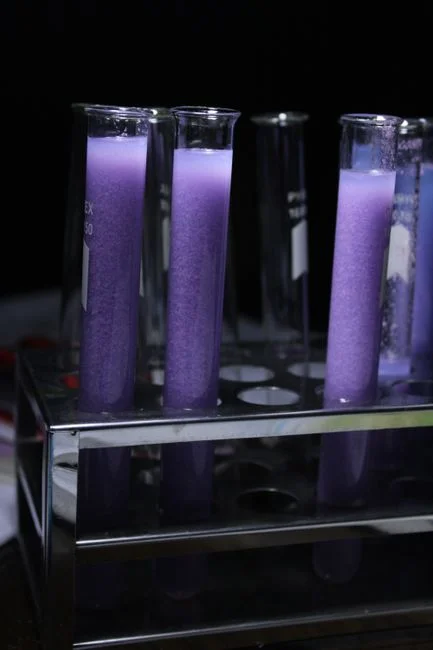
MBBR trades effluent quality for operational simplicity. The mechanism is well-defined: free-floating plastic biofilm carriers in an aerated tank, with suspended- and attached-growth biology handling organic and ammonia loads in one vessel (Reworld 2024). On the textile baseline used as a directional reference, MBBR hit 82% COD and 73% TSS removal at HRT 1 d, cutting the HRT in half versus CAS at matched COD performance (UPC thesis).
What MBBR does well, no other biological reactor matches at the same cost. Performance stays stable under hydrocarbon and ammonia load swings; recovery after upset is faster than CAS; temperature sensitivity is lower than CAS; and footprint is smaller than activated sludge (Reworld 2024). On CAPEX, the UPC textile study measured MBBR CAPEX at 68.4% below MBR, with equivalent OPEX. Operator work is mostly mechanical: carrier inspection, screen cleaning, occasional media top-up. There are no membranes to CIP, no fouling alarms, and no membrane replacement cycle. For an unmanned or remote midstream site, that is the deciding factor.
What MBBR does not do is polish. MBBR effluent is typically 20–80 mg/L TSS and 5–50 NTU turbidity, depending on carrier fill and downstream clarification; oil & grease is typically 10–30 mg/L on produced water and is the reason MBBR alone rarely meets RO feed specifications without a polish step (CPI, DAF, UF, or a downstream membrane). The trade-off in one line: MBBR is cheap to run, expensive to reuse. Operating envelope and oil-removal polish requirements for produced-water reuse are laid out in the MBBR configuration for mining water guide, which is the closest analog available in our library.
Head-to-Head on the Two Criteria the Question Asks About: Reuse Turbidity and Operator Burden
The two criteria that drive the MBR vs MBBR question for midstream reuse are reuse turbidity and operator burden. The data, drawn from Reworld 2024, MDPI 2020, the UPC thesis, and the 2021 JECE systematic review, lines up as follows. Reuse turbidity: MBR delivers <1 NTU, often <0.5 NTU, suitable for RO polishing; MBBR alone delivers 5–50 NTU, which is not RO-feed unless followed by UF, DAF, or coagulation/clarifier. Oil & grease: MBR routinely <2 mg/L on real oilfield water (MDPI 2020); MBBR alone typically 10–30 mg/L and needs a downstream CPI, DAF, or membrane. Operator burden score (1 = low, 4 = high): MBBR = 1, polymeric MBR on oily water = 3–4, ceramic MBR = 2. CAPEX ranking is directional, not a dollar figure, because no source in the research provides an oilfield-specific CAPEX number; the order of magnitude is MBBR < Hybrid MBBR+UF < Polymeric MBR < Ceramic MBR. Cross-industry contrasts that use the same two criteria are covered in the parallel MBR vs MBBR for pharma wastewater guide.
| Parameter | MBBR alone | Polymeric MBR on oily water | Ceramic MBR (CMBR) |
|---|---|---|---|
| Reuse turbidity | 5–50 NTU | <1 NTU (often <0.5) | <1 NTU |
| Oil & grease in effluent | 10–30 mg/L | <2 mg/L | <2 mg/L (0.2–1.1 mg/L observed at Zhanjiang) |
| COD removal | ~82% (textile baseline, UPC) | ~91% (textile baseline, UPC) | 97% (Zhanjiang pilot, MDPI 2020) |
| Salinity tolerance (NaCl) | Up to 100 g/L with halophilic seed | <10 g/L conventional; up to 100 g/L halophilic | Effective at high TDS with appropriate seed |
| Footprint | Small (high biomass in carriers) | Smaller than CAS | Smallest (high flux, compact) |
| CIP frequency | None | Every 1–4 weeks on oily feed | Every 2–8 weeks; more chemical-tolerant |
| Operator-burden score (1–4) | 1 | 3–4 | 2 |
| Membrane replacement cycle | N/A | 5–8 years | 10–15+ years (ceramic) |
The 2026 Midstream Winner: Hybrid MBBR Followed by Ceramic MBR
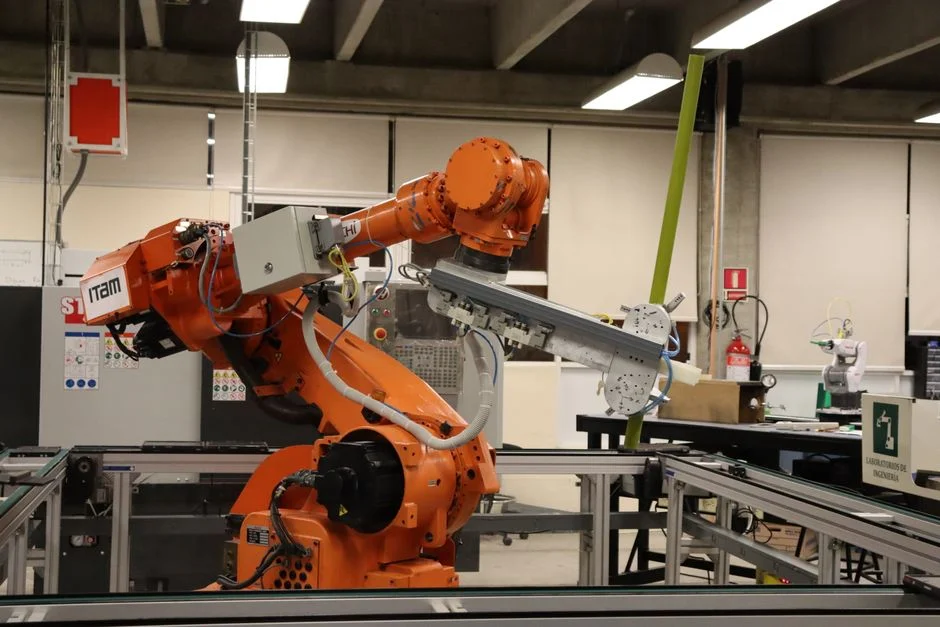
When reuse is the end goal, the configuration the evidence supports in 2026 is a hybrid MBBR followed by a ceramic MBR (MBBR+CMBR). MBBR absorbs hydrocarbon and ammonia load swings, taking the rough edges off feed variability; ceramic MBR polishes the MBBR effluent to <1 NTU, producing the RO-feed quality the rest of the train needs. The MBBR is a buffer that protects the ceramic membrane from oil spikes — a critical feature on a midstream stream where an upstream pig run or a platform flush can deliver a 5x COD slug in a few hours.
The proof point is CNOOC Zhanjiang. The full-scale SBR+CMBR train on HCOGW delivered effluent oil of 0.2–1.1 mg/L and COD of 80–150 mg/L during stable operation, with the third-level Integrated Wastewater Discharge Standard of China (GB8978-1996) as the compliance target (MDPI IJERPH, 2020). The pilot run is the more aggressive data point: with influent COD held at ~5,100 mg/L and HRT 5 d, total COD removal was above 97% and oil removal was 99.6%, with effluent COD 100–200 mg/L and oil <1 mg/L. The systematic-review evidence backs the hybrid direction: the MBMBR configuration achieved 73.5% nutrient removal versus 62.5% for MBR alone and 50% for MBBR alone across the bibliometric dataset (Journal of Environmental Chemical Engineering 9, 2021).
MBBR alone still wins in three specific cases: sites with discharge only and no reuse, locations with TDS >100 g/L where even halophilic MBR is risky, and remote unmanned operations where membrane CIP is impractical. The hybrid configuration should not be used in those envelopes. Cooling-tower blowdown reuse, which is the closest midstream analog for an oily-water reuse train feeding a downstream heat exchanger, is covered separately in the MBR configuration for cooling-tower blowdown guide.
| Configuration | Reuse turbidity | Oil in effluent | COD in effluent | Nutrient removal | Best-fit end-use |
|---|---|---|---|---|---|
| MBBR alone | 5–50 NTU | 10–30 mg/L | ~200–500 mg/L on oily water | ~50% | Discharge; pre-RO roughing |
| Polymeric MBR alone | <1 NTU | <2 mg/L | <250 mg/L | ~62.5% | Reuse, TDS <30 g/L, low oil spikes |
| Hybrid MBBR + ceramic MBR (CNOOC 2020 configuration) | <1 NTU | 0.2–1.1 mg/L | 80–150 mg/L (stable), 100–200 mg/L (pilot) | ~73.5% | Reuse, TDS 30–100 g/L, variable influent |
Decision Framework: Pick by Feedwater TDS and End-Use
For oily and produced water at an oil and gas midstream facility, the MBR vs MBBR choice reduces to feedwater TDS and whether the end goal is reuse or discharge. The following five rules turn the comparison into a 30-second decision.
- Discharge only, TDS <30 g/L → MBBR. Lowest operator burden, lowest CAPEX, no membrane CIP.
- Discharge only, TDS 30–100 g/L → MBBR with halophilic seeding, or hybrid MBBR+UF. Polymeric MBR fouling risk rises sharply with TDS in this band.
- Reuse (RO/cooling-tower/frac), TDS <30 g/L → polymeric or flat-sheet MBR with robust oil-removal upstream (API + DAF + CPI).
- Reuse, TDS 30–100 g/L, or variable influent → hybrid MBBR + ceramic MBR — the CNOOC 2020 configuration. Best balance of reuse turbidity, oil tolerance, and load-shock recovery.
- Reuse, TDS >100 g/L → halophilic-inoculated MBR or MBBR+UF with thermal desalination downstream. The MBR route requires halophilic biomass to stay viable, and even then, expect elevated CIP frequency.
Two pieces of reading anchor the framework. The definitive MBR vs MBBR comparison lays out the cross-industry baseline; the MBR wastewater treatment system in Kuwait guide is the closest oilfield EPC reference in the library, with cost, compliance, and ROI data on a high-TDS midstream envelope.
Frequently Asked Questions
Which is better for produced water treatment in oil and gas — MBR or MBBR?
For reuse end-goals (RO, cooling-tower makeup, frac water), MBR wins on effluent quality, with <1 NTU turbidity and <2 mg/L oil & grease on real oilfield feed (MDPI IJERPH, 2020). For discharge-only or pre-roughing duty, MBBR wins on operator burden and CAPEX, with the UPC textile study showing MBBR CAPEX 68.4% below MBR and equivalent OPEX. For TDS 30–100 g/L and variable influent, the hybrid MBBR+ceramic MBR is the 2026 configuration, with the CNOOC Zhanjiang data showing 99.6% oil removal at 5,100 mg/L influent COD.
What is the MBR CIP frequency on oily produced water?
On real oily feed, polymeric MBR needs routine chemical-in-place every 1–4 weeks, with membrane replacement every 5–8 years. Ceramic MBR extends CIP interval to 2–8 weeks because of higher chemical resistance, and ceramic membrane replacement runs 10–15+ years. An oil spike that drives mixed-liquor oil & grease above ~50 mg/L triggers an immediate flux ramp-down to protect the membrane, which is the single largest source of day-to-day operator attention on a polymeric MBR oilfield train (Reworld 2024; MDPI 2020).
Can MBR handle high-TDS produced water up to 100 g/L NaCl?
Conventional MBR is rated to <10 g/L NaCl, which excludes most produced water. For hypersaline produced water up to ~100 g/L NaCl, the route is halophilic-inoculated MBR (Journal of Environmental Chemical Engineering 9, 2021 systematic review). The halophilic seed extends viability but does not eliminate the fouling cost — it shifts it. For TDS >100 g/L, MBR becomes marginal regardless of seed, and the MBBR+UF or thermal desalination route is preferred.
Related Equipment
- DAF system — specifications, capacity range, and technical data