For Footprint-Constrained EV Factory Sites, MBR Wins on Paint-Shop and Battery Process Wastewater
For footprint-constrained automotive and EV factory sites treating paint-shop and lithium-ion battery process wastewater, MBR beats conventional activated sludge (CAS). MBR needs only 0.1–0.3 m²/m³/day versus 0.5–1.0 m²/m³/day for CAS — roughly 60% less space — while delivering effluent TSS below 1 mg/L, COD below 50 mg/L, and a mixed-liquor concentration (8,000–12,000 mg/L MLSS) that tolerates the toxicity and surfactant shocks typical of paint and battery lines. CAS remains cheaper in CAPEX but cannot meet reuse or tight discharge limits on either stream, and it physically will not fit in most 2026 gigafactory retrofits.
Why EV Factory Wastewater Is a Different Selection Problem
EV factory wastewater is not generic industrial effluent, and a generic MBR-vs-CAS comparison will not protect you at a procurement review.
Paint-shop wastewater typically arrives at the biological stage with COD of 800–2,500 mg/L, non-ionic and anionic surfactants from water-borne basecoats, glycol ethers from clearcoats, residual TiO₂ and carbon-black pigments, and pH swings between 5 and 11 across a campaign. In a CAS clarifier, those surfactants strip floc, drive sludge volume index (SVI) above 250 mL/g, push biomass into the effluent, and create a stable foam blanket that overruns walkways within hours. Bulking events routinely push TSS above 30 mg/L and trigger permit excursions.
Lithium-ion battery process wastewater is the opposite kind of problem. Fluoride sits at 50–500 mg/L, suspended cathode materials (LiCoO₂, NMC, LFP) enter as fine particulates, and the leachate carries nickel, cobalt, lithium, and NMP solvent from electrode coating. Free fluoride above 10 mg/L and free nickel above 5 mg/L inhibit CAS nitrification within hours; deflocculation follows, and the clarifier loses its blanket. Both streams are also campaign-loaded: a 1,000-unit production run dumps a four-hour slug of concentrated effluent, then idles for eight. CAS at 2,000–4,000 mg/L MLSS and 6–12 h HRT cannot absorb that pulse; MBR at 8,000–12,000 mg/L MLSS and 4–8 h HRT can (HydropureWater field data, 2026).
EV plants are typically built on brownfield or retrofit sites with 3–6 m of vertical clearance, not greenfield — and 2026 gigafactory footprints in Suzhou, Chongqing, and Monterrey are already constrained before the wastewater equipment is laid out.
MBR vs CAS: The Parameter Showdown
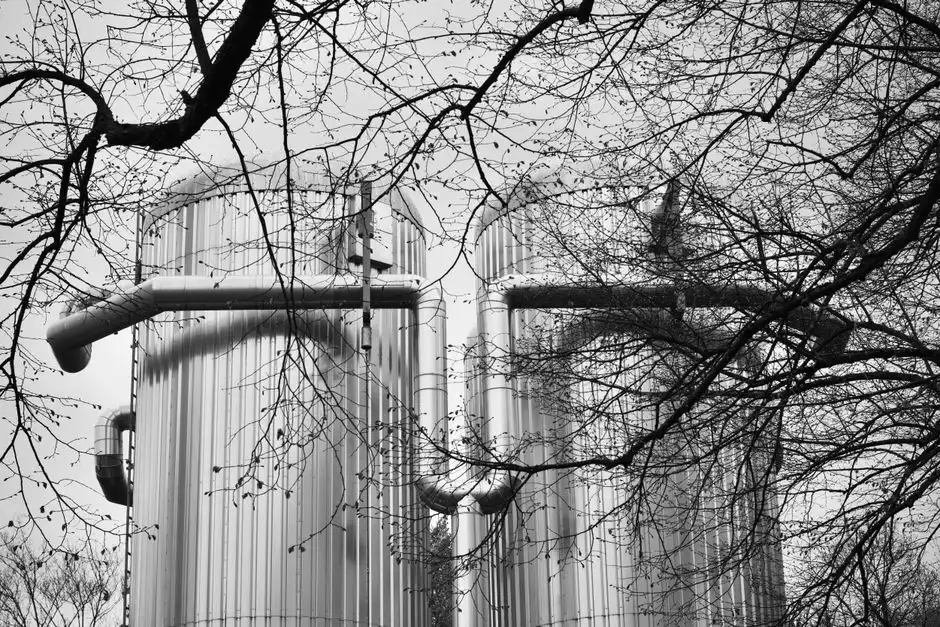
On every quality metric MBR leads; on CAPEX CAS leads; on footprint MBR leads decisively.
| Parameter | MBR (PVDF UF, 0.1–0.4 µm) | CAS (gravity clarifier) |
|---|---|---|
| MLSS | 8,000–12,000 mg/L | 2,000–4,000 mg/L |
| HRT | 4–8 h | 6–12 h |
| SRT | 20–50 days | 5–15 days |
| Effluent TSS | <1 mg/L | 10–30 mg/L |
| Effluent turbidity | <0.2 NTU | 2–10 NTU |
| COD removal (paint/COD ~1,200 mg/L) | to <50 mg/L (Shandong case) | plateau ~150 mg/L (Shandong case) |
| BOD removal | 96–99% | 85–95% (EPA 2024) |
| Sludge yield | 0.1–0.3 kg TSS/kg COD | 0.4–0.6 kg TSS/kg COD |
| Footprint | 0.1–0.3 m²/m³/day | 0.5–1.0 m²/m³/day |
| Energy (total) | 0.5–1.0 kWh/m³ (0.3–0.6 scour + 0.2–0.4 aer) | 0.3–0.6 kWh/m³ (aeration only) |
| CAPEX (500 m³/day, China) | ¥7.5M | ¥4.0M |
| OPEX (500 m³/day, China) | ¥1.20/m³ | ¥0.80/m³ |
The energy premium for MBR is real but compressible: high-efficiency turbo blowers cut MBR specific energy by 20–30% (HydropureWater field data, 2026). The Shandong project data referenced in our MBR vs CAS engineering comparison (2025) showed MBR driving COD from 1,200 mg/L influent to below 50 mg/L, while a parallel CAS train plateaued at approximately 150 mg/L — the gap that decides whether you can reuse the effluent in a cooling tower or must truck it away.
Paint-Shop Wastewater: Why MBR Wins on Foam, Color, and Surfactant Shock
Surfactant-rich paint wastewater destroys CAS clarifier settling, and MBR's physical barrier makes that failure irrelevant.
During a water-borne basecoat campaign, a CAS train will lose 40–60% of its settling velocity within two hours, and the resulting floating scum carries biomass over the weir. Operators respond by cutting MLSS and wasting sludge — exactly the wrong move when influent COD is climbing. MBR's 0.1–0.4 µm membrane physically retains biomass regardless of SVI, so a bulking event becomes a process upset, not a permit excursion (MDPI 2024 review on MBR for industrial effluents).
The long SRT (20–50 days) does additional work that CAS cannot: the biomass develops specialized degraders for glycol ethers and resin residues that wash through a 5–15 day CAS. Color and pigment removal is the other decisive difference — MBR effluent is below 0.2 NTU and visually clear, which lets you reuse it directly to paint-shop pre-rinse or DI makeup stages; CAS effluent typically needs a tertiary sand-and-carbon polish before it is usable, adding CAPEX the footprint analysis never accounted for. An integrated MBR system for paint and battery wastewater paired with DF series PVDF flat-sheet MBR modules is the configuration that tolerates the intermittent shock loading of a paint shop, because flat-sheet geometry handles dry-out and re-submersion better than hollow-fiber in cyclic service.
Battery Process Wastewater: Pretreatment Plus MBR, Not Standalone CAS
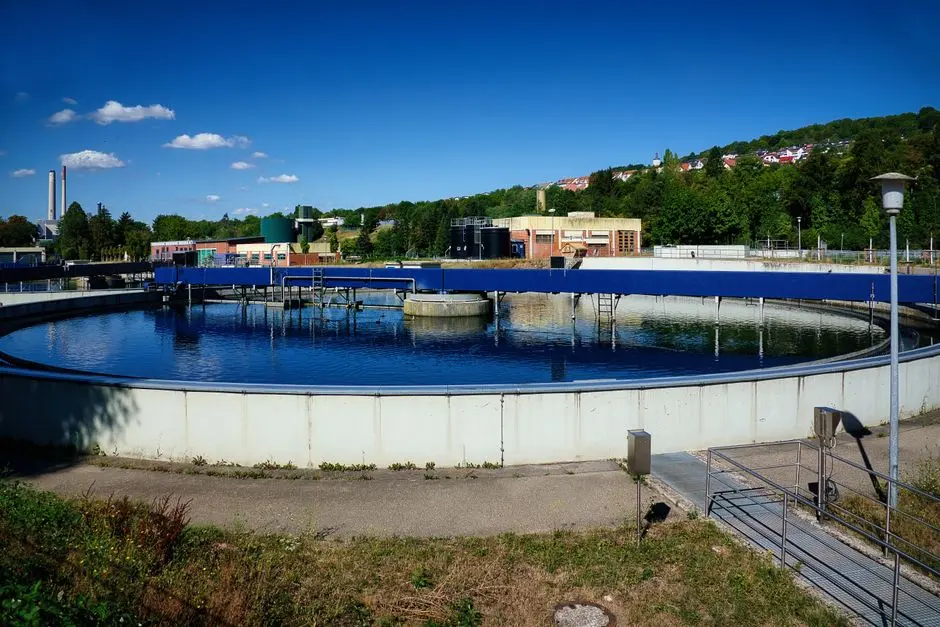
For battery lines, CAS is rarely the right biological stage — precipitation first, then MBR.
The standard train starts with calcium- or aluminum-based precipitation. Lime raises pH to 9–10, drops fluoride as CaF₂, and co-precipitates nickel, cobalt, and lithium as hydroxides. A well-tuned precipitation stage cuts fluoride from 50–500 mg/L to below 15 mg/L and removes more than 95% of the heavy metals, which is what protects the downstream biology (HydropureWater field data, 2026). Automatic chemical dosing for fluoride precipitation is the unit operation that makes this train stable across battery campaigns with varying F⁻ load.
After precipitation, residual COD from NMP solvent and ammonia still need a biological stage. MBR's 8,000–12,000 mg/L MLSS and 20–50 day SRT absorb residual solvent pulses that would crash a CAS train; the MDPI 2024 review specifically notes MBR's ability to support biomass adaptation to toxic industrial substrates, which is the mechanism that lets the system ride out a cathode-coating slug. For cell-rinse reuse, MBR permeate is typically polished by RO, but that single step is enough — you do not need a clarifier, sand filter, carbon polisher, and RO like you would downstream of CAS. CAS, in contrast, cannot tolerate even short fluoride excursions above 10 mg/L without losing its nitrification, which is why standalone CAS on battery wastewater is a documented failure mode in 2024–2025 EV plant audits.
Footprint Math: What 60% Smaller Looks Like on an EV Plant Site
The 60% footprint saving translates into 200–700 m² of freed floor area for a 1,000 m³/day plant — frequently enough to bridge the MBR CAPEX premium.
| Plant capacity | MBR footprint | CAS footprint | m² saved | Land value at $200/m² (Suzhou, Chongqing) | Land value at $500/m² (Monterrey) |
|---|---|---|---|---|---|
| 500 m³/day | 50–150 m² | 250–500 m² | 100–350 m² | $20,000–$70,000 | $50,000–$175,000 |
| 1,000 m³/day | 100–300 m² | 500–1,000 m² | 200–700 m² | $40,000–$140,000 | $100,000–$350,000 |
| 2,000 m³/day | 200–600 m² | 1,000–2,000 m² | 400–1,400 m² | $80,000–$280,000 | $200,000–$700,000 |
At industrial land values of $200–$500/m² in Suzhou, Chongqing, or Monterrey, the saved footprint on a 1,000 m³/day plant is worth $40,000–$350,000 — a number that closes the gap with the MBR CAPEX premium in most 2026 gigafactory CAPEX models. MBR tanks can also be stacked two-high inside a 6 m clear bay; CAS cannot, and that vertical-integration option is what makes a brownfield paint-shop retrofit possible at all.
Cost Reality Check: CAPEX, OPEX, and Sludge Handling
MBR's higher CAPEX is partially offset by lower sludge hauling and chemical use, and the breakeven lands inside a typical EV plant's 3–5 year planning horizon.
For a 500 m³/day plant in China, MBR runs ¥7.5M CAPEX versus ¥4.0M for CAS, and ¥1.20/m³ OPEX versus ¥0.80/m³ (HydropureWater field data, 2026). The OPEX gap narrows quickly once you price sludge: MBR's 0.1–0.3 kg TSS/kg COD yield is 50–70% lower than CAS at 0.4–0.6 kg TSS/kg COD, which cuts hauling and dewatering costs materially. CAS sludge disposal at ¥0.15–¥0.30/m³ dominates its OPEX over time, while MBR's chemical cleaning runs only ¥0.10–¥0.20/m³. Membrane replacement every 5–8 years is a known line item you should budget, not a surprise — and dewatering MBR sludge on a plate and frame filter press for MBR sludge dewatering recovers the cost in reduced polymer and haul fees, as detailed in the Belt Filter Press Operating Cost in 2026: OPEX Breakdown.
Net result: MBR pays back the CAPEX premium on a footprint-constrained, water-reuse-driven site within 3–5 years. CAS still wins on greenfield, non-reuse, land-rich sites — those are the only sites where it should be specified in 2026.
Decision Framework: When to Choose MBR, When CAS Still Makes Sense
Use this matrix in the meeting. If two or more of the first four rows are true, MBR is the right answer.
| Site condition | MBR | CAS | Hybrid |
|---|---|---|---|
| Plot area tight (<0.4 m²/m³/day available) | ✓ | — | — |
| Reuse to cooling tower or rinse required | ✓ | — | — |
| Discharge TSS limit <10 mg/L | ✓ | — | — |
| Mixed paint + battery streams | ✓ | — | — |
| Greenfield, land-rich, sewer discharge only (TSS ≥30 mg/L allowed) | — | ✓ | — |
| Paint line only, intermittent, no reuse | — | — | DAF + CAS |
| Battery line only, strict discharge | — | — | Precipitation + MBR |
The hybrid options are worth naming for completeness: a DAF unit upstream of the biological stage can take a greenfield paint line down to 50–100 mg/L COD before CAS, and precipitation plus MBR is the standard battery-line train. For sites considering whether DAF or a clarifier is the right primary stage, our DAF vs Clarifier for EV/Auto Wastewater in Bradenton, FL: 2026 Factory Guide walks through the same decision. The rule is simple: pick MBR when any two of {plot tight, reuse required, TSS <10 mg/L, mixed streams} are true; pick CAS only when the plot is unlimited, reuse is not a goal, and the discharge permit allows TSS ≥30 mg/L.
Frequently Asked Questions
Is MBR worth the higher CAPEX for an EV factory?
Yes, on footprint-constrained or reuse-driven sites, MBR pays back its CAPEX premium in 3–5 years through 200–700 m² of saved floor area (worth $40,000–$350,000 at $200–$500/m² industrial land), 50–70% lower sludge yield, and the elimination of tertiary sand/carbon polish before reuse. CAS still wins on greenfield, land-rich, sewer-discharge-only sites where reuse is not required.
Can MBR handle battery wastewater toxicity?
Yes, after precipitation cuts fluoride to below 15 mg/L and removes more than 95% of nickel, cobalt, and lithium. MBR's 8,000–12,000 mg/L MLSS and 20–50 day SRT support acclimated biomass that tolerates residual NMP and ammonia pulses, where free fluoride above 10 mg/L would crash a CAS nitrifier population within hours (HydropureWater field data, 2026).
How much space does an MBR save over CAS?
About 60%. MBR footprint is 0.1–0.3 m²/m³/day versus 0.5–1.0 m²/m³/day for CAS, and the MBR tanks can be stacked two-high inside a 6 m clear bay, which CAS cannot. A 1,000 m³/day plant saves 200–700 m² — frequently the difference between fitting the wastewater plant inside a brownfield paint shop and not.
What is the typical MBR effluent quality for paint wastewater?
TSS below 1 mg/L, turbidity below 0.2 NTU, and COD below 50 mg/L — verified in a Shandong chemical-plant project where the MBR took COD from 1,200 mg/L to below 50 mg/L, while a parallel CAS train plateaued at approximately 150 mg/L. That quality enables direct reuse to paint-shop pre-rinse or DI makeup without tertiary polish.
How long do MBR membranes last in industrial service?
5–8 years with routine chemical cleaning at ¥0.10–¥0.20/m³. Membrane replacement is a known line item, not a surprise; high-efficiency turbo blowers cut MBR specific energy by 20–30% and help control the OPEX gap with CAS (HydropureWater field data, 2026).