Why Riviera Beach Paper Mills Face a Tougher Clarification Decision in 2026
For a Riviera Beach pulp & paper factory in 2026, choose DAF — not a conventional clarifier — for the primary stage. P&P wastewater carries up to 70 m³ per tonne of paper with high TSS, fiber, and BOD (Hubbe et al., BioResources NCSU review). DAF removes suspended solids and recovers marketable fiber in 3–5 minutes (Krofta), while gravity clarifiers settle slowly, lose fiber to sludge, and rarely meet 40 CFR 430 limits on their own.
The local geography sharpens the choice. Riviera Beach mills discharge toward the Lake Worth Lagoon and the C-51 canal basin — estuarine waters where TSS plumes, color, and chlorinated organics create faster ecological response curves than at an inland mill discharging to a free-flowing river. A clarifier underflow at 0.5–2% solids forces the operator to either thicken before dewatering or accept high hauling and disposal volumes; a DAF float blanket at 3–5% solids drops directly to a plate and frame filter press and shrinks the disposal mass the operator has to budget.
The 2026 water-use profile is also a constraint. The industry has cut process-water consumption by ~95% per tonne over 30 years (Hubbe et al., citing Blanco et al. 2004), which means the residual stream is more concentrated in fiber, filler, and BOD than historical flows. A clarifier sized for 1990s influent cannot absorb the same solids flux today. Layered on top of that is the FDEP Industrial Wastewater permitting pathway for Palm Beach County, which references 40 CFR 430 subpart limits for BOD, TSS, and pH. The 2026 defensible answer is a DAF primary plus a polishing step, not a clarifier trying to do the work of a flotation unit.
What a P&P Wastewater Stream Actually Looks Like
A pulp and paper mill stream is dominated by four pollutant classes: total suspended solids (fiber, broke, fillers, fines), BOD, COD, and color/chlorinated organics (Hubbe et al., BioResources NCSU review; Ecologix). The ratios matter as much as the absolute values. Chemical pulping generates more than 40% poorly biodegradable organics within the total organic load (Hubbe et al., citing Dahlman et al. 1995), so anything you can remove in primary separation is something your aeration basin never has to pay to biodegrade. AOX has been cut more than 80% since 1990 (Hubbe et al., citing Friere et al. 2003), but dissolved lignin and color still travel with the clarified stream and shape what the secondary stage has to deliver.
Treat the influent envelope as a process parameter, not a fixed number. For a Riviera Beach mill running unbleached or containerboard-grade furnish, expect TSS in the 500–3,000 mg/L range and BOD in the 200–800 mg/L range, with peaks during broke dumps and grade changes. Spikes of 2–3× the daily mean over a 30-minute window are normal, and a hydraulic surge of that magnitude is what disqualifies a small clarifier from being the sole primary — the sludge blanket drifts and the effluent TSS goes with it. Characterize the stream with a 24-hour composite and a 7-day calendar of grade transitions before you commit to a unit-operation footprint.
How DAF and Clarifiers Actually Separate Solids in a Paper Mill
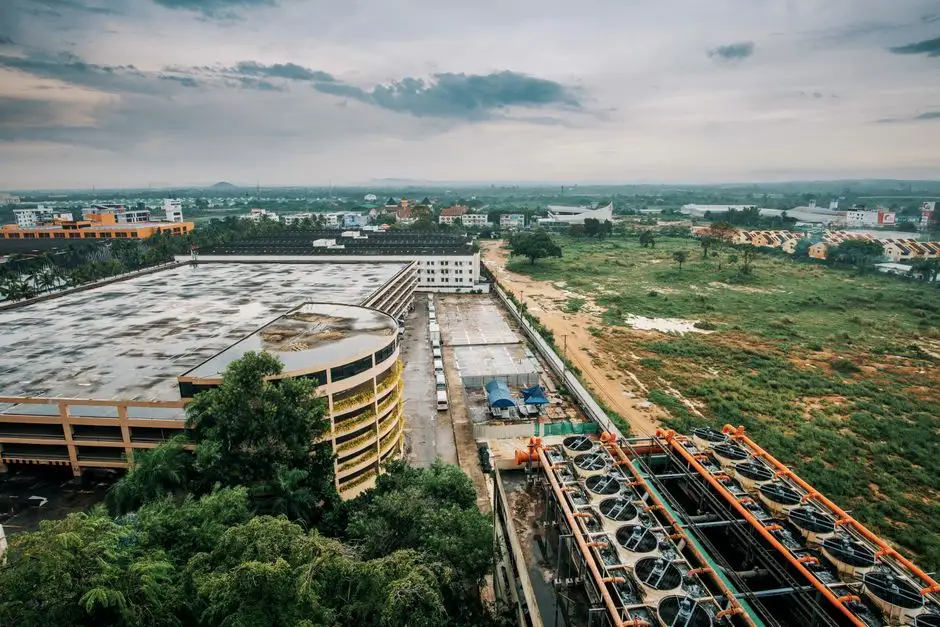
DAF clarifies by floating. A pressurized recycle stream is saturated with air, then released at atmospheric pressure inside a flotation tank; the resulting micro-bubbles attach to suspended fiber and filler, lift the solids to the surface, and a skimmer sweeps the float blanket into a sludge hopper. Clarifiers do the opposite: they let gravity pull denser particles to the bottom, withdraw thickened sludge from a conical or hopper bottom, and send clarified water over peripheral weirs (Ecologix; Krofta).
The hydraulic residence time contrast is the single most important number for a footprint decision. DAF completes primary separation in 3–5 minutes (Krofta); a conventional gravity clarifier takes 1–3 hours. That is a 30–60× reduction in primary-separation residence time, which translates directly into tank volume, civil cost, and plot area. Pulp fiber has a density close to water and tends toward colloidal behavior, so it is exactly the particle population where flotation outperforms sedimentation (Ecologix).
Sludge form follows the mechanism. DAF float comes off at 3–5% total solids as a thick, dry, skimmable blanket that loads directly onto a filter press or a dewatering conveyor. Clarifier underflow is typically 0.5–2% solids and behaves as a thin slurry; it usually requires a thickener or a rotary drum before it can be pressed. For a Riviera Beach mill paying by the ton for sludge disposal, the difference between a 4% DAF float and a 1% clarifier underflow is the difference between hauling roughly 25 truckloads per day and hauling closer to 100.
Side-by-Side: DAF vs Clarifier for Pulp & Paper Primary Treatment
The table below compares the three realistic 2026 options for a paper-mill primary: DAF alone, clarifier alone, and the conventional DAF-primary + clarifier-polish train. The latter is the configuration Hubbe et al. describe as the default P&P system with DAF positioned as the upstream upgrade (BioResources NCSU review).
| Decision criterion | DAF primary only | Clarifier primary only | DAF primary + clarifier polish |
|---|---|---|---|
| TSS removal efficiency | 80–95% on fiber/filler streams | 50–70%; degrades on hydraulic surges | 90–98% combined |
| BOD removal efficiency | 40–60% as primary | 25–40% as primary | 55–75% combined before biology |
| Hydraulic residence time | 3–5 min (Krofta) | 1–3 hr typical | ~3–5 min DAF + 30–60 min clarifier |
| Footprint per m³/h | Small (compact tank) | Large (settling area dominates) | Medium; smaller than clarifier-only |
| Fiber recovery potential | High — marketable furnish | Low — fiber buried in sludge | High (DAF) + low (clarifier polish) |
| Sludge dryness out of unit | 3–5% solids float blanket | 0.5–2% underflow slurry | 3–5% (DAF) + 0.5–2% (clarifier) |
| CAPEX envelope (relative) | 1.2–1.5× clarifier | 1.0× baseline | 1.5–1.8× clarifier |
| OPEX envelope (per m³) | Lower (faster, less polymer) | Higher (more sludge haul) | Moderate; offsets via fiber revenue |
| Sensitivity to flow surges | Low — bubble blanket reforms fast | High — blanket drifts, TSS spikes | Low; clarifier polishes the DAF effluent |
| Fit with 40 CFR 430 BOD/TSS | Partial alone | Rarely meets limits alone | Best — sets up downstream biology |
Read the CAPEX/OPEX rows as relative ranges, not dollar figures. The driver that moves a DAF budget is polymer dose, pressurized recycle pumps, and skimmer mechanism; the driver that moves a clarifier budget is civil excavation, rake torque, and sludge thickening capacity downstream. DAF is typically 1.2–1.5× the clarifier CAPEX at the primary stage, but the per-m³ OPEX is lower once you credit fiber recovery and lower sludge-haul tonnage (Hubbe et al.; Krofta).
The Fiber Economics That Flip the Decision
For a paper mill, the wastewater stream is not a waste — it is a furnish stream that escaped the headbox. A clarifier sends that fiber to the sludge digester; a DAF sends it back to the process. Per Krofta's pulp and paper application note, the Supracell DAF was designed specifically for fiber recovery in both virgin and recycled paper mills and has been the workhorse of whitewater clarification for over 40 years. That 40-year track record is itself a procurement argument for a 2026 CAPEX committee.
Fiber fractionation is the configuration that turns a CAPEX line item into a furnish revenue loop. A Spray Filter scalper captures long fibers on a mesh and routes them directly back to the headbox; the shorter fibers and fines pass through to the DAF, which floats them as a recoverable stock rather than burying them in a clarifier underflow (Krofta). The directional economics are simple: every tonne of fiber you recover is a tonne you do not have to purchase as virgin or recycled furnish, and it is a tonne you do not have to pay to haul to disposal.
A secondary Riviera Beach-relevant benefit is warm-whitewater reuse. DAF plus Spray Filter lets the mill reuse warm shower water on the paper machine, which cuts the heating-energy load in cooler months — a small but real OPEX line that a clarifier train does not offer (Krofta). For operations leadership, the right framing is avoided furnish cost + reduced sludge disposal cost + reduced heating energy, with the actual $/tonne figure developed from the mill's own furnish price list and disposal contract. If you want to plug numbers into a 2026 budget, run a 12-week pilot with a trailer-mounted HydropureWater dissolved air flotation system and weigh the float solids against your headbox furnish.
Compliance, Permitting, and 2026 Regulatory Reality
40 CFR 430 Subpart B (and the applicable subpart for the specific mill process) sets the BOD, TSS, and pH limits that any Riviera Beach discharge must meet under the federal cluster-rule framework (Hubbe et al., BioResources NCSU review). The conventional compliance train — primary clarification followed by activated sludge — has been the industry baseline for decades, and Hubbe et al. position DAF as the upstream upgrade that lets that train run smaller and harder. A clarifier on its own almost never closes the BOD/TSS gap on a P&P stream; it almost always needs a flotation step or a chemical precipitation step ahead of it.
FDEP Industrial Wastewater permitting in Palm Beach County references the federal limits and adds receiving-water sensitivity for the Lake Worth Lagoon system. From a permit-writer's perspective, the more fiber and filler you remove upstream, the smaller the downstream biological stage you have to permit, the lower the aeration cost, and the smaller the chronic-toxicity envelope you have to defend. AOX, color, and chronic toxicity limits still apply (Hubbe et al.), and they may eventually force advanced oxidation or membrane polish downstream — but those are decisions outside the DAF-vs-clarifier question and should not gate the 2026 primary-stage CAPEX.
Translate the regulatory frame into a budget argument. A DAF primary reduces the mass loading on the aeration basin, which lets you defer — or right-size — the next aeration-tank expansion. For a 2026 CAPEX committee that is being asked to choose between compliance and growth, the DAF option is the only one that does both at once.
Selection Framework: When to Pick DAF, Clarifier, or Both
Use the table below as a one-glance decision tool for a 2026 CAPEX review at a Riviera Beach P&P mill. The default for a fiber-producing mill is the DAF-primary + polishing-clarifier train, consistent with the conventional system Hubbe et al. describe and the fiber-recovery capability Krofta documents.
| Mill situation in 2026 | Recommended primary | Secondary / polish | Rationale |
|---|---|---|---|
| Fiber-rich furnish, fiber-recovery mandate, Lake Worth Lagoon discharge | DAF (e.g., HydropureWater dissolved air flotation system) | Lamella clarifier or save-all | Matches 40 CFR 430 envelope; recovers furnish; protects lagoon |
| Specialty non-fibrous paper, low TSS, no recovery mandate | Conventional clarifier acceptable | Sand filter or none | Low solids flux; clarifier HRT is not a constraint |
| Greenfield containerboard mill, hypersensitive receiving water | DAF + Spray Filter fractionation | Activated sludge + tertiary polish | Maximum fiber revenue; minimum biology footprint |
| Brownfield retrofit, limited plot, existing aeration basin | DAF as drop-in primary upgrade | Existing clarifier as polish | Smallest civil change; highest reuse of existing assets |
Read the table as a decision flow: if your influent carries fiber, your permit discharges to a hypersensitive water body, or your 2026 budget includes a furnish-cost line you can credibly reduce, DAF belongs in the primary slot. If your mill is a non-fibrous specialty operation with a calm influent and no recovery mandate, a clarifier is acceptable. If you are greenfield with a tight plot, the DAF + Spray Filter + activated sludge train is the 2026 default.
Two operational notes from the field. First, on a brownfield retrofit, keep the existing clarifier online as a polish step rather than scrapping it; that preserves the CAPEX narrative for the operations leadership review. Second, the DAF polymer dose is where most of the day-to-day OPEX lives — start with a jar test on your actual broke and whitewater, then lock the dose before you commit to a pump and skid size. If you want a side reference for the downstream solids train, the starch wastewater treatment process guide covers related primary-stage chemistry for similar colloidal loads.
Frequently Asked Questions
Does a DAF primary let a Riviera Beach pulp & paper mill meet 40 CFR 430 effluent limits on its own?
No single primary unit meets 40 CFR 430 alone. A DAF primary delivers 80–95% TSS removal and 40–60% BOD removal as a primary, which is the necessary precondition for a downstream activated sludge train to hit the federal BOD, TSS, and pH limits cited in Hubbe et al.'s BioResources NCSU review.
How does fiber recovery via DAF change the economics of a 2026 CAPEX decision?
Fiber recovery reframes the wastewater stream as a furnish asset. Per Krofta, DAF has been the workhorse of whitewater clarification and fiber fractionation for over 40 years; the directional value is avoided furnish purchase cost plus reduced sludge disposal cost, with the actual $/tonne figure driven by the mill's own furnish price and disposal contract.
What is the FDEP Industrial Wastewater permitting context for a Palm Beach County paper mill in 2026?
Florida permitting references 40 CFR 430 subpart limits and layers in receiving-water sensitivity for the Lake Worth Lagoon / C-51 system. Front-end fiber and filler removal via DAF shrinks the downstream biology you have to permit and reduces the chronic-toxicity envelope you have to defend (Hubbe et al.).
Is a DAF primary viable as a brownfield retrofit, or only for greenfield mills?
DAF retrofits are standard in paper mills because of the compact footprint and short HRT (3–5 min per Krofta). The existing clarifier can be retained as a polish step, which preserves CAPEX and keeps the existing aeration basin in service.
What downstream solids-handling equipment should a DAF-primary paper mill plan for in 2026?
DAF float at 3–5% solids loads directly to a filter press; a plate and frame filter press is the standard dewatering step. A clarifier underflow at 0.5–2% would require a thickener first, which is one of the structural reasons DAF wins on OPEX per m³.