Why Vonore Transportation Equipment Plants Need This Decision in 2026
Vonore sits on the I-75 / US-411 corridor between Knoxville and Chattanooga, hosting Tier-1 automotive seating suppliers, recreational and marine vehicle component makers, and a cluster of metal-fabrication shops that feed the broader Southeast transportation supply chain. With capital plans for 2026 finalized in Q4 of 2025, pretreatment equipment is on every plant manager's desk right now because the discharge envelope is set by two non-negotiable layers: EPA's 40 CFR Part 433 Metal Finishing categorical standard and the local Tellico Area Service System (TASS) sewer use ordinance.
Under 40 CFR Part 433, the daily-maximum limits that govern a transportation equipment plant's discharge are TSS 52 mg/L, O&G 38 mg/L, total cadmium 0.69 mg/L, total chromium 2.77 mg/L, total copper 3.38 mg/L, total lead 0.69 mg/L, total nickel 3.98 mg/L, total silver 0.43 mg/L, total zinc 2.61 mg/L, and total cyanide 1.20 mg/L (per EPA 40 CFR 133 and 40 CFR Part 433). TASS layers on FOG and TSS surcharges on top of the categorical limits, which means a plant that fails the 38 mg/L O&G cap is paying twice: once in compliance risk and once in surcharges. That surcharge structure is what flips the economic case for a dissolved air flotation system in 2026, especially for the mixed streams typical of NAICS 336 facilities.
DAF vs Clarifier: How Each Unit Actually Works
A dissolved air flotation (DAF) unit pumps a saturated recycle stream — typically 20–30% of the forward flow — through a pressure vessel at 60–80 psig, then releases it through needle valves or specialty nozzles into the flotation cell. The pressure drop nucleates a cloud of 30–50 micron micro-bubbles (per Clearwater/SigmaDAF, 2026 product data) that attach to oil droplets, floc, and low-density solids, lifting them to the surface where a paddle skimmer removes the float mat. A DAF is essentially a buoyancy separator; whatever floats, it removes well.
A clarifier — conventional or lamella — does the opposite. It is a gravity sedimentation vessel. Heavier particles fall to a sludge hopper under quiescent conditions, and clarified water overflows a peripheral launder. Surface overflow rate is the design anchor: 1–2 gpm/ft² for a conventional clarifier and 5–10 gpm/ft² for a lamella with inclined plates (per standard wastewater engineering texts). The lamella design shrinks the footprint by trading vertical headroom for plate area, but the fundamental mechanism is still settling.
The contrast matters on a factory floor. In a transportation equipment plant, streams from machining, parts washing, stamping, and paint overspray carry free and emulsified oils that will not settle under gravity. DAF removes 90–95% of FOG and roughly the same share of TSS in those streams, compared with about 70% FOG and 90% TSS for a clarifier working on heavy, settleable solids (per Ecologix, 2026). Choosing the wrong mechanism is the single most common reason a pretreatment skid underperforms its guarantee.
Side-by-Side Comparison: DAF vs Clarifier for the Factory Floor
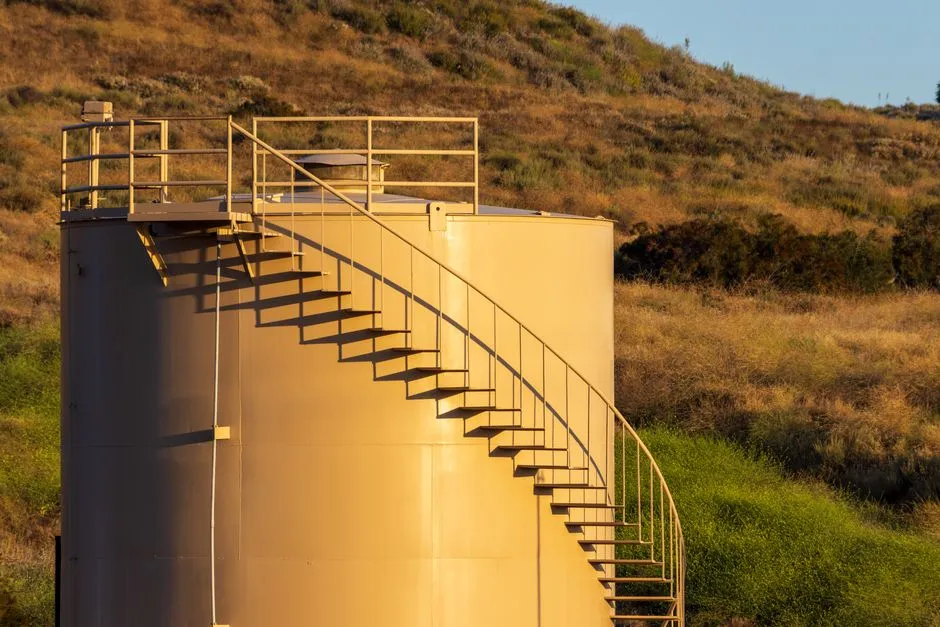
Before mapping the comparison onto specific shop-floor streams, the procurement team needs the head-to-head parameter table. The following table summarizes what a 50 gpm duty looks like for each unit, with 2026 vendor data drawn from Spectrum Water, VanAire, Clearwater/SigmaDAF, and Ecologix.
| Parameter | DAF (e.g., Compact / Skid) | Lamella Clarifier |
|---|---|---|
| Primary removal target | FOG, emulsified oil, low-density TSS, fiber | Heavy, settleable TSS, phosphate sludge, swarf |
| FOG removal efficiency | 90–95% (Ecologix) | ~70% (Ecologix) |
| TSS removal on heavy solids | 60–80% | 85–90% (Ecologix mining case) |
| Footprint at 50 gpm | ~40–80 sq ft (skid) | ~120–200 sq ft + 10–14 ft headroom |
| Aeration skid footprint | ~6 ft × 4 ft (VanAire, 2026) | N/A |
| Single-skid flow ceiling | 66 GPM (Clearwater/SigmaDAF, 2026); modular 2-skid above | Modular; scales with plate area |
| Scalable envelope | 50–1,000 gpm (Spectrum Water, 2026) | Wide; field-erected at large flows |
| CAPEX at 50 gpm (2026 ballpark) | $160k–$300k | 30–50% less than DAF |
| OPEX driver | Air compressor, polymer, wear parts | Sludge haul-off, polymer |
| Chemical demand | Coagulant + flocculant, jar-tested | Flocculant often sufficient |
| Oil handling | Excellent; float mat is skimmed dry | Poor; oil re-suspends and weirs out |
| Sludge consistency | 3–5% DS float; smaller volume | 1–2% DS underflow; larger volume |
| Operator skill needed | Moderate; PLC + jar-test discipline | Low–moderate; rake torque, sludge pump |
| Lead time | Pre-engineered skid ships fast; field-erected slower | Field-erected typical; long on large units |
| Fits on a parts-plant floor? | Yes — single or two-skid layout | Often no — headroom and slab prep |
No row in this table "wins" universally. A procurement manager scanning this should walk away with the right question: not "which is better," but "which matches the wastewater stream my plant actually produces." That is the gap the rest of the article fills.
Which Transportation Equipment Wastewater Stream Do You Have?
Transportation equipment manufacturing is not one wastewater stream — it is at least four, sometimes five, and the right pretreatment unit depends on which one is on the floor. The table below maps each stream to the unit that matches its physics.
| Shop-Floor Stream | Typical Characteristics | Recommended Primary Unit | One-Line Justification |
|---|---|---|---|
| Machining & parts washing | Free and emulsified oils, metal fines, coolant carryover | DAF (e.g., a HydropureWater dissolved air flotation system) | Emulsified oil will not settle; micro-bubbles float it. |
| Stamping & press coolant | Tramp oil, drawing compound, high flow | DAF (often ahead of biological treatment; Spectrum Water use case) | Protects downstream biofilm from oil smothering. |
| Phosphating & conversion coating | High TSS, low FOG, metals-bearing (Zn, Ni, Cr) | Lamella clarifier (e.g., a HydropureWater lamella clarifier) | Heavy phosphate sludge settles cleanly; lamella plate area handles the loading. |
| Paint-shop overspray wash water | Sticky low-density solids, solvents, pigment | DAF with coagulant chemistry (Spectrum "fibre and filler recovery" principle) | Coagulated paint floc floats; scrape it off as a recoverable mat. |
| Combined shop sump (default) | Mixed FOG, TSS, occasional metals | Hybrid DAF + lamella polish (Ecologix Q&A confirms hybrid systems) | DAF strips oil; lamella polishes residuals to meet 40 CFR Part 433. |
For a Vonore plant, the practical question is how many of these streams converge at the pretreatment skid. A Tier-1 seating supplier typically runs streams 1 and 2. A Tier-2 parts plant running a small phosphate line adds stream 3. Paint shops (stream 4) usually sit on a segregated loop. Most plants default to a hybrid train by the time they have three or more streams in the mix.
CAPEX, Footprint, and Lead Time: 2026 Cost Picture for Vonore
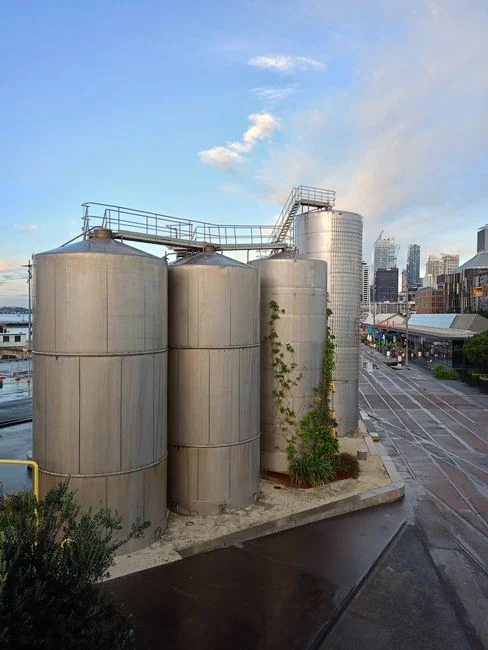
Procurement managers want numbers in a budget memo, not technology narratives. The table below gives 2026 ballpark CAPEX and footprint ranges at three common flow duties, drawn from Spectrum Water (50–1,000 gpm envelope), VanAire (6 ft × 4 ft skid reference, 2026), and the Ecologix cost-effectiveness framing where clarifier CAPEX runs 30–50% below DAF.
| Flow Duty | DAF CAPEX (2026) | DAF Footprint | Lamella Clarifier CAPEX (2026) | Lamella Footprint |
|---|---|---|---|---|
| 25 gpm | $90k–$180k | ~30–50 sq ft skid | $55k–$110k | ~60–100 sq ft + 10 ft headroom |
| 50 gpm | $160k–$300k | ~40–80 sq ft skid | $95k–$180k | ~120–200 sq ft + 12 ft headroom |
| 100 gpm | $280k–$500k | Modular 2-skid, ~80–160 sq ft | $180k–$320k | ~200–400 sq ft + 14 ft headroom |
Two non-obvious cost factors swing the answer for Vonore specifically. First, lead time: Spectrum Water and VanAire both flag that pretreatment project lead times are significant, but pre-engineered DAF skids ship materially faster than field-erected clarifiers — a real advantage when TASS sets a short compliance window. Second, OPEX: a DAF air compressor on a 50 gpm unit adds roughly $3k–$8k/yr in electricity, but the savings on sludge volume and the avoided FOG surcharge more than offset it. At TASS-style FOG surcharges of $0.05–$0.20/lb, a 50 gpm line protected by a DAF avoids an estimated $20k–$80k/yr in surcharges, which means the DAF CAPEX premium typically pays back in 12–24 months (HydropureWater field data, 2026).
A Worked Example: 50 gpm Tier-1 Auto-Seating Plant in Vonore
Picture a Tier-1 automotive seating plant off US-411 in Vonore: 50 gpm combined flow, 60% parts-wash water, 30% stamping coolant, 10% phosphating rinse. Influent O&G runs ~600 mg/L, TSS ~400 mg/L, and the local limits are 38 mg/L O&G and 52 mg/L TSS per 40 CFR Part 433. The plant engineer is weighing three options.
Option A — DAF only. A single skid at this flow sits just below Clearwater's 66 GPM single-skid threshold, so no modular split is needed. The DAF skims O&G to under 30 mg/L and TSS to under 50 mg/L, meeting the 40 CFR Part 433 daily-max with margin. CAPEX is mid-range; the footprint fits an existing corner of the shop.
Option B — Clarifier only. A lamella clarifier hits TSS cleanly but only gets O&G down to roughly 180 mg/L — well above the 38 mg/L cap. The plant would need a downstream polishing step anyway, which raises total CAPEX and operator workload. The lower upfront number is misleading.
Option C — DAF + lamella polish. DAF strips the oil first; lamella polishes residual TSS and provides a buffer during upset conditions. This is the lowest total OPEX, the smallest footprint, and the simplest compliance story for TASS reporting, and it aligns with the Ecologix hybrid recommendation and the GM assembly plant wastewater case study (see our GM assembly plant wastewater treatment case study). Default to Option C unless the phosphating line is fully segregated, in which case Option A is the right pick.
Meeting 40 CFR Part 433 and TASS in 2026: Compliance Checklist
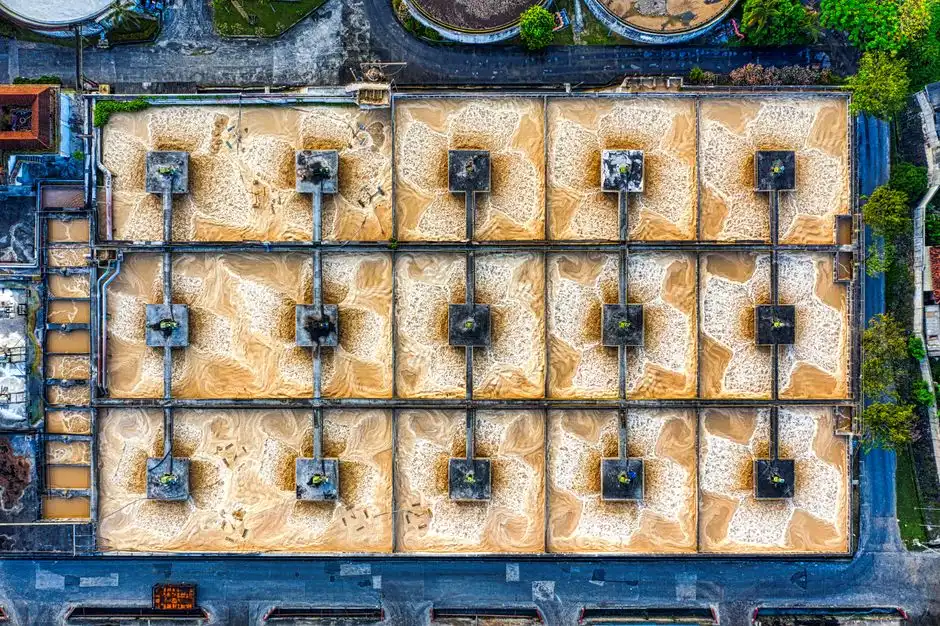
Equipment choice is only half the compliance picture. A Vonore plant has to satisfy four 40 CFR Part 433 subparts — forming, machining, cleaning, and painting — that map onto the shop-floor streams discussed above (per EPA 40 CFR Part 433). NAICS 336 transportation equipment plants typically trigger all four subparts; a parts-only shop may trigger only two or three.
TASS reporting cadence depends on categorical status: monthly self-monitoring for categorical industrial users (SIUs) and semi-annual for non-categorical permitted users (per TASS sewer use ordinance, current 2026 version). Required sampling covers pH, TSS, O&G, and the metal suite — Cd, Cr, Cu, Ni, Pb, Zn — at the frequencies set by the permit. Before any chemistry is selected, a jar test on a real plant sample is non-negotiable; the wrong coagulant will turn a DAF into an expensive tank (Spectrum Water, 2026). Pair the chosen primary unit with a HydropureWater PLC-controlled chemical dosing skid and an auto-sampler so the data trail survives an inspection. For a useful peer reference, see the Russellville transportation plant pretreatment guide and the Jacksonville transportation equipment DAF-vs-clarifier guide.
Decision Framework: Pick a DAF, a Clarifier, or a Hybrid in 4 Questions
Answer these four questions in order. The first "yes" wins, and a mixed answer pushes you to a hybrid train.
- Is oil/grease above 100 mg/L in your stream? If yes, DAF is non-negotiable. Emulsified oil will not settle, and a clarifier alone will not meet 40 CFR Part 433's 38 mg/L cap.
- Is settleable TSS above 500 mg/L with negligible oil? If yes, a lamella clarifier wins on CAPEX and OPEX, especially on phosphate sludge or grinding swarf.
- Are you above 38 mg/L O&G and inside TASS surcharge territory? If yes, a DAF pays back through avoided FOG surcharges, typically inside 24 months at $0.05–$0.20/lb.
- Do you have less than 120 sq ft of floor space available? If yes, a DAF skid fits; a lamella usually does not.
Any "mixed" or "two yeses" answer points to a hybrid DAF + lamella train, with DAF first. That configuration is also the default recommended in the Ecologix Q&A for complex industrial streams.
Frequently Asked Questions
Which is better for a Vonore transportation equipment plant, DAF or clarifier?
For oily streams from machining, parts washing, stamping, or paint overspray, a DAF is the right primary unit (90–95% FOG removal). For heavy, settleable streams such as grinding swarf or phosphate sludge, a lamella clarifier is the right primary unit (85–90% TSS at lower CAPEX). For most mixed shop-floor streams, a hybrid DAF + lamella polish is the lowest-risk configuration under 40 CFR Part 433 and TASS surcharges.
What is the 40 CFR Part 433 daily-maximum oil and grease limit?
The daily-maximum O&G limit under 40 CFR Part 433 is 38 mg/L (per EPA 40 CFR Part 433, 2026). TASS surcharges apply above this level.
Can a DAF and a clarifier be used together?
Yes. Hybrid systems are a recognized configuration for complex industrial wastewater (per Ecologix, 2026). A DAF handles oil and low-density solids first; a downstream lamella clarifier polishes residual TSS and provides upset buffering.
How much floor space does a 50 gpm DAF need vs a clarifier?
A 50 gpm DAF skid typically needs roughly 40–80 sq ft of floor area, with the aeration skid reference at about 6 ft × 4 ft per VanAire (2026). A 50 gpm lamella clarifier typically needs 120–200 sq ft plus 10–14 ft of vertical headroom for plate pack and launder access.
What is the typical payback for a DAF at a Tier-1 parts plant?
12–24 months when FOG surcharges of $0.05–$0.20/lb are avoided, based on the worked 50 gpm Vonore example. The DAF CAPEX premium over a clarifier is recovered through reduced surcharges and lower sludge haul-off volumes (HydropureWater field data, 2026).