
Why the DAF-vs-Clarifier Question Is Different for a Semiconductor Fab
Elk Grove Village semiconductor fabs in 2026 should use DAF as the primary separation step in the fab wastewater train, with a lamella clarifier polishing downstream, because DAF's 30–50 µm microbubbles reliably float CMP-abrasive colloids (silica, ceria), copper-bearing fines, and fluoride co-precipitates that gravity clarifiers underperform on. A stand-alone clarifier is only justified for very high TSS, low-copper sidestreams such as backgrind slurry or HVAC blowdown.
Generic DAF-vs-clarifier content — the kind that anchors most search results — frames the decision around food plants (95% FOG removal with DAF vs 70% with a clarifier, per Ecologix 2026) or mining slurries (clarifier hitting 90% on heavy sediment). That framing is wrong for a fab. A 300 mm wafer fab in the Elk Grove Village / northwest-suburban Chicago cluster generates five fundamentally different sidestreams, and each one tilts the technology choice differently:
- CMP rinse water: sub-50 nm colloidal silica and ceria, copper fines from interconnect polishing, surfactants from post-CMP cleaning — typically 50–500 mg/L TSS with copper at 1–20 mg/L.
- Fluoride scrubber blowdown: 50–500 mg/L F⁻ after wet scrubbers treating BOE etcher off-gas, with co-precipitated CaF₂ and metal hydroxides once lime or CaCl₂ is dosed.
- TMAH-bearing developer waste: 1–10% TMAH (tetramethylammonium hydroxide) with high TOC and high pH; not a DAF or clarifier feed.
- Backgrind slurry: 1,000–10,000 mg/L TSS as silicon fines, low metals, high volume per wafer.
- DI rinse and cooling-tower blowdown: <20 mg/L TSS, low metals, highest volume.
DAF microbubble flotation releases 30–50 µm bubbles that attach to colloidal and flocculated particles and lift them to the surface in 5–15 minutes of hydraulic retention time; gravity sedimentation in a clarifier relies on particle settling velocity and typically needs 1–3 hours HRT. On sub-50 nm colloids — the exact particles a CMP rinse produces — Stokes' law gives settling velocities orders of magnitude below what a lamella plate can capture without coagulation. DAF sidesteps the settling problem entirely by floating the floe. In Elk Grove Village, the 2026 IPP local limits on copper (typically 1.0–2.0 mg/L daily max) and TSS (typically 200–300 mg/L daily max) drive technology choice more decisively than capex does, and that limit set favors DAF wherever copper or colloidal solids are present.
Head-to-Head: DAF Vs Clarifier on Fab-Relevant Parameters
The defensible comparison for a 2026 design review is a 10-parameter table a process engineer can read across in 30 seconds. Numbers below combine Ecologix's 2026 industrial guide, Clearwater/Sigmadaf DAF specifications, and HydropureWater lamella clarifier and DAF field data.
| Parameter | DAF (microbubble flotation) | Lamella clarifier (gravity sedimentation) |
|---|---|---|
| Separation mechanism | 30–50 µm bubbles attach to floc and float (per Clearwater/Sigmadaf) | Gravity settling on inclined plates |
| Typical TSS removal | 80–95% on flocculated streams | 50–90%; up to 90% on heavy mining sediment (Ecologix 2026) |
| Copper / heavy-metal behavior | Strong with hydroxide or sulfide precipitation; floe floats | Effective on dense metal-hydroxide floe only; poor on colloidal fines |
| Fluoride co-precipitate handling | Floats CaF₂ and metal-hydroxide co-precipitate cleanly | Settles co-precipitate; sensitive to upflow velocity |
| FOG / surfactant tolerance | 95% FOG removal (Ecologix 2026); designed for surfactants | 70% FOG removal (Ecologix 2026); emulsions often pass through |
| Footprint (m² per m³/h) | ~0.6 m² per m³/h including chemical skid | ~0.25–0.4 m² per m³/h thanks to 20–40 m³/m²·h lamella loading (HydropureWater) |
| Hydraulic retention time | 5–15 minutes contact time in the float cell | 1–3 hours |
| Chemical demand | Coagulant + flocculant aid, typically 50–200 mg/L total | Up to 30% lower on bulk TSS, but higher polymer dose on colloids (HydropureWater field data) |
| Capex (per m³/h, 2026) | Higher; packaged-skid DAF premium | Lower; concrete or FRP tank dominates cost |
| Opex | Higher air-compressor and polymer load | Lower energy, lower polymer on heavy-TSS streams |
The two technologies are equivalent on sludge handling (both need a dewatering step — see the DAF vs IAF selection guide for related flotation comparisons) and on instrumentation. They diverge sharply on footprint, chemical demand against colloidal streams, and the qualitative ability to handle sub-50 nm CMP fines. The Ecologix 2026 95%-vs-70% FOG number is the upper bound of the DAF advantage; on a pure heavy-TSS, low-metals stream the lamella clarifier wins on capex and opex.
Mapping Each Fab Stream to the Right Unit Operation
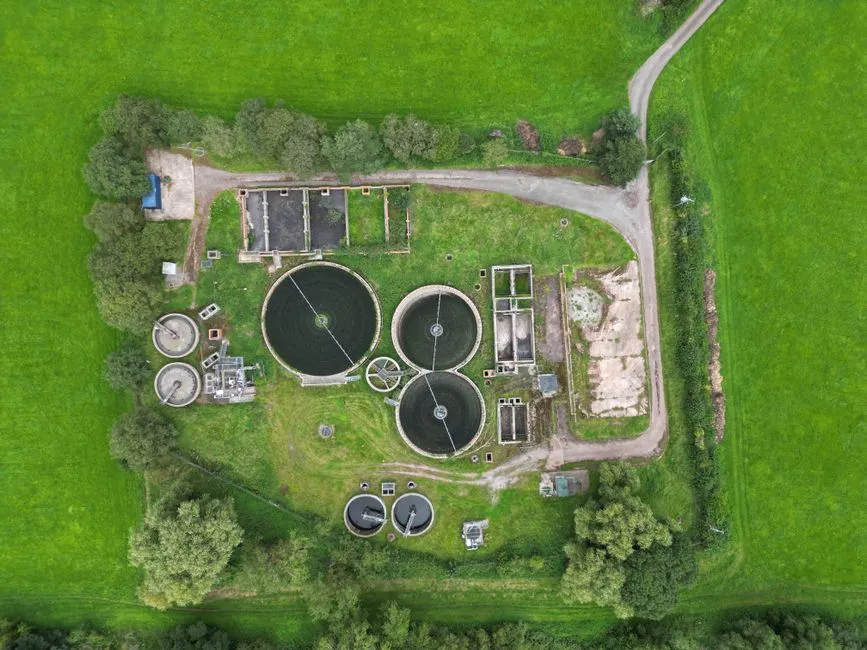
Translating the parameter table into a sidestream-by-sidestream recommendation is what turns a generic comparison into a fab engineering deliverable. The matrix below maps the five major streams in a 2026 Elk Grove Village advanced-packaging or logic fab to the unit operation that meets local IPP limits at the lowest lifecycle cost.
| Fab sidestream | Typical TSS / Cu / F⁻ | Primary unit operation | Polish step |
|---|---|---|---|
| CMP rinse (silica, ceria, Cu fines) | 50–500 mg/L TSS, 1–20 mg/L Cu | DAF with coagulant + flocculant aid | Lamella clarifier or multimedia filter |
| Fluoride scrubber blowdown | 50–500 mg/L F⁻, variable TSS after precipitation | DAF after lime or CaCl₂ precipitation | Lamella clarifier for TSS polish |
| TMAH developer waste | High TOC, pH > 12 | Dedicated biological sidestream (MBR or activated sludge) | Not DAF or clarifier primary |
| Backgrind slurry | 1,000–10,000 mg/L TSS, low metals | Stand-alone lamella clarifier (coagulation-sedimentation) | Optional filter press for solids |
| DI rinse / cooling-tower blowdown | <20 mg/L TSS, low metals | Lamella clarifier or multimedia filter | Optional RO for reuse |
Three notes for the design engineer. First, on CMP rinse water, a clarifier alone is insufficient because the silica and ceria colloids stay in suspension indefinitely; DAF-primary with a coagulant (typically a cationic polymer or a metal-salt coagulant) plus an anionic flocculant aid is the standard 2026 configuration, with the HydropureWater automatic chemical dosing skid as the typical pre-treatment package. Second, on fluoride scrubber blowdown, the precipitation chemistry must come first; the DAF unit then floats the calcium fluoride and metal-hydroxide co-precipitate that a clarifier would otherwise let drift on the upflow. Third, on backgrind slurry, the high TSS and low metals make this the one sidestream where a stand-alone lamella clarifier is cheaper and adequate; HydropureWater's 2026 backgrinding wastewater treatment blueprint documents 99% silica removal from backgrinding coagulation-sedimentation, which is the published benchmark to cite.
Footprint, Automation, and the Elk Grove Village Reality
Procurement will weigh the engineering case against floor space and skid delivery as quickly as they will weigh it against capex. A packaged DAF unit typically needs 1.2–1.5× the footprint of a lamella clarifier at the same flow, but the trade is drier floated sludge (3–5% dry solids vs 1–2% for settled clarifier underflow), which lowers downstream dewatering capex. The standard fab-retrofit delivery model is the COMPACT DAF plug-and-play skid: a single skid handles flows of 66 GPM (≈15 m³/h) or less, and flows above 66 GPM ship as a two-skid modular system (Clearwater/Sigmadaf 2026). For a typical Elk Grove Village fab producing 50–150 m³/h of combined CMP and fluoride scrubber wastewater, that translates to two or three pre-assembled skids delivered with a PLC control panel for chemical-dose, skimmer-speed, and sludge-discharge trim.
The lamella clarifier's advantage in tight manufacturing campuses is the 20–40 m³/m²·h surface-loading rate of the inclined-plate pack: a 50 m³/h clarifier fits in roughly 12–15 m² of plan area, against approximately 30 m² for an equivalent DAF including the chemical-conditioning skid. Where a fab already runs a lamella clarifier on backgrind slurry, the marginal cost of routing a polish slipstream from a CMP DAF through that same clarifier is low. The HydropureWater automatic chemical dosing skid is the standard pre-treatment package for both DAF and clarifier flows, which keeps PLC integration and SCADA tag mapping consistent across the train.
2026 Selection Framework: DAF, Clarifier, or Both
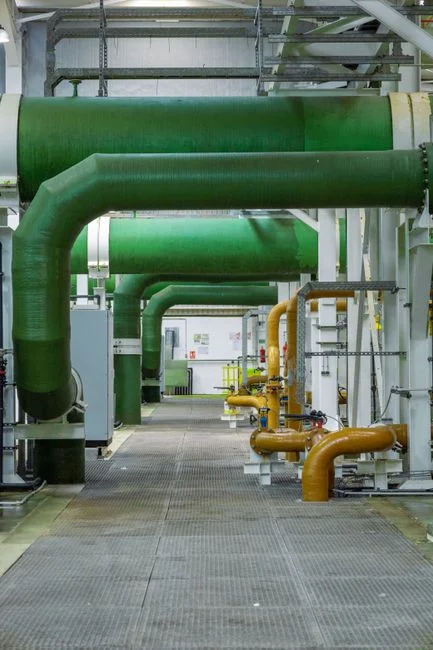
Three branches, written so a process engineer can paste them directly into a 2026 capex justification memo:
- Choose DAF-only when the fab stream is dominated by CMP colloids (silica, ceria), copper fines, fluoride co-precipitates, or FOG/surfactant residues, and the goal is reuse-quality effluent. Apply the HydropureWater DAF system sized at 4–300 m³/h across the 13 standard models.
- Choose clarifier-only when the stream is high-TSS, low-metals backgrind slurry or cooling-tower blowdown, and capex is the binding constraint. The HydropureWater lamella clarifier at 20–40 m³/m²·h loading covers this case at the lowest installed cost.
- Choose DAF-primary + lamella-clarifier-polish when the stream must meet the strictest 2026 Elk Grove Village IPP limits for copper and TSS in a single pass, or when the effluent is being routed to RO for water reuse (per the reuse-recovery targets in HydropureWater's 2026 advanced packaging reclaim guide). DAF removes the colloidal and metal load; the lamella clarifier polishes residual TSS to under the IPP daily-max ceiling.
Default recommendation for a 2026 Elk Grove Village fab: most plants will end up on the third branch because the 2026 IPP copper and TSS limits almost always need both steps to be hit in a single pass, and any fab targeting >80% water reuse will need the lamella polish to protect the RO from fouling.
Frequently Asked Questions
Can DAF remove copper from CMP wastewater?
Yes. DAF removes copper once a coagulant — typically a hydroxide precipitant (NaOH, Ca(OH)₂) or a sulfide precipitant (Na₂S, FeS) — has converted dissolved Cu²⁺ into a settleable / floatable floc, and a flocculant aid (usually an anionic polyacrylamide at 1–5 mg/L) has built floc size. The DAF cell then floats the floe in 5–15 minutes of contact time. Without the precipitation step, DAF alone will not remove dissolved copper.
Is a lamella clarifier enough for fluoride wastewater?
Only after chemical precipitation. The lamella clarifier is a solid-liquid separator, not a precipitation reactor. Lime (Ca(OH)₂) or CaCl₂ dosing is required first to drop fluoride as CaF₂; the clarifier then settles the co-precipitate. For a 2026 fab stream with a tight fluoride limit and variable flow, a DAF after precipitation typically outperforms a stand-alone clarifier.
What flow range does the HydropureWater DAF cover?
The DAF covers 4–300 m³/h across 13 standard models, with single-skid delivery to 66 GPM and modular two-skid delivery above that flow. The unit ships with automatic skimming, a micro-bubble contactor, and PLC-ready I/O for chemical-dose and sludge-discharge control.
When does a fab need both DAF and a clarifier?
When the 2026 Elk Grove Village IPP daily-max limits on copper and TSS must be met in a single pass, and when the effluent is being routed to RO for reuse. DAF carries the colloidal and metal load; the lamella clarifier polishes residual TSS to protect the RO membranes from fouling.
How much floor space does a DAF system need vs a clarifier at 50 m³/h?
A DAF system at 50 m³/h typically needs about 30 m² of plan area including the chemical-conditioning skid and the float cell. A lamella clarifier at 50 m³/h fits in roughly 12–15 m². The DAF trades footprint for drier floated sludge (3–5% DS vs 1–2% for clarifier underflow), which reduces downstream dewatering capex.