Why Zeeland, MI Transportation Equipment Plants Are Regulated as Industrial Users
Any transportation equipment plant in the Zeeland, Holland, or Ottawa County corridor that discharges process wastewater to the sanitary sewer falls under 40 CFR Part 403, the General Pretreatment Regulations, and is treated as an Industrial User (IU) under 40 CFR 403.3(j). The federal trigger is straightforward: the Clean Water Act prohibits any non-domestic discharge that would pass through or interfere with the receiving Publicly Owned Treatment Works (POTW). The City of Zeeland Clean Water Plant (CWP) at 350 E. Rich Avenue is a 2.1 MGD biological nutrient removal (BNR) facility with UV disinfection that discharges to Noordeloos Creek under Michigan EGLE oversight, so any slug from a parts washer, e-coat tank, or stamping line that disturbs the BNR biomass is treated as a federal compliance event, not just a local code violation.
Two terms drive the entire compliance conversation. Pass-through under 40 CFR 403.3(p) is a discharge that exits the POTW in concentrations or volumes that, alone or with other sources, cause a violation of the POTW's NPDES permit. A real-world example for a Tier 1 transportation supplier: a 200-gallon hexavalent-chrome spill from a conversion-coating bath that survives the on-site train and pushes the receiving stream past its NPDES total-chromium or hex-chrome limit in Noordeloos Creek. Interference under 40 CFR 403.3(k) is a discharge that disrupts the POTW's treatment processes, its sludge handling, or its biosolids quality. A slug of high-pH (12-13) alkaline cleaner overflowing a sump is the classic interference case: it shifts the aeration-train pH, kills the nitrifiers that drive the BNR process, and forces the CWP to lengthen detention times or dump biomass.
EPA requires any POTW with an approved Industrial Pretreatment Program to develop local limits and to perform an annual review under 40 CFR 403.5(c). The City of Zeeland meets at least one of the published triggers (a POTW with a delegated IPP), so its local limits are site-specific, numeric, and enforceable at the end-of-pipe connection. The local instrument is Chapter 86 of the Code of Ordinances, the Sewer Use Ordinance, with the user-facing numeric limits, surcharges, and penalties compiled in the Guide to the Sewer Use Ordinance published by the CWP. The plant engineer should treat that document as the binding table of design values for the on-site train. For a parallel look at how a similar compliance framework is applied in a different industry cluster, see this pretreatment compliance guide for chemical plants operating under the same federal regulation.
The City of Zeeland Industrial Pretreatment Program: Permits, Reports, and Site Visits
The City of Zeeland CWP administers the Industrial Pretreatment Program (IPP) that the EPA and Michigan EGLE require, and the program is the day-to-day regulatory interface for every non-domestic sewer user in the service area. Per the CWP's published program description, the IPP "periodically issues permits to non-domestic sewer users within the collection system as needed to ensure that the concentrations of any pollutants in their wastewater comply with the requirements of the Sewer Use Ordinance." The permit is the legal instrument, and the underlying paperwork stack is what the IPP inspector will request on a site visit.
The recurring deliverables a non-domestic user must keep on file are explicit: a Baseline Monitoring Survey (BMS) at intake; a Baseline Monitoring Report / Wastewater Discharge Disclosure Report (BMR/WWDDR) at intake and whenever process chemistry changes materially; a Non-Domestic User Survey at each permit renewal; and Semi-Annual Compliance Reports covering January through June and July through December. The BMR/WWDDR is the most consequential document because it is the basis for the local-limits calculation, the categorical-standard determination (40 CFR Parts 413, 433, 467, and similar metal-finishing or forming rules may all apply by analogy depending on the in-plant process), and the design of the on-side monitoring schedule.
The IPP also reserves the right to collect samples "from various points in the collection system to continuously monitor for unknown sources of pollutants" and to respond to accidental spills with the resources it has available. For a transportation equipment plant, that posture should be read as: assume manhole sampling, downstream composite sampling, and unannounced compliance inspections are all part of the operating environment. The IPP additionally publishes a one-time compliance report for dental amalgam dischargers under 40 CFR Part 441; for a plant that runs an on-site occupational health or dental clinic, that report is the only categorical filing of its kind and demonstrates that the same IPP paperwork chassis can absorb a categorical standard without a separate program.
In practical terms, the permit cycle looks like: BMS and BMR/WWDDR at startup, renewal survey every permit term, two semi-annual self-monitoring reports per calendar year, and a non-routine sampling event whenever the IPP detects an anomaly upstream. A lapsed BMR/WWDDR is the single most common enforcement trigger in 40 CFR 403.5(c) IPPs, and Zeeland is no exception.
Typical Wastewater Streams Inside a Transportation Equipment Plant
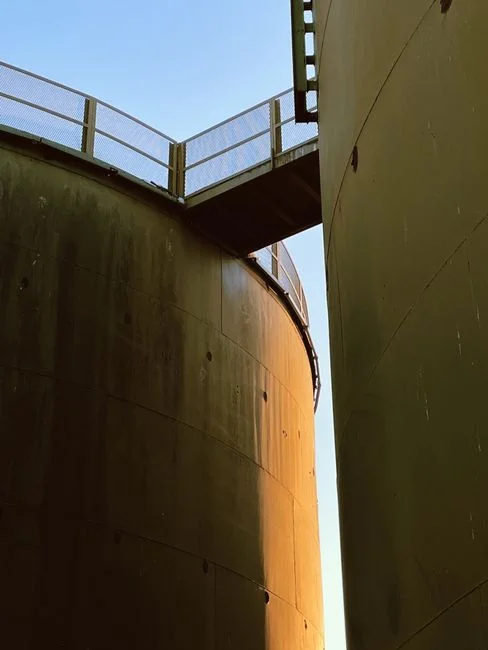
A Tier 1 transportation equipment plant — metal stamping, e-coat, paint, and assembly under one roof — generates five distinct wastewater streams, each with a different local-limits footprint. Mapping each stream to its likely local-limit parameter is the fastest way to build a defensible sampling plan.
Parts washing and alkaline cleaning produces the highest pH excursions on the floor, typically pH 10 to 13, with total suspended solids from carry-off, oil and grease from the substrate, and trace nickel or zinc where the substrate is coated steel. This is the stream that most often produces a high-pH slug and triggers the interference definition in 40 CFR 403.3(k). Phosphating and conversion coating swings the other way: acidic pH excursions in the 2 to 5 range, with phosphate, zinc, manganese, iron, and elevated TDS. Zinc and manganese are the categorical parameters under 40 CFR Part 433 (metal finishing) and are the metals most likely to be flagged in the BMR/WWDDR. E-coat and paint booth water contributes suspended paint solids, organic solvents, low-level hexavalent chromium where legacy chemistry is still in use, and high BOD/COD from overspray; this is the stream where flow equalization and coagulation matter most because it is both organically loaded and chromate-bearing. Machining, stamping, and assembly is dominated by lubricants, hydraulic oil, tramp oils, and metal fines, so oil and grease and total petroleum hydrocarbons become the leading local-limit drivers. Spot-test wash water, boiler blowdown, and RO reject rounds out the list with pH swings, temperature excursions, and high TDS that can knock a BNR plant out of its design range if discharged without damping.
On-Site Pretreatment Train: Step-by-Step Equipment Selection for 2026
The on-site pretreatment train for a 2026 transportation equipment plant in this corridor is a six-step ordered stack, with each step tied to a specific local-limit parameter and a specific piece of equipment. The table below summarizes the stack; the prose that follows it explains the design intent of each step.
| Step | Unit Operation | Typical Sizing Basis | Primary Local-Limit Parameter Addressed |
|---|---|---|---|
| 1 | Rotary mechanical bar screen | 2–6 mm aperture; sized to peak shift flow | Solids protection (TSS, rags, chips) |
| 2 | Coalescing plate / corrugated-plate OWS | 10–20 min HRT at design flow; sludge draw-off | Oil and grease (free and emulsified) |
| 3 | Flow equalization basin with pH staging | 4–8 hr HRT; 5–11 pH band | pH, temperature, slug dampening |
| 4 | DAF or lamella clarifier | 20–40 m/h surface loading (lamella) | FOG, paint solids, TSS, metals precipitates |
| 5 | Coagulant and flocculant dosing | Hydroxide precipitation for Zn, Ni, Cr(III) | Dissolved metals, residual TSS |
| 6 | pH/conductivity probe, effluent sampler, optional polish filter | Tied to PLC; 24-hr composite capability | Verification, self-monitoring, NPDES linkage |
Step 1 is a rotary mechanical bar screen at headworks, sized to peak shift flow with a 2 to 6 mm aperture. The screen is cheap insurance: it removes stamping chips, shop rags, and fibrous debris before the equalization tank, and it protects every downstream pump and the DAF nozzle ring. Step 2 is a coalescing plate or corrugated-plate oil/water separator with a sludge draw-off and a typical HRT of 10 to 20 minutes at design flow; this is the primary defense for the oil and grease local limit and protects the BNR microorganisms downstream from free and emulsified FOG. Step 3 is a flow-equalization basin with chemical dosing for pH staging. Four to eight hours of HRT is the usual design range — long enough to flatten a shift's worth of pH and flow swings, short enough to fit on a typical Zeeland industrial lot. Acid and caustic trim should be on automatic control with a redundant pH probe, and the basin outlet should land in the 5 to 11 pH band that most POTW local limits use as the safe operating window.
Step 4 is the workhorse clarification step. Use a DAF system when free oil, emulsified oil, and paint overspray solids dominate the waste stream — DAF excels at floating FOG and low-density paint solids. Use a lamella clarifier with sludge recirculation when total suspended solids and metals precipitation are the priority; lamella surface loading rates in the 20 to 40 m/h range are typical and the geometry gives a small footprint for the same hydraulic capacity. Step 5 is the chemistry step. An automatic chemical dosing system for coagulant (typically a metal salt such as ferric chloride or alum) and flocculant (an anionic or cationic polyelectrolyte) drives hydroxide precipitation of zinc, nickel, and trivalent chrome, and polishes residual TSS. Step 6 is the verification and self-monitoring step: a final pH probe, conductivity probe, and an automatic effluent sampler tied to the plant PLC, with an optional bag or multi-media filter for residual TSS before the discharge line to the sanitary sewer. Because the Zeeland CWP runs BNR and UV at 2.1 MGD, the plant's discharge should leave the site with a stable, low-strength profile — slugs and peaks are what trip pass-through findings, not steady-state loading.
Recommended Operating Parameters at the End-of-Pipe Connection
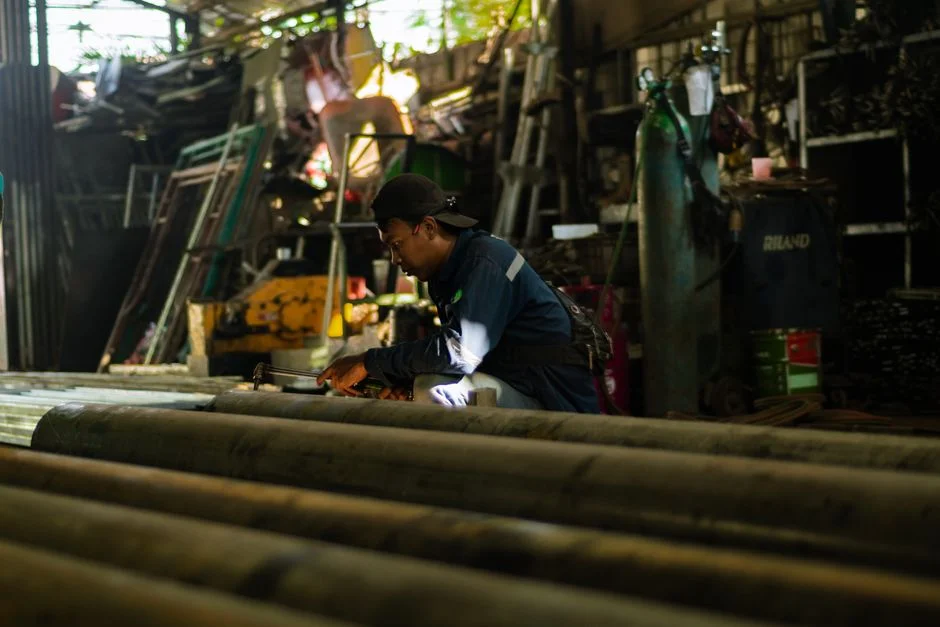
The local limits in the City of Zeeland Sewer Use Ordinance are the binding numbers, but a tier-1 transportation equipment plant should benchmark its discharge against the typical POTW operating band before the inspector ever shows up. The table below lists the operating targets a well-run on-site train should hold to clear most sewer-use ordinances in this region; the exact numeric values must be confirmed against the current Zeeland Chapter 86 ordinance.
| Parameter | Typical POTW Local-Limit Target (Daily Max) | Process Tie-Back in the On-Site Train |
|---|---|---|
| pH | 5.0 to 11.0 (instantaneous band) | Equalization basin with redundant pH probe and acid/caustic trim |
| Oil and grease | < 100 mg/L | Coalescing plate OWS + DAF for FOG and paint solids |
| Total suspended solids | 200 to 400 mg/L (lower if nutrient-sensitive) | Bar screen + lamella clarifier + coagulant dosing |
| Zinc | Categorical under 40 CFR 413 / 433; local limit often tighter | Hydroxide precipitation in coagulation step |
| Nickel | Categorical under 40 CFR 413 / 433 | Hydroxide precipitation; pH held at 9.0 to 9.5 |
| Total chromium / hexavalent chromium | Categorical; hex-chrome often < 0.1 mg/L at end-of-pipe | Reduction to Cr(III) then hydroxide precipitation |
| Flow and loading | Reported peak and average; mass limits per shift possible | Equalization dampens peaks; flowmeter tied to self-monitoring |
Metals are where the categorical standards bite hardest. 40 CFR Part 413 (electroplating), 40 CFR Part 433 (metal finishing), and 40 CFR Part 467 (plastic molding and forming) are the most common categorical backstops a transportation equipment plant will see referenced in its BMR/WWDDR, and the local limits in the Zeeland Sewer Use Ordinance may be tighter than the categorical numbers, never more lenient. The on-site train should be designed to clear the tighter of the two — categorical or local — because pass-through is evaluated at the receiving stream, not against the categorical ceiling. For comparison, a similar metals-heavy pretreatment challenge is documented in the mining and metals pretreatment guide.
2026 Compliance Checklist and Documentation Trail
The framework and equipment stack above reduce to a calendar of action items the EHS team can execute this year. The checklist assumes a non-domestic user that is already inside the Zeeland IPP service area; plants that have not yet been issued an IPP permit should add the BMS and BMR/WWDDR intake steps to the top of the list.
- Confirm the facility is listed as a non-domestic user with the City of Zeeland IPP and that the current permit term has not lapsed.
- Keep the BMR/WWDDR current and on file; update it whenever process chemistry changes (new cleaning chemistry, new paint line, new stamping lubricant, new conversion-coating bath).
- Submit Semi-Annual Compliance Reports for January through June and July through December on the IPP's published cadence; do not let the second-half report slip into Q1 of the following year.
- Maintain chain-of-custody records for every self-monitoring sample and every IPP-initiated sampling event, including the field blank and duplicate QA/QC.
- Document every spill-response action and every deviation from local limits, with a written corrective action and verification sampling result attached.
Documentation is the audit posture: an inspector who finds complete chain-of-custody and corrective-action files will close a deviation with a written warning, while missing records turn a warning into a formal notice of violation under 40 CFR 403.5(c).
Frequently Asked Questions
What federal regulation governs a transportation equipment plant discharging to the City of Zeeland sanitary sewer?
40 CFR Part 403, the General Pretreatment Regulations, governs every Industrial User discharging to a POTW with an approved IPP. The City of Zeeland CWP at 350 E. Rich Avenue operates such a program, so any non-domestic discharge from a transportation equipment plant is regulated under 40 CFR 403.3(j) as an Industrial User and is subject to the local limits developed under 40 CFR 403.5(c).
What is the difference between pass-through and interference under 40 CFR 403.3?
Pass-through under 40 CFR 403.3(p) is a discharge that exits the POTW in concentrations or volumes that, alone or with other sources, cause a violation of the POTW's NPDES permit. Interference under 40 CFR 403.3(k) is a discharge that disrupts the POTW's treatment processes, sludge handling, or biosolids quality. A high-pH alkaline cleaner slug is a classic interference case at the Zeeland CWP's BNR plant, while a hex-chrome spill that survives treatment and violates the NPDES total-chromium limit at Noordeloos Creek is a classic pass-through case.
What paperwork does the City of Zeeland IPP require from a non-domestic user?
The IPP requires a Baseline Monitoring Survey (BMS) and a Baseline Monitoring Report / Wastewater Discharge Disclosure Report (BMR/WWDDR) at intake, a Non-Domestic User Survey at each permit renewal, and Semi-Annual Compliance Reports covering January through June and July through December. The IPP also reserves the right to collect its own samples from the collection system to identify unknown sources of pollutants.
What on-site equipment stack is typical for a 2026 transportation equipment plant near Zeeland?
The standard ordered stack is a rotary mechanical bar screen, a coalescing plate oil/water separator, a flow-equalization basin with pH staging, a DAF or lamella clarifier, automatic coagulant and flocculant dosing for metals precipitation, and a final pH/conductivity probe and effluent sampler tied to a PLC. The design intent is to leave the plant with a stable, low-strength discharge that the 2.1 MGD Zeeland CWP BNR plant can absorb without biomass upset.
What local-limit parameters are most likely to be flagged for this industry?
pH, oil and grease, total suspended solids, and the metals from 40 CFR Parts 413, 433, and 467 — zinc, nickel, total chromium, and hexavalent chromium — are the parameters most likely to appear in a Zeeland BMR/WWDDR for a transportation equipment plant. Mass-based limits per shift may also be imposed to prevent pass-through during peak loading windows.