Why petroleum wastewater in Kansas City is not a generic industrial stream
For petroleum wastewater in Kansas City in 2026, choose DAF when free oil, FOG, and emulsified hydrocarbons dominate the stream — round DAFs reach 92-98% TSS removal (per DAF Corp FC Maximizer data) and 2-4% TS thickened sludge. Choose a lamella clarifier only as a polish step after DAF or API separation, because its 20-40 m/h surface loading cannot match DAF on oil-laden water. Most factories end up running a DAF-first, clarifier-second hybrid train.
A typical Kansas City petroleum terminal or lube-oil blender generates three distinct sub-streams that confuse a generic "clarifier vs. DAF" comparison. The first is API separator effluent — free oil that has gravity-separated from tank-farm runoff and slop-oil receipts, typically carrying 50-500 mg/L oil and 100-400 mg/L TSS. The second is emulsified FOG from blending kettle washdowns, drum decanting, and equipment wash bays, often running 100-1,000 mg/L oil with stable oil-in-water emulsions that will not break in a quiescent basin. The third is dissolved and suspended hydrocarbons from stormwater that has passed through truck-loading areas, frequently failing the Kansas City MSD oil & grease limit of 100 mg/L and the 30-day TSS ceiling of 250 mg/L (per 40 CFR 403 categorical standards adopted by Kansas City MSD).
Local winter climate makes the choice sharper. Kansas City sees 30-50 days per year below -5°C, and clarifier settling rates drop measurably as kinematic viscosity climbs above 1.0 cSt at 5°C — a 1.5-2x reduction in Stokes-law settling velocity for fine TSS. DAF microbubble flotation is far less viscosity-sensitive because buoyant force dominates over drag at the 20-40 micron bubble size range, which is why DAF performance is the same in January as in July (HydropureWater field data, 2026). WesTech's product literature confirms that the DAF process is highly effective at removing oil, grease, and other suspended solids from oil and gas and manufacturing streams (WesTech, 2025-08). Generic clarifier-vs-DAF articles rarely mention this, which is why a KC-specific, petroleum-specific decision is overdue.
How a dissolved air flotation unit actually treats oily water
DAF works by attaching fine air bubbles to oil droplets and suspended solids, then floating the agglomerate to the surface for skimming. The process starts with a pressurized recycle stream saturated at 4-6 bar (60-90 psig) in a saturation tank, then released through a pressure-reducing valve to generate 20-40 micron microbubbles — the bubble size specification comes from the DAF Corp micro-bubble generator, which produces consistent 20-40 micron bubbles with no coarse air, 24/7 operation (DAF Corp, 2025). Those microbubbles nucleate on oil droplet surfaces within a few seconds, and the buoyant oil-floc layer is scraped off the top by a rotating skimmer. Heavy solids drop to a sludge cone at 2-4% TS (DAF Corp FC Maximizer, 2025).
Two equipment formats dominate the petroleum market. The round FC Maximizer tank runs 6-70 ft in diameter, handles 10-11,000 gpm, and delivers 92-98% TSS removal on a zero-velocity hydraulic design. The rectangular RC UniMax covers 10-1,000 gpm at 85-90% TSS removal and fits tighter footprints in existing tank farms. A typical DAF hydraulic residence time is 15-30 minutes, compared to 2-4 hours for a conventional clarifier, which is why DAFs deliver a 60-80% smaller footprint per m³/h of flow. For petroleum applications specifically, DAF Corp lists the FC-150 as a 500 gpm reference unit designed to clarify down to 50 ppm from 2,000 ppm suspended solids loading (DAF Corp, 2025).
Polymer demand for an oil-and-grease DAF is typically 5-15 mg/L of cationic or anionic polyacrylamide, dosed through a chemical feed skid ahead of the flocculation zone. The float mechanism does most of the oil-capture work, so polymer consumption stays low. Effluent from a well-run DAF will routinely drop below 20 ppm TSS, which positions the downstream process for either MSD discharge compliance, cooling-tower makeup, or a polishing clarifier. Engineers sizing a 2026 petroleum DAF should review the DAF system advantages and disadvantages 2026 guide alongside the HydropureWater dissolved air flotation system specification sheet before finalizing a vendor shortlist.
How a gravity clarifier (and lamella plate settler) behaves on the same stream
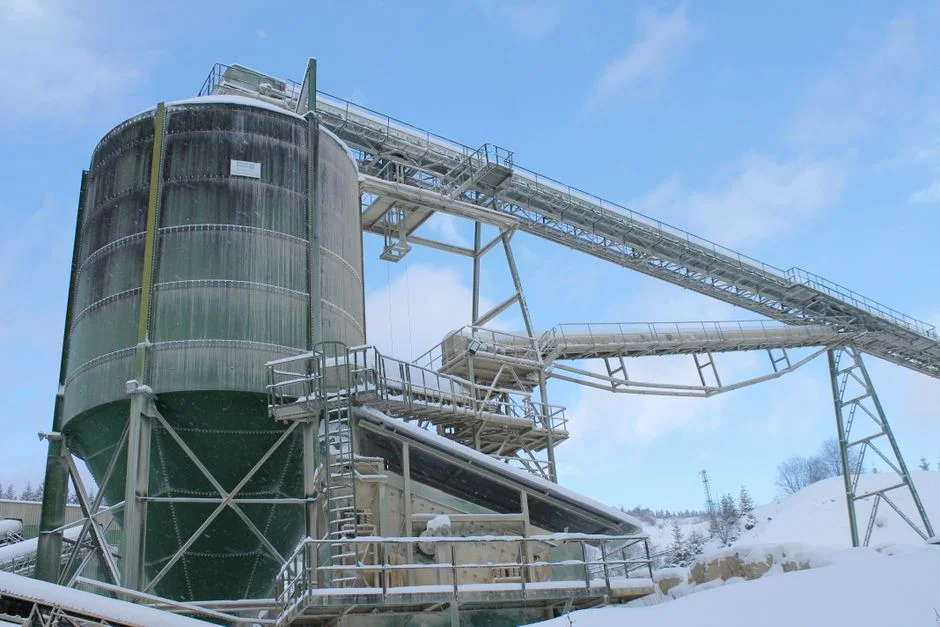
A lamella clarifier is a gravity settler packed with inclined plates at 55-60° from horizontal. The plates shorten the effective settling distance so surface loading rates reach 20-40 m/h versus 1-2 m/h for a conventional clarifier, which is why lamellas replaced most old circular clarifiers in industrial pretreatment. Catalog data for the HydropureWater high-efficiency lamella clarifier confirms that inclined-plate geometry is the design choice when footprint matters and the influent has already been de-oiled.
The honest limitation of a lamella on petroleum water: it settles TSS but does not capture emulsified oil or FOG, because oil rises rather than sinks. Running raw tank-farm runoff or emulsified blending washwater through a lamella without upstream oil removal simply re-suspends the oil as it floats up through the plate pack and exits in the effluent. A lamella on raw oily water typically needs 20-50 mg/L of cationic polymer plus coagulant to break the emulsion first — and even then, oil removal rarely matches DAF performance. Underflow solids come off a lamella at 0.5-1.5% TS, which is 2-3x more sludge volume per tonne of dry solids than a DAF, and that sludge is mostly water-bound TSS rather than a floatable oil-rich layer.
Where the lamella does earn its place is as a polish step after API separation and DAF. With TSS already at 50-100 ppm and free oil below 20 ppm going in, the lamella can drop effluent to 20-30 ppm TSS, recover another 5-10% of fines, and protect downstream filters or cooling-tower makeup lines from slug solids. For sizing and selection on petroleum polishing duty, the lamella clarifier sizing and specifications reference gives the standard 55-60° plate angle, 20-40 m/h loading envelope, and materials-of-construction options that apply to a KC installation. A Kansas City winter further argues for keeping the lamella downstream of a DAF, because the lamella's settling velocity depends on viscosity while the upstream DAF does not.
DAF vs clarifier: parameter and cost comparison
Below is the decision aid most engineers will screenshot and forward to procurement. CAPEX and OPEX bands are planning estimates, not quotes, and they reflect 2025-2026 fabricated-steel and polymer market conditions for U.S. industrial installations in the 50-500 gpm range.
| Parameter | Dissolved Air Flotation (round or rectangular) | Lamella / Inclined-Plate Clarifier |
|---|---|---|
| TSS removal | 92-98% round (FC Maximizer); 85-90% rectangular (RC UniMax) — per DAF Corp, 2025 | 60-80% on TSS-only streams; poor on FOG without upstream oil removal |
| FOG / free oil removal | 90-95% on free and emulsified oil with polymer | <40% unless preceded by coagulation and DAF |
| Surface loading rate | Not rate-limited; governed by hydraulic residence time of 15-30 min | 20-40 m/h on the projected plate area (HydropureWater catalog) |
| Hydraulic residence time | 15-30 minutes | 2-4 hours (conventional); 30-60 min effective in lamella |
| Footprint per m³/h (≈4.4 gpm) | 0.3-0.6 m² | 1.0-2.0 m² at 20-40 m/h loading |
| Polymer / coagulant dose | 5-15 mg/L cationic or anionic polyacrylamide | 20-50 mg/L cationic polymer + coagulant on raw oily water |
| Sludge %TS | 2-4% (DAF Corp, 2025) | 0.5-1.5% |
| CAPEX band, installed, per m³/h | $8,000-$15,000 (planning estimate, 2025-2026) | $3,000-$6,000 (planning estimate, 2025-2026) |
| OPEX, $/m³ treated | $0.15-$0.40 incl. polymer and power for saturator | $0.05-$0.15 incl. polymer; no saturator power |
| Best-fit refinery sub-process | Tank-farm runoff, slop oil, lube-oil blending washwater, emulsified FOG, stormwater with hydrocarbons | Polishing DAF or API effluent to <30 ppm TSS for cooling-tower reuse or low-TSS discharge |
The table shows why a DAF-first, lamella-second train is the 2026 default for KC petroleum: the DAF handles the oil and FOG that the lamella cannot, and the lamella catches the residual fines that the DAF float leaves behind. The CAPEX gap (roughly 2-3x per m³/h for a DAF) is real, but it is offset by smaller downstream sludge dewatering — 2-3x more sludge volume out of a clarifier means a larger industrial filter press sizing and dewatering guide applies, and a 30-50% larger capex on the dewatering side.
The 2026 decision framework for a Kansas City petroleum plant
Three rules let a plant engineer reach a defensible technology choice without re-running bench tests.
- If free oil exceeds 50 mg/L or FOG is visible at the API outlet, start with a DAF. A lamella cannot do this job alone. WesTech confirms that the DAF process is highly effective at removing oil, grease, and other suspended solids from oil and gas streams (WesTech, 2025-08). The DAF removes 90-95% of free and emulsified oil in a single pass, leaving a clarifier-ready stream for the next step.
- If the goal is polishing DAF effluent for cooling-tower reuse or low-TSS discharge, add a lamella as a second stage. A DAF effluent at 50-100 ppm TSS drops to 20-30 ppm through a lamella with no additional chemical feed, which is the operating envelope where cooling-tower makeup specifications typically sit.
- If total flow is below 50 gpm and the influent is already de-oiled (e.g., a small lube-oil blender with a working API separator), a lamella with coagulant dosing can suffice. Verify against Kansas City MSD oil & grease and TSS limits first, and budget for a HydropureWater automatic chemical dosing skid sized to the polymer demand.
The hybrid recommendation — DAF primary plus lamella polish — is the 2026 default for any plant that must hit both Kansas City MSD pretreatment compliance and internal reuse targets. For CAPEX framing, a 100 gpm hybrid train in carbon steel with a chemical dosing skid and sludge dewatering will land in the $250,000-$450,000 installed range, with a simple payback of 2-4 years against hauled-sludge disposal and MSD surcharges (HydropureWater field data, 2026). A standalone DAF or standalone clarifier will land 20-40% below that figure, but only if the influent matches what that single unit can handle — which is rarely the case at a KC petroleum terminal with mixed tank-farm, blending, and stormwater sources. Engineers building a compliance case for sewer discharge should pair this decision framework with the petroleum plant pretreatment compliance guide and the industrial filter press sizing and dewatering guide to close the loop on solids handling.
Frequently Asked Questions
Can a clarifier replace a DAF for refinery wastewater?
No — not on FOG-bearing streams. A lamella clarifier settles TSS but does not capture emulsified oil, because oil rises rather than sinks. On raw tank-farm runoff or lube-oil blending washwater, a clarifier alone typically removes less than 40% of FOG and will not meet the Kansas City MSD oil & grease limit of 100 mg/L without upstream oil removal. The 2026 default is a DAF first, lamella second.
What DAF removal rate should I expect on petroleum water?
Plan on 92-98% TSS removal and 2-4% sludge TS for a round DAF such as the FC Maximizer, and 85-90% TSS removal for a rectangular RC UniMax (DAF Corp, 2025). With 5-15 mg/L polymer, expect 90-95% FOG removal on free and emulsified oil, leaving 20-50 ppm oil downstream for polishing or discharge.
How cold does it get in Kansas City and does that affect DAF?
Kansas City averages 30-50 days below -5°C per year. Clarifier settling velocity drops 1.5-2x as kinematic viscosity rises, but DAF microbubble flotation is far less viscosity-sensitive because buoyant force dominates at 20-40 micron bubble size. Expect DAF performance to be the same in January as in July (HydropureWater field data, 2026).
Is a mobile DAF viable for a short plant turnaround?
Yes. WesTech's mobile DAF clarifier can typically be delivered and brought online within a single day, depending on site readiness and utility availability (WesTech, 2025-08). Trailer footprints run 47'-6" x 8'-6" (small) or 51'-7" x 8'-6" (large) with 3-5 ft clearance, making mobile DAF a practical option for a 2-6 week tank-farm or blending-area turnaround where temporary treatment is needed.
Related Equipment
- HydropureWater plate and frame filter press — specifications, capacity range, and technical data