Why the DAF-vs-Clarifier Question Hits Differently for San Antonio Fabs in 2026
For San Antonio semiconductor and related-device factories in 2026, choose DAF when the stream carries fines, CMP slurry residue, photoresist solids, or sub-50 µm particles that settle poorly; choose a lamella clarifier when flow is high, particles settle readily, and footprint plus chemical budget dominate. In practice, most 2026 fab trains pair a DAF system (4-300 m³/h, 13 models) ahead of a lamella clarifier (20-40 m/h surface loading) to hit 40 CFR 433 categorical pretreatment limits and reclaim-rate ESG targets.
San Antonio's semiconductor footprint is not a single archetype. The city hosts three operationally distinct clusters: back-end test and assembly lines that generate dicing slurry, grinding swarf, and flux residues; power-electronics packaging (IGBT, SiC, GaN) where lead-free solder and epoxy cure rinses dominate; and compound-semiconductor R&D pilots running smaller flow volumes but with highly variable chemistries. Each cluster produces a different solids signature, and a separator that works at one will underperform at another.
What ties these streams together is that they are not generic industrial wastewater. A typical fab P&ID mixes HF and BHF fluoride, copper-bearing CMP slurry with silica, ceria, or alumina nanoparticles typically 10-200 nm in size, photoresist strippers, TMAH developer, and TBAC rinses. Particles in this size range do not obey Stokes' law in a conventional basin — they ride Brownian motion and colloidal forces rather than gravity. The compliance floor is set by 40 CFR 433 semiconductor categorical pretreatment standards, with the San Antonio Water System (SAWS) Industrial Pretreatment Program acting as the local enforcement layer that adds site-specific metals caps and flow-based surcharges. Layered on top, 2026 ESG water-reclaim disclosures — documented in the analysis of 2026 semiconductor ESG water-reclaim disclosures — push fabs toward recovery rates above 75%, which raises the bar on upstream TSS reduction before the RO train.
How a DAF Clarifier Actually Works in a Semiconductor Wastewater Train
A dissolved air flotation (DAF) clarifier injects a recycle stream saturated with air at 4-6 bar back into the process stream, producing 30-50 µm microbubbles that attach to flocculated particles and lift them to the surface, where a paddle skimmer removes the float (Clearwater/SigmaDAF USA, 2026-04-27).
On a fab feed, chemical conditioning is not optional. Coagulation with PAC (typically 50-150 mg/L) or ferric chloride destabilizes the colloidal charge on CMP fines and resist fragments; an anionic flocculant polymer (1-5 mg/L) is then used to build a floc large enough for bubbles to bridge. Without this two-stage conditioning, the DAF cell passes nanoparticles straight through, and copper co-precipitation targets are missed. Hydraulic residence time in the flotation cell is short — usually 5-15 minutes — which is why DAF handles shock loads and variable influent better than a settling basin.
A conventional or lamella clarifier does the opposite job: it lets gravity pull particles down. Inclined plates at 55-60° compress the effective settling area, and a HydropureWater lamella clarifier operates at 20-40 m/h surface overflow rate with roughly 60% less footprint than a rectangular basin. The mechanism only works when particles are dense and large enough to overcome drag — practically, ≥50 µm — and when the upstream flow is reasonably quiescent. A lamella clarifier does not need bubbles, but it does need pre-thickened feed and stable solids loading, which is why it pairs with, rather than replaces, a DAF in a fab train.
One documented operating advantage: round-tank vertical-flow DAFs avoid the dead zones that form in rectangular horizontal cells, and ClearFox's design data (2026) shows up to 15% lower chemical consumption as a result of better floc-bubble contact. For a fab running 24/7, that delta is a measurable line item.
DAF vs Lamella Clarifier: The 2026 Decision Matrix for Fab Effluent
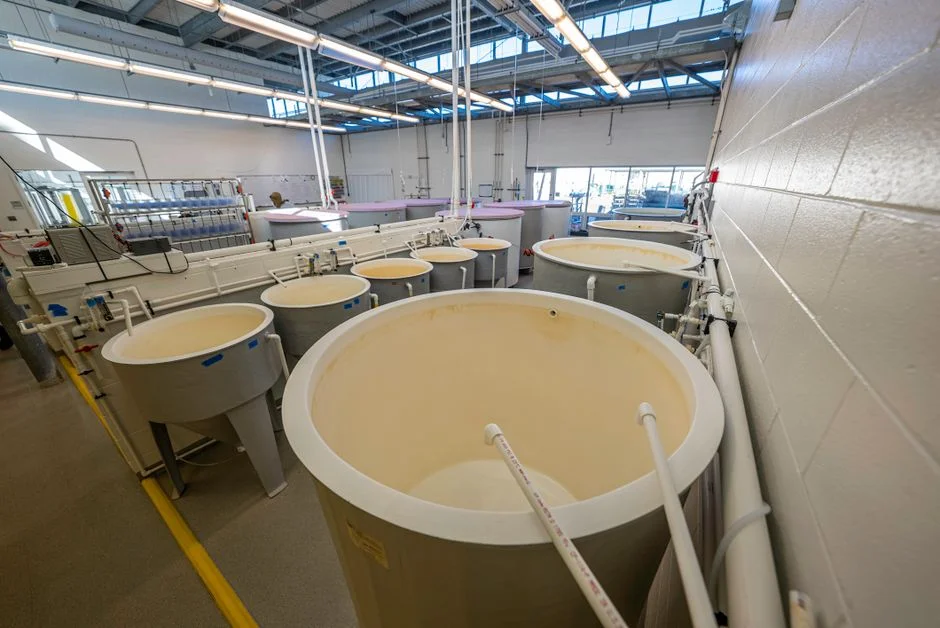
The center of gravity of this article is a head-to-head parameter matrix. None of the top three commercial SERP results for this query publish DAF and lamella clarifier on a shared axis; they describe one product or the other and stop. The table below is the artifact a 2026 fab engineer can score their own influent against.
| Parameter | DAF | Lamella Clarifier | Hybrid (DAF + Lamella) |
|---|---|---|---|
| Mechanism | Microbubble flotation (30-50 µm bubbles) | Gravity settling on inclined plates | Flotation primary, settling polish |
| Effective particle size | Sub-50 µm, including colloidal and 10-200 nm CMP nanoparticles | ≥50 µm practical | Sub-50 µm to bulk TSS |
| Flow range | 4-300 m³/h across 13 standard models | Scales with plate area; typical fab trains 50-500 m³/h | Sum of upstream capacities |
| Surface loading / hydraulic rate | 5-15 m/h equivalent overflow at the cell | 20-40 m/h overflow on plates | Bottleneck is the lamella stage |
| Footprint | Compact; round-tank vertical flow saves plan area | ~60% smaller than conventional rectangular basin | Two skids; moderate total area |
| Polymer / coagulant demand | Moderate-to-high (PAC 50-150 mg/L; anionic polymer 1-5 mg/L) | Up to 30% lower chemical use on bulk settleable solids | Polymer at DAF; lamella needs only floc aid |
| Sludge %DS | Float 3-6% DS without thickener; up to 2× DS vs rectangular DAFs (ClearFox, 2026) | Settled sludge 2-4% DS | Combined to plate-and-frame press |
| Automation | Full PLC; skimmer speed, recycle, dosing recipe | Simple PLC; sludge scraper cycle | Integrated recipe management |
| Best-fit fab stream | CMP slurry, photoresist, FOG-bearing rinses, nanoparticle colloids | Bulk TSS, back-end grinding swarf, dicing slurry | 2026 default for fabs targeting 40 CFR 433 and >75% RO reclaim |
Two takeaways from the matrix. First, the two unit operations are not substitutes — they overlap on a narrow band of settleable colloids and diverge sharply once particles drop below 50 µm. Second, the hybrid train (DAF primary, lamella polish) is becoming the 2026 default for fabs because it stacks two independent removal barriers: the DAF strips nanoparticles, FOG, and resist fragments; the lamella catches any float that escapes and any denser particles that settle before reaching the cell. That dual barrier is what protects a downstream RO from fouling, and RO protection is the binding economic constraint on a 2026 fab water budget. For reference specs, see the DAF system and the HydropureWater lamella clarifier product pages.
Matching the Unit Operation to Specific Fab Wastewater Streams
Translating the matrix into a stream-by-stream playbook lets an engineer map a P&ID to the right primary separator in a few minutes.
CMP slurry wastewater. Particles in the 10-200 nm range (silica, ceria, alumina) will not settle in any reasonable residence time. DAF is the only practical primary, and the coagulant dose must be tuned per slurry type — silica slurries respond to PAC at 80-120 mg/L, while ceria and alumina often need a cationic coagulant first to reverse the surface charge before the anionic polymer bridges the floc. Copper co-precipitation is the secondary target and the reason pH must be held in the 7.5-8.5 range across the DAF cell.
Back-end dicing and grinding. Swarf from wafer dicing saws and back-grinding wheels is coarser (typically 50-500 µm) and dense enough to settle. A lamella clarifier is the right primary here, and the inclined plates cut the clarifier footprint by roughly 60% versus a conventional rectangular basin of the same throughput. HydropureWater field data on lamella installations shows that swarf streams settle cleanly at 25-35 m/h overflow with only a light flocculant dose.
Photoresist stripping and developer waste. Resist fragments and the surfactants used in strip chemistries float rather than settle — they ride entrained air and have a density close to water. DAF is the correct primary, and a pairing with an automatic chemical dosing skid for pH and ORP control is what makes the removal reproducible across shift changes.
Back-end packaging flux and organic rinses. FOG-bearing streams respond well to DAF; the mechanism is well-documented and the float is stable. A stand-alone DAF cell is usually sufficient, with a small lamella polish only when the downstream load is RO.
The connective tissue across all of these is chemical conditioning. PLC-controlled coagulant and flocculant injection, with recipe management per stream, is what makes either separator actually hit spec on a fab feed. Skid sizing should match peak flow, not average, because that is what the SAWS surcharge is calculated on.
San Antonio Compliance and Reclaim Targets: What 2026 Forces Into the Decision
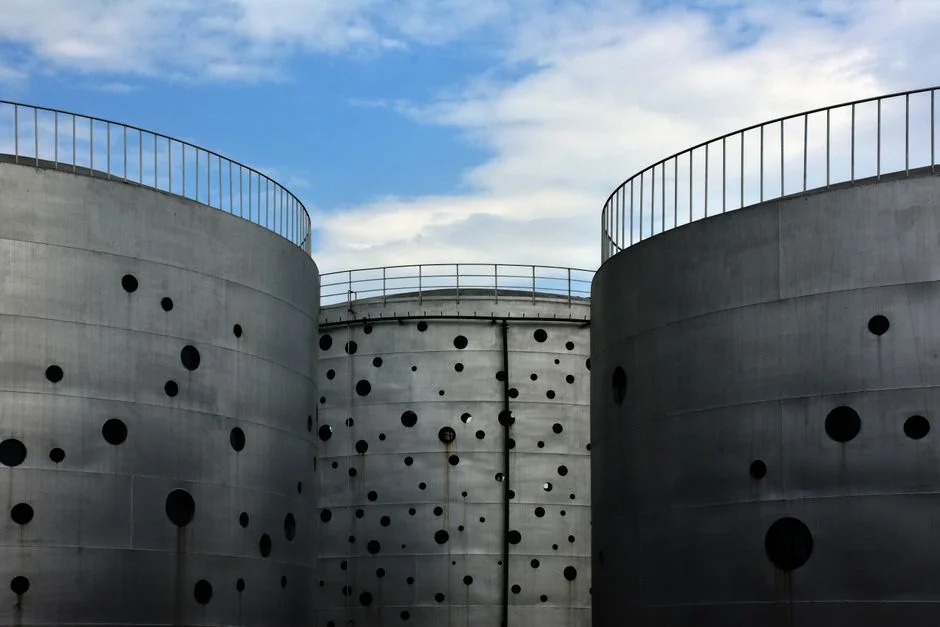
40 CFR 433 sets the categorical pretreatment standards for the semiconductor category — TSS, copper, fluoride, and TTO organics — and these are the federal floor that any selected unit operation must support. The rule itself is older regulation and does not name a specific separator, but its limits are tight enough that a lamella-only train will struggle on copper-bearing CMP flows.
Locally, the SAWS Industrial Pretreatment Program adds site-specific metals caps, daily and instantaneous maximum limits, and flow-based surcharges that scale with the strength of the discharge. Higher upstream TSS and copper removal translates directly into a lower surcharge, which is a line item an operations manager can defend to finance. A DAF front-end, with its copper co-precipitation side benefit, pays back faster on this surcharge than a clarifier alone.
The 2026 delta is the ESG layer. Semiconductor water-reclaim disclosures from the major foundries and IDMs are now benchmarked in the public domain, and fabs targeting reclaim rates above 75% need sub-ppm TSS upstream of the RO train. The 2026 semiconductor ESG water-reclaim disclosures analysis shows that this is no longer aspirational — it is the disclosed operating norm. A DAF followed by a lamella polish is the dual barrier that lets the RO run at designed flux without expensive anti-scalant over-dose or premature membrane replacement. For a sister-market comparison on the same axes, see the Sioux Falls DAF-vs-clarifier guide in the Sioux Falls selection guide.
The honest framing for a 2026 SAWS submission: 40 CFR 433 is the floor, SAWS pretreatment is the local envelope, and ESG reclaim targets are the economic driver. The unit operation choice has to be defensible against all three, which is why the hybrid train keeps showing up in approved submissions.
Procurement Checklist: Specifying a DAF or Clarifier for a 2026 San Antonio Fab RFQ
- Characterize the influent. Capture TSS range (typically 200-3,000 mg/L on fab feeds), particle size distribution by stream, FOG yes/no, fluoride and copper presence, and peak-versus-average flow. Without this data the RFQ is guesswork.
- Select the primary unit. DAF (4-300 m³/h, 13 standard models) for colloidal, FOG, or nanoparticle streams. Lamella clarifier for high-flow coarse solids with modest chemical budget.
- Add chemical conditioning. Size an automatic chemical dosing skid to peak flow with PLC recipe management per stream, including pH and ORP trim where HF neutralization is in scope.
- Plan sludge handling. Route DAF float and lamella underflow to a plate-and-frame filter press for cake solids suitable for off-site disposal; size the press on peak DS load, not average.
- Confirm 2026 compliance. Document the selection rationale against 40 CFR 433 categorical limits, SAWS local limits, and the fab's ESG reclaim target, so the same paragraph defends the choice to EHS, to SAWS, and to procurement.
Frequently Asked Questions
Can a lamella clarifier replace a DAF for fab wastewater?
Only when particles are ≥50 µm and influent is consistent. For CMP slurry (10-200 nm) and photoresist fragments, a lamella clarifier cannot deliver the required TSS and copper removal; DAF is required as the primary, with a lamella polish as a secondary barrier.
What is the typical flow range for a HydropureWater DAF?
The DAF line covers 4-300 m³/h across 13 standard skid-mounted models, with PLC-controlled skimmer, recycle, and chemical dosing, allowing a single platform to scale from a compound-semiconductor pilot to a back-end assembly main line.
Does 40 CFR 433 force fabs to install DAF?
No. The rule sets effluent limits for TSS, copper, fluoride, and TTO organics, not unit operations. DAF is one of several compliant paths; it becomes the practical default only when the influent contains sub-50 µm particles, FOG, or colloidal copper that a clarifier cannot reliably remove.
How does San Antonio's pretreatment program affect the choice?
SAWS imposes local metals caps and flow-based surcharges that scale with discharge strength. Higher upstream TSS and copper removal reduces the surcharge, which is a measurable operating saving and shifts the cost-benefit calculation toward DAF or DAF + lamella trains over a clarifier-only design.
Can a DAF and a lamella clarifier be installed in series?
Yes. A 2026 fab default is DAF primary, lamella polish, because the series arrangement delivers two independent removal barriers and protects downstream RO membranes from fouling, which is the binding economic constraint on a fab water budget targeting above 75% reclaim.