
La Porte Regulatory Stack: EPA → TCEQ → City — What Actually Applies to Your Plant
Petrochemical facilities in the La Porte industrial corridor operate under a three-tier regulatory hierarchy where federal mandates define the baseline, state permits set the operational envelope, and local ordinances dictate final discharge compliance. Under 40 CFR 414, organic chemical manufacturing facilities are subject to categorical pretreatment standards that establish mass-based limits for specific priority pollutants. These federal requirements are codified into your facility-specific Texas Pollutant Discharge Elimination System (TPDES) permit, issued by the Texas Commission on Environmental Quality (TCEQ) under 30 TAC 307. The third and most immediate layer is the City of La Porte’s Industrial Wastewater Discharge Permit, which enforces local limits to protect the integrity of the municipal publicly owned treatment works (POTW).
Most facilities in this region qualify as Significant Industrial Users (SIUs) by discharging process wastewater volumes exceeding 25,000 gallons per day or by contributing more than 5% of the POTW’s hydraulic or organic capacity. The City of La Porte’s ordinance (Chapter 82, Article III) requires compliance with 18 specific local parameters that are often more restrictive than federal baselines. Failure to manage these at the source triggers high-strength surcharges or administrative enforcement actions.
| Regulatory Layer | Authority | Scope | Primary Enforcement Mechanism |
|---|---|---|---|
| Federal | EPA | 40 CFR 414 (Categorical Standards) | National Pretreatment Program |
| State | TCEQ | TPDES Permit (TX0XXXXX) | Whole Effluent Toxicity (WET) Testing |
| Local | City of La Porte | Chapter 82, Article III | Industrial Wastewater Discharge Permit |
City of La Porte Local Limits Table (2026 Current) — The Numbers You Must Meet
Compliance with local limits is mandatory for all industrial users, and the City of La Porte utilizes a surcharge structure to recover costs for high-strength loading. As of 2026, the surcharge threshold for both BOD₅ and TSS is 250 mg/L; exceeding this triggers a cost of $0.45 per pound for BOD and $0.38 per pound for TSS. The discharge permit is issued based on the facility’s ability to maintain effluent quality within the defined maximum daily limits.
| Parameter | Daily Maximum Limit | Notes |
|---|---|---|
| BOD₅ | 300 mg/L | Surcharge > 250 mg/L |
| TSS | 300 mg/L | Surcharge > 250 mg/L |
| FOG (Petroleum) | 100 mg/L | Mineral/Petroleum based |
| Total Phenols | 1.0 mg/L | Critical for cracker/aromatics |
| Benzene | 0.05 mg/L | Strict VOC compliance |
| pH | 6.0 – 11.0 SU | Continuous monitoring required |
| Sulfides | 1.0 mg/L | Odor and corrosion control |
| Temperature | ≤ 40°C | Point of discharge |
Petrochemical Waste Stream Profiles — What You're Actually Treating
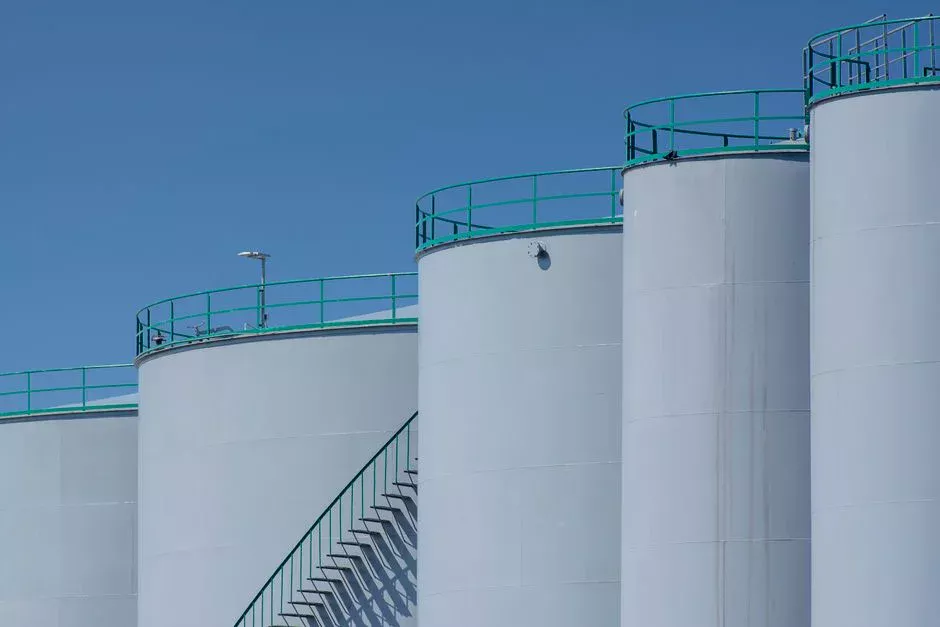
Effective pretreatment requires matching unit operations to the specific chemical fingerprint of your process streams. Ethylene cracker quench water typically presents high COD loads (2,000–5,000 mg/L) alongside phenols (50–200 mg/L) and benzene (5–20 mg/L). Because these streams often exit the process at 80–95°C, thermal reduction is a prerequisite for biological or chemical treatment. Aromatics complex wastewater is similarly challenging, with BTEX concentrations often requiring advanced oxidation or specialized stripping before entering a standard pretreatment train.
PDH purge water is characterized by moderate COD but high total dissolved solids (TDS) (15,000–25,000 mg/L), necessitating chemical precipitation to manage trace metals. For composite plant flows, which average 500–3,000 m³/day, the BOD/COD ratio often falls between 0.3 and 0.5. Physical-chemical pretreatment, such as the DAF for petrochemical FOG/TSS removal, is required before any downstream polishing can be effective. Equalization tanks, sized for a minimum of 2 hours hydraulic retention time (HRT) at peak flow, are mandatory to dampen the concentration spikes inherent in batch-process tank bottom or hydrotest water discharges.
Pretreatment Technology Selection Matrix for La Porte Petrochemical Streams
Technology selection depends on the target contaminants and the required discharge quality. Headworks screening using a GX Series rotary bar screen for headworks screening provides 6 mm openings to protect pumps and downstream media from catalyst fines and debris. For primary FOG and TSS removal, a DAF system operating at 4–5 bar saturation pressure typically achieves 90–95% removal efficiency.
When benzene or phenol limits are consistently challenged, PLC-controlled chemical dosing for pH and coagulation optimizes the coagulation of colloids. If surcharge avoidance is the primary driver, the addition of DF Series PVDF membranes for MBR polishing enables consistent effluent quality (BOD <20 mg/L, TSS <5 mg/L) regardless of influent variability. Sludge management is handled by a filter press for DAF sludge dewatering, which typically produces an 18–22% solids cake, reducing landfill disposal costs compared to liquid sludge hauling.
| Technology | Function | Performance Target |
|---|---|---|
| Mechanical Screen | Debris removal | 6 mm capture |
| DAF System | FOG/TSS reduction | 90-95% efficiency |
| Chemical Dosing | pH/Metals/Coagulation | Optimized flocculation |
| MBR Module | BOD/COD polishing | BOD <20 mg/L |
| Filter Press | Sludge dewatering | 18-22% cake solids |
Three Pretreatment Train Configurations — CAPEX, OPEX, and Compliance Risk Compared
Selecting a configuration depends on your budget and the consistency of your waste streams. Train A (DAF + Dosing) is the most common baseline, requiring $1.2–2.5M in CAPEX. While effective for FOG/TSS, it may struggle with high-strength organics, leaving the facility exposed to periodic surcharges. Train B adds PAC injection to the DAF system, increasing OPEX by $1.2–2.0/kg of carbon used, but reducing the risk of benzene/phenol exceedances.
Train C (DAF + MBR) represents the highest investment ($2.5–4.5M) but offers the lowest long-term operational risk. By ensuring BOD and TSS remain well below the 250 mg/L surcharge threshold, the MBR system can provide a 4-to-5-year payback on capital through avoided fees, particularly for facilities with high, consistent organic loads. Train C provides the highest margin for compliance with the 95% threshold required by TCEQ.
90-Day Permit Readiness Checklist — From Design Freeze to Legal Discharge
- Days 1–30: Finalize process flow diagrams (PFDs) and submit TPDES modification application to TCEQ.
- Days 30–60: Submit Form IWD-1 to the City of La Porte with the engineering report and spill prevention plan.
- Days 45–75: Procure long-lead items including DAF vessels and MBR modules to ensure site arrival by Day 120.
- Days 60–90: Execute civil/structural site preparation and install equipment pads.
- Days 90–120: Commission the PLC/SCADA integration and perform hydrotesting of all vessels.
- Days 120–150: Perform 14-day continuous sampling to verify compliance for all 18 parameters.
- Days 150–180: Submit final performance data to City and TCEQ for permit issuance.
Frequently Asked Questions
What are the current City of La Porte local limits for benzene and total phenols?
Benzene is limited to 0.05 mg/L daily maximum, and total phenols are limited to 1.0 mg/L daily maximum, per the 2026 City Ordinance Chapter 82, Exhibit A.
Does La Porte require a separate permit from TCEQ?
Yes. You must hold a valid TCEQ TPDES permit for federal/state compliance and a separate Industrial Wastewater Discharge Permit from the City of La Porte for local sewer discharge.
What is the high-strength surcharge threshold for BOD in La Porte?
The surcharge threshold is 250 mg/L monthly average. Costs are assessed at $0.45 per pound for BOD and $0.38 per pound for TSS for any concentrations exceeding this threshold.
Can I use a package MBR system for pretreatment polishing?
Yes. Submerged MBR modules, such as the DF Series, provide an effective polishing step for BOD and COD reduction. You must provide the City with 90 days' notice before implementing significant process changes to your pretreatment train.
How long does the permit process take in La Porte?
The process takes a minimum of 180 days from the date of a complete application. TCEQ typically requires 60 days for technical review, and the City requires 30 days for completeness followed by 60 days for processing.
What sludge disposal options exist for DAF float in Harris County?
Dewatered cake (18–22% solids) must be disposed of at a permitted Type I landfill, such as the McCarty Road or Atascocita facilities. Liquid hauling to the POTW headworks is restricted and requires prior written authorization from the City.