

Pharmaceutical preparations and toilet preparations plants near Mooresville, NC must satisfy EPA categorical pretreatment standards at 40 CFR Part 439 on top of the Charlotte Water Industrial User (IU) program limits, which implement 40 CFR Part 403 for the regional POTW. A compliant treatment train typically follows: flow equalization → pH adjustment → dissolved air flotation (DAF) → biological treatment (activated sludge or MBR) → secondary clarification → disinfection before discharge to the sanitary sewer under a valid Charlotte Water industrial waste discharge permit (per Charlotte Water Industrial Waste Discharge program).
Why Mooresville Pharmaceutical and Toilet Preparations Plants Need Pretreatment Before Sewer Discharge
Any Mooresville-area facility classified as SIC 283 (Drugs, including pharmaceutical preparations) or SIC 2844 (Toilet Preparations) discharges process wastewater to the Charlotte Water regional POTW under the Industrial User (IU) program administered at charlottenc.gov/water/Commercial-Development/Commercial-Customer-Services/Industrial-Waste-Discharge. The IU program is the local mechanism that enforces 40 CFR Part 403 (General Pretreatment Regulations) for sewer users whose discharges could pass through or interfere with the POTW.
Pharmaceutical preparations wastewater is characteristically high-strength: typical BOD₅ runs 1,500–6,000 mg/L and COD 3,000–15,000 mg/L, with active pharmaceutical ingredients (APIs)—including lidocaine-type actives confirmed measurable in environmental wastewater samples—plus high TDS from formulation buffers and pH swings between acidic and alkaline CIP batches. Toilet preparations wastewater adds surfactants, oils and emulsifiers, fragrance compounds, and suspended solids, with BOD₅ commonly in the 500–3,000 mg/L range and oil & grease frequently exceeding 200 mg/L. Both waste streams are subject to 40 CFR Part 439 controls.
Direct discharge of untreated process wastewater risks permit revocation, surcharges, and EPA enforcement under 40 CFR 403.8. A working treatment train is the price of holding a valid discharge permit in the Charlotte Water service area.
The Dual Regulatory Framework: 40 CFR Part 439 Meets the Charlotte Water IU Program
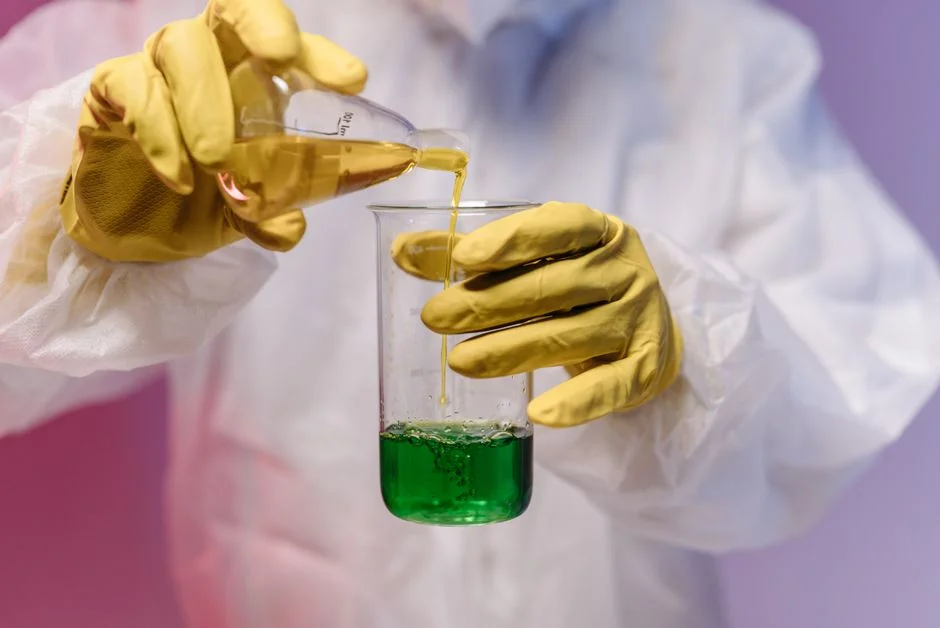
Two authorities set the numbers the plant must hit, and they are not redundant. 40 CFR Part 439 (Pharmaceutical Manufacturing Point Source Category) is the federal categorical pretreatment standard, structured around subcategories—fermentation, extraction, chemical synthesis, formulation, finishing, packaging, and research—each with its own set of daily-maximum and monthly-average limits. Facilities engaged in multiple subcategories must meet the most stringent applicable limit at each sampling point.
40 CFR Part 403 is the umbrella General Pretreatment Regulation, which authorizes the local Control Authority to implement categorical and local limits through an IU permit. In the Mooresville service area, Charlotte Water is the Control Authority. The Charlotte Water IU program runs permitting, sampling, inspections, slug control plan review, and surcharge billing for any facility whose discharge is non-domestic.
Charlotte Water's local limits—typically pH 5.0–11.0, oil & grease ≤ 100 mg/L, BOD₅ and TSS limits, and a metals schedule—are at least as stringent as the federal categorical standards and include site-specific surcharge triggers for BOD₅, TSS, and oil & grease (per Charlotte Water's local sewer-use ordinance, which is incorporated by reference into every IU permit). When the two regimes conflict, the more stringent limit applies.
40 CFR Part 439 Categorical Pretreatment Limits at a Glance
The table below consolidates the parameters most commonly cited in 40 CFR Part 439 limits for the formulation, finishing, and packaging subcategories typically present in Mooresville-area pharmaceutical preparations and toilet preparations operations. Operators must confirm the exact subcategory applicability and applicable numbers against the current EPA 40 CFR Part 439 text and the facility's IU permit, since limits differ by subcategory and by point of compliance.
| Parameter | Daily Maximum (typical range) | Monthly Average (typical range) |
|---|---|---|
| pH | 5.0 – 11.0 SU (range, not to exceed) | 5.0 – 11.0 SU (range, not to exceed) |
| BOD₅ | 30 – 300 mg/L | 20 – 150 mg/L |
| TSS | 40 – 300 mg/L | 25 – 150 mg/L |
| COD | 150 – 800 mg/L | 100 – 500 mg/L |
| Oil & Grease | 50 – 100 mg/L | 25 – 50 mg/L |
| Total Toxic Organics (TTO) | 2.13 mg/L (summation limit) | — |
| Total Residual Chlorine (TRC, if chlorination is used) | ≤ 0.5 mg/L | ≤ 0.5 mg/L |
Total Toxic Organics at 2.13 mg/L is the categorical summation limit in 40 CFR Part 439. TTO captures a defined list of priority pollutants; if any individual compound is detected above its analytical detection limit and contributes to the summation, the facility is in violation regardless of the composite value. SIC 283 (Drugs) is the primary code routed to 40 CFR Part 439; SIC 2844 (Toilet Preparations) overlaps with Part 439 subparts for formulation and finishing, and may also trigger 40 CFR Part 463 (Plastics and Synthetics) where polymer chemistry is in scope.
How a Compliant Pretreatment Train Is Actually Built
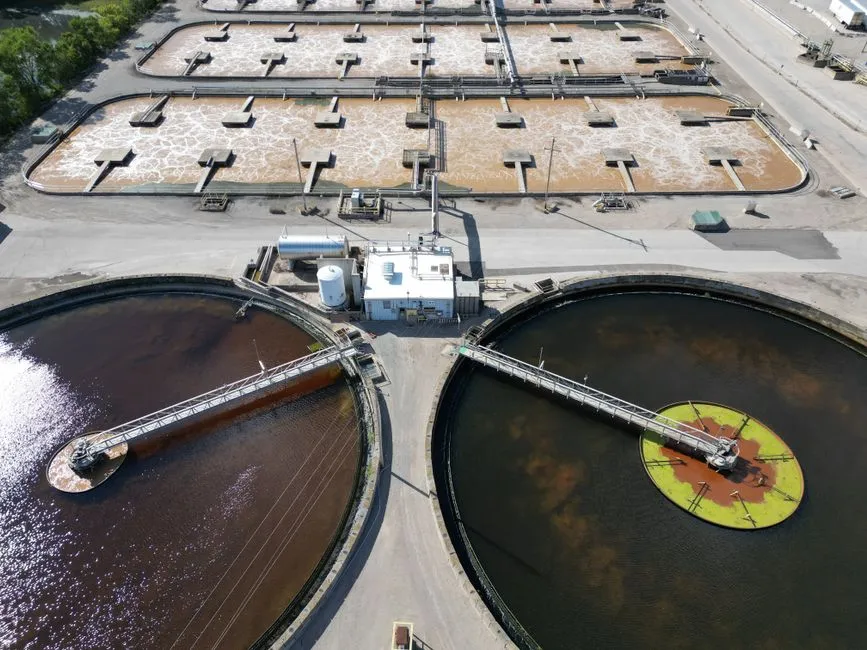
Wastewater treatment requires a sequenced approach where each stage must meet specific targets before the effluent progresses.
Step 1 — Equalization. A flow and load equalization tank sized for roughly 24-hour retention, with mechanical mixing and gentle aeration, dampens batch production peaks and CIP slugs. Without EQ, downstream pH probes and biological units get shocked, and slug loads become permit violations (per 40 CFR 403.8(b) slug control requirements).
Step 2 — pH adjustment. PLC-controlled acid/caustic dosing into the equalized stream drives pH into the 5.0–11.0 range required by both 40 CFR Part 439 and Charlotte Water's local limit. Inline pH probes with redundant sensing are standard; failure modes dump to off-spec containment, not to the sewer.
Step 3 — DAF. Dissolved air flotation is the workhorse for toilet preparations lines carrying surfactants, oils, and emulsified residue, and for pharmaceutical lines carrying colloidal API carryover. A properly designed DAF system for toilet preparations and pharmaceutical surfactant removal typically removes 60–90% of oil & grease and 50–80% of TSS in a single stage, with float skimmings routed to a dedicated sludge-handling drum.
Step 4 — Biological treatment. Activated sludge or an MBR reduces soluble BOD/COD. MBR is the right answer for facilities with space constraints—typical MBR footprints run roughly 60% smaller than conventional activated sludge at the same loading, and the membrane barrier produces a high-quality clarified effluent that helps meet the tighter monthly-average TSS limits. An MBR system for biological treatment of pharmaceutical wastewater also retains most biomass on the process side, which limits API breakthrough in the clarified stream.
Step 5 — Clarification / Polishing. A lamella clarifier for post-biological polishing captures biomass carryover and brings TSS below the 40 CFR Part 439 monthly-average target before disinfection. Lamella plates provide a small footprint with high equivalent settling area.
Step 6 — Disinfection. A ClO₂ generator for final disinfection before sewer discharge is favored over chlorine gas because ClO₂ forms fewer chlorinated by-products and breaks down cleanly, which matters when total residual chlorine is restricted downstream. If the local IU program includes microbiological limits, this stage satisfies them; if it does not, the generator is still useful for slug-event control. After disinfection, the stream goes to the discharge sampling point, then to the sanitary sewer.
Sludge handling, in parallel: DAF float and waste activated sludge from the clarifier are typically dewatered (often via a belt press or screw press), and the cake is hauled off as a non-hazardous industrial waste unless characterization places it under RCRA hazardous waste rules.
Sampling, Slug Control Plans, and What Charlotte Water Actually Inspects
Effluent numbers are not enough to ensure compliance, as inspectors require documentation of both monitoring and emergency preparedness.
24-hour composite sampling at the discharge sampling point, plus grab samples for parameters that composites miss (pH, oil & grease, total residual chlorine, any TTO fraction). Sampling location, frequency, and preservation are specified in the IU permit; deviation is a violation in itself.
Discharge Monitoring Reports (DMRs) go to Charlotte Water, typically monthly, with chain-of-custody for any third-party lab. A missed DMR is treated as a non-reporting violation and can trigger an enforcement action under 40 CFR 403.8 even when the effluent is clean.
Slug Control Plan is mandatory for any IU with potential batch releases—any pharmaceutical preparations or toilet preparations plant that runs batch reactors or CIP cycles qualifies. The plan must include a chemical inventory, a worst-case spill scenario, automatic diversion to containment sized for the worst-case volume, and the operator procedure to execute the diversion. Charlotte Water reviews this plan as part of permit issuance and during inspections.
BMP/P2 plan: a pollution prevention plan covering solvent substitution, solvent recovery (which reduces load on the biological stage), spill prevention, and employee training. The P2 plan is not just paperwork—recovered solvent lowers both surcharges and the size of the biological stage the plant has to install. The same regulatory logic applies to chemical plant pretreatment limits near other U.S. municipalities and to the 40 CFR Part 469 semiconductor pretreatment limits, where local POTW authority and federal categorical standards operate in the same two-layer pattern.
Frequently Asked Questions
Which EPA categorical standard applies to a pharmaceutical preparations plant near Mooresville?
40 CFR Part 439 (Pharmaceutical Manufacturing Point Source Category). Subcategory determines which specific limits apply—fermentation, extraction, chemical synthesis, formulation, finishing, packaging, and research each have separate tables in the rule.
Does a toilet preparations plant (SIC 2844) fall under 40 CFR Part 439?
Partially. SIC 2844 facilities typically route through the formulation and finishing subparts of 40 CFR Part 439, and may also trigger 40 CFR Part 463 where polymer chemistry is in scope. Local Charlotte Water IU limits apply in addition to whichever federal categorical standard applies.
What is the Total Toxic Organics (TTO) limit under 40 CFR Part 439?
2.13 mg/L as a daily maximum summation limit across the defined list of toxic organic priority pollutants. Any individual compound detected above its detection limit contributes to the summation.
How does a Slug Control Plan interact with the IU permit at Charlotte Water?
It is a permit condition. The plan must include a chemical inventory, worst-case spill volume, automatic diversion, and operator procedure. Charlotte Water reviews the plan during permit issuance and during routine inspections, and a missing or inadequate plan is grounds for permit revocation under 40 CFR 403.8.
Can a facility substitute MBR for activated sludge in the biological step?
Yes. MBR produces a higher-quality clarified effluent in a smaller footprint—typically around 60% smaller than conventional activated sludge at the same loading—and is commonly used for space-constrained pharmaceutical preparations and toilet preparations plants. The membrane barrier also limits biomass-API breakthrough into the clarified stream.