Why Legacy Wastewater Is the Silent Liability in Industrial Acquisitions
Effluent treatment plant (ETP) due diligence for a Unilever factory acquisition is a three-phase engineering and compliance audit of the target's wastewater infrastructure, designed to surface legacy wastewater liabilities before closing. Phase I screens permits, ETP design capacity versus actual hydraulic and organic load, and 36-month compliance records; Phase II executes an ETP Assessment Audit using a 47-point checklist spanning documents, operations, sludge disposal, and emergency response, paired with independent effluent sampling; Phase III quantifies remediation cost, redesigns the treatment train, and structures indemnities. Each finding must be classified as a deal-breaker, price-adjustment item, indemnity trigger, or post-close CapEx line, not a generic "compliance list."
Effluent non-compliance is structurally different from other environmental liabilities because penalties are uncapped in most jurisdictions and the remediation obligation is open-ended. For an acquirer bound by the Unilever Sustainable Living Plan and its Climate Transition Action Plan, a legacy ETP that fails to meet the buyer's internal water-reuse key performance indicator is a strategic liability even where the asset is legally compliant. The Tatapuram reference illustrates the asset intensity a buyer is inheriting: a 132 m³/day flow envelope carrying COD 1,992 mg/L, BOD 1,219 mg/L, TSS 75 mg/L, and pH 5.0–9.0, processed through a 7 m × 7 m equalization tank and a 90 KLD aeration basin (per S2 documentation). The MoEF Technical EIA Guidance Manual for CETPs (S3) provides the regulatory backbone for what "compliant operations" actually means in jurisdictions where Unilever operates. Buyers who treat the ETP as a generic line item rather than a deal-risk instrument absorb the cost of any gap in this stack, and the parallel M&A due-diligence playbook for a food-industry acquirer shows how the same framework applies across FMCG sub-sectors.
Phase I — Pre-LOI Desktop ETP Screen (Days 1 to 7)
Phase I is a low-cost desktop filter that produces a go/no-go decision and a list of red flags to seed the SPA negotiation. No external sampling occurs in this phase; the deliverable is a document-based risk heat-map covering permit status, consent-to-operate transferability, and historical compliance.
The screen pulls and reviews: the factory wastewater discharge permit (Consent to Establish / Consent to Operate under the Water Act, 1974), CETP membership documentation where applicable, 36 months of ETP inlet and outlet monitoring records, environmental clearance under the EIA Notification, 2006 if applicable, and any prior show-cause notices or closure directions from the State Pollution Control Board. Cross-check consented effluent volume against actual production; if the factory discharges 132 m³/day (per S2 Tatapuram) but is permitted for 80 m³/day, that is a Phase I red flag for unauthorized expansion. The acquirer should also request the last 12 months of ETP inlet and outlet analytical records, all hazardous-waste manifests covering sludge, spent oil, and ETP chemical waste, and any third-party Environmental Site Assessment Phase I already completed. Findings map to deal consequence: deal-breaker (operating without valid consent), price-adjustment (consented capacity too small for buyer's planned production), or post-close monitoring. For a side-by-side view of what Phase I yields in a comparable industrial setting, the pretreatment compliance playbook for industrial plants walks through the same permit and flow reconciliation discipline for a U.S. pretreatment audience.
| Phase I Document | Source | Red-Flag Trigger | Deal Consequence |
|---|---|---|---|
| Consent to Operate (CTO) | State PCB | Expired, suspended, or in renewal > 90 days | Deal-breaker or escrow |
| Consented vs. actual effluent volume | Production log + permit | Actual > 110% of consented KLD | Price-adjustment + indemnity |
| 36-month compliance record | PCB returns / self-monitoring | > 2 consent-limit exceedances | Escrow or price-adjustment |
| Show-cause / closure notices | State PCB / NGT | Open matter or NGT order | Deal-breaker until withdrawn |
| Sludge manifests | Authorized contractor | Missing or non-NABL lab reports | Indemnity + Phase II probe |
| EIA clearance (if applicable) | MoEF / SEIAA | Non-listed expansion post-clearance | Phase II legal opinion |
Phase II — ETP Assessment Audit and Independent Sampling (Weeks 2 to 6)
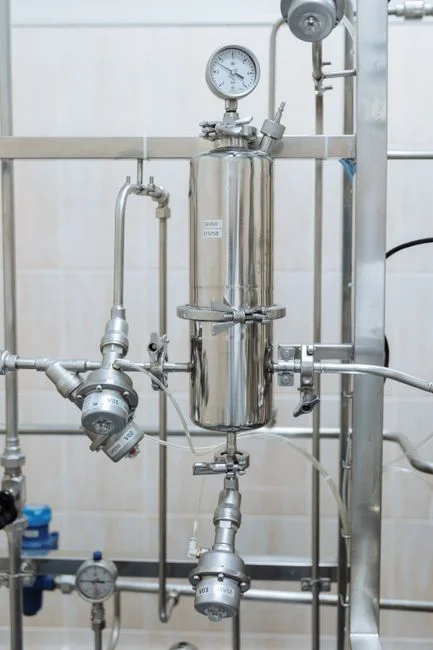
Phase II walks the deal team through a field-level technical audit using the ETP Assessment Audit Checklist (S4) as scaffolding, expanded to surface legacy liabilities rather than just verify current compliance. The work is performed by a Qualified Professional (QP) supported by a NABL-accredited third-party laboratory, and the output is a finding-by-finding dossier that flows directly into Phase III quantification.
Section I — General documents. Compile the list of ETP equipment, spare parts inventory, water meter locations, wastewater testing instruments, pump working hours, the discharge permit, the drainage plan, production records, and any future expansion plan. Gaps are red flags: a note such as "spare parts not available" (per S4) is an immediate operational risk because a single failed blower can disable biological treatment in under 24 hours.
Section II — ETP design documents. Obtain the process flow diagram, design flow rate, commissioning analysis from the constructor, and the design document submitted to the regulator. The Tatapuram reference (S2) is a useful benchmark: equalization → dual aeration → clarification → flash mix → clariflocculation → sand filter → carbon filter, with a 132 m³/day design envelope handling COD 1,992 mg/L and BOD 1,219 mg/L. Compare the target's design hydraulic and organic loading against the last 12 months of actual flow and COD data; deviation of more than 20% in either direction is a material finding.
Section III — Water consumption and wastewater volume. Reconcile 12-month water bills, source breakdown, and ETP inlet/outlet flow records. Discrepancy between water intake and discharged volume greater than 10% suggests an undocumented release path; the same 10% rule is the working threshold for Phase II escalation.
Section IV — ETP operations. Review the O&M manual, O&M logs, chemical dosing records, on-site wastewater quality test records, instrument calibration certificates, the internal calibration procedure, and the action plan for excursions. Missing or expired calibration is a data-integrity risk that undermines the seller's representations on historical compliance.
Section V — External documents. Pull the sludge contractor agreement, contractor authorization, sludge disposal method, third-party lab reports, and lab accreditation (NABL / ISO 17025). Legacy sludge liability is most often discovered here, and the disposal chain is the single most common source of uncapped indemnity claims in Indian FMCG deals.
Section VI — ETP organization. Verify the org chart, operator experience files, external training certificates, and internal training records. Under-trained operators are a Phase II red flag even where the hardware is sound, because biological treatment is operator-driven.
Section VII — Emergency response. Audit the factory risk assessment, the ETP emergency response plan, drill records, and the ETP-failure action plan. Absence of drill records within the last 12 months is itself a finding, not a procedural detail.
Commission a NABL-accredited lab to sample ETP inlet, outlet, and key inter-stage points (typically post-equalization, post-aeration, post-clarifier) across at least one full diurnal production cycle. Compare results against consent limits and against the ETP design effluent guarantee; deviation greater than 15% on COD, BOD, or TSS flags either biological stress or a bypass. A QP who has worked on retrofit and upgrade projects in 2026 will recognize the same diurnal-sampling discipline that supports any capacity-expansion decision.
| S4 Section | Key Line Items | Phase II Finding Trigger | Legacy-Liability Lens |
|---|---|---|---|
| I — General documents | Equipment list, spare parts, water meters, instruments | "Spare parts not available" (S4 verbatim) | Single-point-of-failure risk |
| II — Design documents | PFD, design flow, constructor analysis, regulator submission | Design flow not submitted to authority | Undocumented expansion path |
| III — Water & volume | 12-month bills, inlet/outlet, breakdown | Intake–discharge gap > 10% | Undocumented release |
| IV — Operations | O&M manual, dosing, calibration, excursion plan | Calibration certificates outstanding | Data-integrity / warranty risk |
| V — External documents | Sludge contractor, disposal method, NABL lab | No manifest or non-NABL lab | Unbounded sludge liability |
| VI — Organization | Org chart, operator files, training records | No external training records | Operator-driven failure risk |
| VII — Emergency response | Risk assessment, ERP, drill records, failure plan | No drill in last 12 months | Regulatory exposure on incident |
Phase III — Legacy Liability Quantification and Deal Structuring
Phase III translates Phase II findings into numbers the corporate-development team can use to negotiate price, indemnity, or escrow. The work is a structured exercise in three dimensions: probability (does the finding recur under buyer operation?), severity (fine, remediation, shutdown, brand impact), and detectability (will the seller's warranties catch it post-close?).
Common legacy liabilities in Indian FMCG and consumer-goods factory ETPs cluster into three patterns. First, historical sludge dumped on-site rather than disposed through an authorized contractor — a long-tail liability because contaminated soil can trigger remediation obligations years after the discharge stopped. Second, absence of inlet segregation so sanitary and process streams mix, which over-loads the biological stages and can push the ETP past its design envelope by 30–50%. Third, ZLD compliance triggered by upstream groundwater regulation or local State PCB directives, which forces incremental tertiary treatment (RO or MBR) and a brine management system that the original design did not accommodate. Each of these patterns is a deal-mechanic decision: deal-breaker (withdraw), specific indemnity in the SPA (capped or uncapped), escrow retention for an agreed remediation period, or post-close CapEx line in the 100-day plan.
The strategic overlay matters. Unilever's own climate and water-stewardship commitments, anchored in the USLP and the Climate Transition Action Plan, raise the bar above statutory consent compliance. A legacy ETP that cannot meet the buyer's internal water-reuse KPI is a strategic liability even where it is legally compliant, and that gap should be priced into the deal, not absorbed into goodwill. The forward-looking global compliance targets for effluent quality are the standard against which a buyer's internal KPIs are now being set, and they tighten faster than most legacy ETPs can be retrofitted without staged CapEx.
Severity Scoring Matrix — Turning Findings into Deal Language
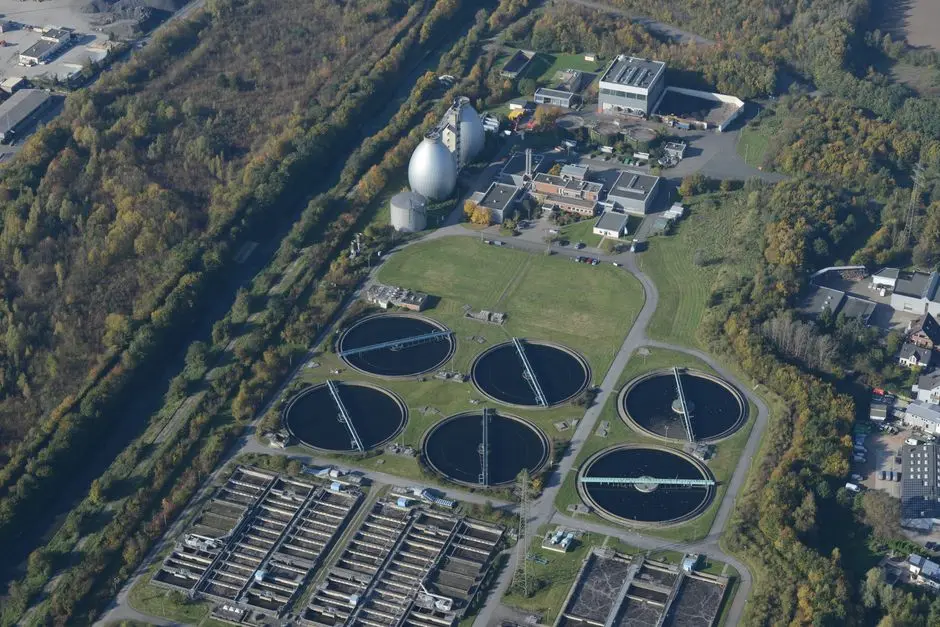
A consistent scoring rubric is the bridge between engineering and deal language. The 3×3 matrix below uses Likelihood (Low / Med / High) and Severity (Low / Med / High) to assign every Phase II finding to a deal consequence: deal-breaker, price-adjustment or escrow, or post-close monitoring. The decision rule: any High × High finding holds signing until it is remediated, indemnified, or escrowed.
| Likelihood ↓ / Severity → | Low (warning / minor non-compliance) | Med (consent excursion, single fine) | High (shutdown, NGT, criminal exposure) |
|---|---|---|---|
| High (recurs under buyer operation) | Price-adjustment or escrow | Specific indemnity in SPA | Deal-breaker |
| Med (recurs under stress) | Post-close monitoring | Price-adjustment or escrow | Specific indemnity in SPA |
| Low (one-off / historical) | Warranty only | Post-close monitoring | Price-adjustment or escrow |
Applied to canonical ETP findings: a missing consent is High × High and a deal-breaker; ETP operating over design capacity is typically Med × High and an indemnity item; sludge without manifests where the volume is material is High × High; outdated calibration is Low × Low and a post-close monitoring item; no operator training records is High × Med and a price-adjustment; flow meter discrepancy greater than 10% is Med × High and an indemnity trigger. The matrix keeps the deal team from re-litigating the same finding at every meeting, and it gives the seller's counsel a single document to push back against.
Post-Close 100-Day ETP Integration Plan
The 100-day plan retires residual liability and stabilizes operations under buyer ownership. Days 0–30 are about title and compliance continuity: lock in all consents in the buyer name, freeze any pending show-cause matters, and secure sludge handling contracts. Days 31–60 establish a defensible data baseline: install a real-time online effluent monitoring system at the ETP outlet if not present, calibrate all existing instruments, and run a 30-day side-by-side third-party sampling campaign to confirm consent compliance under new ownership. Days 61–100 convert the baseline into a forward plan: commission a capacity-audit study comparing current load to the buyer's planned production growth, and produce a phased CapEx roadmap covering pretreatment upgrade, biological capacity expansion, and tertiary or ZLD if the regulatory trajectory requires it.
The treatment-train choices for the CapEx roadmap should be benchmarked against current technology. An MBR membrane bioreactor system is the typical upgrade path for water-reuse and tightened consent limits, with a smaller footprint than conventional activated sludge at the same organic loading. For sludge handling, a plate-and-frame filter press reduces sludge volume by 75–80% versus drying beds and is the standard dewatering step that pairs with authorized disposal. CapEx ranges are project-specific; the right discipline is to scope cost in the 100-day plan, not to back-fit a number from a sales quotation into the SPA.
Frequently Asked Questions
How long does an ETP due-diligence for an industrial acquisition typically take, and what does it cost?
Phase I runs 5–7 working days, Phase II runs 4–6 weeks including the diurnal sampling campaign, and Phase III runs 2–3 weeks in parallel with the SPA negotiation; the total elapsed time is typically 8–10 weeks. Cost is driven by sampling scope, QP day rate, and lab fees, and is generally a fraction of one percent of enterprise value for a mid-cap industrial target.
Is a Phase II Environmental Site Assessment mandatory for an industrial acquisition?
Phase II ESA is not universally mandatory, but the IFC Performance Standards and most lender EHS frameworks treat it as the minimum for any brownfield industrial acquisition, and ASTM E1903 is the working standard for the fieldwork. Buyers that skip Phase II absorb full environmental liability on closing under most "as-is" SPA structures.
How should undocumented historical sludge be handled in the deal?
Undocumented sludge should trigger a Phase II probe for soil and groundwater impact, a specific indemnity in the SPA (typically uncapped for environmental matters), and an escrow retention sized to the estimated remediation cost plus a contingency margin. The disposal chain is the single most common source of uncapped indemnity claims in Indian FMCG deals and should never be waved through on seller's warranty alone.
Does the ETP consent to operate transfer automatically to the buyer?
No. Under the Water Act, 1974 and the Hazardous Waste Management Rules, consents are granted to a specific party and must be re-applied for or formally transferred by the State PCB on change of ownership; the buyer should treat consent transfer as a Day 0–30 action item in the 100-day plan, not as a closing-day formality.
What happens if the ETP is found to be undersized for the buyer's planned production post-close?
The finding should have been priced into the deal as a price-adjustment or escrow in Phase III; if it surfaces post-close, the buyer's recourse is the SPA indemnity subject to the survival period and the disclosure schedule. Operationally, the corrective path is a capacity-audit study in the 100-day plan followed by staged biological and tertiary capacity expansion, sized to the buyer's production growth curve rather than the seller's historical load.