Why Cheyenne Chemical Plants Operate Under a Dual Federal-Local Pretreatment Regime
Chemical plants discharging to the City of Cheyenne sewer system must satisfy a stacked regulatory frame: federal pretreatment standards under EPA's 40 CFR Part 403, administered locally by the Board of Public Utilities (BOPU) Industrial Pretreatment Program (IPP). BOPU acts as the Control Authority for industrial users (IUs) whose wastewater flows to the publicly owned treatment works (POTW), and the IPP is the mechanism through which federal categorical standards and site-specific local limits are enforced (per BOPU, cheyennebopu.org IPP overview).
Under 40 CFR 403.3(j), pretreatment standards are pollutant discharge limits that apply to industrial users of any nondomestic source of indirect discharge. These standards are not voluntary — they are the legal floor. On top of that floor, the POTW imposes local limits: site-specific numeric or narrative effluent limits, including best management practices (BMPs), developed under 40 CFR 403.5(c) to protect the collection system, sludge-handling operations, and receiving waters from pass-through or interference (per EPA, epa.gov pretreatment standards and local limits).
Pass-through and interference have precise regulatory definitions. Pass-through under 40 CFR 403.3(p) is a discharge that exits the POTW into U.S. waters in quantities or concentrations that cause a violation of the POTW's NPDES permit. Interference under 40 CFR 403.3(k) is a discharge that inhibits or disrupts the POTW, its treatment processes, or its sludge processes, and is a cause of an NPDES or sludge-disposal violation. Either finding is an enforceable event.
EPA requires affected POTWs to perform annual reviews and periodic reevaluations of their local limits. A 2022 limit set is not automatically a 2026 limit set — pollutant loading, hydrology, and treatment-plant capacity change, and so must the limits. For a chemical plant, the practical consequence is that the design basis for the treatment train must be revalidated against current BOPU local limits at least annually, and the IU discharge permit must be treated as a living document, not a one-time artifact.
The BOPU Enforcement Reality: A Documented Case and What It Signals
BOPU publicly documented an enforcement action against an industrial user that discharged a bacterium into the city sewer system, triggering an IPP response (per Wyoming News, BOPU: Industrial user discharged bacterium into city sewer system). The case is significant for chemical-plant compliance engineers because it establishes that biological or microbial contamination — not just classic chemical parameters — falls within BOPU's enforcement scope.
For a chemical plant, the operational implication is direct: source segregation, validated disinfection with documented kill rates, and chain-of-custody sampling are baseline expectations, not optional upgrades. A plant that meets every numeric local limit but cannot demonstrate microbial compliance at the BOPU monitoring station is exposed to the same class of finding. The case also reinforces that 40 CFR 403.5's general prohibited discharge standards — including prohibitions on discharges that cause interference — are interpreted broadly enough to cover organisms, not just analytes on a lab sheet.
The rest of this article is framed as the engineering response a chemical plant would implement to avoid that class of finding: a documented, parameter-anchored treatment train with verifiable disinfection and a self-monitoring report (SMR) workflow that BOPU inspectors can audit on demand.
Mapping a Chemical Plant's Wastewater to BOPU Pollutant Categories
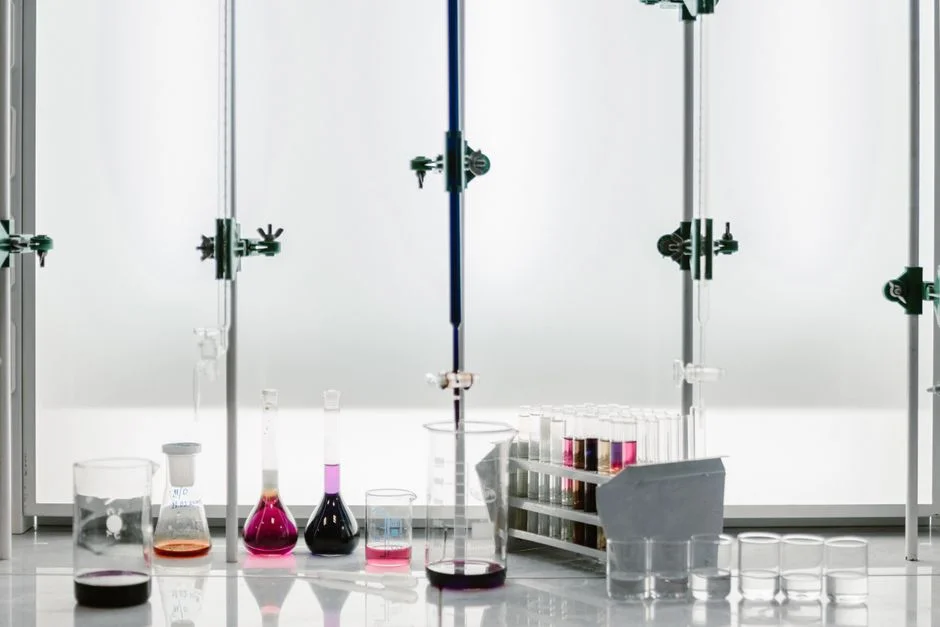
The first engineering task is not equipment selection — it is stream mapping. The general prohibited discharge standards in 40 CFR 403.5 set the categorical baseline and include flammable or explosive substances whose closed-cup flashpoint is below the POTW's limit, along with discharges that create a fire or explosion hazard, corrosive discharges that exceed pH bounds, and obstructions that may cause damage to the POTW (per EPA, epa.gov pretreatment standards overview).
BOPU-style local limits typically cover pH, total suspended solids (TSS), oil and grease, chemical oxygen demand (COD), biochemical oxygen demand (BOD), ammonia, sulfides, phenols, cyanide, and a panel of heavy metals — commonly Cu, Pb, Zn, Cr, Ni, Cd, and Hg — whose numeric values are derived from the POTW's Maximum Allowable Headworks Loading (MAHL). For each metal, the local limit at end-of-pipe is set so that the IU's mass loading, combined with domestic and other industrial loadings, does not exceed what the downstream plant can remove without violating its own NPDES permit or contaminating biosolids.
A chemical plant's effluent inventory should be categorized by source: process reactions (often the most concentrated streams), equipment cleaning (CIP rinses, solvent flushes), cooling-tower blowdown (high TDS, scale inhibitors, biocides), lab drains (small volume, high variability, often containing solvents or mercury), and stormwater (which becomes industrial once it contacts process areas). Each source contributes a different pollutant signature and may require its own local-limit line item. Streams that are RCRA-listed, high-TDS, or contain VOCs drive additional decisions on explosion-relief, equalization tank venting, and air-emission control — decisions that sit on top of the liquid-discharge limits.
The output of this exercise is a pollutant-by-stream matrix that becomes the influent design basis for the treatment train. Without that matrix, equipment selection is guesswork.
The 2026 Pretreatment Train: Unit Operations From Influent to BOPU Connection
A chemical-plant treatment train designed to meet BOPU's daily-average and instantaneous-maximum local limits typically runs through seven engineered steps. Each step addresses a specific 40 CFR 403 standard or local-limit parameter.
- Mechanical screening. A rotary mechanical bar screen removes rags, plastics, and fibrous debris that would damage downstream pumps, skimmers, and membranes. Standard units handle 50–3,000 m³/h depending on bar spacing and channel width.
- Flow and load equalization. A buffered equalization tank with mechanical mixing and level-controlled transfer dampens hydraulic and organic shocks so the biological step downstream sees a stable influent. This step is critical because BOPU local limits are typically expressed as both daily-average and instantaneous-maximum values — a slug discharge can violate the instantaneous ceiling even if the 24-hour composite passes.
- pH adjustment. A PLC-controlled chemical dosing system delivers acid or alkali to bring pH into a treatable range — typically 6.5–8.5 for biological polishing — and stabilizes metals in solution for subsequent precipitation in the DAF stage.
- Coagulation, flocculation, and dissolved air flotation (DAF). A dissolved air flotation system removes suspended solids, emulsified oils, and colloidal matter. Micro-bubble DAF is the workhorse for oil and grease reduction in chemical-plant effluents, with hydraulic retention times of 20–40 minutes and typical air-to-solids ratios of 0.01–0.05 by weight.
- Biological treatment. An MBR membrane bioreactor or conventional activated-sludge system targets COD and BOD reduction. MBR delivers near-reuse-quality effluent with sub-1 μm filtration and reduces footprint by approximately 60% versus conventional activated sludge — a meaningful gain when the chemical plant is land-constrained.
- Polishing and disinfection. An on-site chlorine dioxide generator addresses residual microbial counts — the lesson from the BOPU bacterium case — and produces a broad-spectrum kill compatible with EPA drinking-water and EU drinking-water quality frameworks. On-site generation avoids the transport and shelf-life issues of bulk hypochlorite.
- Sludge handling. A plate and frame filter press dewaters DAF float and biological waste sludge to a transportable cake (typically 25–35% dry solids) before off-site disposal.
The full sequence from screening to filter press is documented in equivalent process trains for chemical-plant pretreatment limits in other U.S. jurisdictions, and the DAF step in particular follows the O&M discipline described in the DAF O&M protocol reference. The choice between DAF and a conventional clarifier at step 4 is a real engineering decision; the trade-offs are detailed in the DAF vs clarifier for chemical-plant wastewater buyer's guide.
Parameter Compliance Table: Typical Local Limits vs. Achievable Effluent

The table below is a reference framework, not a substitute for the current BOPU local limits. The "Typical BOPU local limit" column reflects standard POTW practice; the actual numeric values must be obtained from BOPU for the specific IU discharge permit. The "Achievable effluent" column reflects performance ranges typical of the seven-step train above when properly sized and operated.
| Pollutant / parameter | Typical BOPU local limit at end-of-pipe | Achievable effluent after the treatment train |
|---|---|---|
| pH (instantaneous) | 5.0–10.0 (confirm with BOPU) | 6.5–8.5 |
| Total suspended solids (TSS), mg/L | ~200–400 (confirm with BOPU) | ≤5 (MBR) / ≤30 (DAF + activated sludge) |
| Oil & grease, mg/L | ~50–100 (confirm with BOPU) | ≤10 |
| COD, mg/L | ~300–600 (confirm with BOPU) | ≤50 |
| BOD, mg/L | ~200–400 (confirm with BOPU) | ≤10 |
| Total copper (Cu), mg/L | ~1.0–3.0 (confirm with BOPU) | ≤0.1 |
| Total lead (Pb), mg/L | ~0.1–0.5 (confirm with BOPU) | ≤0.05 |
| Total zinc (Zn), mg/L | ~1.0–3.0 (confirm with BOPU) | ≤0.5 |
| Total chromium (Cr), mg/L | ~1.0–2.0 (confirm with BOPU) | ≤0.1 |
| Total nickel (Ni), mg/L | ~1.0–2.0 (confirm with BOPU) | ≤0.1 |
| Total cadmium (Cd), mg/L | ~0.1–0.3 (confirm with BOPU) | ≤0.02 |
| Total mercury (Hg), mg/L | ~0.001–0.01 (confirm with BOPU) | ≤0.001 |
| Sulfides (as S), mg/L | ~1–10 (confirm with BOPU) | ≤0.5 |
| Cyanide (total), mg/L | ~0.2–1.0 (confirm with BOPU) | ≤0.1 |
| Phenols, mg/L | ~0.1–0.5 (confirm with BOPU) | ≤0.1 |
| Ammonia (as N), mg/L | ~10–30 (confirm with BOPU) | ≤5 |
| Flashpoint, °F (closed cup) | ≥140 (per 40 CFR 403.5) | ≥140 |
The table is the single reference document that justifies why a six- or seven-step train is required, not a shorter sequence. Each unit operation exists to move one or more rows from the "typical limit" column to the "achievable effluent" column with adequate safety margin.
Monitoring, Self-Monitoring Reports, and BOPU Inspection Readiness
Engineering compliance is only half of a BOPU-compliant posture; the documentation and monitoring chain is the other half. Industrial users under IPPs are typically required to submit periodic Self-Monitoring Reports (SMRs) — frequency depends on permit classification and pollutant load — and to maintain chain-of-custody records for every compliance sample. An SMR that is missing signatures, sampling times, or preservation documentation is treated as a non-submission, not a clerical error.
Effluent sampling must occur at a BOPU-accessible, clearly labeled monitoring station equipped with flow measurement (typically a Parshall flume or magnetic flow meter), continuous pH and temperature probes, and an automatic composite sampler. The station should be located at the end-of-pipe connection to the POTW collection system, which is the regulatory point of compliance (per 40 CFR 403.5(c), per EPA, epa.gov local-limits overview).
Discharge characterization must address the general prohibited discharge standards in 40 CFR 403.5 — including flashpoint for flammable constituents — not just the numeric local limits. A chemical plant that monitors metals and COD but ignores flashpoint is exposed to a 40 CFR 403.5(b)(6) finding regardless of its numeric compliance. BOPU may conduct on-site inspections, review records, and require corrective action; a plant that cannot produce a current SMR on demand is treated as out of compliance even if the actual effluent meets every limit.
2026 Equipment Selection and Cost Framework for the Critical Unit Operations
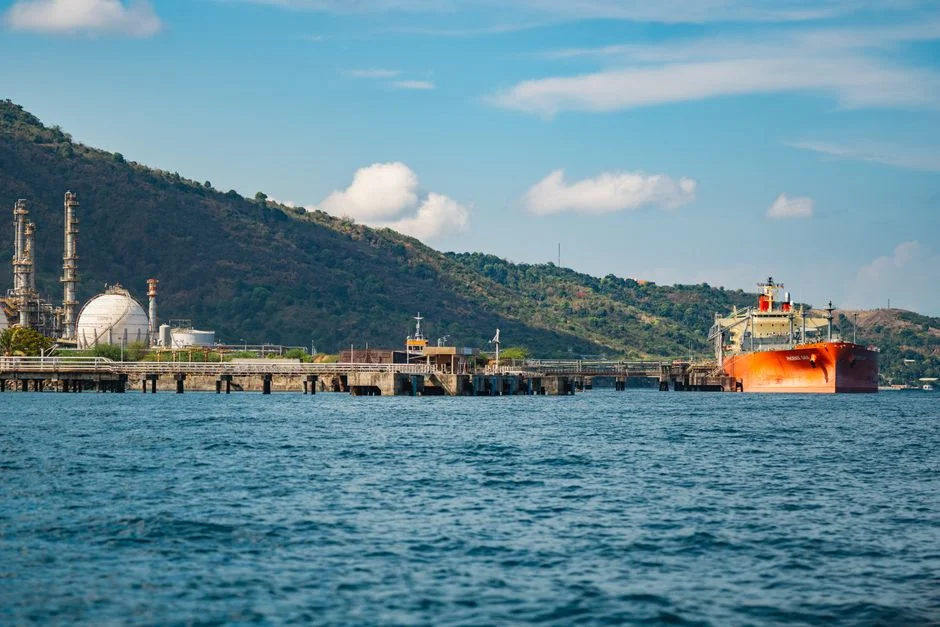
The capex conversation for a 2026 BOPU-compliant chemical-plant pretreatment system should center on the three highest-impact unit operations: DAF (oil and grease and colloidal removal), MBR or activated sludge (organic load), and on-site chlorine dioxide generation (microbial compliance, per the bacterium-discharge case). Together, these three systems typically account for 55–70% of total pretreatment capex (HydropureWater field data, 2026).
DAF selection. Micro-bubble DAF with automatic skimming, sized to the plant's peak hourly flow and oil-loading. Standard industrial DAF units span 4–300 m³/h; the sizing driver is typically oil-and-grease flux (kg/m²·h) rather than hydraulic flow alone. A chemical plant with batch discharges should size on peak flow, not average flow, to avoid floc washout during slug events.
Biological step selection. MBR is the right choice for plants with space constraints, tight local limits on TSS (often ≤10 mg/L), or a planned water-reuse downstream. MBR systems carry a roughly 30–50% capex premium over conventional activated sludge but reduce footprint by approximately 60% and produce a higher-quality effluent. For larger flows (>500 m³/day) where footprint is not constrained, conventional activated sludge with a well-designed clarifier remains cost-effective.
Disinfection selection. On-site chlorine dioxide generation in configurations from compact 50 g/h units to large industrial 20,000 g/h systems, selected to deliver the validated kill rate BOPU would expect after the bacterium-discharge case. ClO₂ has the operational advantage of maintaining efficacy across a broader pH range than free chlorine and not producing regulated trihalomethane byproducts at typical doses.
Site-specific cost drivers — soil conditions for tank foundations, influent variability requiring larger equalization volume, disposal routing for filter-press cake, and the distance to the BOPU monitoring point — typically move the final capex by ±25% from any reference budget. The cost framework in HydropureWater's other 2026 U.S. cost guides for analogous chemical-plant trains (HydropureWater field data, 2026) is a defensible anchor for early-stage budgeting, with a hard recommendation to obtain a BOPU-specific local-limit package and site-specific influent characterization before issuing a purchase order.
Frequently Asked Questions
What is the BOPU Industrial Pretreatment Program?
The BOPU Industrial Pretreatment Program (IPP) is the local regulatory framework through which the Board of Public Utilities enforces federal pretreatment standards under 40 CFR Part 403 on industrial users discharging to the Cheyenne POTW. The IPP issues IU discharge permits, sets site-specific local limits, requires self-monitoring reports, and conducts enforcement actions when IUs violate pass-through or interference standards (per BOPU, cheyennebopu.org IPP overview).
What unit operations are required for a chemical plant to meet BOPU local limits?
The standard treatment train for a chemical plant discharging to the Cheyenne sewer is screening → flow/load equalization → pH adjustment → coagulation/flocculation + DAF → biological treatment (MBR or activated sludge) → disinfection (typically on-site chlorine dioxide) → sludge dewatering with a plate-and-frame filter press. Each step addresses a specific 40 CFR 403 standard or local-limit parameter.
How often must a chemical plant submit self-monitoring reports to BOPU?
SMR frequency is set by the IU discharge permit and depends on pollutant load, discharge volume, and permit classification — typically monthly or quarterly for routine parameters, with more frequent reporting for categorical standards or plants on compliance schedules. The exact frequency must be confirmed in the current BOPU permit.
Did BOPU actually enforce a case involving a bacterium discharge?
Yes. BOPU publicly documented an enforcement action against an industrial user that discharged a bacterium into the city sewer system, triggering an IPP response (per Wyoming News, BOPU enforcement case). The case establishes microbial contamination as an enforceable pretreatment violation, not just a numeric-parameter issue.
Where can a chemical plant obtain the current BOPU local limits?
Current BOPU local limits must be obtained directly from BOPU's Industrial Pretreatment Program office, as the limits are reevaluated annually under 40 CFR 403.5(c) and may have changed since any prior published value. The IU discharge permit itself contains the binding numeric or narrative limits for that specific user.