Why Mongolia Needs Package Wastewater Treatment Plants
Mongolia faces significant wastewater management challenges, exacerbated by its unique geography and rapid industrial growth. Approximately 70% of the country is classified as arid or semi-arid, intensifying the need for efficient water reuse and conservation strategies. This scarcity makes effective wastewater treatment not just an environmental imperative but a critical economic one. The burgeoning mining and manufacturing sectors, while vital to Mongolia’s economy, are often located in remote areas where traditional municipal infrastructure is nonexistent or insufficient. This decentralization requirement drives the demand for localized, pre-engineered solutions. Compounding these issues are Mongolia's extreme climate conditions, with winter temperatures plummeting to -30°C and widespread permafrost. These factors render conventional, site-built concrete wastewater plants impractical due to freezing risks and installation complexities. Instead, insulated, above-ground or buried modular units offer a more robust and reliable alternative. Even in the capital, Ulaanbaatar, urban expansion strains existing systems, highlighting the need for flexible, scalable wastewater treatment options that can adapt to changing demands and geographical constraints.
Technical Specifications of Package Plants for Mongolian Conditions
For industrial operations in Mongolia, selecting a package wastewater treatment plant requires a focus on resilience and performance under extreme conditions. HydropureWater's WSZ Series, for example, is engineered to operate reliably in temperatures ranging from -30°C to 40°C, incorporating essential features like insulated enclosures and heated control panels to prevent freezing and ensure consistent operation. The option for buried installation, as seen with the WSZ Series, provides significant advantages by protecting the system from frost heave and allowing for landscaping or snow loading on the surface, thus minimizing the visible footprint. Critical for remote mining camps and industrial sites where personnel may be scarce, these systems feature fully automated PLC control with remote monitoring capabilities, enabling efficient oversight and management from a distance. Flow capacities for these units typically range from 1 to 80 m³/h, with scalability achieved through the parallel deployment of multiple units to accommodate expanding operational needs. The effluent quality consistently meets Mongolia’s National Drinking Water & Sanitation Program standards, typically achieving BOD levels of ≤20 mg/L and TSS levels of ≤30 mg/L, ensuring compliance and enabling potential water reuse.
| Parameter | Specification Range | Notes |
|---|---|---|
| Operating Temperature | -30°C to 40°C | Requires insulation and heated components |
| Flow Capacity (per unit) | 1–80 m³/h | Scalable with parallel units |
| BOD Removal Efficiency | 92–97% | For A/O Biological Contact Oxidation |
| TSS Removal Efficiency | 90% | For A/O Biological Contact Oxidation |
| Effluent Quality (BOD) | ≤20 mg/L | Meets national standards |
| Effluent Quality (TSS) | ≤30 mg/L | Meets national standards |
| Installation Type | Above-ground or Buried | Buried offers frost protection and surface utility |
| Automation Level | Fully Automatic PLC Control | Includes remote monitoring |
Top 4 Package Plant Technologies for Industrial Use
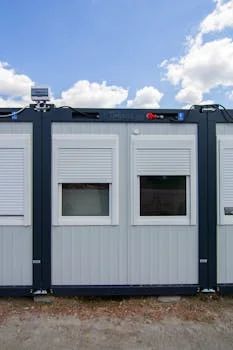
Mongolia's industrial sector requires effective wastewater treatment solutions. The A/O Biological Contact Oxidation system, exemplified by the WSZ Series, offers a robust and cost-effective solution for general domestic and light industrial wastewater, achieving 92–97% BOD removal and 90% TSS removal. For applications where water scarcity is a primary concern, or higher effluent quality is required for reuse, a MBR Membrane Bioreactor system is often the superior choice. These systems utilize advanced membrane filtration to achieve <1 μm particle removal, producing effluent suitable for reuse, and typically occupy up to 60% less space than conventional methods. For industries generating significant amounts of fats, oils, and grease (FOG) or suspended solids, such as food processing or metalworking facilities, a DAF Dissolved Air Flotation system is indispensable, capable of removing over 90% of these contaminants. In situations with high debris loads from raw water sources or initial site preparation, a hybrid approach combining a Rotary Screen for pre-treatment with a subsequent biological stage like MBR can significantly enhance system longevity and performance.
| Technology | Primary Application | Key Effluent Quality | Footprint Efficiency | Cold Climate Suitability |
|---|---|---|---|---|
| A/O Biological Contact Oxidation (WSZ Series) | Domestic & Light Industrial Wastewater | BOD ≤20 mg/L, TSS ≤30 mg/L | Moderate | High (with insulation/burial) |
| MBR Membrane Bioreactor | Water Reuse, High-Strength Effluent | <1 μm filtration, high clarity | High (up to 60% smaller) | High (with insulation/burial) |
| DAF System | FOG & Suspended Solids Removal | >90% FOG & SS removal | Moderate | Moderate (requires protection) |
| Rotary Screen + MBR Hybrid | High Debris Inflows | Enhanced by pre-treatment | Moderate | High (MBR component) |
Cost, Installation & ROI for Mongolian Projects
The financial justification for investing in a package wastewater treatment plant in Mongolia hinges on a clear understanding of both capital expenditure (CAPEX) and operational expenditure (OPEX), alongside a compelling return on investment (ROI). CAPEX for these modular systems can range from $50,000 to $300,000, with the final cost dictated by the required flow rate (1–80 m³/h) and the chosen technology, such as a more advanced MBR system versus a standard A/O configuration. A significant advantage for projects in Mongolia is the dramatically reduced installation time; package plants can typically be installed within 2–4 weeks, a stark contrast to the 6–12 months often required for traditional concrete plants. OPEX is competitive, with MBR systems generally costing between $0.35–$0.65/m³ and A/O systems between $0.20–$0.40/m³, encompassing power consumption and routine maintenance. The ROI for these investments is typically realized within 3–5 years, driven by substantial savings from reduced reliance on expensive potable water procurement, avoidance of penalties for non-compliance with environmental regulations, and the potential for beneficial reuse of treated sludge. The containerized nature of many package units significantly reduces shipping costs to remote Mongolian locations by up to 30% compared to site-built alternatives.
| Cost Component | Typical Range (USD) | Notes |
|---|---|---|
| CAPEX (1–80 m³/h) | $50,000–$300,000 | Varies by technology (A/O vs. MBR) |
| Installation Time | 2–4 weeks | 60% faster than traditional plants |
| OPEX (per m³) | $0.20–$0.40 (A/O) | Includes power & maintenance |
| OPEX (per m³) | $0.35–$0.65 (MBR) | Includes power & maintenance |
| Typical ROI Period | 3–5 years | Via water savings, compliance, sludge reuse |
| Shipping Savings | Up to 30% | For containerized units to Mongolia |
How to Choose the Right System for Your Site
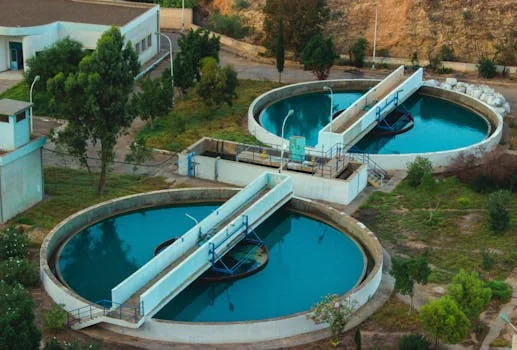
Selecting a package wastewater treatment plant for a Mongolian industrial site requires a tailored approach. Consider the specific wastewater characteristics, operational demands, and environmental context. For remote mining camps, prioritize systems with robust freeze protection, mobility for potential relocation, and high-quality effluent for water reuse. An insulated, underground, or skid-mounted MBR system is often the optimal choice. In established factory zones, focus on reliable BOD and TSS removal and automation. Cost-effective A/O systems, such as the WSZ Series, are well-suited for these applications. For specialized industrial facilities like hospitals or clinics, integrating a disinfection module, such as an ozone or chlorine dioxide generator, into the treatment train is essential. For remote areas with limited access to skilled maintenance personnel, select a fully automatic, low-maintenance system with comprehensive remote diagnostics capabilities.
Frequently Asked Questions
What is a package wastewater treatment plant?
A package wastewater treatment plant is a prefabricated, modular system designed for rapid installation and automated operation.
Can package plants operate in -30°C weather?
Yes, package plants can effectively operate in sub-zero temperatures down to -30°C and below, provided they are equipped with proper insulation, buried installation, and heated components.
How much space does a 50 m³/day plant need?
A package plant with a capacity of 50 m³/day typically requires a footprint of approximately 4m x 6m.
Do these systems meet Mongolian environmental standards?
Yes, these systems are designed to meet or exceed Mongolia’s Class II discharge standards.
Are spare parts readily available in Mongolia?
While systems are engineered for minimal maintenance, critical spare parts can be pre-shipped with the main equipment delivery.
Related Equipment
The following HydropureWater products are engineered for the wastewater challenges discussed above:
- buried package wastewater treatment plant for cold climates — view specifications, capacity range, and technical data
- compact MBR system for high-quality effluent reuse — view specifications, capacity range, and technical data
Need a customized solution? Request a free quote with your specific flow rate and pollutant parameters.