
Why residential wastewater treatment in Ghana is a 2026 priority
Only about 15% of Ghana's municipal wastewater receives any treatment, leaving roughly 85% discharged untreated into primary water bodies (2025 Ghana EPA, via HydropureWater field data, 2026). This gap explains why Ghana records approximately 6,000 cholera cases annually and absorbs an estimated $120 million in healthcare costs and lost productivity each year (2024 WHO data, via HydropureWater field data, 2026). For residential developers in Accra, Kumasi, Tema, or Sekondi-Takoradi, the requirement is clear: the EPA, district assemblies, and the District Housing Authority increasingly demand an engineered package plant before approving an estate.
Centralized interceptor projects under ASIP (the Accra Sewerage Improvement Project) cannot keep pace with urban population growth in the four metro areas. Peri-urban estates in Dodowa, Prampram, Kasoa, and the Tema–Sakumono corridor are being built on land with no downstream sewer. The developer is therefore the compliance gatekeeper: the 2026 EPA effluent limits are enforced at the point of discharge, regardless of whether a trunk sewer exists. Selecting the right WSZ underground integrated sewage treatment plant or an MBR skid is now a permit precondition.
Ghana EPA 2026 effluent standards and design basis for residential systems
The Ghana EPA 2026 discharge limits set COD at ≤125 mg/L and BOD at ≤25 mg/L for municipal and residential effluent. For projects targeting reuse, the WHO unrestricted-irrigation target of <10 CFU/100 mL E. coli applies, compared to a general-discharge ceiling of <1,000 CFU/100 mL (2026 Ghana EPA, via HydropureWater field data, 2026). These standards represent the minimum requirement, as residential influent also contains pharmaceuticals, hormones, detergent metabolites, and plasticizers listed in ASTM E2717-18—meaning biological treatment alone is insufficient where irrigation reuse is intended (ASTM E2717-18R25).
The residential design basis for a Ghanaian middle-income estate assumes 150–250 L/person/day, with 5–6 persons per household and a peaking factor of 2.5–3.0 over the daily average (HydropureWater field data, 2026). Influent COD routinely exceeds 500 mg/L, the BOD/COD ratio sits at 0.5–0.6, and FOG loadings are elevated due to household-centric food preparation (HydropureWater field data, 2026). TSS spikes occur during the May–July monsoon (up 200%) and again in the November–March Harmattan, when wind-blown dust infiltrates open estate drains (HydropureWater field data, 2026). A defensible residential-cluster design must include equalization for at least 24 hours of monsoon surge and grit removal for the full 2× peak hydraulic load.
Process train: grit removal → primary → biological → disinfection
A reliable residential process train includes five unit operations, each requiring Ghana-specific design margins. Omitting any stage is the leading cause of plant failure within the first 24 months (ASIP field data, via HydropureWater field data, 2026).
| Stage | Equipment / Configuration | Ghana Design Margin | Key Performance Target |
|---|---|---|---|
| Pretreatment | Rotary bar screen, grit chamber | 3–6 mm aperture; sized for 200% TSS spike, 40% hydraulic surge | Protect downstream biology from monsoon washout |
| Primary / FOG | Two-chamber septic or stilling tank; DAF for high-FOG estates | 24–48 h HRT; scum removal upstream of aeration | Remove settleables and floatables; cut scum load on diffusers |
| Biological | A/O packaged (WSZ), SBR, or MBR | MBR at 8,000–12,000 mg/L MLSS; air scour 10–15 m³/m²/h | 95–98% COD removal; TSS <5 mg/L (MBR) |
| Disinfection | Chlorine dioxide (preferred) or UV | High-pH tropical water; CEB/CIP every 3–6 months for MBR | Meet <10 or <1,000 CFU/100 mL E. coli per WHO |
| Sludge | Plate-and-frame filter press or drying bed | Target EPA 40 CFR Part 503 Class A/B for land application | Volume reduction; pathogen control for reuse |
Pretreatment is non-negotiable: a rotary mechanical bar screen ahead of a grit chamber prevents plastics, rags, and road grit from entering biological tanks. For estates with high food-prep activity, a dissolved air flotation (DAF) system ahead of biology reduces FOG load by 60–80% and protects fine-bubble diffusers from oil fouling. The biological stage is where most Ghanaian failures occur: a buried WSZ underground integrated sewage treatment plant suits 30–150 m³/day clusters and remains unobtrusive, while an MBR membrane bioreactor system is better for flows above 150 m³/day where reuse is the goal. Disinfection typically uses a chlorine dioxide generator at $0.05–$0.10/m³ OPEX (HydropureWater field data, 2026)—preferred over chlorine gas in high-pH tropical water. Sludge handling defaults to a plate-and-frame press for estates under 500 m³/day to minimize hauling costs.
Residential-cluster packaged plant selection matrix (5–500 m³/day)
Cluster size, land availability, and reuse intent determine the appropriate technology. The following matrix matches Ghana’s most common residential scales to the right packaged configuration.
| Cluster Daily Flow | Homes Served | Recommended Configuration | Reuse Outcome | Land Footprint |
|---|---|---|---|---|
| 5–30 m³/day | <100 homes | Septic tank + anaerobic filter + constructed wetland, or buried WSZ A/O | Subsurface drip irrigation | Smallest; partly above-grade |
| 30–150 m³/day | 100–500 homes | Underground WSZ A/O or SBR with ClO₂ polishing | Landscape irrigation, toilet flushing | Compact; fully buried to suppress odor |
| 150–500 m³/day | 500–1,500 homes | MBR with submerged PVDF flat-sheet membranes (<1 μm) | Unrestricted irrigation per WHO | 40–60% smaller than CAS at the same load |
At the small end, a septic tank plus a constructed wetland offers the lowest CAPEX and requires no daily operator. From 30–150 m³/day, a buried WSZ underground integrated sewage treatment plant is the standard choice: it preserves landscaping, eliminates odor complaints, and meets the 2026 EPA BOD ≤25 mg/L with ClO₂ polishing (HydropureWater field data, 2026). Above 150 m³/day, the MBR membrane bioreactor system is the only configuration that achieves the WHO <10 CFU/100 mL unrestricted-irrigation target while occupying 40–60% less land than conventional activated sludge (HydropureWater field data, 2026). Domestic-scale trickle-filter plants—such as the 90 m³/day system at Kumawu and Fomena hospitals and the 16 m³/day plant at a Sekondi-Takoradi apartment complex—serve as useful reference points for the 16–90 m³/day range (WEC Projects, 2024). For coastal estates in Sekondi-Takoradi or Cape Coast, specify SS316L or FRP casings; for inland Kumasi sites, prioritize Harmattan dust protection and insulated covers to maintain anaerobic biology above 20°C.
Cost, energy, and ROI for a residential plant in Ghana
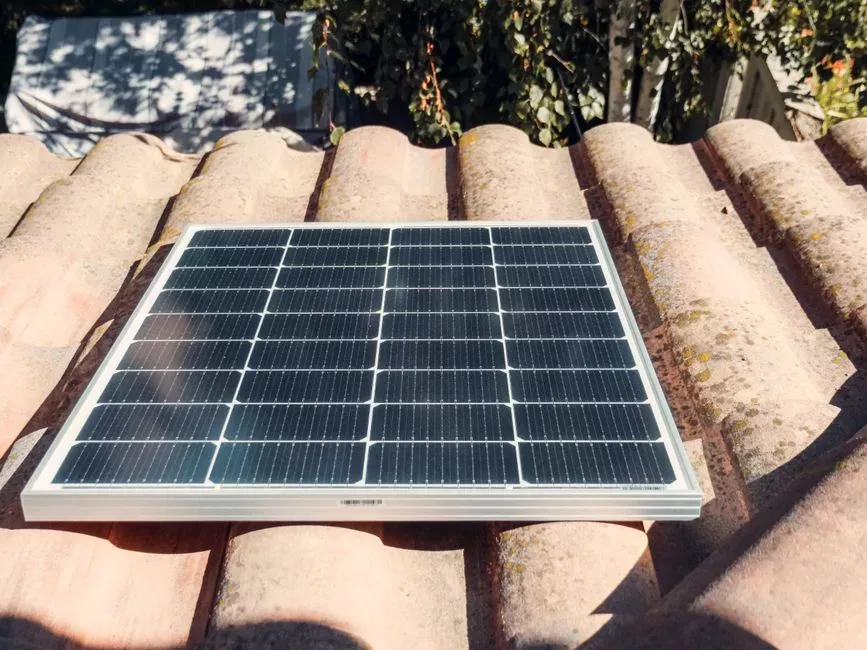
Residential-cluster CAPEX in 2026 ranges from approximately $50,000 for a small WSZ skid (serving <100 homes) to $600,000 for a 500 m³/day MBR. Most mid-size estates fall within the $120,000–$280,000 range, extrapolated from the municipal benchmark of $800,000–$2.5M for 10,000 m³/day (HydropureWater field data, 2026). OPEX is dominated by energy, which accounts for 40–60% of total operating costs (HydropureWater field data, 2026), making the 12-hour weekly grid outages in Accra and Kumasi a critical design consideration. Any aerobic system must include solar PV, a biogas buffer, or a diesel auto-start backup to prevent biomass die-off.
Reuse revenue alters the financial outlook: irrigation-grade MBR effluent at <10 CFU/100 mL E. coli (HydropureWater field data, 2026) can replace estate landscaping water purchases and qualify for low-interest financing under the Ghana Green Bond initiative. The cost of non-compliance is equally significant: an EPA fine for a failed 2026 audit can exceed the entire OPEX reserve, and loss of World Bank or investor ESG funding may jeopardize the estate’s phase-2 build. Sludge dewatering with a plate-and-frame filter press and precise coagulant dosing via an automatic chemical dosing system reduces hauling volume and ensures Class A/B compliance.
Frequently Asked Questions
What is the minimum treatment standard for a residential estate in Ghana?
The 2026 Ghana EPA mandate requires COD ≤125 mg/L and BOD ≤25 mg/L, with disinfection to <1,000 CFU/100 mL E. coli for general discharge or <10 CFU/100 mL for unrestricted irrigation (2026 Ghana EPA, via HydropureWater field data, 2026). Biological treatment alone is insufficient where reuse is intended.
What design flow should I use per household in Ghana?
Use 150–250 L/person/day with 5–6 persons per middle-income household and a peaking factor of 2.5–3.0 over the daily average (HydropureWater field data, 2026). A 200-home estate with 6 persons per home and 200 L/person/day produces roughly 240 m³/day at average flow.
Can treated wastewater from a residential plant be used for irrigation in Ghana?
Yes, provided the effluent meets the WHO unrestricted-irrigation