Why Confectionery Wastewater Is Hard on Biological Treatment
Confectionery wastewater routinely arrives at the treatment plant with COD between 5,000 and 25,000 mg/L, BOD/COD ratios above 0.5, and a dissolved-sugar fraction dominated by sucrose, glucose, and invert sugar. Gelatin from gummy and marshmallow operations adds slowly biodegradable protein, starch slurries from biscuit-cream lines arrive in slugs, and CIP cycles swing pH from 3 to 11 in a single shift. The result is a stream that conventional activated sludge handles poorly: surfactants and gelatin drive stable foam, sugar shocks trigger filamentous bulking within 24–48 hours, and caramelization melanoidins bleed a tea-colored plume through the secondary clarifier. Nitrification is the first casualty — once the food-to-microorganism ratio pushes past 0.3 kg BOD/kg MLSS·d, heterotrophs out-compete Nitrosomonas and ammonia begins to climb the effluent trend. In a candy plant, the question is not whether the existing aeration basin will fail under shock, but how often. MABR sidesteps this by immobilizing the nitrifying population on the membrane surface; attached biofilm is not subject to washout when a sugar slug hits the basin.
How MABR Treats Sugary, High-COD Streams Differently
MABR (membrane aerated biofilm reactor) treats confectionery wastewater by delivering oxygen passively through gas-transfer membranes to a nitrifying biofilm, while the anoxic bulk liquid denitrifies the high-sugar carbon in a single tank. These systems report up to 90% aeration energy savings versus activated sludge, with effluent total nitrogen routinely below 5 mg/L in long-term pilots — making MABR a credible retrofit for candy, chocolate, and starch-based plants facing COD 5,000–25,000 mg/L and BOD/COD ratios above 0.5.
Counter-diffusion enables this process: oxygen diffuses outward from the pressurized lumen of a hollow-fiber membrane into the biofilm, while organics and ammonium diffuse inward from the bulk liquid. The two substrates meet inside a 200–800 µm biofilm, where nitrifiers colonize the oxygen-rich inner face and heterotrophs occupy the outer anoxic face (per Fluence MABR product documentation, 2026). Because oxygen is supplied as a dissolved gas rather than as bubbles, off-gas losses are effectively zero and standard oxygen transfer efficiency approaches 100% at near-atmospheric lumen pressure. Fluence's MABR product line reports up to 90% reduction in aeration energy and up to 50% reduction in overall plant energy versus conventional activated sludge. Simultaneous nitrification-denitrification happens in one tank, eliminating the separate anoxic volume and external carbon dosing that suspended-growth systems need. Biofilm biomass is not lost during CIP-induced hydraulic surges — attached growth is the structural reason MABR tolerates shock loading better than a clarifier-dependent activated sludge train. Commercial deployment began in 2016 and exceeds 200 projects worldwide (Fluence, 2026).
MABR Design Parameters for Confectionery Influent
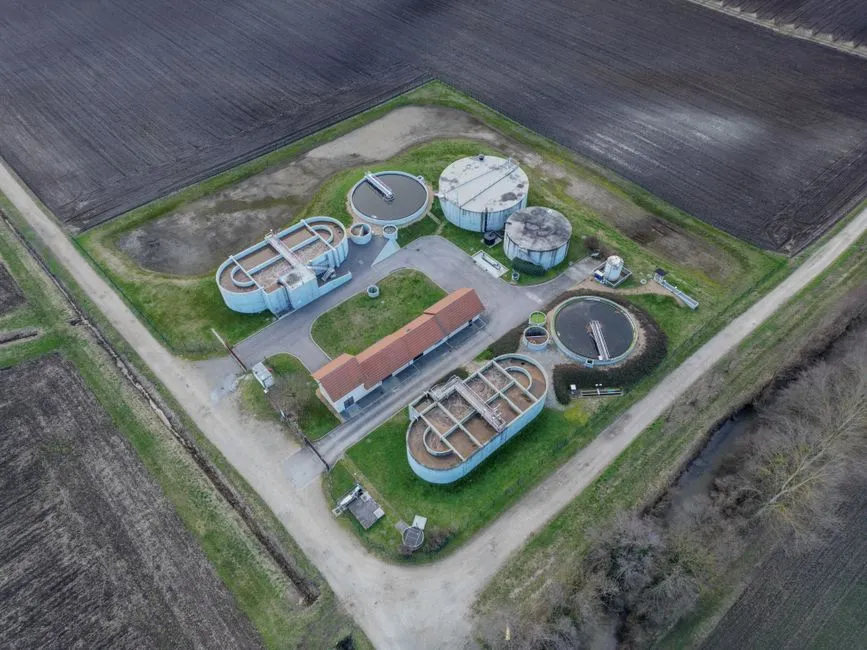
MABR is sized as a post-anaerobic polishing stage for confectionery applications because raw influent at COD 5,000–25,000 mg/L overwhelms a single aerobic biofilm; a UASB or IC reactor upstream typically removes 70–85% of the COD before the MABR sees it. The applied organic loading on the MABR basin then sits in the 0.5–2.0 kg COD/m³·d range, with an HRT of 6–12 hours. The table below captures the design envelope a process engineer would put into a spreadsheet for a candy, chocolate, or starch-based plant.
| Parameter | Typical Confectionery Range | Design Note |
|---|---|---|
| Influent COD (post-anaerobic) | 800–4,000 mg/L | Upstream UASB or IC assumed |
| Influent BOD/COD | 0.45–0.65 | Sufficient carbon for denitrification without methanol |
| Applied organic loading | 0.5–2.0 kg COD/m³·d | Lower end for shock-prone candy lines |
| HRT | 6–12 h | Basin-volume dependent |
| SRT | Uncontrolled (biofilm) | Attached growth — no clarifier washout |
| Temperature floor | 10–12 °C for design nitrification | Rate drops sharply below 10 °C; heated tanks or covered basins in winter |
| Target effluent COD | <150 mg/L (with anaerobic + MABR) | <50 mg/L only with downstream MBR membrane bioreactor for polishing |
| Target effluent TN | <5 mg/L (long-term pilots) | 4.1 mg/L recorded at CENTA, Spain |
| Target effluent TP | <0.5 mg/L (with chemical P precipitation) | 0.4 mg/L at CENTA; 0.3 mg/L at Stanford CR2C |
| Basin depth | 1.5–6 m | SUBRE retrofit envelope (Fluence, 2026) |
| Plant flow envelope | 2,000–100,000 m³/d (SUBRE); from 20 m³/d (Aspiral) | Containerized vs submerged retrofit |
Oxygen is delivered at near-atmospheric lumen pressure, and periodic coarse-bubble mixing using existing aeration blowers is used for sloughing control rather than for oxygen supply (Fluence SUBRE design manual, 2026).
MABR vs MBR vs SBR for a Confectionery ETP Upgrade
The head-to-head comparison is vital because food-plant CAPEX is justified on four metrics: effluent quality, footprint, energy, and tolerance to sugar shock. A side-by-side view for a representative mid-size confectionery plant (COD 10,000–15,000 mg/L raw, 50–60 °C, batch discharge) is shown below.
| Metric | MBR (submerged PVDF) | SBR | MABR (post-anaerobic) |
|---|---|---|---|
| Effluent COD | <50 mg/L | 80–150 mg/L | 100–150 mg/L single stage; <50 mg/L with MBR polish |
| Effluent TN | <10 mg/L (with anoxic + carbon) | <10 mg/L (long cycles) | <5 mg/L (SND in one tank) |
| Footprint | Smallest (membrane cassette) | Largest (batch volume + decanter) | Compact; fits existing aeration basin |
| Energy intensity | 0.6–1.0 kWh/m³ | 0.4–0.7 kWh/m³ | 0.2–0.4 kWh/m³ (Fluence 2026: up to 50% saving) |
| Chemical demand | Membrane CIP (NaOCl, citric) | Minimal | No methanol for denitrification |
| Sugar-shock sensitivity | High (membrane fouling from gelatin, starch) | Moderate (bulking) | Low (biofilm retention) |
| Retrofit complexity | High (new tank, cassette rack) | Low (reuses basin) | Low to moderate (submerge modules, 1–3 weeks per basin) |
| Reuse suitability | High (low TSS) | Moderate (variable TSS) | High (TN <5 mg/L clears Title 22; disinfection method comparison needed downstream) |
MBR provides superior effluent TSS and COD for tight reuse specs, but gelatin and starch foul the membranes aggressively and force weekly recovery cleans that food-plant operators recognize as a hidden OPEX tax. SBR tolerates batch inflow at low CAPEX but requires 2–3× the basin volume and decanter effluent can drift in TSS after sugar slugs. MABR's structural advantage is biofilm retention under hydraulic shock and SND in a single tank, but at very high loadings (raw COD >10,000 mg/L) it must be paired with an anaerobic or DAF for confectionery pre-treatment upstream; it is best framed as a polishing stage, not a stand-alone reactor. For a deeper SBR sizing reference, see SBR for high-strength food wastewater.
Matching the Right MABR Format to Your Plant Size
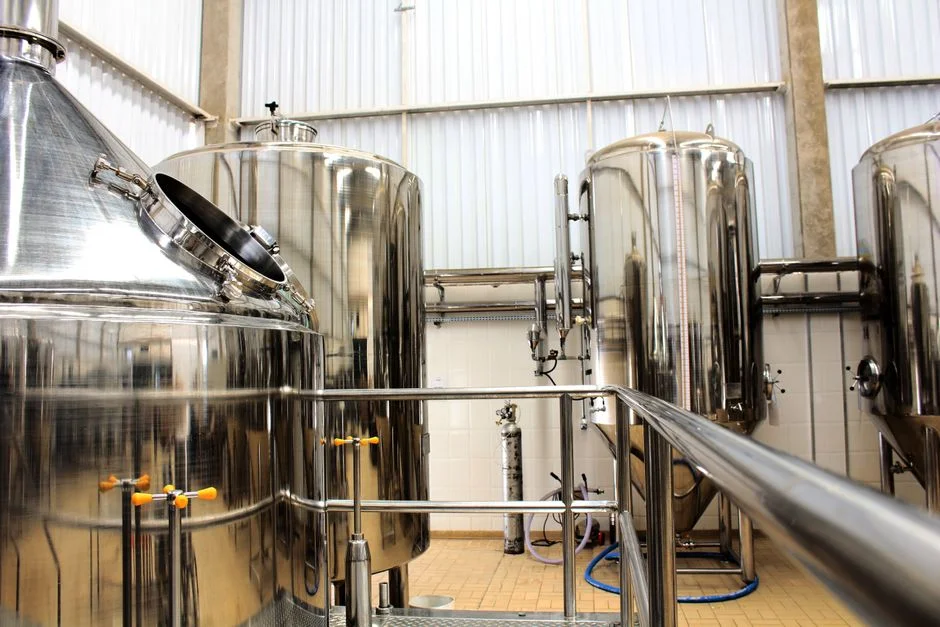
Plant size and existing civil work drive the format choice more than influent numbers do. For a satellite candy line or seasonal contract production at ≤500 m³/d, containerized Aspiral-class units starting at 20 m³/d are plug-and-play and can be redeployed when a contract moves — useful for R&D kitchens and toll-manufacturing operations (Fluence Aspiral product data, 2026). For a mid-size plant at 500–5,000 m³/d, a hybrid train of UASB or IC reactor plus MABR polishing leverages the existing equalization basin and cuts new concrete volume to near zero; the anaerobic stage removes 70–85% of the COD, and the MABR finishes ammonia and residual organics. For a large plant at ≥5,000 m³/d, SUBRE submerged modules drop into the existing aerobic basin one chamber at a time with minimal interruption and a reported 30% plant-wide energy drop within 1–3 weeks of commissioning (Fluence SUBRE field data, 2026). The decision drivers in priority order are: existing basin geometry and depth (1.5–6 m envelope), peak-to-average flow ratio, availability of heat for winter operation, and whether the discharge target is compliance-only or full Title 22 reuse. A small seasonal line with no reuse ambition can be served by a packaged biological treatment skid; a continuous chocolate plant discharging to a sensitive watershed needs the SUBRE retrofit and an RO polish.
2026 Compliance Targets and Reuse Pathways for Food Plants
In the United States, 40 CFR Part 405 sets federal sugar-processing discharge limits (BOD 230 mg/L daily max, TSS 350 mg/L daily max for the raw sugar subcategory) and is the baseline a confectionery plant's NPDES permit is benchmarked against. In the European Union, Industrial Emissions Directive 2010/75/EU and the BAT-AEL ranges for the food, drink, and milk industries set COD 25–100 mg/L and TN 10–50 mg/L depending on plant size and receiving water — the MABR envelope of TN <5 mg/L and COD 100–150 mg/L before polish sits comfortably inside the BAT-AEL band for most subcategories. For plants in China, GB 8978-1996 second-class limits and the increasingly enforced GB 18918-2002 Class IA targets (COD <50 mg/L, NH₃-N <5 mg/L, TN <15 mg/L) are driving the Hubei and Henan deployments of Aspiral units along highways and in remote townships (Fluence MABR project data, 2026). On the reuse side, the CENTA pilot in Spain recorded TN 4.1 mg/L and TP 0.4 mg/L over a year, and the Stanford Codiga Resource Recovery Center pilot met California Title 22 with TN <3 mg/L and TP <0.3 mg/L — both numbers clear the envelope for boiler feed, cooling-tower make-up, and CIP rinse water after an RO polish. For pretreatment-program plants discharging to a POTW, see food and beverage pretreatment compliance for the local-limits picture.
Frequently Asked Questions
Can MABR handle confectionery wastewater with COD above 1
Frequently Asked Questions
Can MABR treat confectionery wastewater with COD above 10,000 mg/L?
Yes, Membrane Aerated Biofilm Reactors (MABR) can handle high-strength confectionery wastewater exceeding 10,000 mg/L COD, provided the system is configured with an integrated anaerobic pre-treatment stage. While the MABR membrane itself serves as the aerobic polishing step, upstream high-rate anaerobic digestion is required to reduce organic loading to manageable levels before the wastewater reaches the biofilm surface.
Directly exposing MABR membranes to raw, untreated confectionery effluent at concentrations above 10,000 mg/L can lead to rapid membrane fouling and excessive oxygen mass transfer resistance. By utilizing an anaerobic buffer, the system effectively manages the high sugar and fat loads typical of candy manufacturing while meeting stringent final effluent discharge standards.
What BOD to COD ratio does MABR need to denitrify without methanol?
To achieve effective biological nitrogen removal without external carbon supplementation, MABR systems require a BOD to Total Nitrogen (BOD:TN) ratio of at least 4:1. Confectionery wastewater is generally rich in carbohydrates, providing a high internal carbon source that supports autotrophic nitrification and heterotrophic denitrification within the depth of the biofilm.
Because the MABR creates a simultaneous nitrification-denitrification (SND) environment within the same biofilm, the oxygen gradient allows for anoxic zones to persist near the membrane-media interface. This configuration optimizes the use of the readily biodegradable carbon found in candy processing streams, often eliminating the need for methanol or other supplemental carbon sources provided the influent BOD:TN ratio remains above this threshold.
How long does a SUBRE retrofit take in an active aeration basin?
A SUBRE (Submerged MABR) retrofit typically takes between 4 to 8 weeks for installation and commissioning, depending on the scale of the confectionery facility's existing basin. Because the modular cassettes are designed to be lowered directly into operational aeration tanks, the process can often be completed without taking the entire treatment plant offline.
The duration is primarily dictated by the time required for structural frame anchoring and the integration of the air delivery manifold into the plant’s existing blower infrastructure. Once the cassettes are secured and the air supply is connected, the biofilm typically reaches full operational maturity within 14 to 21 days of inoculation.
Does MABR meet EU IED BAT-AEL limits for the food and drink sector?
Yes, MABR technology is capable of meeting the BAT-AEL (Best Available Techniques Associated Emission Levels) limits specified in the EU Industrial Emissions Directive (IED) for the food and drink sector. These standards often require effluent COD concentrations below 100 mg/L and Total Nitrogen levels below 10 mg/L, depending on the specific facility size and location.
The high-efficiency oxygen transfer provided by the gas-permeable membranes allows for more robust nitrification even under fluctuating loading conditions common in confectionery production. By maintaining a stable, long-age biofilm, the system consistently achieves the low nutrient and organic discharge levels mandated by the EU’s current BREF (BAT Reference) documents.
What minimum temperature can MABR nitrify at in an unheated candy plant?
MABR systems can maintain effective nitrification at temperatures as low as 8°C to 10°C, even in unheated plant environments. The biofilm structure in an MABR provides a sheltered niche for Nitrosomonas and Nitrobacter species, which are typically more sensitive to cold-weather performance drops than those found in conventional suspended growth systems.
While metabolic rates decrease at lower temperatures, the high surface area and biofilm density of the MABR allow for sufficient nitrifier retention to maintain effluent compliance. In environments where temperatures drop below 8°C, operators may need to adjust the membrane aeration pressure to optimize the biofilm growth rate and compensate for the slower kinetics of ammonia oxidation.