Why Baomahun Is on the Radar for Semiconductor and Data-Hall Wastewater in 2026
In 2026, there is no operating semiconductor fab or hyperscale data centre in Baomahun, Sierra Leone; the only major industrial wastewater competence on site is the Baomahun Gold Project's Mine Water Management Plan (FG Gold, 2026). Any new fab or data-hall would need to piggyback on that plan, meet WHO drinking-water guidelines for any potable reuse, and target ≥75% reclaim with RO at up to 95% recovery because Sierra Leone's EPA discharge framework is not yet fab-specific.
Baomahun sits in the Valunia and Kunike Barina Chiefdoms, Bo and Tonkolili Districts, roughly 200 km east of Freetown, with the provincial capital Bo (~500,000 people) about 60 km south. The site is a greenfield gold-mining construction zone: a 124.27 km² concession holding a JORC-certified 5.81 Moz Au resource, large-scale mining licence awarded, environmental permits approved, and first gold pour scheduled for 2026 (FG Gold, 2026). Infrastructure already committed includes a 34 MW hybrid power plant combining solar PV, BESS, and diesel, a 64 km site access road, an airstrip, and a Tailings Storage Facility designed to exceed modern standards. That envelope is the only on-site industrial water and power baseline a fab or data-hall EPC would inherit.
The paradox is that the supply-chain conversation has shifted. Sierra Leone is an emerging gold jurisdiction, but West African cloud traffic and back-end semiconductor packaging are pulling planners toward sites with stable power, water competence, and political backing. Baomahun has all three in nascent form. The engineering question for an EPC lead in Freetown or Bo is therefore not whether a fab or data-hall will be built here, but what a defensible 2026 compliance and treatment baseline looks like if one were.
What Process Wastewater Streams a Fab or Data Hall Would Actually Generate
Semiconductor fabs and hyperscale data halls produce very different wastewaters, and the treatment train at Baomahun would have to handle both categories if the client wants a co-sited package. A typical back-end packaging or wafer-fab generates four canonical streams: ultra-pure water (UPW) reject with TDS <10 mg/L feed but containing trace silica and boron; chemical-mechanical planarisation (CMP) slurry wastewater with high TSS, colloidal nanosilica, and dissolved Cu, Co, and W; acid and alkaline rinse water swinging between pH 1 and pH 13; and HF- or ammonia-bearing scrubber blowdown (Membrion, 2026). Concentrated metal-bearing wastewater from these streams must be treated to reduce hazardous waste volume and enable reuse, which is the central design driver.
A hyperscale data hall produces lower-toxicity but higher-volume wastewater: cooling-tower blowdown carrying scale-forming Ca, Mg, and silica; adiabatic cooler reject; humidification bleed; and a small domestic sewage load. Typical 2026 industry bands put fab total flow at 5–25 m³/h per 10,000 wafer starts per month, and data-hall flow at 0.5–1.5 L/kWh IT load depending on adiabatic versus chilled-water cooling. These are global benchmarks because Sierra Leone has no published local data yet.
On-site routing at Baomahun would split cleanly: UPW reject and cooling-tower blowdown are RO-reclaimable; CMP slurry and acid/alkaline rinse need pretreatment before discharge to the existing TSF; HF and ammonia streams need dedicated scrubbing before any atmospheric or aqueous release. The table below maps each stream to a likely fate.
| Stream | Source facility | Key contaminants | 2026 flow band | Probable on-site fate |
|---|---|---|---|---|
| UPW reject | Semiconductor fab | Trace silica, boron, TDS <10 mg/L feed | 40–60% of incoming UPW | Two-pass RO reclaim → polishing mixed bed |
| CMP slurry wastewater | Semiconductor fab | Nanosilica TSS, Cu/Co/W | 2–6 m³/h per tool cluster | DAF + chemical precipitation → TSF |
| Acid/alkaline rinse | Semiconductor fab | pH 1–13 swings, F⁻, SO₄²⁻ | 3–10 m³/h per wet bench | Equalisation + neutralisation → TSF |
| Scrubber blowdown | Semiconductor fab | HF, NH₃, acids | 0.5–2 m³/h per scrubber | Dedicated wet scrubbing + neutralisation |
| Cooling-tower blowdown | Data hall | Ca, Mg, silica, biocides | 0.3–0.8 L/kWh IT | Softener + RO → cooling makeup |
| Adiabatic reject | Data hall | Low TDS, elevated temperature | 0.1–0.4 L/kWh IT | Filtration + ClO₂ → reuse |
| Domestic sewage | Both | BOD, TSS, pathogens | 50–100 L/person-day | MBR or packaged plant → TSF or irrigation |
The 2026 Treatment Train for Baomahun: Pretreatment, Membrane Reclaim, Polishing
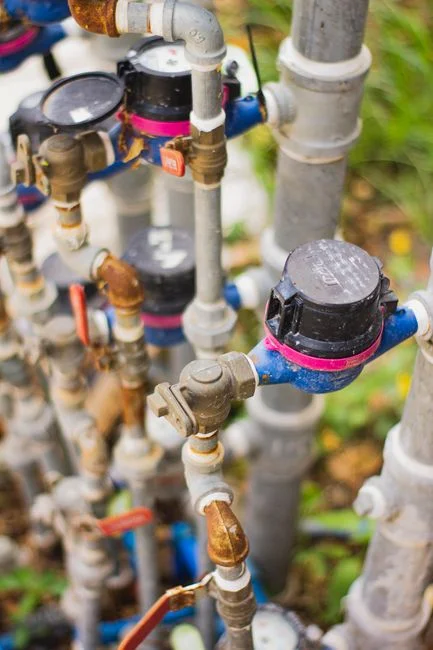
A defensible 2026 treatment train for Baomahun runs in six stages, each matched to a real unit operation that exists in the HydropureWater catalogue or comparable equipment.
- Equalisation and pH adjustment. A PLC-controlled chemical dosing skid with NaOH, H₂SO₄, coagulant, and flocculant holds the combined influent to pH 6.5–8.5 and steady TSS before downstream biology or membranes see it. Without this stage, pH swings from acid/alkaline rinse will collapse DAF and RO performance within hours.
- Dissolved air flotation (DAF). A DAF rated 4–300 m³/h across 13 models strips TSS, FOG, and colloidal silica before the membranes, which is especially critical for CMP wastewater where nanosilica fouls RO spacers within days if not removed upstream.
- Two-pass industrial reverse osmosis. An industrial RO system with up to 95% recovery handles the bulk of both UPW feed recovery and cooling-tower makeup. Two-pass configuration is the workhorse for fab-grade water; single-pass is rarely adequate below 1 µS/cm.
- Polishing mixed-bed ion exchange and sub-µm filtration. Mixed-bed polishers and 0.2 µm final filters bring the RO permeate below 1 µS/cm for fab rinse reuse and below 0.5 µS/cm for any HP-UPW feed.
- On-site ClO₂ generation for non-fab reuse loops. A on-site ClO₂ generation unit sized 50–20,000 g/h disinfects cooling-tower makeup, humidification bleed, and staff-contact reuse against WHO Guidelines for Drinking-water Quality (4th ed.) and EU Drinking Water Directive 98/83/EC. ClO₂ is preferred over chlorine for fab loops because it does not form trihalomethanes with the trace organics that survive RO.
- Brine and metal concentrate routing. Concentrate from RO and the metal-bearing sludge from DAF are routed to the existing Baomahun TSF, leveraging the mine's tailings competence rather than reinventing a new solids handling package. Membrion's ECD-style ion exchange (Membrion, 2026) is a viable contingency for the most concentrated metal stream if the client wants to recover heavy metals before they reach the TSF.
Equalisation and chemical dose are delivered through an automatic chemical dosing system sized to the peak combined flow. The table below summarises the stage-to-equipment map with the operating envelope that matters at Baomahun.
| Stage | Unit operation | Typical 2026 sizing | Key performance target |
|---|---|---|---|
| 1 | Equalisation + pH adjustment | 6–24 h HRT, pH 6.5–8.5 | < ±0.5 pH swing downstream |
| 2 | DAF | 4–300 m³/h | > 90% TSS removal, < 30 mg/L to RO |
| 3 | Two-pass RO | Up to 95% recovery | > 99% ion rejection, < 10 µS/cm permeate |
| 4 | Mixed-bed + 0.2 µm filter | 2–20 m³/h per vessel | < 1 µS/cm, < 100 ppt TOC |
| 5 | ClO₂ generator | 50–20,000 g/h | 0.2–0.5 mg/L residual at point of use |
| 6 | Brine to TSF or ECD contingency | 5–15% of feed flow | Meets TSF acceptance criteria |
For a cross-regional comparison of the same engineering baseline, the Gaborone semiconductor wastewater guide applies the same train to a SADC site, and the Dhaka semiconductor compliance guide covers the equivalent South Asian regulatory route. Mechanical and commissioning detail for the MBR leg is laid out in the MBR installation and commissioning guide.
Compliance Pathway in Sierra Leone: What's Written, What's Silent, What to Reference Instead
The Sierra Leone Environment Protection Agency (SLEPA) administers environmental discharge permits under the EPA Act 2008 and its 2022 amendment. There is no fab-specific effluent standard in 2026, so a semiconductor or data-hall project would be handled case-by-case against project-specific environmental permits, with limits negotiated from international benchmarks. The Baomahun Gold Project already operates inside this framework with an approved Mine Water Management Plan and EIA, which is a real advantage for any co-sited fab or data-hall applicant.
For 2026 design, the practical compliance anchors are the WHO Guidelines for Drinking-water Quality (4th ed.) for any potable or staff-contact reuse, the EU Industrial Emissions Directive 2010/75/EU BAT-AELs for metals and TOC in the fab discharge, and the US EPA NPDES limits for fluoride, ammonia, and total metals if the effluent is discharged to a surface-water receiver. Where the local standard is silent, the WHO + EU IED combination is the defensible 2026 floor. Macro context for outside reviewers is in the OECD Data: Sierra Leone entry (OECD, 2026).
Co-location with the mine lets an EIA submission cite the existing Baomahun Mine Water Management Plan and TSF design as a combined-facility baseline. That is faster and cheaper than a greenfield EIA, but it also means the EIA must explicitly model cumulative loads — fab metals plus mine tailings — and confirm that the TSF is hydraulically and geochemically able to accept the additional concentrate.
Reuse, ZLD, and How to Stay Inside a 34 MW Power Envelope
The 34 MW Baomahun hybrid envelope (solar PV + BESS + diesel) is the binding constraint on any future fab or data-hall. Two-pass RO at 95% recovery (HydropureWater RO spec) cuts brine volume roughly 20× versus single-pass, which directly reduces evaporation pond sizing and pump-around power. A lamella clarifier ahead of the DAF cuts footprint and solids loading on the RO, which keeps recovery high and cleaning frequency low.
Design targets for 2026: ≥75% reclaim on data-hall cooling loops, ≥90% reclaim on fab UPW reject, and brine volumes held inside what the existing TSF can accept without a new pond. Power draw for a 10 m³/h RO + DAF + ClO₂ package sits at roughly 60–120 kW for a mid-size data hall, well inside the 34 MW envelope once the mine is running. Where a client wants zero liquid discharge, a forward-osmosis or brine concentrator stage can be added, but that is a 2027+ decision, not a 2026 baseline, because the incremental power and capex do not yet pencil out for a greenfield Sierra Leone site without a confirmed fab tenant.
Frequently Asked Questions
What wastewater permit does a semiconductor fab need in Sierra Leone in 2026?
A fab would need a project-specific discharge permit from the Sierra Leone Environment Protection Agency (SLEPA) under the EPA Act 2008/2022, because no fab-specific effluent standard exists. Limits would be negotiated against WHO drinking-water guidelines for reuse and EU IED 2010/75/EU BAT-AELs for metals and TOC in the discharge.
How much water can a hyperscale data hall reclaim at Baomahun?
A 2026 data-hall package using two-pass RO at up to 95% recovery, DAF pretreatment, and on-site ClO₂ disinfection can reclaim ≥75% of cooling-tower blowdown and adiabatic reject, holding brine inside the existing Baomahun TSF without a new pond.
Can a fab or data hall share the Baomahun mine's 34 MW power plant?
Yes. A 10 m³/h RO + DAF + ClO₂ package for a mid-size data hall draws 60–120 kW, which sits well inside the 34 MW Baomahun hybrid envelope once the gold plant is operational. A co-located fab would need a dedicated load study but the envelope is large enough for typical 2026 back-end packaging flows.
What is the practical 2026 compliance floor for fab effluent at Baomahun?
With no Sierra Leone fab-specific standard, the defensible 2026 floor is the WHO Guidelines for Drinking-water Quality (4th ed.) for any potable or staff-contact reuse, combined with EU IED 2010/75/EU BAT-AELs for metals and TOC in the discharge, and EPA NPDES limits for fluoride, ammonia, and total metals if the receiver is surface water.