Why La Paz Hotels Cannot Rely on Municipal Treatment in 2026
A hotel or resort in La Paz, Bolivia in 2026 needs a packaged, on-site wastewater treatment system because the city has no municipal treatment plant and only 27% of Bolivian wastewater is treated nationally (per the World Bank's WSP 2016 baseline, restated in the 2021 Bolivia water security blog). The recommended 2026 baseline is a buried MBR membrane bioreactor (submerged PVDF, 0.1–0.4 µm) with primary screening, A/O biological stage, UV or chlorine dioxide disinfection, and optional reuse for landscape irrigation at 3,200–4,100 m altitude.
La Paz, with nearly 800,000 inhabitants, operates without municipal treatment facilities. Untreated sewage is discharged directly into the Choqueyapu and La Paz Rivers, which the World Bank identifies as the source of downstream irrigation water used without restriction by peri-urban farmers (source: World Bank, 2021-08). The Ministry of Environment and Water (MMAyA) launched a National Strategy for Wastewater Management and Reuse in 2017, but the strategy is still in design phase and no La Paz treatment plant is funded, permitted, or under construction as of 2026.
The practical consequence for a hotel project engineer is that the municipal sewer is a collection pipe, not a treatment service. Any hotel discharging to it is, in regulatory terms, discharging raw sewage into a watercourse. Operators pursuing international brand standards (LEED, EarthCheck, Travelife) or simple liability protection must treat on-site, even when the local inspector has no capacity to enforce. On-site treatment is the only legally defensible baseline. Engineers specifying similar systems in other capitals without municipal treatment face the same constraint, as covered in the 2026 guide to hotel wastewater treatment in Luanda.
Influent Characteristics for an Andean Hotel or Resort
Hotel-specific wastewater in La Paz runs 150–300 L/guest-night at average occupancy, with a 2.5–3.0 peaking factor concentrated over an 8-hour morning window. This is the design envelope most international hotel engineering guidelines converge on, and it is conservative enough for Andean properties where guests stay longer and laundry per room-night is higher than transient-city-hotel averages (per HydropureWater field data, 2025).
Engineers should sample the actual site for 7 consecutive days before final sizing, but for proposal and permit-stage design, the following table provides a defensible design influent envelope.
| Parameter | Design Influent Range (hotel/resort) | Notes for La Paz |
|---|---|---|
| Flow per guest-night | 150–300 L | Add 30–50 L/staff shift; spa and laundry add 50–100 L/room |
| COD | 400–800 mg/L | Higher on weekends; restaurants push grease load |
| BOD₅ | 200–400 mg/L | Typical BOD/COD ratio 0.45–0.55 |
| TSS | 150–300 mg/L | Increases sharply during high-occupancy weekends |
| FOG (fat, oil, grease) | 30–80 mg/L | Install grease trap upstream if kitchen discharge is significant |
| Total Nitrogen | 30–60 mg/L | NH₃-N typically 20–40 mg/L |
| pH | 6.5–8.0 | Spa and laundry can push pH outside this band |
| Temperature (sewer) | 8–14°C | Coldest in June–August; this drives HRT and SRT design |
Laundry and spa operations warrant specific attention. Surfactants from detergents and TDS spikes from spa backwash can push influent conductivity above 2,000 µS/cm. An equalization tank sized for at least 12 hours of average daily flow smooths these pulses and protects downstream membranes from shock loads. Skipping equalization is the single most common cause of MBR fouling at remote resort sites, an issue covered in detail in the broader MBR installation and commissioning guide.
High-Altitude Design Corrections for 3,200–4,100 m Sites
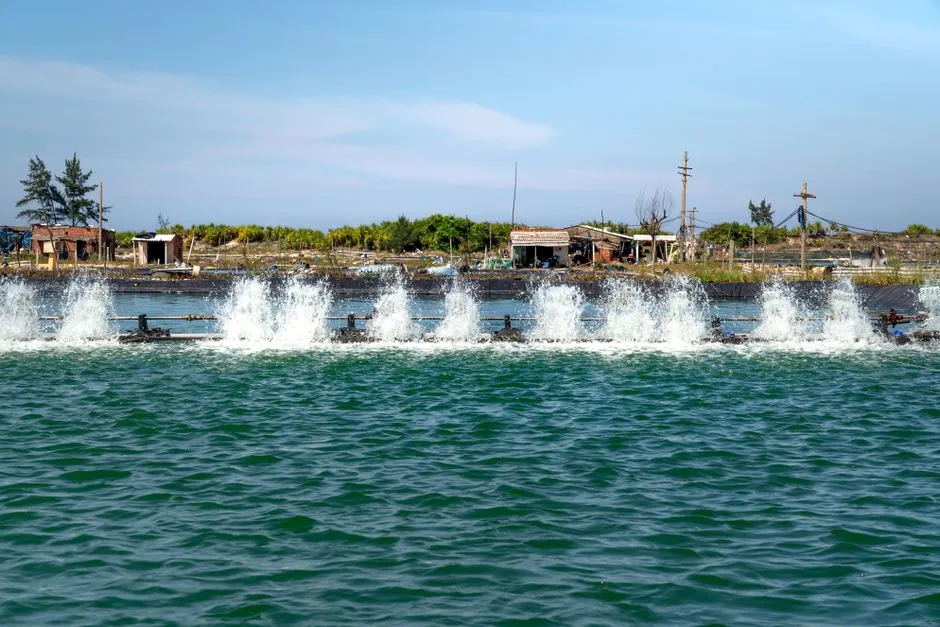
Atmospheric pressure at 3,600 m is approximately 650 mbar, roughly 64% of sea-level standard, which reduces standard oxygen transfer efficiency (SOTE) in coarse-bubble aeration systems by about 30%. Off-the-shelf biological designs copied from sea-level references will not nitrify at La Paz altitudes, and most packaged-plant vendors do not correct for this unless explicitly instructed.
Three engineering adjustments are non-negotiable. First, fine-bubble diffusers with EPDM membranes at 20–30% higher density than sea-level designs, paired with blowers oversized by 25% to maintain the same actual oxygen mass transfer. Second, longer hydraulic retention time: target 10–14 hours in the biological stage instead of the 6–8 hours typical at sea level, to compensate for the cold 8–14°C sewer temperature that suppresses nitrification kinetics by a factor of roughly two to three. Third, the MBR membrane bioreactor system should run with elevated MLSS (8,000–12,000 mg/L) so the membrane stage decouples clarifier performance from biological kinetics — this is the main reason MBR outperforms conventional activated sludge at altitude. UV disinfection must be sized for ≥40 mJ/cm² dose, using low-pressure high-output lamps with automatic quartz wipers, because cold water reduces UV transmittance and the high mineral content of Andean supply water fouls sleeves quickly. A comparison with low-altitude hotel design, where these corrections are not required, is laid out in the Brisbane equivalent specification on hotel wastewater system selection in Brisbane.
Recommended 2026 Process Train for a La Paz Hotel
The defensible 2026 process train for a 30–200 room La Paz property is a five-stage buried train: coarse screening, equalization, A/O biological stage with submerged MBR, disinfection, and sludge dewatering.
Stage 1 — Influent screening. A rotary mechanical bar screen with 3 mm aperture protects downstream pumps and membranes from wipes, hair, and laundry lint. Manual bar screens are acceptable below 20 m³/day but become a maintenance liability at resort scale.
Stage 2 — Equalization. A buried concrete or FRP equalization tank sized for 8–12 hours of average daily flow with submersible mixer and level-controlled transfer pumps. The 2.5–3.0 peaking factor is absorbed here, not in the biological stage.
Stage 3 — A/O biological stage with MBR. Anoxic zone (≈25% of biological volume) followed by aerated zone feeding flat-sheet PVDF MBR modules with 0.1–0.4 µm nominal pore size. MLSS 8,000–12,000 mg/L, HRT 10–14 hours, SRT 20–30 days, membrane flux 15–20 L/m²·h. Suction pump operates on an 8-minute on / 2-minute off cycle with in-situ chemical cleaning every 30–60 days.
Stage 4 — Disinfection. A chlorine dioxide disinfection generator for properties targeting reuse (ClO₂ residual of 0.5–1.0 mg/L with 30-minute contact time is non-negotiable for landscape irrigation), or a UV system sized to 40 mJ/cm² for discharge-only configurations.
Stage 5 — Sludge handling. Waste-activated sludge from the MBR stage concentrates in a hopper, then is dewatered with a small plate-and-frame filter press to a cake solids content above 18% for landfill disposal. Belt presses are acceptable but require more floor area and are harder to bury. Expected effluent against NB 512 guidance: COD <50 mg/L, BOD₅ <10 mg/L, TSS <10 mg/L, NH₃-N <5 mg/L — suitable for restricted landscape irrigation and well within typical reuse thresholds.
Choosing Between WSZ Package Plant and MBR Skid
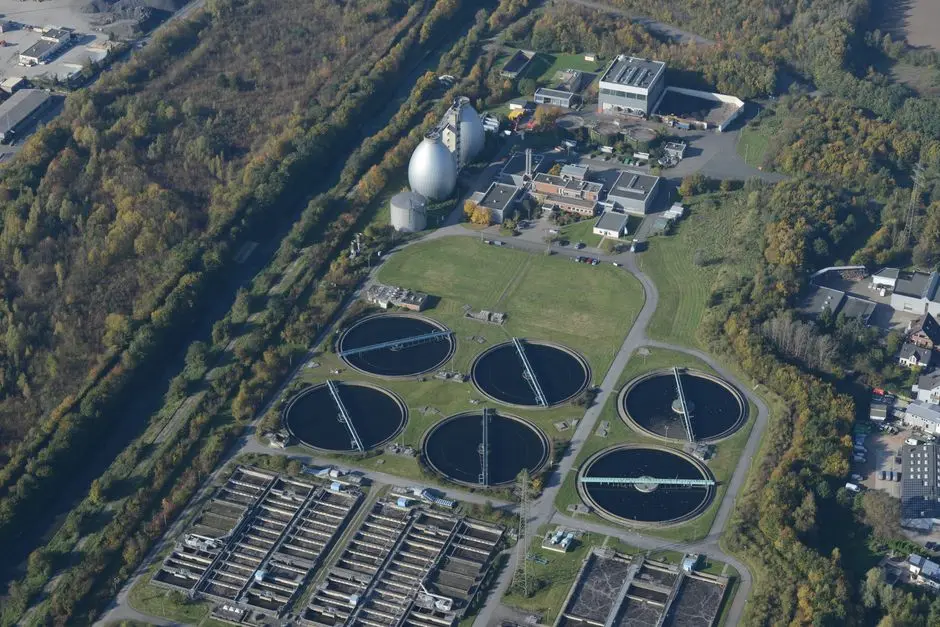
The two real packaged options for a La Paz property are the WSZ underground integrated plant and the MBR skid. They are not interchangeable: each fits a different scale, reuse requirement, and discharge scenario. The matrix below provides the decision rule for procurement.
| Selection Criterion | WSZ Underground Packaged Plant | MBR Skid |
|---|---|---|
| Flow range | 5–30 m³/day | 30–500 m³/day |
| Property size | Under 60 rooms, boutique lodges | 60–400 rooms, full-service resorts |
| Process core | A/O + sedimentation, fixed media | A/O + submerged PVDF membrane |
| Effluent BOD/COD | BOD <20 mg/L, COD <80 mg/L | BOD <10 mg/L, COD <50 mg/L |
| Reuse suitability | Restricted (toilet flush only) | Suitable for landscape irrigation |
| Cold/altitude tolerance | Compromised below 12°C | Robust down to 6°C with MBR SRT |
| CAPEX band (equipment) | $8,000–$25,000 (5–30 m³/day) | $25,000–$120,000 (30–200 m³/day) |
| Civil works | Minimal, fully buried | Concrete tank + equipment room |
| Best fit | Simple discharge, no reuse, stable occupancy | Reuse, NB 512 compliance, variable load |
Decision rule: If the project targets irrigation reuse, faces strict discharge limits, or runs at an altitude above 3,200 m, specify the WSZ underground packaged plant only when flow is below 30 m³/day and reuse is not required; otherwise the MBR skid is the correct 2026 default. CAPEX is the order-of-magnitude range, not a turnkey price — civil works, import duties, and installation in Bolivia typically add 40–70% to equipment cost.
Frequently Asked Questions
Can a La Paz hotel legally reuse treated wastewater for landscape irrigation in 2026?
Yes, but only with a treatment train meeting Bolivian NB 512 reuse quality (BOD <10 mg/L, TSS <10 mg/L, fecal coliform <200 CFU/100 mL for restricted irrigation) and a documented chlorination or UV step. A packaged MBR skid sized to 30+ m³/day with chlorine dioxide disinfection satisfies the requirement.
What are the actual discharge limits a La Paz hotel must meet in 2026?
Regulatory Bolivian Standard NB 512 (Reglamento Nacional para el Control de la Contaminación Ambiental) sets receiving-water body limits, not direct end-of-pipe values; in practice municipalities enforce BOD <30 mg/L, TSS <50 mg/L, and pH 6–9. Because La Paz has no municipal plant, the safe target is the reuse-quality effluent above: BOD <10 mg/L, COD <50 mg/L, NH₃-N <5 mg/L.
How much electricity does a packaged MBR system use at altitude?
A 5