The Pretreatment Framework El Paso Chemical Plants Operate Under
Under 40 CFR 403.3(j), pretreatment standards apply to any Industrial User (IU) that discharges indirectly to a Publicly Owned Treatment Works (POTW) — meaning the wastewater enters the sanitary sewer rather than a surface water outfall. For chemical plants near El Paso, this federal framework is the floor, not the ceiling: the plant must first determine whether it is a Categorical Industrial User (CIU) under one of the EPA categorical rules, and then layer the local POTW's site-specific limits on top. The most common category for organic chemicals, plastics, and synthetic fiber manufacturers is 40 CFR Part 414, which sets pollutant-specific effluent limits for organic chemicals processes.
40 CFR 403.5(b) lays out the general prohibitions that apply to every IU regardless of category: no discharge of flammable or explosive materials, no corrosive discharges that would damage the collection system or harm workers, no obstructive flows, no toxic gases or vapors in quantities that threaten worker safety, and no slug loads or excessive flows that would interfere with the receiving POTW. These are narrative prohibitions — they tell you what you cannot do but not how many mg/L you must stay under. That is the job of the next layer.
40 CFR 403.5(c) requires every control authority — meaning the POTW in El Paso's case, with EPA oversight — to develop and enforce site-specific local limits designed to protect against pass-through and interference. Pass-through is defined in 40 CFR 403.3(p) as a discharge that exits the POTW into waters of the United States in quantities or concentrations that cause or contribute to a violation of the POTW's NPDES permit. Interference, defined in 40 CFR 403.3(k), is broader: a discharge that inhibits or disrupts the POTW, its treatment processes, its sludge processes, or sludge use or disposal. The two definitions drive why metals, oil and grease, sulfides, and total toxic organics all show up in local limits tables — not just because they hurt aquatic life, but because they also concentrate into biosolids and can shut down a POTW's sludge handling or land-application program.
El Paso and Texas-Specific Overlays You Cannot Ignore
El Paso Water Utilities (EPWU) operates the Industrial Pretreatment Program (IPP) for chemical plants discharging to its sanitary sewer system, with permit issuance, compliance inspections, self-monitoring report review, and slug control plan approval all administered locally. The IPP applies a federal-state-local hierarchy: the most stringent of (a) EPA categorical standards under 40 CFR Part 414 for organic chemicals, (b) EPWU's local limits at the manhole, and (c) any narrative prohibitions becomes the controlling number. For a 2026 permit renewal, expect a hard look at slug control plans, baseline monitoring, and the new PFAS track.
Texas is an EPA-authorized state, which means the Texas Commission on Environmental Quality (TCEQ) holds parallel enforcement authority over TPDES permits and pretreatment coordination. For a chemical plant on the border, the practical consequence is dual reporting: the same exceedance can trigger a notice from EPWU, a referral to TCEQ, and an EPA enforcement file. Maquiladora and other cross-border chemical operations face additional manifest and notification duties under USMCA-side waste transfer rules, and any wastewater hauled off-site as liquid waste must be tracked on a Texas-registered waste manifest regardless of the generating facility's country.
For El Paso operators looking for a sister-jurisdiction walkthrough, our chemical plant pretreatment compliance guide for Augusta, GA maps the analogous federal-local structure in another Southeastern POTW.
Numeric Discharge Limits a Chemical Plant Must Hit at the Manhole
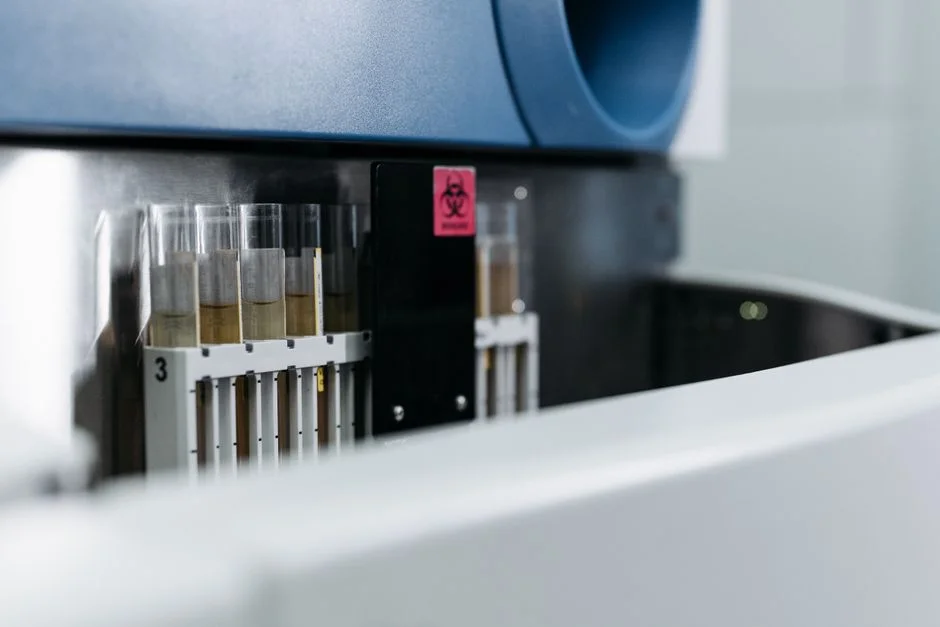
Representative El Paso-style numeric local limits at the IU-to-POTW connection — drawn from typical IPP limits in the Texas border region and the 40 CFR Part 414 categorical overlay for organic chemicals, plastics, and synthetic fibers — are summarized below. Confirm the current values with EPWU before specifying equipment.
| Parameter | Representative Local Limit (Daily Max) | Source / Basis |
|---|---|---|
| pH | 5.0 – 11.0 SU (instantaneous) | Typical IPP local limit; 40 CFR 403.5(b) general prohibition |
| Total Suspended Solids (TSS) | 250 mg/L | Typical EPWU-style local limit |
| Oil & Grease (O&G) | 100 mg/L | Typical IPP local limit; protects POTW aeration basins |
| Ammonia (as N) | Variable; often 20 – 50 mg/L seasonal | Site-specific; protects POTW nitrification |
| Cadmium (Cd) | 0.05 – 1.0 mg/L (daily max) | 40 CFR Part 414 categorical / local |
| Chromium (total Cr) | < 1.0 mg/L (daily max) | Local limit; protects biosolids land application |
| Copper (Cu) | < 1.0 mg/L (daily max) | Local limit; common pass-through concern |
| Lead (Pb) | < 0.5 mg/L (daily max) | Local limit; biosolids trigger |
| Nickel (Ni) | < 1.0 mg/L (daily max) | 40 CFR Part 414 categorical / local |
| Zinc (Zn) | < 1.0 mg/L (daily max) | Local limit; common pass-through |
| Cyanide (total) | 1.0 mg/L (daily max) | Typical IPP local limit |
| Total Toxic Organics (TTO) | 2.13 mg/L | 40 CFR 414 categorical standard for organic chemicals |
Two overlays drive the next 18 months. First, the PFAS-in-CWA rulemaking track set by H.R. 7900 (passed 329-101 by the House in July 2022) put the EPA on a fast-track schedule: first limits for organic chemicals, plastics, synthetic fiber manufacturers, electroplaters, and metal finishers were due June 30, 2024; limits for landfills, textile mills, and electrical/electronic component manufacturers were due one year later; and the second wave — paint formulators, plastic molders, and leather tanneries — is scheduled for 2026 (per C&EN reporting, 2022-07). Second, biosolids land-application restrictions under 40 CFR Part 503 are tightening because PFAS, metals, and TTO partition into sludge; a clean effluent stream is not enough if the dewatered cake fails the receiving landfill's acceptance criteria.
The Unit-Process Train That Gets You Under Those Limits
A sequenced physical-chemical-biological train is the only reliable way for a chemical plant to hit the manhole numbers above. The exact HRT, dose rates, and clarifier sizing depend on the specific wastewater characterization, but the unit operations below are standard for 40 CFR Part 414 facilities.
| Step | Unit Operation | Typical Performance / Target |
|---|---|---|
| 1 | Flow & load equalization (EQ basin, 6 – 24 hr HRT) | Dampens slug loads, stabilizes pH/COD swings before downstream units |
| 2 | Coarse screening & grit removal | Protects downstream pumps, DAF nozzles, and biological reactors |
| 3 | Oil/water separation: API/CPI gravity separator → DAF | Free and emulsified O&G to < 50 mg/L; TSS removal 60 – 90% |
| 4 | pH adjustment via PLC-controlled chemical dosing | Holds pH in the 7.5 – 9.5 precipitation window |
| 5 | Chemical precipitation (lime/caustic + sulfide or polymer) | Drives dissolved Cd, Cr, Cu, Ni, Pb, Zn to < 1 mg/L each; sludge to filter press |
| 6 | Biological treatment (activated sludge or MBBR/MBR) | COD/BOD reduction; TTO polishing to < 2.13 mg/L; ammonia nitrification |
| 7 | Polishing filtration & optional disinfection | TSS < 30 mg/L; protects POTW or enables on-site reuse |
Step-by-step, the train reads as follows. (1) An equalization basin with 6 – 24 hours of hydraulic retention time absorbs slug loads so the downstream units see a steady feed. (2) A rotary mechanical bar screen for headworks removes rags, plastics, and grit that would otherwise foul DAF nozzles and aeration diffusers. (3) An API/CPI gravity separator removes free oil, followed by a DAF system for oil and suspended solids removal that floats emulsified oil and biosolids to the surface for skimming — typical DAF effluent for O&G is 25 – 50 mg/L, comfortably under the 100 mg/L local limit. (4) PLC-controlled pH and precipitation chemical dosing brings the stream into the 7.5 – 9.5 window where lime, caustic, and sulfide do their work on dissolved metals. (5) The precipitation reactor drives heavy metals below their daily-max local limits; the resulting hydroxide sludge goes to a plate-and-frame filter press for hydroxide and biological sludge for dewatering to 25 – 35% dry solids. (6) Biological polishing — either a conventional activated-sludge basin, an MBBR, or an MBR depending on footprint and reuse goals — removes residual COD/BOD and provides the final TTO reduction below the 2.13 mg/L categorical threshold. (7) A multimedia polishing filter and optional UV or chlorination step protects the receiving POTW or supports on-site water reuse.
Sludge, PFAS, and 2026 Compliance Risks You Should Plan For Now
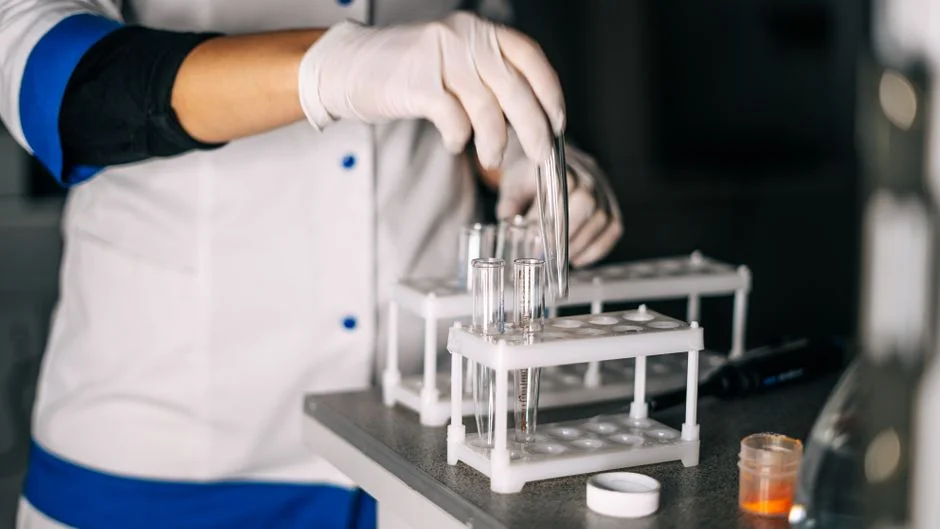
Sludge handling is where many pretreatment programs quietly fail. A plate-and-frame filter press for hydroxide and biological sludge typically dewatersthe combined chemical and biological sludge to 25 – 35% dry solids, which is acceptable for landfill disposal but may face restrictions if PFAS or metals content is elevated. The EPA's 2018 enforcement data shows that almost 11,000 facilities significantly exceeded permit limits in a single year (per EPA ECHO data referenced via Hella Water, 2026), and the most common root causes are inadequate O&M and missing self-monitoring records — not undersized unit processes.
For the PFAS track, plants in the second-wave cohort (paint formulators, plastic molders, tanneries) and even organic-chemicals facilities anticipating stricter limits should begin a source-trace and analytical baseline now. PFAS in the effluent is one issue; PFAS partitioning into biosolids that fail Part 503 ceiling concentrations or that a receiving landfill rejects is a separate and more expensive problem. For a broader look at the 2026 effluent standards landscape, the 2026 PFAS and emerging contaminant compliance standards analysis covers parallel rulemaking in the electronics sector and the same first-wave/second-wave calendar. Practical 2026 readiness actions: (1) baseline sample for PFAS, the six priority metals, and TTO before the new limits take effect; (2) verify the filter press cake meets landfill acceptance criteria; (3) confirm slug control plan covers every chemical in use; (4) calibrate pH probes and flow meters so the self-monitoring data holds up under inspection.
Frequently Asked Questions
Does every El Paso chemical plant need an IPP permit?
Yes — any facility that discharges to the El Paso Water Utilities sanitary sewer and meets the definition of an Industrial User under 40 CFR 403.3 must hold an IPP permit, and the more stringent the discharge (categorical industrial user under 40 CFR Part 414, for example), the more onerous the self-monitoring and slug-control requirements.
Are local limits stricter than EPA categorical standards?
Often yes. Under 40 CFR 403.5(c) the POTW must set site-specific local limits to prevent pass-through and interference, and these local limits frequently are more stringent than the federal categorical minimums — the controlling limit at the manhole is whichever standard is tighter.
What is the most common compliance failure for chemical plant pretreatment?
Slug loads that bypass the equalization basin and cause pH or metals excursions at the manhole. Root causes are usually a failed pH probe, a pump that runs when it should not, or a batch spill routed directly to the sewer without the slug control plan being triggered.
When do PFAS limits hit chemical plants?
The first EPA PFAS-in-CWA limits for organic chemicals, plastics, synthetic fiber manufacturers, electroplaters, and metal finishers were due by June 30, 2024; the second wave covering paint formulators, plastic molders, and leather tanneries is scheduled for 2026 (per H.R. 7900 as reported by C&EN, 2022-07).