
Start With the Two Numbers That Drive Every Other Choice
Containerized MBR sizing collapses to two inputs: design population and unit flow. For Mandan residential work, use 100 gpcd (≈380 L/c/d), which matches North Dakota Department of Environmental Quality (NDDEQ) typical design flow for residential subdivisions (per NDCC Ch. 61-28 program guidance). For workforce camps, use 50 gpcd for permanent occupancy (per Pure Aqua MBR-C sizing proxy, 2025) and 60–75 gpcd for construction camps with showers, food service, and laundry. The conversion rule that ties these to a container envelope is one line: ADF (gpd) = Population × unit flow; PDF = ADF × peaking factor; peak hourly = PDF × 1.5.
Define the design population deliberately. Residential = number of dwelling units × 2.6 persons/HU, the Census average for North Dakota. Camp = peak bed count × 1.0, assuming full occupancy at shift change, plus any meal-hall or laundry load the operator can quantify. A 200-room camp that runs 1.0 shift turnover per day is a 200-person plant, not a 400-person plant.
Apply a peaking factor: 1.5 for residential subdivisions >500 persons, 2.0 for 100–500 persons, and 2.5 for camps under 100 persons to capture the morning shower/evening kitchen peaks. The single most common sizing error is to size the equalization tank on average daily flow (ADF) instead of peak daily flow (PDF); the tank is supposed to swallow the peak, not the mean. Record the calculation as one line — it will be reused in steps 4 and 7.
| Project type | Unit flow | Peaking factor | Population basis | Source |
|---|---|---|---|---|
| Residential subdivision | 100 gpcd (380 L/c/d) | 1.5–2.0 | Dwelling units × 2.6 persons/HU | NDDEQ typical design flow |
| Permanent workforce camp | 50 gpcd (190 L/c/d) | 2.5 | Peak bed count × 1.0 | Pure Aqua MBR-C proxy, 2025 |
| Construction camp with showers/laundry | 60–75 gpcd (225–285 L/c/d) | 2.5 | Peak bed count × 1.0 | NDDEQ camp design flow |
Translate Population Into BOD, TSS, and Nitrogen Loading
A container that handles the flow can still be too small for the load. Per-capita loadings for residential sewage run 0.17 lb BOD/c/d (≈77 g/c/d) and 0.20 lb TSS/c/d (≈91 g/c/d); bump BOD to 0.20 lb/c/d for camps with food service (per Metcalf & Eddy, 5th ed., and EPA Onsite Wastewater Treatment System design manuals). Target Modified Ludzack-Ettinger (MLE) influent ranges for a containerized MLE-MBR are 200–400 mg/L BOD, 200–350 mg/L TSS, and 30–60 mg/L TKN — the most common design case for skid-mounted plants in the 5–200 m³/d class.
Confirm hydraulic retention time (HRT) ≥ 6 hours in the aeration tank and solids retention time (SRT) of 15–30 days for nitrification. In Mandan's winter mixed-liquor window of 10–15°C, hold SRT ≥ 25 days to retain nitrifiers — nitrification rates fall roughly 50% between 20°C and 10°C, and below 8°C the standard safety factor collapses. Membrane flux must stay inside 10–25 LMH for submerged hollow-fiber PVDF modules (per Pure Aqua MBR-C, 2025) and for the DF-series flat-sheet module at the design mixed-liquor suspended solids (MLSS) of 8,000–12,000 mg/L.
A 30-second sanity check: if the food-to-microorganism ratio (F:M) drops below 0.05 kg BOD/kg MLSS·d, the biological stage is over-sized and a smaller container envelope is possible. The same check flags under-sized plants — an F:M above 0.20 kg/kg·d at design load means the MLSS is too low to absorb the daily BOD, and the operator will see bulking and rising transmembrane pressure within weeks of startup. Specifying the containerized MBR bioreactor system around both hydraulic and biological numbers is what separates a defensible memo from a vendor one-liner.
| Parameter | Target / range | Basis |
|---|---|---|
| Influent BOD | 200–400 mg/L | MLE design case, residential/camp |
| Influent TSS | 200–350 mg/L | Standard domestic strength |
| Influent TKN | 30–60 mg/L | Residential/camp range |
| HRT (aeration) | ≥ 6 hours | Membrane manufacturer minimum |
| SRT (winter, 10–15°C) | ≥ 25 days | Nitrifier retention at Mandan MLSS temp |
| MLSS design | 8,000–12,000 mg/L | MBR operating envelope |
| Membrane flux | 10–25 LMH | Submerged UF (HF and flat-sheet) |
Match the Flow Envelope to a 20' or 40' High-Cube Container
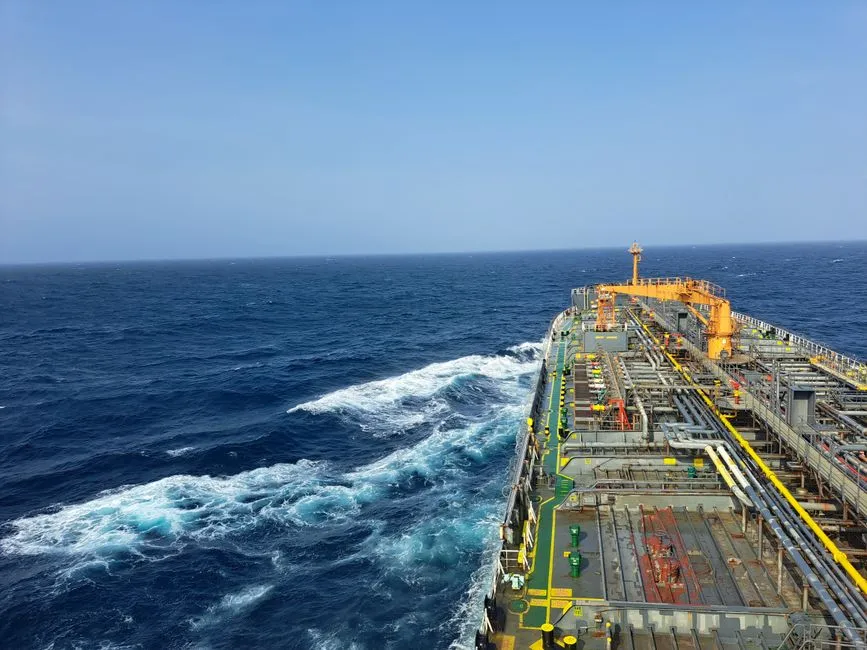
Convert the calculated flow into a container the procurement team can price, ship, and crane onto a foundation. A 20' HC ISO container (≈6.06 m × 2.44 m × 2.90 m internal) typically serves 5–50 m³/day (1,300–13,000 GPD); a 40' HC (≈12.19 m × 2.44 m × 2.90 m) typically serves 50–200 m³/day (13,000–53,000 GPD) per published ranges from Pure Aqua and Skyview (2025). The DF-series flat-sheet module produces 32–135 m³/day per 80–225 m² module bank, so a 40' HC envelope can host one to two banks depending on flow. Vendors that quote a "200 m³/d plant in a 20' HC" are usually quoting peak, not sustained, flow.
Reserve 20% of floor area for blowers, permeate pumps, clean-in-place (CIP) skids, and the PLC panel — this is the most common reason a packaged plant gets returned after delivery. Baseline enclosure requirements for a Mandan delivery are seaworthy ISO packaging, insulated walls (R-13 minimum), zero-leak welded sumps, and a built-in membrane air-scoring system. Plan the crane pick at the design stage: a 40' HC MBR with equipment typically lands at 8–12 metric tons, which means a 20-ton crane with 30 ft of boom is the minimum and access roads must hold a lowboy.
Use the table below as a one-glance container-to-population map. Residential at 100 gpcd and camp at 60 gpcd are both shown so a developer can size before contacting a vendor.
| Container | Flow envelope | Residential @ 100 gpcd | Camp @ 60 gpcd | Notes |
|---|---|---|---|---|
| 20' HC | 5–50 m³/d (1,300–13,000 GPD) | 13–130 persons | 22–217 persons | Pre-treatment + 1 membrane bank |
| 40' HC | 50–200 m³/d (13,000–53,000 GPD) | 130–530 persons | 217–880 persons | Two membrane banks + CIP |
| 40' HC + equalization | Same flow, lower peak shock | 100–400 persons | 160–700 persons | Recommended for camp peaking 2.5× |
For the membrane area calculation, divide design flow (m³/d) by 0.864 to get m³/h, then divide by design flux (LMH) to get the membrane area in m². A 100 m³/d plant at 15 LMH needs roughly 7,800 m³/d ÷ 15 LMH × 24 h — i.e. about 280 m² of membrane, easily served by a DF-series flat-sheet membrane module bank in a 40' HC envelope.
Engineer the Foundation, Piping, and Pre-Treatment for a North Dakota Site
Most MBR project failures in cold climates are civil, not biological: the container arrives but cannot be installed. Specify a 6-inch reinforced concrete pad or a 12-inch compacted granular base with a 2% slope to a floor drain. Tie the unit down to helical piles or dead-man anchors rated for Mandan's 90+ mph design wind (per ASCE 7-22 and the North Dakota building code adoption). A 40' HC pad needs roughly 40 ft × 16 ft of clear, level ground plus 6 ft of skirt allowance on the working face.
Pre-treatment is non-negotiable. A 1.5 mm perforation drum screen protects the membrane surface per Pure Aqua MBR-C design (2025); for camp flows with lint, food waste, and grit, add a rotary bar screen upstream so the drum screen does not blind. Size the equalization tank at ≥ 25% of ADF for residential and ≥ 50% of ADF for camps to absorb the 2.0–2.5× peaking without starving the biological stage. Use HDPE DR 11 fusion-welded pipe below the frost line (≈7 ft in the Mandan area) and insulated PEX or heat-traced pipe for the container inlet and concentrate lines.
Confirm a 460V/3Ph/60Hz three-phase supply and standby power. A generator receptacle is standard for camps in the Bakken-adjacent service area, and runtime for a 200-person MBR is roughly 8–12 kW continuous plus 20 kW peak during a membrane relaxation/backwash cycle. For a packaged MBR with camp-style loading, the rotary mechanical bar screen upstream of the drum screen is the cheapest insurance against membrane fouling you can buy.
Override the Container for Mandan Winters (Zone 4a)
Mandan is USDA Hardiness Zone 4a with design winter lows of -20°F to -40°F (per the 2023 USDA Plant Hardiness Zone Map and NOAA NCEI 30-year normals for the Bismarck-Mandan station). The MBR's 68–86°F (20–30°C) operating window (per Pure Aqua MBR-C, 2025) must be held by enclosure heat, not just biological activity, because biological heat alone is overwhelmed once the air temperature drops below 10°F. No standard vendor datasheet covers this — it is the single largest gap in the Bakken-camp procurement cycle.
Specify 2–4 inches of closed-cell spray-foam or rigid polyiso insulation on walls and roof (R-13 to R-30 effective), add a 1–2 inch heated skirt around the base, and heat-trace the inlet and concentrate piping with self-regulating cable rated to -40°F. Add a 3–5 kW electric unit heater per 20' HC bay and a small heat-recovery loop from the duty blower discharge (typically 30–40°C at the manifold) into the equalization tank. If the site is rural, allow a propane-fired hydronic or ducted indirect-fired heater as backup; an air-source heat pump is generally not cost-effective below -10°F because COP collapses and the defrost cycle steals capacity.
For seasonal camps, a "cold-hardy" configuration is acceptable: bury the equalization tank below frost line, drain and air-blow the membrane modules, and keep the enclosure at ≥ 10°C with a thermostatically controlled unit heater. This is the configuration used for the Bakken construction-camp winter shutdown case and is documented in HydropureWater's cold-climate skid notes (2025).
| Climate parameter | Mandan design value | Override |
|---|---|---|
| USDA Hardiness Zone | 4a | Enclosure heat required Nov–Mar |
| Design winter low | -20°F to -40°F | Heat-trace all exterior piping |
| MBR operating window | 68–86°F (20–30°C) | Maintain via enclosure + heater |
| Frost line | ≈7 ft (2.1 m) | HDPE below this depth |
| Insulation target | 2–4 in. polyiso / spray foam | R-13 to R-30 effective |
| Heater sizing | 3–5 kW per 20' HC bay | With blower heat-recovery loop |
Map the Effluent Targets to NDDEQ, NSF 350, and Subsurface Disposal
MBR effluent of BOD <5 mg/L, TSS near zero, and 4–6 log virus/bacteria reduction (per peer-reviewed data summarized in the 2024 MBR review) easily meets NDDEQ Class I/II subsurface-disposal limits and NSF/ANSI 350-2022 for onsite reuse. The MBR is the treatment device; it does not replace the disposal permit. North Dakota requires a permit from NDDEQ Division of Water Quality for any subsurface disposal system serving more than 2,500 gpd or more than one parcel (per NDCC Ch. 61-28). The package plant is permitted as part of the overall system, not on its own.
If the project targets reuse — camp laundry, landscape irrigation, toilet flush — design to NSF/ANSI 350-2022 turbidity and E. coli benchmarks, or to California Title 22 disinfected tertiary (≤2.2 MPN/100 mL coliform, ≤2 NTU turbidity, 5-log virus reduction) as a defensible upper bound. NSF/ANSI 350-2022 has emerged as the de facto product-certification benchmark for onsite reuse in North America and is referenced in the International Plumbing Code and Uniform Plumbing Code. For camps, the North Dakota Department of Health may also require a drinking-water review if on-site wells are within 100 ft of the disposal footprint.
Worked disposal check: 200-person workforce camp → 200 × 60 gpcd = 12,000 gpd ADF, × 2.5 = 30,000 gpd PDF, fits a single 40' HC unit with one equalization tank and a Class II drainfield sized at ~6,000 sq ft (at 0.5 gpd/sq ft LTAR for a typical Mandan sandy-loam loading rate). Direct surface-water discharge requires an NDPDES permit and is rarely granted for residential/camp flows.
| Standard | Limit / target | MBR capability |
|---|---|---|
| NDDEQ Class I/II | BOD/TSS limits per site | BOD <5 mg/L, TSS ≈ 0 |
| NSF/ANSI 350-2022 | Turbidity & E. coli | 4–6 log virus/bacteria reduction |
| California Title 22 (tertiary) | ≤2.2 MPN/100 mL coliform, ≤2 NTU turbidity | Defensible upper bound for reuse |
| Discharge permit (NDPDES) | Surface water | Rarely granted for residential/camp |
Worked Example: Sizing a 200-Person Bakken-Adjacent Camp in Mandan
Inputs: 200 persons, 60 gpcd camp unit flow, 2.5 peaking factor, 10°C winter mixed liquor, 6-hour minimum HRT. Calculations:
- ADF = 200 × 60 = 12,000 gpd (45.4 m³/d)
- PDF = 12,000 × 2.5 = 30,000 gpd
- Peak hourly = 30,000 × 1.5 = 45,000 gpd
- All three values sit inside a single 40' HC MBR envelope (per Pure Aqua population/capacity table, 2025)
- Aeration tank: 12,000 gpd × 0.5 d = 6,000 gal working volume
- SRT 25 days at 8,000 mg/L MLSS keeps nitrification above 10°C
Footprint: a 12.2 m × 2.4 m container plus a 6 ft skirt, on a 40 ft × 16 ft concrete pad; 6,000 gal HDPE equalization tank; drainfield ≈ 6,000 sq ft. OPEX at the industry average of 0.4–2.3 kWh/m³ (per the 2023 MBR review summarized in S4) is roughly USD 8,000–10,000 per year in electricity at North Dakota industrial rates. For comparison, the same inputs in a warmer climate are covered in the Dallas containerized MBR sizing guide, where winterization is a footnote rather than a design driver. For biological-stage alternatives where an MBR is over-specified, the oxidation ditch design reference lays out the HRT/SRT math side by side.
| Line item | Value |
|---|---|
| Population | 200 persons |
| Unit flow | 60 gpcd |
| ADF | 12,000 gpd (45.4 m³/d) |
| 30,000 gpd | |
| Container | 40' HC MBR (1 unit) |
| Equalization tank | 6,000 gal HDPE |
| Drainfield (Class II) | ~6,000 sq ft @ 0.5 gpd/sq ft LTAR |
| Concrete pad | 40 ft × 16 ft × 6 in. |
| OPEX (electric) | USD 8,000–10,000/yr |
Frequently Asked Questions
What is the unit flow I should use for Mandan residential and camp sizing?
100 gpcd for residential (per NDDEQ typical design flow), 50–60 gpcd for permanent workforce camp, and 60–75 gpcd for construction camp with showers and food service. Apply a peaking factor of 1.5–2.5 to convert to peak daily flow before sizing the equalization tank and the membrane area.
Which container size fits my project?
20' HC ISO containers handle 1,300–13,000 GPD (5–50 m³/d), which covers 13–130 residents at 100 gpcd or 22–217 campers at 60 gpcd. 40' HC containers handle 13,000–53,000 GPD (50–200 m³/d), which scales to 130–530 residents or 217–880 campers. Vendors quoting a 200 m³/d plant in a 20' HC are quoting peak, not sustained, flow.
Can a containerized MBR run in a Mandan winter?
Yes, with 2–4 inches of closed-cell insulation, a 1–2 inch heated skirt, heat-traced piping, and a 3–5 kW unit heater per 20' HC bay. Air-source heat pumps lose cost-effectiveness below -10°F; specify an electric unit heater with optional propane backup for rural sites. Seasonal camps can hold the enclosure at ≥ 10°C with the membrane modules drained and air-blown.
Which North Dakota agency permits these plants?
The North Dakota Department of Environmental Quality (NDDEQ), Division of Water Quality, under NDCC Ch. 61-28. The package plant is the treatment device; the disposal system (drainfield or LPP) is permitted separately. Projects over 2,500 gpd or serving more than one parcel require a subsurface-disposal permit in addition to the device approval.
Do I still need a drainfield, or can the MBR effluent go straight to surface water?
Mandan projects almost always need a subsurface disposal system (drainfield or LPP) sized to NDDEQ loading rates — typically 0.5 gpd/sq ft for a sandy-loam Class II site. Direct surface-water discharge requires an NDPDES permit and is rarely granted for residential/camp flows because of the Missouri River tributary total maximum daily load constraints in the region.