What Makes Airport Sludge Different from Municipal Biosolids
Airport wastewater sludge in 2026 is a four-stream composite, not a single sanitary feed: terminal sewage, apron and taxiway stormwater, aircraft and hangar wash, and seasonal de-icing fluid discharge. Each stream peaks in a different month and contributes a different solids signature — fecal colloids from terminals, mineral grit and tire-wear metals from the apron, surfactant-laden emulsions from hangar wash, and a high-COD biodegradable load from glycol during winter operations. The combined sludge carries 50–500 mg/L oil and grease at baseline and spikes above 1,000 mg/L on first-flush apron events (per airport master-plan loadings referenced in the hydropurewater 2026 process guide), which is 2–5× the load a municipal plant is designed for and produces floatable solids that foul dewatering belts and centrifuge bowls.
The de-icing shock is the defining operational risk. Mixed-liquor suspended solids swing from a summer baseline near 2,500 mg/L to above 8,000 mg/L during winter glycol events (Jank, Guo & Cairns, 1974, Water Research 8(11):875-880), because propylene and ethylene glycol add 10,000–50,000 mg/L COD that conventional activated sludge cannot buffer without massive equalization. Glycol biodegradation in adjacent soil runs 19.7–27.0 mg/kg/day at 8°C but collapses to 2.3–4.5 mg/kg/day at −2°C (1993 Ecotoxicology and Environmental Safety study, sciencedirect S0147651383710262) — the same temperature effect slows thickener biology in winter, so design solids capture targets must be derated 20–30% from November through March. PFAS from legacy AFFF stockpiles and from the fluorine-free foam transition contributes short-chain PFBA and PFBS that pass through 0.1–0.4 µm MBR membranes and concentrate in the biosolids cake, which is why PFAS-in-biosolids is now a forward design constraint rather than an environmental afterthought.
Sludge Characterisation and Yield Estimation for the 2026 Design Basis
The parameter table below is the asset a consulting engineer copies into a 2026 process design memo or P&ID. Values are drawn from Jank et al. (1974), standard airport master-plan loadings, the hydropurewater 2026 airport wastewater guide, and HydropureWater field data on glycol-conditioned mixed liquor. The yield relationship is the key differentiator: glycol-dominated influent produces 0.3–0.6 kg dry solids per kg COD removed, versus 0.2–0.4 kg/kg for typical municipal activated sludge, because propylene and ethylene glycol carry high COD with low cell yield per unit substrate.
| Parameter | Terminal sewage | Apron / taxiway runoff | De-icing fluid discharge | Combined mixed liquor (winter) |
|---|---|---|---|---|
| MLSS (mg/L) | 1,800–2,500 | 200–800 | n/a (raw) | 6,000–8,500 |
| MLVSS / MLSS ratio | 0.75–0.82 | 0.40–0.60 | 0.90–0.95 | 0.78–0.85 |
| SVI (mL/g) | 100–150 | n/a | n/a | 120–180 (winter), 90–130 (summer) |
| CST (s) | 8–15 | 20–40 | 5–10 | 25–45 |
| Total solids, raw stream (mg/L) | 700–1,200 | 300–1,500 | 50,000–150,000 | 1,500–3,000 |
| Oil & grease (mg/L) | 30–80 | 50–500 (peak >1,000) | <20 | 80–300 (winter blend) |
| Observed yield Yobs (kg DS/kg COD) | 0.25–0.40 | 0.15–0.30 | 0.30–0.50 | 0.30–0.60 |
Thickening target for the 2026 design basis is 2–3% total solids from a gravity belt thickener or DAF thickener, with polymer dose 3–6 kg/ton dry solids for glycol-conditioned sludge (HydropureWater field data, 2025-11). Winter operation derates this: thickened-solids concentration can drop to 1.5% because high hydraulic load from snowmelt and low polymer efficiency below 5 °C reduce capture. Foaming risk in winter anaerobic storage is real — VFA accumulation from partially degraded glycol drives a stable foam layer that disrupts gravity thickener overflow weirs and forces operators to dose antifoam (typically silicone emulsion at 50–200 mg/L) or accept 10–15% solids loss to the overflow.
The 2026 Process Train: From Bioreactor to Cake
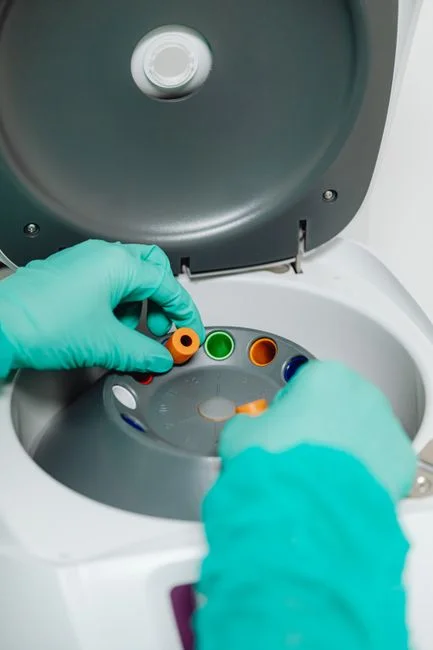
The end-to-end train sequences five unit operations so that each handles what the previous one cannot. Step 1 is biological: a submerged PVDF MBR at 0.1 µm absorbs the equalized COD shock and produces a low-SS mixed liquor suitable for direct thickening. The MBR replaces the secondary clarifier, sand filter, and most of the sludge-return stream of a conventional layout, and it cuts the ~60% footprint penalty that has historically driven municipal copy-paste designs off airside plots. Step 2 is sludge thickening: a DAF-thickener or rotary drum thickener targeting 3–5% DS, with DAF preferred when oil and grease carryover is high because flotation outperforms drum thickening on buoyant and emulsified solids. Step 3 is conditioning: cationic polyacrylamide at 8–18 kg/ton DS for glycol-conditioned sludge (HydropureWater field data, 2026); lime or ferric chloride is added only when the biosolids must hit Class A pathogen reduction under 40 CFR 503.
Step 4 is mechanical dewatering, and this is where the airport 2026 process train diverges from the standard municipal tender. A plate-and-frame filter press sized 1–500 m² delivers 22–28% cake DS — the 2026 norm for any airport with under 50 m³/d of sludge volume, because the higher cake dryness cuts transport mass, lifts incinerator autothermal performance, and keeps landfill leachate thresholds inside spec. Centrifuges and belt presses are evaluated against the plate press in the decision matrix that follows, but the plate press remains the drop-in dewatering unit for the airport cake-handling step on sites where footprint, polymer demand, or transport-cost economics dominate. Step 5 is biosolids handling: cake storage in an enclosed hopper, then off-site incineration, landfill, or land application, with the end-use decision driven by PFAS class, pathogen class, and local receiving-water regulation rather than by equipment preference.
For engineers sequencing this train alongside other industrial sludge applications, the same unit-operation logic appears in the foundry wastewater sludge treatment guide for heavy-metals conditioning and in the coking wastewater sludge treatment cost data piece for phenolics-laden streams — the thickening-to-conditioning-to-dewatering sequence holds across industries even when the chemistry does not.
Selecting Dewatering Equipment by Sludge Type and Site Constraints
The decision matrix below is what a procurement lead or airport environmental manager will copy into a tender. The three viable candidates for airport biosolids dewatering in 2026 are plate-and-frame filter press, decanter centrifuge, and belt press; each has a defined operating envelope, and the cold-climate derate is what flips the decision at most northern hubs.
| Criterion | Plate-and-frame filter press | Decanter centrifuge | Belt press |
|---|---|---|---|
| Cake DS achievable | 22–28% | 18–24% | 16–22% |
| Polymer demand (kg/ton DS) | 8–14 | 10–18 | 12–22 |
| Footprint (relative) | 0.7–1.0× | 0.5–0.8× | 1.0–1.4× |
| Energy use (kWh/ton DS) | 5–10 (batch) | 25–45 | 15–30 |
| CAPEX (relative, skid-mounted) | 1.0–1.3× | 1.4–1.8× | 0.7–0.9× |
| OPEX driver | Polymer + cloth life | Energy + polymer + wear | Polymer + belt life |
| Best-fit airport scenario | <50 m³/d sludge; cold-climate hubs; transport or incineration-bound cake | >50 m³/d sludge; 24/7 generation; warm or temperate sites | Low-volume greenfield; temporary or pilot deployment |
The airport-specific override on this matrix is low mixed-liquor temperature. Polymer efficiency for cationic polyacrylamide drops 20–40% below 10 °C, and a centrifuge at low temperature loses both cake dryness and capture rate because bowl residence time on a viscous feed does not recover the lost kinetics. A plate-and-frame filter press with extended pressing stages (4–6 hour cycle versus the typical 2–3 hour cycle) recovers cake DS even when polymer dose is held at the low end of the 8–14 kg/ton DS range, which is why plate presses are winning tenders at Minneapolis, Montreal, and Munich despite a higher unit CAPEX.
Lifecycle Cost and 2026 Compliance Anchors
CAPEX for a 20 m³/d dewatering skid — comprising thickener, plate press, and polymer make-up system — sits in the USD 180,000–420,000 installed range, consistent with EU industrial wastewater cost benchmarks cited in the hydropurewater 2026 airport guide. OPEX is polymer-dominated: 8–18 kg/ton DS at USD 3.5–6.0/kg is the single largest line item, energy typically accounts for 15–25% of OPEX, and maintenance (cloth replacement, hydraulics, polymer pump diaphragms) runs 8–12%. At 22–28% cake DS, transport mass drops 35–45% relative to a 16% belt-press baseline, which is the line item that closes the CAPEX gap at sites more than 50 km from the disposal point.
Regulatory anchors governing the 2026 design are: EU UWWTD 91/271/EEC at BOD ≤25 mg/L (95th percentile), COD ≤125 mg/L, TSS ≤35 mg/L for any hub discharging above 2,000 p.e.; China GB 8978 Class I/II at COD ≤60–100 mg/L and oil & grease ≤5 mg/L (a binding number at Chinese hub airports); US EPA Airport Deicing NPDES framework for state-level glycol-specific COD caps tightening through 2026; and ICAO Annex 14 Vol. I Attachment C for the combined-stream guidance that overlays numeric local limits. The biosolids end-use rule of thumb is straightforward: 22–28% cake DS passes standard landfill leachate thresholds, but mono-incineration without auxiliary fuel requires 25%+ DS to stay autothermal — a 3-percentage-point gap that is the practical reason airports with on-site incineration push the upper end of the plate-press envelope.
PFAS-in-biosolids is the 2026 forward risk that no tender currently prices. Short-chain PFBA and PFBS pass the 0.1–0.4 µm MBR membrane and concentrate in the cake; land-application pathways are tightening in 2026 in Minnesota, Michigan, and New York, and the EU is moving through the PFAS restriction proposal that will reclassify biosolids land spreading by 2027. The defensible 2026 design choice is to leave space and hydraulic profile for a downstream NF/RO polish on the MBR permeate — not on the cake — so that future PFAS removal is a retrofit, not a rebuild.
Frequently Asked Questions
What cake dry-solids target should a 2026 airport tender specify for a plate-and-frame filter press?
Specify 22–28% cake DS as the operating range, with a 25% acceptance value for routine operation and a 28% demonstrated value under optimized polymer dose and pressing time. Cake at 25%+ enables mono-incineration without auxiliary fuel (per HydropureWater field data, 2026) and passes landfill leachate thresholds for all major 2026 jurisdictional frameworks.
How much polymer does glycol-conditioned airport sludge actually demand?
Cationic polyacrylamide at 8–18 kg/ton DS for the dewatering stage, with 3–6 kg/ton DS for the upstream thickening stage. Winter operation below 5 °C mixed liquor derates polymer efficiency 20–40%, so a cold-climate tender should price polymer at the upper end of the range and carry a contingency line for an extended pressing cycle rather than a higher dose.
Does an MBR remove PFAS from airport wastewater?
No. An MBR removes biomass-bound PFAS marginally but does not stop dissolved short-chain PFBA and PFBS, which pass the 0.1–0.4 µm membrane and concentrate in the biosolids cake. A 2026-compliant PFAS train requires nanofiltration or reverse osmosis downstream of the MBR, and that stage is treated as a future retrofit on the biosolids-management side, not as base scope on the membrane bioreactor.