
Why a Packaged Plant Is the Default Choice for a Thiès Housing Estate in 2026
Thiès, like most secondary Senegalese cities, has no central sewer network serving peri-urban housing estates, so any 200–1,000-home development built in 2026 must treat its own sewage on the plot. The default answer is a buried packaged sewage treatment plant in the 50–1,500 m³/day envelope, because 65–100% of urban sanitation in sub-Saharan Africa is delivered through onsite or decentralized technologies, with Dakar documented as the reference case where sewer-based and on-site systems operate side by side (Strande et al., PMC, 2014). For a single estate, a centralized plant on the SUEZ Hann Bay (Dakar) model — a 50,000+ m³/day facility designed for industrial and urban catchments — is the wrong scale, wrong delivery model, and wrong contracting structure. A buried WSZ A/O package plant, defined as a skid- or skid-section-mounted, factory-built unit combining anoxic/aerobic biological treatment, sedimentation, and disinfection, delivered ready to lower into a pit, fits the brief on three counts: a 4–8 week install window instead of 9–15 months of civil works, no large reinforced concrete tanks, and the ability to add parallel modules in 250–500 m³/day increments as the estate phases in. For a Thiès developer, the alternative of building a conventional cast-in-place activated-sludge plant is technically valid but commercially punitive at this flow band.
How to Size the Plant: From Number of Homes to m³/day
Residential sewage flow in West Africa is conventionally taken at 100–150 L per capita per day (lpcd) with 5–6 persons per household, giving a per-home envelope of 0.5–0.9 m³/day. Apply a peaking factor of 1.5–2.0 for morning and evening peaks, then add 10–20% for infiltration, pool backwash, mosque ablutions, and small commercial plots inside the estate. Worked example for a 200-home estate: 200 × 6 × 130 L = 156 m³/day average dry-weather flow, rising to 230–310 m³/day at peak, comfortably inside the WSZ 1–80 m³/h range (the WSZ-10 covers 240 m³/day at 10 m³/h, the WSZ-15 covers 360 m³/day). A 500-home estate hits ~390 m³/day average and ~580–780 m³/day peak, mapping to a WSZ-20 to WSZ-30 unit. The 950-home benchmark from the New Harbour Village (Jamaica) design report — 0.361 MGD, equivalent to ~1,367 m³/day, or ~1.44 m³/home/day — cross-checks the West-African assumption and sits at the upper end because that development includes 2-bedroom houses with higher per-home occupancy (NEPA Jamaica engineer's report, 2006). A 1,000-home estate in Thiès therefore lands at 1,200–1,440 m³/day average, requiring either a single large MBR skid or a 2× parallel WSZ-30 arrangement. The 10–20% design margin should be applied to the peak figure, not the average, otherwise the grit chamber and biological stage will be undersized for the morning peak that lasts 2–3 hours.
| Estate size (homes) | Persons (6/hh) | Average flow (m³/d) | Peak flow (PF 2.0 + 15% margin) | Suggested WSZ model | Suggested MBR module |
|---|---|---|---|---|---|
| 200 | 1,200 | 156 | ~360 | WSZ-15 (360 m³/d) | MBR-20 skid |
| 500 | 3,000 | 390 | ~900 | 2× WSZ-20 in parallel | MBR-50 skid |
| 1,000 | 6,000 | 780 | ~1,800 | 2× WSZ-30 in parallel | MBR-100 skid |
WSZ A/O Package vs. MBR Package: Which Fits a Housing Estate?
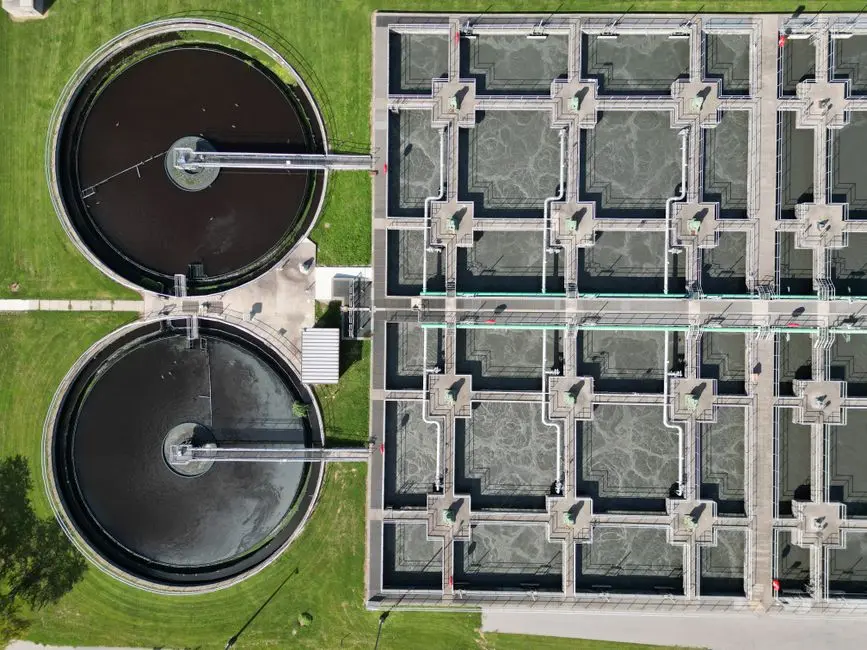
The WSZ A/O series is an anoxic/aerobic biological contact-oxidation process with built-in sedimentation and chlorine contact, sized 1–80 m³/h, fully automatic, and designed to run without a dedicated operator; well-sized units discharge BOD₅ around 20 mg/L, COD around 80 mg/L, and TSS around 30 mg/L (HydropureWater field data, 2026). The MBR package plant combines activated sludge with submerged PVDF ultrafiltration membranes at less than 1 μm pore size, delivering BOD₅ below 30 mg/L, COD below 50 mg/L, and TSS below 5 mg/L, in a footprint roughly 60% smaller than an A/O unit of equal capacity. The decision rule for a Thiès estate is straightforward: if the developer wants to reuse treated water for landscape irrigation, toilet flushing, or road washing in the dry season, specify MBR; if the goal is compliant discharge to a soakaway or evaporation drain that does not feed a watercourse, the WSZ A/O is the lower-CAPEX, lower-OPEX choice. Energy use separates the two on a 10-year OPEX basis — WSZ A/O draws 0.3–0.5 kWh/m³ while MBR with membrane scouring aeration draws 0.8–1.2 kWh/m³ (HydropureWater engineering reference, 2026) — which at Senegalese grid tariffs of 0.13–0.18 USD/kWh in 2026 adds roughly 110–260 USD/day for a 500 m³/day plant running on MBR, or about 400,000–950,000 USD over a 10-year operating horizon. Sludge handling favors MBR for downstream logistics: the higher MLSS concentrates waste-activated sludge, easing dewatering on a plate-and-frame filter press. Footprint is decisive on high-value peri-urban land: a 500 m³/day WSZ-A/O train needs 80–120 m² plus a sludge holding tank, while an equivalent MBR needs 30–50 m².
| Parameter | WSZ A/O package | MBR package |
|---|---|---|
| Flow range | 1–80 m³/h (24–1,920 m³/d) | 10–2,000 m³/d |
| Effluent BOD₅ / COD / TSS | ~20 / ~80 / ~30 mg/L | <30 / <50 / <5 mg/L |
| Membrane pore size | n/a (clarifier-based) | <1 μm PVDF |
| Footprint at 500 m³/d | 80–120 m² + sludge tank | 30–50 m² |
| Energy use | 0.3–0.5 kWh/m³ | 0.8–1.2 kWh/m³ |
| Operator requirement | None (automatic) | None (automatic), annual membrane service |
| Best fit in Thiès | Soakaway / evaporation discharge | Reuse for irrigation / toilet flush |
Senegalese Compliance, Discharge Options and Reuse in 2026
The applicable effluent standard is Senegalese NS 05-061, which sets urban wastewater discharge limits typically at BOD₅ ≤ 40 mg/L, COD ≤ 120 mg/L, TSS ≤ 50 mg/L, and fecal coliforms in the 10³–10⁴ CFU/100 mL band depending on the reuse class (Senegalese standards reference, Direction de l'Environnement). Both a well-sized WSZ A/O and an MBR package can meet these limits, but the MBR carries a smaller safety margin against hydraulic peaks because the membrane barrier is absolute on TSS and most coliforms. For a Thiès estate in the 2026 dry season, the realistic reuse targets are landscape irrigation of the estate's own green space, road washing, and toilet flushing in the clubhouse or guardhouse — all compatible with MBR effluent and all reducing the volume discharged to any soakaway. Approvals sit with the Direction de l'Environnement for the environmental compliance file and the ONAS (Office National de l'Assainissement du Sénégal) for the technical review of the WWTP itself, even though ONAS does not own the asset. Pre-screening with a rotary mechanical bar screen on the inlet is worth specifying because it protects both the biological stage and, in the MBR case, the membrane cassettes from ragging. Disinfection with an on-site chlorine dioxide generator downstream of the biological stage is more reliable than sodium hypochlorite in Thiès' Sahelian heat, where ambient temperatures above 35 °C accelerate off-gassing and lose residual.
Indicative CAPEX, OPEX and Delivery Model for a 2026 Thiès Project
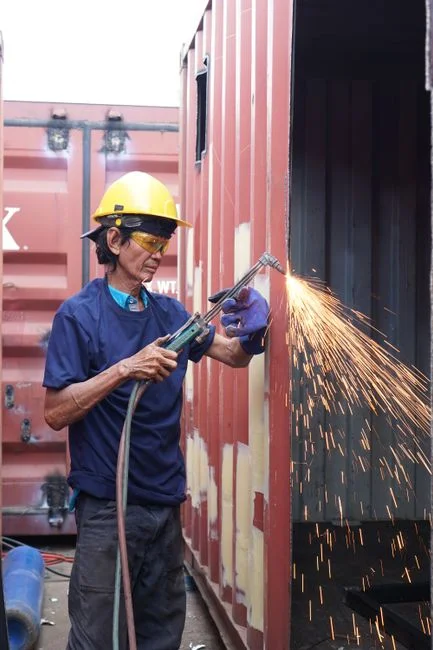
Order-of-magnitude CAPEX for a 200–500 m³/day WSZ-A/O package plant, on a basis of equipment ex-works plus civil works, pipework, installation, and 20-ft/40-HQ container shipping from the factory to Dakar and onward road freight to Thiès, falls in the 250–600 USD per m³/day of installed capacity range; an MBR of the same capacity adds 30–60% on top of the equipment line because of the membrane cassettes and the larger blower (HydropureWater indicative pricing, 2026). OPEX is dominated by energy at Senegalese grid tariffs of 0.13–0.18 USD/kWh in 2026, sludge hauling to the ONAS reception point, chemical dosing for disinfection, and — for MBR — membrane replacement every 5–7 years at roughly 8–12% of the membrane skid cost per cycle. The delivery model is well established for West Africa: the unit is factory-built, FAT-tested, shipped in a 20-ft or 40-HQ container, road-freighted Dakar–Thiès, lowered onto a prepared concrete pad or buried, and connected to inlet, outlet, and power over 4–8 weeks. The comparable cast-in-place activated-sludge plant would take 9–15 months and cost 1.5–2× the packaged equivalent at this flow band, which is why the procurement model in 2026 is overwhelmingly packaged with an annual O&M service contract from the supplier — typically 4–6% of CAPEX per year for a multi-year deal. For a developer, this procurement pattern also transfers most of the performance risk to the equipment supplier during the first 24 months.
| Item | 200-home estate (WSZ-15) | 500-home estate (WSZ-20 × 2) | 1,000-home estate (WSZ-30 × 2 or MBR-100) |
|---|---|---|---|
| Design flow (m³/d) | ~360 peak | ~900 peak | ~1,800 peak |
| Equipment CAPEX (USD) | 90,000–180,000 | 200,000–450,000 | 450,000–900,000 (WSZ) / 700,000–1,300,000 (MBR) |
| Civil + install (USD) | 40,000–90,000 | 90,000–200,000 | 180,000–400,000 |
| Annual energy (USD/yr) | 14,000–24,000 | 32,000–58,000 | 65,000–118,000 (WSZ) / 130,000–236,000 (MBR) |
| Annual O&M contract | 6,000–12,000 | 12,000–30,000 | 25,000–60,000 |
| Install timeline | 4–6 weeks | 6–8 weeks | 8–10 weeks |
Frequently Asked Questions
What size packaged sewage plant does a 200-home estate in Thiès need?
Plan for an average dry-weather flow of about 156 m³/day, rising to 230–310 m³/day at peak, which maps to a WSZ-15 (15 m³/h, ~360 m³/day capacity) or a single MBR-20 skid. Add 15% margin on the peak figure to cover infiltration and small commercial flows inside the estate.
Is a packaged plant approved by ONAS for a residential estate in Senegal?
Yes, ONAS reviews and approves packaged WWTPs for residential and institutional sites even though it does not own them; the Direction de l'Environnement handles the environmental compliance file. Submit the process description, the NS 05-061 effluent compliance table, and the equipment data sheet as the core of the technical review.
How much does a packaged sewage plant cost in Senegal in 2026?
Expect 250–600 USD per m³/day of installed capacity for a WSZ A/O plant in the 200–500 m³/day band, with MBR adding 30–60% on equipment only. A turnkey 500 m³/day WSZ estate plant typically lands between 300,000 and 650,000 USD including civil works, shipping, and commissioning.
Can treated wastewater from a package plant be reused for garden irrigation in Thiès?
Yes, provided the plant meets NS 05-061 fecal coliform limits and the effluent goes through a disinfection step, typically an on-site chlorine dioxide generator. MBR effluent is preferred for unrestricted landscape irrigation because TSS stays below 5 mg/L and the disinfection demand is lower.