What an MBR System Does and Why It Suits Oman's Wastewater Profile
An MBR merges activated sludge biology with submerged microfiltration or ultrafiltration membranes in a single tank, eliminating the secondary clarifier and most of the footprint that conventional activated sludge or SBR systems require. Solids are retained at the membrane surface, not settled by gravity, so biomass concentrations can run at 8,000–12,000 mg/L MLSS versus 2,000–4,000 mg/L in a conventional plant. For an Omani industrial buyer, that translates into a unit 50–60% smaller than an equivalent SBR for the same organic load, and effluent quality that is decoupled from sludge settleability — a real advantage when influent TDS pushes above 5,000 mg/L and filamentous bulking becomes a risk.
The typical packaged integrated MBR wastewater treatment system ships as a skid or ISO-container module rated from 10 to 2,000 m³/day, with submerged PVDF membranes at 0.1 μm nominal pore size. Treated effluent typically lands at BOD ≤5 mg/L, TSS ≤5 mg/L, and turbidity below 1 NTU — well inside the limits a refinery in Sohar or a food plant in Salalah needs to hit. PVDF chemistry matters here: it tolerates the 30–50°C ambient temperatures of an Omani summer, the oxidative cleaning chemicals used for CIP, and the high-TDS brine that often shows up in refinery or desalination-adjacent streams. The biological kinetics also accelerate at higher temperatures; a standard activated sludge plant rated for 0.3 kg BOD/kg MLSS·day at 20°C can often run 0.5–0.6 kg BOD/kg MLSS·day at 35°C, which lets a smaller tank do the same work.
Oman 2026 Regulatory Framework: Discharge Limits and Reuse Targets
Oman's environmental discharge framework is administered by the Ministry of Environment, Climate and Climate Affairs (MECA) and enforced by Royal Oman Police environmental units, with treated industrial effluent typically held to BOD ≤30 mg/L, TSS ≤30 mg/L, COD ≤150 mg/L, oil & grease ≤10 mg/L, residual chlorine ≤1 mg/L, and pH 6–9. Oil and gas projects inside Petroleum Development Oman (PDO) concession blocks face stricter Shallow Offshore / SOIL and SRO discharge criteria, often requiring additional polishing for hydrocarbons, phenols, and heavy metals before final disposal.
On the reuse side, Oman Vision 2040 targets 35% non-conventional water supply from treated wastewater and desalination by the plan horizon, which puts MBR effluent directly in scope as a building block for irrigation, cooling tower makeup, and industrial process reuse. Haya Water and Nama Group operate the municipal reuse grid under their own acceptance standards for irrigation and landscape applications, while the ASPEE/PEER framework covers industrial reuse benchmarks. A practical pre-RFQ step: have the influent characterized for TDS, FOG, and temperature profile across at least one summer month before sizing the MBR — influent swings of 20°C and 4,000 mg/L TDS will move both membrane area and aeration sizing by 15–25%.
| Parameter | Oman Industrial Discharge Limit (MECA/ROP) | Typical MBR Effluent (PVDF, 0.1 μm) | PDO Concession / Oil & Gas Stricter Criteria |
|---|---|---|---|
| BOD | ≤30 mg/L | ≤5 mg/L | ≤20 mg/L |
| TSS | ≤30 mg/L | ≤5 mg/L | ≤10 mg/L |
| COD | ≤150 mg/L | ≤40 mg/L | ≤100 mg/L |
| Oil & grease | ≤10 mg/L | ≤2 mg/L | ≤5 mg/L |
| pH | 6–9 | 6.5–8.0 | 6–9 |
| Residual chlorine | ≤1 mg/L | ≤0.5 mg/L | ≤0.5 mg/L |
MBR Membrane Configurations: PVDF Flat-Sheet vs Hollow Fiber vs External Cross-Flow
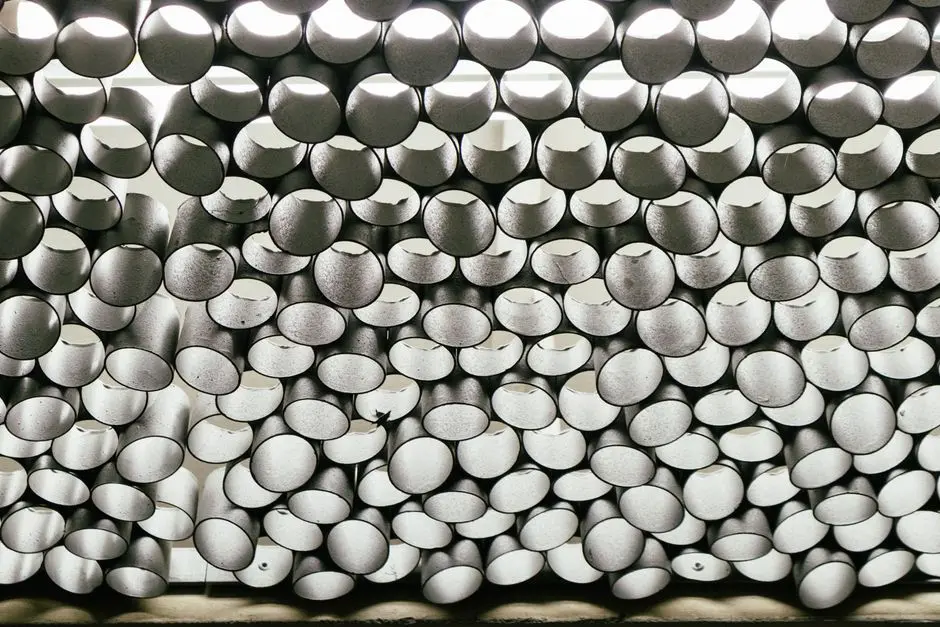
The membrane geometry you specify drives both capital cost and operating risk. For Oman's 50–500 m³/day industrial sweet spot, three configurations compete: PVDF flat-sheet, hollow fiber, and external cross-flow tubular.
PVDF flat-sheet modules (DF series) use reinforced PVDF membranes at 0.1 μm nominal pore size, with 80–225 m² per module delivering 32–135 m³/day per module at design flux. The flat geometry tolerates high suspended solids and high FOG better than hollow fiber because each panel is rigid, individually replaceable, and scoured by an integrated aeration box with bubble size typically 2–3 mm. Hollow fiber MBR systems pack up to 30,000 m² of membrane area per cubic meter of tank volume, which keeps CAPEX per m² low, but the fibers foul faster with high TSS or oil — a known weakness when treating refinery or food-processing streams (see the hollow fiber MBR for food processing engineering guide for fouling case data). External cross-flow MBR, using tubular ceramic or metallic membranes, handles fouling the best but consumes 10–20× the energy per m³ permeate versus submerged designs and rarely pays back below 1,000 m³/day.
The trade-off is a triangle: flux vs energy vs footprint. Flat-sheet sits in the middle on flux (15–25 LMH at 25°C) with the lowest energy and a moderate footprint. Hollow fiber wins on footprint and CAPEX but loses on fouling tolerance. External cross-flow wins on fouling tolerance but loses on energy. For Oman's industrial 50–500 m³/day range, the DF series PVDF flat-sheet MBR module is the 2026 default — it survives high TDS, runs reliably across the 20–40°C influent envelope, and the individually replaceable panels cut mid-life membrane replacement cost by 30–40% versus cassette-style fiber bundles.
| Configuration | Pore Size | Module Area / Capacity | Design Flux (25°C) | Energy (kWh/m³ permeate) | Footprint | Best Fit |
|---|---|---|---|---|---|---|
| PVDF flat-sheet (DF) | 0.1 μm | 80–225 m² per module / 32–135 m³/day per module | 15–25 LMH | 0.4–0.7 | Medium | Industrial 50–500 m³/day, high TDS/FOG |
| Hollow fiber (submerged) | 0.03–0.4 μm | up to 30,000 m²/m³ tank | 10–20 LMH | 0.3–0.6 | Smallest | Municipal, low-TSS industrial <200 m³/day |
| External cross-flow (tubular) | 0.05–0.2 μm | Varies, skid-based | 50–100 LMH | 4–8 | Largest | High-strength industrial >1,000 m³/day |
2026 CAPEX and OPEX Benchmarks for MBR Plants in Oman
Budget figures below are 2026 mid-range envelopes for packaged or skid-mounted MBR units delivered CIF Sohar or Salalah, excluding site-specific civil works unless noted. For a procurement manager building a defensible internal estimate before going to RFQ, these bands are realistic for the Omani market right now.
For 50 m³/day packaged MBR systems, expect CAPEX of $85K–$140K; 200 m³/day runs $280K–$450K; 500 m³/day sits between $900K and $1.6M; a 1,000 m³/day custom skid lands $2.2M–$3.8M. Civil works in Oman's industrial parks run $250–$400 per m² for reinforced concrete foundations, cable trenches, and chemical dosing skids — add 15–25% on top of equipment CAPEX for a turnkey build. OPEX lands in the $0.18–$0.35 per m³ treated band, dominated by aeration energy (40–50% of OPEX), membrane cleaning chemicals (10–15%), and sludge hauling (10–20%). At a 35°C operating temperature, expect a flux derating of 25–35% versus 25°C nameplate, which translates directly into 15–20% more membrane area for the same throughput.
One cost lever worth flagging: containerized MBRs built into ISO 40HC frames can cut site installation time by 30–45% versus stick-built systems, which matters in Sohar, Salalah, and Duqm where mobilization costs are high and EPC schedules tight. The trade-off is shipping envelope — a 40HC frame caps at roughly 200 m³/day before you start splitting into multiple containers, and oversize crane lifting at the Port of Salalah can add 8–12% to logistics cost.
| Plant Size | CAPEX Range (2026, USD) | OPEX (USD/m³ treated) | Containerized Option | Civil Works Multiplier |
|---|---|---|---|---|
| 50 m³/day | $85K–$140K | $0.20–$0.35 | Single 20HC or 40HC | +15–20% |
| 200 m³/day | $280K–$450K | $0.18–$0.30 | Single 40HC or split skid | +18–22% |
| 500 m³/day | $900K–$1.6M | $0.18–$0.28 | Multi-container | +20–25% |
| 1,000 m³/day | $2.2M–$3.8M | $0.18–$0.25 | Custom skid | +22–28% |
7-Point Checklist for Selecting an MBR System Supplier in Oman
Use this list as a printed scorecard during supplier visits or RFQ evaluation. Any "no" on items 1–4 is a deal-breaker; items 5–7 are differentiators.
- Membrane type and PVDF grade. Confirm reinforced PVDF with hydrophilic surface modification. Reject HDPE, PVC, or unreinforced PVDF — they degrade under the 50–200 mg/L free chlorine exposure common in CIP cycles and fail within 3–4 years versus the 5–8 year life of proper PVDF.
- Flux specification at 25°C and 35°C. Supplier must provide temperature-corrected flux curves, not just a 25°C nominal number. At 35°C (Oman summer feed), expect 15–25 LMH net flux on flat-sheet, 10–18 LMH on hollow fiber. A supplier that quotes only 25°C is hiding the membrane area you'll actually need.
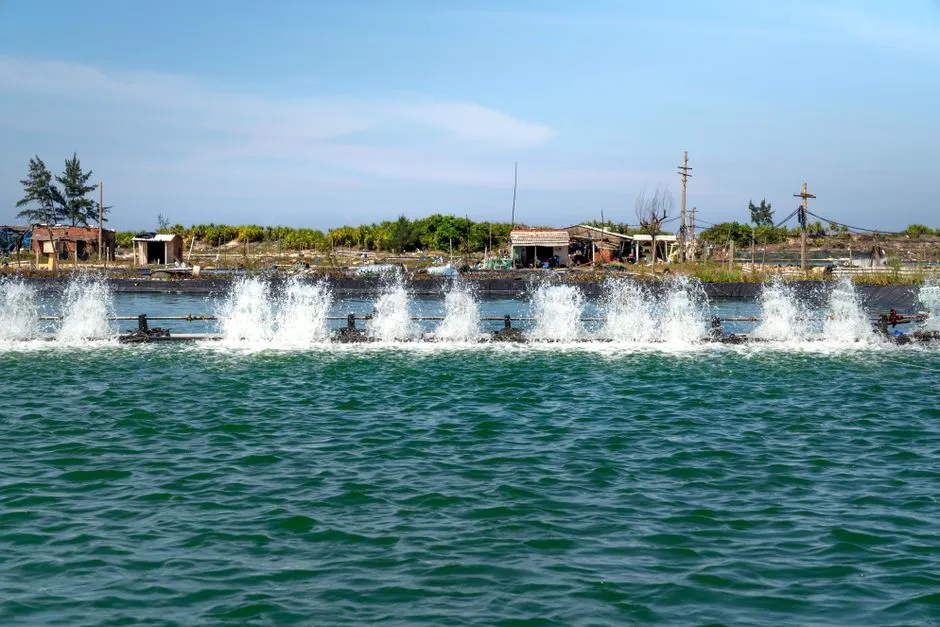
- Aeration system design. Bubble size below 3 mm with uniform distribution across the membrane rack. Coarse bubbles (>5 mm) create dead zones and accelerate fouling by 30–50%. Ask for the blower curve and diffuser spacing drawing, not just a nameplate.
- PLC/SCADA platform. Supplier must expose Modbus TCP or OPC UA for integration with the client's plant DCS, and support remote diagnostics — Oman sites rarely have resident OEM support. A vendor that locks you into proprietary protocols adds 20–30% to lifetime service cost.
- Spare parts logistics. Membrane modules have a 5–8 year life; supplier must keep a hot-spare set in a UAE or Oman warehouse for <72 hr delivery. For Duqm or Salalah, build in 96 hr as a realistic minimum.
- GCC/MENA reference installations. Ask for at least two operating references in the last 36 months at similar TDS and temperature. A municipal sewage treatment plant compliance guide for the MENA region reference set is a useful benchmark, but industrial Omani influent is hotter and saltier than typical municipal flows.
- Compliance documentation and warranty. CE/PED certification, factory acceptance test (FAT) reports, and a 12-month performance warranty linked to effluent quality (BOD, TSS, turbidity) — not just equipment uptime. Pair this with a CIP and PLC-controlled chemical dosing system that the supplier can support locally. A predictive maintenance for MBR systems program from the same vendor can extend membrane life by 12–18 months.
Frequently Asked Questions
What is the typical lifespan of an MBR membrane in Oman? A reinforced PVDF flat-sheet membrane runs 5–8 years in Omani industrial service before replacement, assuming proper CIP every 2–4 weeks and a feed TSS below 8,000 mg/L. Higher TDS or oil contamination can shorten this to 3–5 years.
How often does an MBR need CIP cleaning in Oman's hot climate? Plan for a maintenance CIP every 2–4 weeks and a recovery CIP every 6–12 months in Oman. Summer temperatures of 35–45°C accelerate biological growth and fouling, often requiring 20–30% more frequent cleaning than a European installation at the same loading.
Can a containerized MBR be shipped to Salalah or Duqm? Yes — ISO 40HC containerized MBRs are routinely shipped to Port of Salalah and Duqm via Sohar transshipment. Allow 4–6 weeks for sea freight plus 1–2 weeks for inland transport, and budget 8–12% logistics uplift for the Salalah route versus Sohar direct.
PVDF vs PES membranes for MBR — which is better for Oman? PVDF is the better choice for Oman's high-temperature, high-chlorine-exposure service. PES has higher flux but degrades 2–3× faster under free chlorine and pH swings above 9, which is common when treating refinery or textile effluent. PVDF's chemical resistance and 5–8 year life justify the 10–20% CAPEX premium.
How does MBR flux derate at Oman's summer temperatures? Expect 25–35% flux derating at 35°C versus 25°C nameplate on PVDF flat-sheet MBR. This means a 200 m³/day design at 25°C needs roughly 230–240 m³/day of nameplate capacity to hold 200 m³/day through August — factor this into the RFQ to avoid mid-summer shortfalls.