What the pH Discharge Limit in Kenya Actually Is (and Where It Comes From)
In Kenya, the pH discharge limit set by NEMA under the Environmental Management and Coordination Act (EMCA, Cap 387, amended 2015) and enforced through Schedule II of the Environmental Management and Coordination (Water Quality) Regulations, 2006, is 6.0 to 9.0 for effluent discharged into public sewers or natural watercourses. Certain industry schedules — including coffee wet processing, tea, and sugar manufacturing — apply the tighter 6.5 to 8.5 range. Compliance is verified by continuous or composite sampling at the discharge point.
Schedule II of the 2006 Regulations is the controlling instrument for the general range; industry-specific sub-schedules sit in the same statutory document and override the general number wherever a sub-schedule exists. Sampling defaults to 24-hour composite, but NEMA inspectors retain the right to demand a grab sample at any time, and a single out-of-range grab is sufficient to trigger a non-compliance notice under Section 73 of EMCA. A continuous pH recorder with timestamped logs is the only evidence base that holds up in a compliance review.
Where effluent is destined for potable reuse, the WHO drinking-water guidance band of 6.5–8.5 applies as well, and that path is governed separately under the Water Act 2016 and a Reuse Permit issued by the Water Resources Authority. Most industrial facilities only need to clear the NEMA bar; reuse-to-drinking is a separate, higher-cost track.
| Instrument / clause | Effective pH range | Applies to | Sampling rule |
|---|---|---|---|
| EMCA Cap 387 (2015 amendment) | 6.0–9.0 | All effluent to sewer or watercourse | 24-h composite, grab on inspector demand |
| Water Quality Regs 2006, Schedule II | 6.0–9.0 | General industrial discharge | Continuous or composite |
| Schedule II, industry sub-schedules | 6.5–8.5 | Coffee, tea, sugar, dairy | Per sub-schedule notes |
| WHO drinking-water guidance + Water Act 2016 | 6.5–8.5 | Effluent destined for potable reuse | Reuse Permit conditions |
Industry-Specific pH Limits: Tea, Coffee, Sugar, Tannery, and Hospital Effluent
Kenya stacks sub-schedules on top of the general 6.0–9.0 ceiling, and the sub-schedules are the numbers a permit officer will actually check first. Coffee wet-processing effluent sits at 6.5–8.5 because mucilage fermentation loads organic acids into the stream and the receiving rivers around Kiambu, Kirinyaga, and Machakos are often low-flow in the dry season — design to the tighter band, not the general one. Tea factory effluent and sugar mill condensate typically land in the same 6.5–8.5 window, and milk and dairy whey commonly sit at 6.0–9.0 with parallel loadings on nitrate and phosphate that drive a separate compliance line (see the Kenya total phosphorus discharge limit guide for the matching PO₄ number).
Tannery and slaughterhouse effluents are scheduled at 6.0–9.0 but the pH correction step must come after sulfide stripping; dosing caustic into raw tannery effluent converts dissolved sulfide to H₂S gas and creates an immediate EHS hazard. Hospital effluent in Kenya typically tracks the WHO 6.5–8.5 band because downstream chlorination and ozonation are pH-sensitive — chlorine residual collapses above pH 8.0 and ozone demand rises sharply below pH 6.5. For a sector-specific design walkthrough, see the hospital effluent pH control reference, which applies to Kenyan county hospitals under the same EMCA framework.
| Sector | Schedule pH band | Key driver | Design implication |
|---|---|---|---|
| Coffee wet processing | 6.5–8.5 | Organic acid load from mucilage | Equalization + acid trim |
| Tea factories | 6.5–8.5 | Polyphenol and tannin load | pH correction before biological step |
| Sugar milling | 6.5–8.5 | Condensate acidity swings | Trim on combined condensate |
| Dairy and whey | 6.0–9.0 | Lactose fermentation acids | NaOH dosing + nitrate/phosphate control |
| Tannery | 6.0–9.0 | Sulfide and chromium load | pH trim after sulfide stripper |
| Slaughterhouse | 6.0–9.0 | Blood and paunch handling | Equalization before trim |
| Brewery | 6.0–9.0 | Variable CIP acid/caustic | Two-tank batch neutralization |
| Hospital | 6.5–8.5 (WHO-aligned) | Disinfection efficacy downstream | pH trim before chlorination |
Designing a pH Correction Train: Sensors, Dosing, and Control
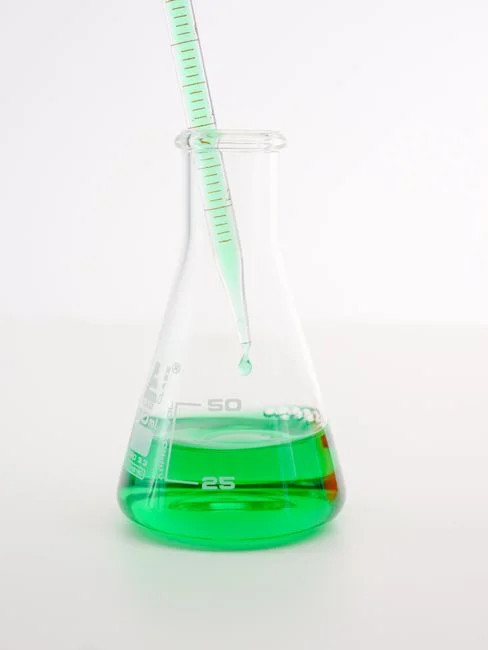
A correction train that holds pH inside 6.0–9.0 (or the tighter 6.5–8.5 sub-band) at industrial flow is a stack of five blocks, and skipping any one of them shows up as a permit excursion within weeks. Start with a combination pH electrode with a double-junction reference, KCl filling, and a self-cleaning head — ultrasonic or chemical-jet, depending on fouling severity — mounted in a flow-through cell with a buffer/calibration bypass. The bypass is non-optional; a sensor that cannot be pulled and checked against pH 4.01 and pH 7.00 buffers in 15 minutes is a sensor that drifts unnoticed.
Dosing hardware should be a PID-controlled diaphragm or peristaltic pump sized at 1.5–2× the calculated stoichiometric flow so the control loop has headroom during load spikes. For acidic influent in the pH 2–5 range, dose 30–48% NaOH; for strongly alkaline influent at pH 10–13, dose 92–98% sulfuric acid or use CO₂ sparging when the swing is less than 1 pH unit. A packaged PLC-controlled pH dosing system with PID trim on a 4–20 mA loop from the inline analyzer typically holds ±0.2 pH at steady state. The full dosing-train logic on a fish-processing line is worked through in the fish-processing dosing system guide, and the same tuning rules apply to food, beverage, and hospital streams.
Place a mixing reaction tank with HRT of 30–90 seconds immediately after the dosing point, followed by a 5–15 minute equalization basin that carries a second pH sensor as the trim signal before final discharge. The equalization tank also acts as the emergency diverter; size it as V = Q × t, where t is the longest credible pH excursion in minutes (a typical design value is 15–20 minutes of peak flow). Set the alarm band at pH 6.5–8.5 (inside the regulatory range) and the trip band at 5.8 or 9.2, which diverts flow to a standby neutralization tank via a pneumatically actuated three-way valve. Chemical storage must sit in lined HDPE bunding sized at 110% of the largest tank, per EMCA storage rules.
| Block | Specification | Why |
|---|---|---|
| Sensor | Double-junction, KCl, self-cleaning | Drift control in fouling streams |
| Dosing pump | 1.5–2× stoichiometric, PID on 4–20 mA | Headroom for load spikes |
| Reaction HRT | 30–90 s with mechanical mixer | Complete reagent dispersion |
| Equalization HRT | 5–15 min, V = Q × t | Dampens swings, holds trim |
| Alarm band | 6.5–8.5 | Inside regulatory range |
| Trip band | 5.8 / 9.2 | Divert to emergency tank |
Treatment Technologies That Move pH Into Range
Match the technology to flow rate and influent swing rather than buying the largest unit on the market. For flows under 10 m³/h with swings of 3–5 pH units, a two-tank batch neutralization system with a slow mixer (40–60 rpm) and intermittent dosing is the lowest-CAPEX path; an aeration header in the second tank strips dissolved CO₂ and lifts the pH half a unit on its own. For flows of 10–200 m³/h, the standard food-and-beverage train is an in-line DAF pre-treatment ahead of pH trim, where the DAF removes suspended solids and oils that would otherwise coat the pH probe; pH correction sits either upstream of the DAF (when the chemistry is sensitive to biological oxygen demand) or downstream (when the DAF feed is already near-neutral).
For high-strength chemical or metal-finishing streams, a two-stage precipitation train is the standard approach: dose to pH 9–10 to precipitate metals, settle in a dedicated clarifier, then trim back to pH 7 with sulfuric acid before discharge. Precipitation efficiency is a sharp function of pH — zinc drops out between 8.5 and 9.5, copper between 9.0 and 10.0, and nickel needs 10.0–10.5 — so tight pH control is not optional. The high-rate settler used after the metal precipitation step is the same high-efficiency sedimentation tank typically used in chemical pretreatment lines. For very large flows (over 500 m³/h) or remote sites without reliable caustic supply, a fluidized-bed limestone contactor can replace NaOH for acidic streams, with a 1.5–3 pH unit lift per stage; expect 2–4 stages for a pH 3 feed to reach pH 7.
2026 Cost Benchmarks and the Cost of Non-Compliance
NaOH dosing for a 50 m³/h plant lifting influent from pH 4 to pH 7 typically costs KES 18–36 per m³ in 2026, dominated by 30% liquid caustic at KES 95–140 per kg of active NaOH (HydropureWater field data, 2026). Sulfuric acid trim for an alkaline stream is comparable at KES 22–42 per m³ because acid is more aggressive on dosing-pump seals and the dosing tank must be rubber-lined; expect pump rebuilds every 6–9 months at continuous duty. Sensor and probe replacement is the second-largest line item — budget KES 90,000–220,000 per probe per year for cleaning chemicals, buffers, and annual replacement at industrial duty cycle, with a calibration log filed monthly.
Non-compliance costs are an order of magnitude higher. The 2024 NEMA enforcement sweep along the Athi–Nairobi river corridor penalized 47 facilities, with average fines of KES 250,000–1,200,000 per incident and stop-orders that halt production for 7–30 days. Frame the comparison for a 50 m³/h plant: properly instrumented pH correction runs KES 2.0–3.5 million per year in OPEX, while a single enforcement action is KES 0.25–1.2 million in fines plus the cash-flow hit of a 7-day stop-order. A first-year non-compliance event is roughly 20–40× the annual OPEX of a properly instrumented train — the engineering pays for itself the first time NEMA inspector walks in.
| Cost line (50 m³/h plant, 2026) | Benchmark | Notes |
|---|---|---|
| NaOH, pH 4→7 lift | KES 18–36 / m³ | 30% liquid caustic dominant |
| H₂SO₄ trim, alkaline stream | KES 22–42 / m³ | Rubber-lined dosing tank required |
| Probe and sensor annual cost | KES 90,000–220,000 / yr | Cleaning, buffers, replacement |
| Annual OPEX, full correction train | KES 2.0–3.5 million / yr | Chemicals + maintenance + power |
| Single NEMA non-compliance fine (2024 sweep) | KES 250,000–1,200,000 | Plus 7–30 day stop-order |
Frequently Asked Questions
What is the legal pH limit for industrial discharge into Kenyan rivers and sewers?
NEMA enforces pH 6.0–9.0 under Schedule II of the Environmental Management and Coordination (Water Quality) Regulations, 2006, issued under EMCA Cap 387. Industries on the coffee, tea, sugar, and dairy sub-schedules must hold the tighter 6.5–8.5 band. Continuous logging at the discharge point is the standard evidence base for compliance reviews.
Which industries have a tighter pH limit than the general 6.0–9.0 range?
Coffee wet processing, tea factories, sugar mills, and dairy processors are scheduled at 6.5–8.5 because their organic and condensate loads depress pH into the acid range. Hospital effluent typically targets the same 6.5–8.5 band to keep downstream chlorination effective above pH 8.0 and ozone demand manageable below pH 6.5.
What chemical is most cost-effective for raising wastewater pH in 2026?
30–48% liquid NaOH remains the standard for acidic streams, at KES 18–36 per m³ for a typical pH 4→7 lift on a 50 m³/h plant (HydropureWater field data, 2026). Lime is cheaper per kg but brings a 5–10× sludge-handling penalty and is rarely used where flow is below 100 m³/h or discharge permits are tight on total suspended solids.
How does NEMA verify pH compliance during an inspection?
NEMA inspectors can demand a grab sample at any time, and a single out-of-range reading is sufficient to issue a non-compliance notice under Section 73 of EMCA. A continuous pH recorder with timestamped 4–20 mA logs and a calibration register is the only documentation that consistently overturns a contested grab result. Buffer calibration records should be retained for at least 24 months.
What is the cost of a NEMA pH non-compliance fine in Kenya?
The 2024 NEMA enforcement sweep along the Athi–Nairobi corridor penalized 47 facilities at an average of KES 250,000–1,200,000 per incident, with stop-orders halting production for 7–30 days. For a 50 m³/h plant, a single enforcement event is roughly 20–40× the annual OPEX of a properly instrumented pH correction train running KES 2.0–3.5 million per year.