What Is the Oil and Grease Discharge Limit in Nigeria?
Nigeria's oil and grease (O&G) discharge limit depends on the receiving environment and the sector. The Department of Petroleum Resources (DPR) produced water schedule, now administered under the Nigerian Upstream Petroleum Regulatory Commission (NUPRC) following the 2021 Petroleum Industry Act, sets the limit at 10 mg/L for inland waters, 20 mg/L for near-shore waters, and 40 mg/L monthly average for offshore. Non-petroleum sectors operating under Federal Ministry of Environment (FMEnv) sectoral regulations converge on 10 mg/L for any discharge to inland or near-shore waters. The full sector matrix is consolidated below.
| Parameter | Inland | Near-shore | Offshore | Source |
|---|---|---|---|---|
| Oil & Grease (produced water, petroleum sector) | 10 mg/L | 20 mg/L | 40 mg/L (monthly average) | DPR/EGASPIN 2018, Table III-1 |
| Oil & Grease (pulp & paper, wood products) | 10 mg/L | 10 mg/L | — | S.I. 34 of 2013, Schedule I |
| Oil & Grease (wood treatment & preservation) | 10 mg/L | 10 mg/L | — | FMEnv Gazette Reg. 37 (2013) |
| Oil & Grease (refinery, food, metal finishing, tannery) | 10 mg/L | 10 mg/L | — | FMEnv Schedule I sectoral S.I.s |
| pH (produced water) | 6.5–8.5 | 6.5–8.5 | No limit | DPR/EGASPIN |
O&G is defined operationally as the hexane-extractable fraction measured under APHA 5520 B (partition-gravimetric), 5520 C (Soxhlet extraction), or 5520 D (hydrocarbons only)—the methods FMEnv Schedule I defaults to when a sectoral regulation is silent on technique. The distinction between produced water (petroleum upstream) and process wastewater (manufacturing) determines which regulation applies, but the inland concentration ceiling is identical: 10 mg/L. Sampling is a spot sample taken at the point of discharge and analyzed within 24 hours, per FMEnv Gazette Regulation 37.
Which Nigerian Regulator Enforces Your O&G Limit?
Four agencies share enforcement, and confusion between them is a primary reason operators receive overlapping violation notices. The Federal Ministry of Environment (FMEnv) issues the National Environmental (Sanitation and Water Quality) Regulations and the sectoral Statutory Instruments (S.I. 34 of 2013 for pulp and paper is the most cited example for O&G). FMEnv sets the national Schedule I parameters that all sectors must meet. The National Environmental Standards and Regulations Enforcement Agency (NESREA), established by the 2007 Act, is the field enforcement arm—it conducts unannounced inspections, issues violation notices, and prosecutes non-compliance in the Federal High Court.
For upstream oil and gas, the Department of Petroleum Resources historically enforced the Environmental Guidelines and Standards for the Petroleum Industry in Nigeria (EGASPIN). DPR was subsumed into the Nigerian Upstream Petroleum Regulatory Commission (NUPRC) after the 2021 Petroleum Industry Act; NUPRC now administers EGASPIN for produced water. As of 2026, the EGASPIN 2018 revision remains the active upstream standard, and no replacement has been gazetted. State-level bodies—Lagos State Environmental Protection Agency (LASEPA) is the most active—layer additional discharge permits on facilities in their jurisdiction. For a parallel compliance picture on nutrient parameters, the Total Nitrogen Discharge Limit in Nigeria: 2026 FMEnv Compliance Guide covers the same enforcement architecture for nitrogen species.
How the 10 mg/L Limit Is Actually Measured (And How Operators Fail the Test)
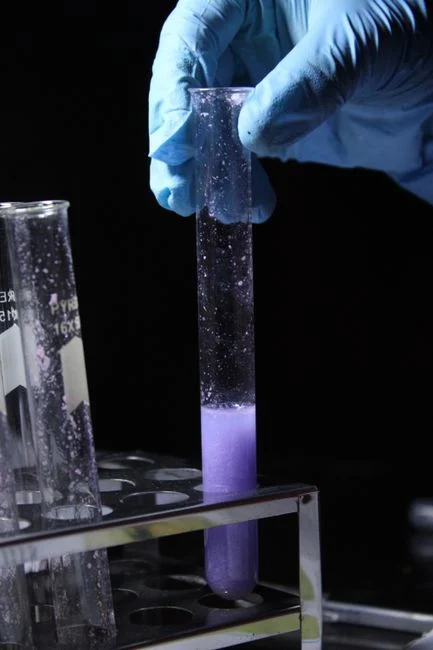
Procedural rules under FMEnv Gazette Regulation 37 are where compliant-looking plants routinely fail. A spot sample is taken at one time, at the point of discharge; if discharge has stopped, sampling moves to the nearest practicable point within 0–1 km upstream and downstream. The sample must be analyzed immediately where possible, but no later than 24 hours after collection. O&G is biodegradable and partitions in the bottle, so a delayed analysis returns a falsely low reading—and regulators will not accept a result older than 24 hours as evidence of compliance.
- Method: APHA 5520 B (partition-gravimetric) is the most common in Nigerian labs; 5520 C (Soxhlet) and 5520 D (hydrocarbons only) are alternatives. Specify the method in the lab service contract; a facility that passes under 5520 D can fail under 5520 B because the hydrocarbon-only method excludes animal and vegetable fats.
- Sample type: Spot sample is the compliance sample. Composite samples are acceptable for trend monitoring but not for reporting against the limit.
- Hold time: 24 hours from collection to extraction. Beyond that, results are inadmissible under FMEnv Reg. 37.
- Sample point location: Per 2024–2026 NESREA enforcement patterns, the location of the sampling tap—not the plant's treatment performance—is the leading cause of failed compliance tests. Taps placed upstream of the final polishing unit, or in a side-stream that bypasses the DAF, routinely return 30–80 mg/L even when the actual final effluent is below 10 mg/L.
Practical move: locate the compliance tap after the last treatment unit, in a section with continuous flow, and have it witnessed by an independent NESREA-accredited lab during commissioning. The tap is part of the design.
Treatment Process Map: Getting to 10 mg/L from Real-World Influent
The treatment train must be selected based on influent O&G concentration to avoid costly EPC errors on Nigerian projects. The decision map below ties influent ranges to unit operations and expected effluent quality.
| Influent O&G (mg/L) | Typical source | Treatment train | Expected effluent (mg/L) |
|---|---|---|---|
| 50–500 | Food processing, refinery desalter brine | API oil-water separator → corrugated plate interceptor (CPI) → dissolved air flotation (DAF) system → biological polishing | <10 |
| 500–5,000 | Meat processing, edible oil refining, oily bilge | DAF with coagulant dosing (polyaluminum chloride 50–150 mg/L) → MBR membrane bioreactor | <10 |
| 5,000–50,000 | Petroleum refinery wastewater, produced water before primary treatment | Three-stage DAF or induced gas flotation (IGF) → walnut shell filter → activated carbon → polishing | 15–25 after DAF alone; <10 after polishing |
DAF is the workhorse for the 50–5,000 mg/L band. The DAF line covers 4–300 m³/h across 13 standard models, with air-to-solid ratios of 0.005–0.015, surface loading rates of 5–15 m/h, and hydraulic residence times of 20–40 minutes. A properly sized DAF with polyaluminum chloride (PAC) at 50–150 mg/L and anionic polyacrylamide flocculant at 1–5 mg/L will remove 85–95% of influent O&G in a single stage. Hold pH between 6.5 and 8.5 to maintain simultaneous compliance with the DPR produced water pH window and to keep the coagulant hydrolysis curve inside its effective band. Dose drift is the most common cause of a plant sliding from 5 mg/L to 15 mg/L at the outlet, so an automatic chemical dosing system with flow-proportional PAC control should be specified at the design stage. DAF alone typically reaches 15–25 mg/L on high-strength produced water; downstream walnut shell filtration and activated carbon polishing are required to break the 10 mg/L inland limit.
Nigeria vs. International Standards: How Strict Is 40 mg/L Offshore, Really?

International oil companies operating in Nigeria often find the local offshore limits more lenient than global ESG benchmarks. The U.S. offshore limit under 40 CFR Part 435 is 29 mg/L monthly average and 42 mg/L daily maximum—effectively the same daily ceiling as Nigeria, but with a tighter long-term average and aggressive enforcement. The North Sea, operating under OSPAR, has moved toward zero-discharge; current produced water O&G targets sit around 30 mg/L monthly, with several operators required to re-inject rather than discharge. MARPOL 73/78, to which Nigeria is a signatory, sets 15 ppm (≈15 mg/L) for machinery space deck drainage—but Nigeria has not yet domesticated MARPOL into national law, so the convention's deck-drain limits are not directly enforceable on Nigerian offshore installations.
Expect offshore limits to tighten. As Nigeria pursues IMO compliance and ESG-linked financing, the 40 mg/L offshore ceiling is likely to move toward 29–30 mg/L by 2028–2030, mirroring the U.S. trajectory. Operators designing new produced water treatment packages today should size for a 30 mg/L outlet even if the current compliance number is 40 mg/L—the marginal cost is small, while the retrofit cost is high.
2026 Compliance Checklist for Nigerian Facilities
- Confirm your discharge route—inland, near-shore, or offshore—and apply the matching O&G limit (10 / 20 / 40 mg/L).
- Verify the sampling tap is after the final polishing unit, in continuous flow, and that your lab contract specifies APHA 5520 B (or C) with a 24-hour maximum hold time.
- Install a fluorescence-based online oil-in-water analyzer at the discharge point (0–100 mg/L range) for trend monitoring; trend data is not a substitute for the spot sample, but it catches drift before the monthly composite does. See the engineering tradeoffs in our Digital Dashboard for Wastewater KPI: 2026 Engineering Guide.
- Audit DAF chemical dosing monthly—record pH, PAC dose (mg/L), and flocculant dose; set alarm thresholds at ±20% of design dose.
- Retain records for the statutory minimum (typically 3 years under FMEnv Sectoral Guidelines) and prepare for unannounced NESREA inspections; keep the chain-of-custody form for every compliance sample.
Frequently Asked Questions
What is the oil and grease limit for inland discharge in Nigeria?
10 mg/L for both produced water under DPR/EGASPIN and process wastewater under FMEnv sectoral regulations (including S.I. 34 of 2013 for pulp and paper and equivalent S.I.s for other manufacturing sectors).
What is the offshore produced water O&G limit in Nigeria?
40 mg/L monthly average, per EGASPIN 2018 Table III-1, enforced by NUPRC post-2021 PIA.
Which APHA method is used to measure O&G in Nigeria?
APHA 5520 B (partition-gravimetric) is the default in Nigerian labs; 5520 C (Soxhlet) and 5520 D (hydrocarbons only) are also referenced in FMEnv Schedule I. Specify the exact method in