PFAS Discharge Limit in Indonesia: What the 2026 Regulatory Stack Says
Indonesia has no numeric PFAS discharge limit in 2026 — PP 22/2021 enforces PFAS through general hazardous-substance clauses, leaving a detect-to-zero floor near 1–5 ng/L. Most exporters design to EPA's 4 ng/L PFOA/PFOS benchmark instead, pairing GAC or anion exchange with RO.
The governing instrument is Government Regulation No. 22 of 2021 (PP 22/2021) on the Implementation of Environmental Protection and Management, administered by the Ministry of Environment and Forestry (MoEF). Article 261–264 of PP 22/2021 sets a general quality-standard obligation for every hazardous substance discharged to water. MoEF can enforce a substance-specific limit by decree even if PP 22/2021 itself never publishes a PFAS row.
The international layer is already binding. PFOA, PFOS, PFHxS, and their salts were listed under the Stockholm Convention in 2009 and 2019 — PFOS into Annex B, PFOA into Annex A with specific exemptions (Stockholm Convention COP decisions). Indonesia ratified both decisions through PP 26/2024 on POPs management. Any measurable release therefore triggers administrative sanctions, mandatory remediation, and potential criminal liability under Articles 97–98 of the same regulation.
The practical floor for an Indonesian industrial emitter is detect-to-zero in the receiving water body, which is functionally a limit of detection (typically 1–5 ng/L by LC-MS/MS) rather than a numeric effluent number. Most multinational customers and international insurers operating in Indonesia already require alignment with stricter offshore benchmarks. The US EPA 2024 final rule sets an MCL of 4 ng/L each for PFOA and PFOS, with 10 ng/L for HFPO-DA/GenX. The EU Drinking Water Directive 2020/2184 benchmark runs at 0.10 µg/L PFAS-total and 0.0044 µg/L PFOA-equivalent (per EU DWD 2020/2184, transposed by 2026).
According to the US EPA, the 2024 rule established legally enforceable MCLs for six PFAS, with initial monitoring due by 2027 and treatment solutions by 2029. Those dates matter to Indonesian exporters because customer contracts increasingly mirror them. The IPEN 2021 PFAS Situation Report measured 84 ppt average PFOS in Indonesian breast milk — more than 4× the 20 ppt US drinking water health advisory. That study has been cited in MoEF public consultations as the public-health pressure pushing a numeric MCL into PP 22/2021 by 2027–2028 (IPEN, 2021-01).
Which Indonesian Industries Are Most Exposed to PFAS Discharge Risk
PFAS loading in Indonesian industrial wastewater is highly sector-specific, and the sector ranking directly drives which polishing train makes economic sense. Textile finishing mills using durable water repellent (DWR) coatings typically show 50–500 µg/L total PFAS in spent dye-bath wastewater, dominated by long-chain PFOA and 6:2 FTSA. Pulp and paper mills producing greaseproof food packaging run 5–80 µg/L with a short-chain signature (PFBA, PFBS, GenX-replacement chemistries) that is harder to remove on GAC.
Electroplating and metal-finishing operations using PFAS-based fume suppressants (historically Fumetrol-grade products) discharge 1–50 µg/L PFOA + PFOS in rinse water, often co-mingled with chromium and nickel that complicate precipitation upstream. Semiconductor and PCB fabs using PFAS in photoresists, etchants, and wafer-cleaning steps show a complex fingerprint of GenX, PFPeA, and PFHxA at 0.5–20 µg/L in fab wastewater. AFFF-impacted sites — airports, refineries, military bases, and a few petrochemical tank farms — are the outlier: groundwater under fire-training pads commonly runs 100–10,000 µg/L PFOS, and remediation trains must hit non-detect.
| Sector | Typical PFAS in raw wastewater | Dominant species | Indonesian regulatory hook |
|---|---|---|---|
| Textile finishing (DWR coatings) | 50–500 µg/L total PFAS | PFOA, 6:2 FTSA, PFOS | PP 22/2021 Art. 261 + customer ESG |
| Pulp & paper / food packaging | 5–80 µg/L | Short-chain PFBA, PFBS, GenX | PP 22/2021 + Stockholm POPs |
| Electroplating / metal finishing | 1–50 µg/L | PFOA, PFOS | MoEF hazardous-substance decree |
| Semiconductor / PCB | 0.5–20 µg/L | GenX, PFPeA, PFHxA | PP 22/2021 + MNC customer standards |
| AFFF sites (airports, refineries) | 100–10,000 µg/L (groundwater) | PFOS, PFOA | PP 26/2024 POPs + PP 22/2021 |
If your plant sits in the top three rows, a polishing train is no longer optional. That applies to any facility exporting to the EU, supplying an automotive or apparel MNC, or under an ISO 14001 audit cycle that references PFAS in the materiality assessment.
GAC, Anion Exchange, RO and Foam Fractionation: The PFAS Removal Comparison
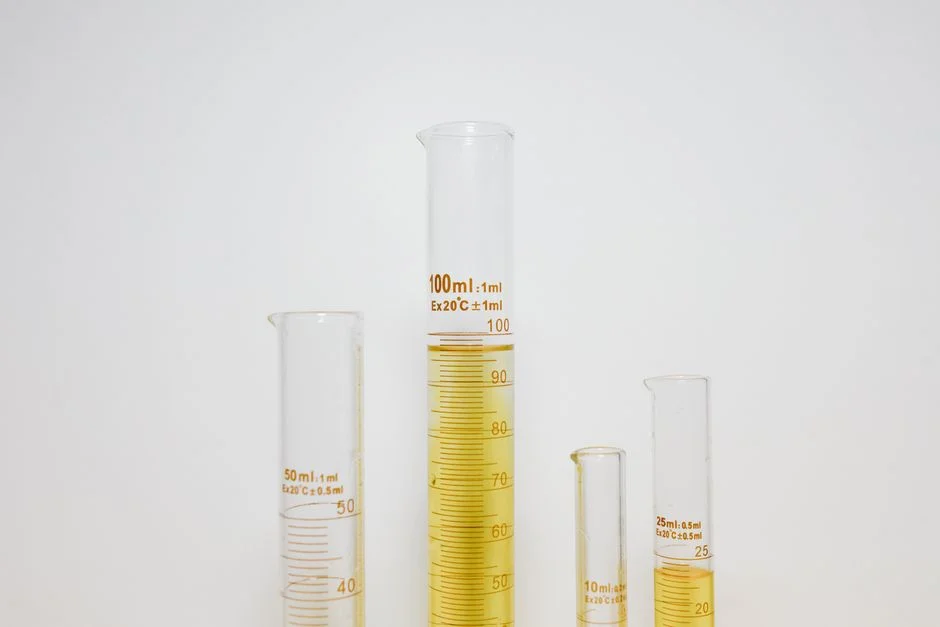
Four unit processes dominate PFAS polishing at industrial scale: granular activated carbon (GAC), strong-base anion exchange (AIX), reverse osmosis (RO), and foam fractionation. Each has a defensible niche. The engineering decision is almost always a train of two of them rather than a single stage.
GAC with bituminous-coal or coconut-shell media at an empty bed contact time (EBCT) of 10–20 minutes removes 90–99% of PFOA/PFOS on virgin carbon. Media life collapses to 3–6 months when influent total PFAS exceeds 50 µg/L, and GAC media runs USD 2.5–4.5/kg delivered to Java. Strong-base anion exchange resins (Purolite PFA694E, DOWex PSR-2, or equivalents) drive PFOA/PFOS to <10 ng/L on polish duty and reach breakthrough at 20,000–50,000 bed volumes. They are regenerable off-site, but the regenerant brine becomes a concentrated PFAS waste that must be destroyed — typically by thermal oxidation at >1,000°C — and resin cost sits at USD 15–25/kg.
Reverse osmosis with thin-film composite spiral-wound elements rejects 95–99% of long-chain PFAS and 70–90% of short-chain PFBA/PFBS, with 70–80% recovery and 15–25 bar feed pressure. The deciding factor is concentrate disposal, which carries 5–15% of OPEX. Foam fractionation is a niche but legitimate option for high-surfactant streams such as AFFF-impacted groundwater and landfill leachate, where 2–3 stages of foam columns remove 80–95% of PFAS at very low energy cost. Track record at full industrial scale outside the US DoD portfolio is thin, so treat it as a third stage rather than a workhorse.
A detailed head-to-head including removal of short-chain PFAS, footprint, and energy intensity is available in our PFAS treatment methods comparison.
| Technology | EBCT / HRT / pressure | PFOA/PFOS removal | Short-chain PFAS removal | Media / membrane life | USD per kg / m² |
|---|---|---|---|---|---|
| GAC (bituminous / coconut) | EBCT 10–20 min | 90–99% | 40–70% | 3–6 months at high load | USD 2.5–4.5/kg |
| Strong-base AIX | BV/h 20–40 | >99% to <10 ng/L | 60–85% | 20,000–50,000 BV | USD 15–25/kg |
| RO (TFC spiral-wound) | 15–25 bar, 70–80% recovery | 95–99% | 70–90% | 3–5 years | USD 8–15/m² |
| Foam fractionation | 2–3 stages | 80–95% | 50–70% | No media | OPEX-only, low |
| UV/persulfate AOP | UV dose >1,500 mJ/cm² | 50–85% destruction | 20–50% | Lamp 8,000–12,000 h | Energy-driven |
Advanced oxidation (UV/persulfate, UV/H2O2) belongs in this conversation only as a polish step on RO concentrate or AIX regenerant. PFOA/PFOS destruction is real, but the oxidant dose and contact time required make it uneconomic as a standalone primary stage on raw industrial wastewater.
Recommended PFAS Treatment Trains for Industrial Wastewater in Indonesia
For a textile finishing plant at 10–100 m³/day, a moving-bed biological reactor (MBR) sized for BOD/COD removal, followed by a GAC adsorber and a polishing AIX vessel, reliably hits <10 ng/L PFOA/PFOS. That train tolerates the high temperature (30–45°C) and surfactant load of spent dye-bath water.
A pulp and paper or food-packaging mill at 50–300 m³/day typically runs dissolved air flotation for fibre and filler recovery, an MBR for organics, and a single-pass RO with 70% reuse and 30% discharge. The RO permeate is already below 10 ng/L, so a downstream AIX is optional unless the customer spec is <4 ng/L.
Electroplating and metal finishing at 5–50 m³/day need chemical precipitation for chrome and nickel first, then GAC, then AIX — co-removal of PFAS with the metal sludge is partial and should not be relied on. Semiconductor fabs at 50–200 m³/day use ultrafiltration for colloidal silica, two-pass RO for water reuse ≥85%, and an AIX polish to scrub the RO permeate to non-detect. For AFFF-impacted groundwater remediation at 10–100 m³/day, the standard train is GAC followed by AIX followed by a foam-fractionation polish to drive PFOS to <4 ng/L before re-injection or surface discharge.
The MBR and RO units referenced above can be sourced as packaged skids — see the HydropureWater MBR membrane bioreactor system and the HydropureWater industrial RO system for typical footprints and Indonesian delivery lead times.
Indonesia PFAS CAPEX and OPEX: Polishing Train Costs at 10–500 m³/day
Budget envelopes below assume a turnkey skid-mounted train delivered to a Java or Sumatra industrial estate, including civil works, instrumentation, and commissioning by a qualified EPC. Numbers are stated in USD; FX exposure is the buyer's problem and is not hedged here.
For a GAC + AIX polishing train at 10–50 m³/day, CAPEX runs USD 0.18–0.45M and OPEX USD 0.25–0.55/m³, dominated by media change-out every 4–8 months and quarterly AIX regeneration logistics. An MBR + RO + AIX train at 50–200 m³/day sits at CAPEX USD 0.6–1.6M and OPEX USD 0.35–0.85/m³, with membrane replacement every 3–5 years and concentrate disposal roughly 5–10% of OPEX. A two-pass RO + AIX configuration at 200–500 m³/day is the heavy end — CAPEX USD 1.4–2.4M and OPEX USD 0.45–1.10/m³ — with concentrate disposal climbing to 10–15% of OPEX because of the higher reject volume.
Energy intensity is 1.2–3.5 kWh/m³ for RO-dominated trains and 0.2–0.6 kWh/m³ for GAC/AIX-only trains. Indonesia's industrial electricity tariff of USD 0.07–0.10/kWh (per PLN industrial tariff schedule 2025-08) keeps power-driven OPEX competitive against Vietnam and Thailand. A more granular line-item view of OPEX drivers — consumables, energy, labor, resin change-out — is in our wastewater treatment plant OPEX breakdown 2026.
Apply a +20% CAPEX contingency to any of these envelopes. Pilot testing, the 28-day sampling campaign, and the resin exhaustion surprises that almost always surface in the first six months of operation all belong inside that line (HydropureWater field data, 2026).
| Train | Flow (m³/day) | CAPEX (USD M) | OPEX (USD/m³) | Main OPEX driver |
|---|---|---|---|---|
| GAC + AIX | 10–50 | 0.18–0.45 | 0.25–0.55 | Carbon + resin change-out |
| MBR + RO + AIX | 50–200 | 0.6–1.6 | 0.35–0.85 | Membrane replacement |
| Two-pass RO + AIX | 200–500 | 1.4–2.4 | 0.45–1.10 | Concentrate disposal |
90-Day Implementation Roadmap for PFAS Compliance in Indonesia
- Days 1–30 — Influent and effluent characterization. Pull 28-day composite samples across all shift patterns for PFOA, PFOS, PFHxS, PFBA, PFBS, and GenX. Select the binding target standard: PP 22/2021 + MoEF decree for legal floor, or EPA 4 ng/L / EU 0.10 µg/L PFAS-total if a customer or ESG commitment applies.
- Days 31–60 — Bench- and pilot-scale testing. Run parallel GAC, AIX, and RO pilots on actual site wastewater. Confirm media life, breakthrough curves, and concentrate volumes. Send all confirmatory analyses to an accredited LC-MS/MS lab (Sucofindo, SGS Indonesia, or an international partner).
- Days 61–90 — Vendor RFQ, basic engineering, and permit update. Issue the RFQ to 2–3 qualified EPCs with the pilot results attached. Submit an AMDAL/UKL-UPL addendum or RKL-RPL revision to MoEF if the selected train materially changes the discharge quantity or quality described in the existing permit.
Next Step: Lock the Compliance Target Before the Regulator Does
The PFAS discharge limit Indonesia enforces today is contractual and detection-based, not a published number. Plants that design to <10 ng/L now are insulated from any numeric MCL aligned with EU or US benchmarks. Teams comparing vendor capacity can start with the PFAS Removal Technology Growth Rate 2026: Market Data & B2B Buyer Outlook page, while multi-country compliance teams will find the same detect-to-zero logic in the PFAS Discharge Limit in Saudi Arabia: 2026 Compliance & Treatment Guide.
For a plant-specific train selection, send the 28-day characterization data, the binding customer standard, and the target flow range through the PFAS compliance sizing inquiry. The pilot data then drives a firm GAC/AIX/RO split rather than a vendor's default preference.
Frequently Asked Questions
What does Indonesia PFAS effluent regulation require in 2026?
Indonesia PFAS effluent regulation in 2026 runs through PP 22/2021 rather than a numeric limit. The regulation obliges every discharger to meet quality standards for hazardous substances, and POPs listings ratified via PP 26/2024 expose any measurable PFAS release to sanctions. In practice the floor is detect-to-zero near 1–5 ng/L.
Does Indonesia have a numeric PFAS effluent limit in 2026?
No — no numeric PFAS effluent limit exists in 2026. PP 22/2021 governs PFAS indirectly through its general quality-standard and hazardous-substance clauses, so the enforceable floor is functionally detect-to-zero (typically 1–5 ng/L by LC-MS/MS) rather than a published number. MoEF can still set a substance-specific limit by decree.
What treatment train is recommended for a textile finishing plant?
Biological MBR followed by GAC polishing and an AIX polish stage is the recommended train. It is designed for 10–100 m³/day and a target of <10 ng/L PFOA/PFOS on the combined effluent, and it tolerates the 30–45°C temperature of spent dye-bath water. Budget USD 0.18–0.45M for the GAC + AIX portion at small flows.
What CAPEX should a 50–200 m³/day PFAS polishing train budget for in Indonesia?
USD 0.6–1.6M for a packaged MBR + RO + AIX train. OPEX runs USD 0.35–0.85/m³ including membrane replacement and concentrate disposal, with membrane change every 3–5 years. Add a +20% contingency for piloting and first-year resin surprises (HydropureWater field data, 2026).
How often must PFAS be monitored once the train is running?
Monthly 24-hour composite sampling on the final effluent for at least PFOA and PFOS. Quarterly full-panel analyses should cover PFHxS, PFBA, PFBS, and GenX for the first two years. All confirmatory work belongs in an accredited LC-MS/MS lab such as Sucofindo or SGS Indonesia.
What happens if PP 22/2021 is amended to add a numeric PFAS MCL?
An MoEF decree would set a transition period of typically 12–24 months. Plants already operating below 10 ng/L PFOA/PFOS will meet any proposed MCL aligned with EU or US benchmarks without retrofit. Plants relying solely on biological treatment will need to add GAC, AIX, or RO polishing within the transition window.